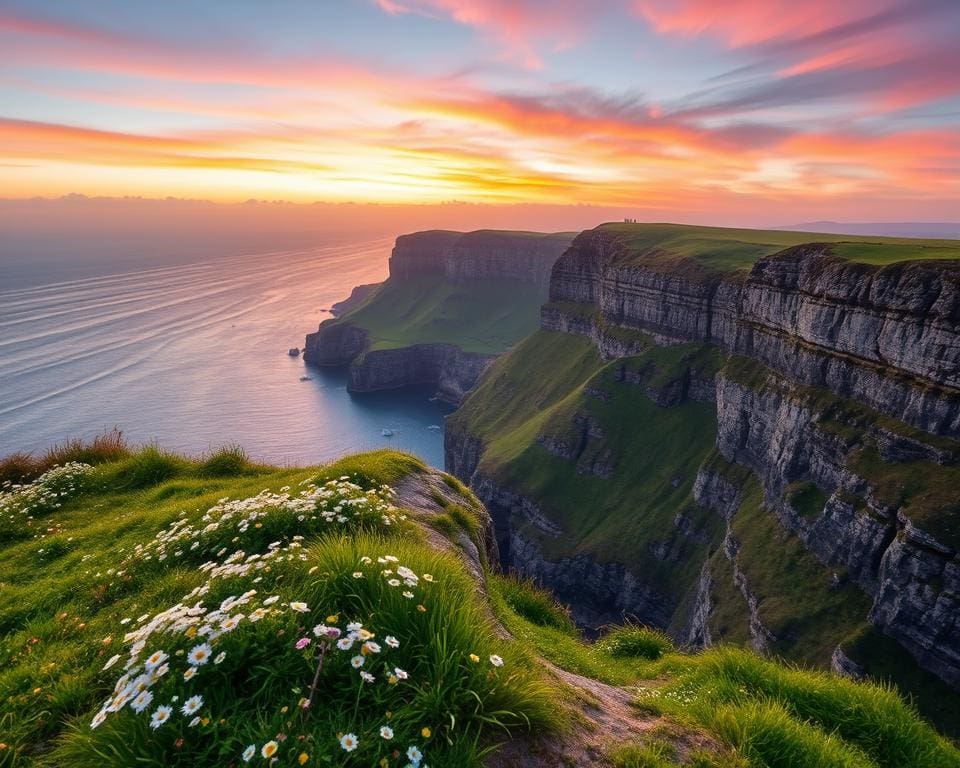

The Cliffs of Moher sit on the west coast of County Clare and stretch for about 8 kilometres along the Atlantic. You will see sheer rock faces rising to 214 metres at their highest point, making them one of the most striking scenic attractions Ireland has to offer.
As a must-see Ireland destination, the cliffs combine dramatic geology, sweeping sea views and rich wildlife. They form part of the Burren and Cliffs of Moher UNESCO Global Geopark and are a Special Protection Area for birds, so you can expect strong conservation and interpretation at the visitor centre.
Filmmakers and travel guides often feature the site — it appears in films such as Harry Potter and the Half-Blood Prince — and it sits high on many itineraries from Galway, Dublin and beyond. Photographers, birdwatchers, walkers and families all find reasons to visit the Irish coastline here.
In this article you will learn what makes the cliffs spectacular, how to plan your visit including transport and ticketing, activities on site and nearby, and practical safety tips to get the most from your Ireland cliff views.
What makes the Cliffs of Moher so spectacular
The Cliffs of Moher draw you with raw drama and steady geology. Your first steps along the paths reveal layers of rock that tell a story stretched across millions of years. Expect sudden drops, wide seascapes and a sense of being on the edge of the Atlantic.
Geology and natural history
The cliffs are mainly Namurian shale and sandstone laid down around 320 million years ago during the Carboniferous period. That Cliffs of Moher formation gives the vertical faces and narrow ledges you see today. Ongoing coastal processes—storm-driven waves, tidal force and weathering—chiselled caves, overhangs and sea stacks such as Branaunmore over time.
The area sits within the Burren and Cliffs of Moher UNESCO Global Geopark. The visitor centre offers educational displays that explain the local Cliffs geology and the long-term forces that shaped this coastline.
Scale and vantage points for breathtaking views
The cliffs stretch for roughly 8 km and reach a maximum height of 214 m (702 ft). Walking the cliff-edge paths gives you constant reminders of scale. From the terraced viewing areas beside the visitor centre you can look north and south for sweeping panoramas.
Key vantage spots include the interpretive boardwalk and the trail leading to O’Brien’s Tower. That O’Brien’s Tower view rewards you with panoramic scenes across the Atlantic and, on a clear day, the Aran Islands and the Twelve Bens. Southward viewpoints at Hag’s Head offer dramatic coastal perspectives.
For photography, aim for sunrise or late afternoon. Use a wide-angle lens to capture scale and keep a safe distance from the edge when framing the sea and islands.
Wildlife and birdwatching opportunities
The cliffs host important seabird colonies. In summer you can spot Atlantic puffin, guillemot, razorbill, kittiwake and fulmar breeding on narrow ledges. This makes the site one of Ireland’s most significant seabird habitats and a top choice for birdwatching Cliffs of Moher trips.
Offshore you may see dolphins, basking sharks and seals. Migrating whales are observed from time to time. The cliffs are a designated Special Protection Area for seabirds. Stay on marked paths, take your litter home and respect seasonal closures to protect nesting sites.
Bring binoculars and a field guide for the best wildlife experiences. Local signage and staff at the centre can help you plan where to see particular species safely.
How to plan your visit to the Cliffs of Moher
Planning makes your trip smoother and safer. This short guide helps you decide when to go, how to book, and the best ways to reach the site. Use it to make the most of your time at this iconic Irish coastline.
Best time Cliffs of Moher usually falls between late spring and early autumn. May to September brings warmer weather, longer daylight and lively seabird colonies. If you prefer fewer people, consider March–April or October for dramatic skies and stronger contrasts for photography. Aim for early morning or late afternoon to avoid the busiest periods, enjoy calmer winds and benefit from golden-hour light. Always check the Irish Meteorological Service forecast before travel because west-coast conditions can change fast. Bring layers and waterproofs; even summer can be blustery and wet.
The visitor centre Cliffs of Moher is built into the hillside with exhibits on geology, biodiversity and local history. Inside you will find interactive displays, a café, a gift shop and accessible toilets. Some viewing platforms and paths are suitable for mobility-impaired visitors, while certain cliff-top trails remain steep and uneven. Confirm accessibility details with the official site if you need assistance.
Booking Cliffs of Moher tickets online secures timed entry and reduces queuing in peak season. There are concession rates for seniors and children and free or reduced access for some categories; check current fees before you travel. Opening hours vary with the season. Visitor centre facilities operate longer in summer and shorter in winter. The cliffs themselves can be visited outside centre hours but without centre services.
For transport to Cliffs of Moher by car, expect roughly 1.5 hours from Galway and about 1.5–2 hours from Limerick. From Dublin allow around 3–3.5 hours by road; many visitors combine the trip with an overnight stay in the west. Routes use the N18/N67 and R478; local roads can be narrow, so drive with care.
Public transport options include Bus Éireann services and private operators from Galway and Ennis, seasonal shuttle buses from Doolin and organised day tours from Galway, Killarney and Dublin. Coaches have designated parking close to the visitor centre. A paid car park serves private cars and offers drop-off points to ease congestion. During peak months, arrive early to secure a space and avoid delays.
Things to do at the Cliffs of Moher and nearby attractions
You will find a mix of cliff-top paths, sea excursions and village life that fill a full day or more. Pick activities that match your fitness and interests to make the most of the coast and the surrounding Burren landscape.
Walking routes and accessible trails
The main cliff path runs north–south for several kilometres. Close to the visitor centre you will walk on flat, surfaced sections that suit families and casual strollers. Further along the route the ground becomes more rugged as you approach Hag’s Head, which rewards experienced walkers with dramatic perspectives.
The short climb to O’Brien’s Tower gives elevated views from circular paths. Some trails here are steep and can turn muddy after rain. Wear sturdy footwear and allow extra time for slippery stretches.
Accessible viewing decks and a paved boardwalk near the visitor centre are suitable for pushchairs and wheelchairs. Check published accessibility maps for precise route details before you go. Stay within fenced areas, obey signage and avoid cliff-edge shortcuts for your safety.
Boat trips and coastal perspectives
Licensed boat trips operate from Doolin and provide a very different way to experience the cliffs. From sea level you can appreciate the full height of the rock faces, view sea stacks and explore caves that cannot be seen from land.
Boat trips Cliffs of Moher are seasonal and weather-dependent. Operators give safety briefings before departure. Book with reputable companies based in Doolin and consider reserving in advance during the summer months.
On calm days the sea perspective reveals rock layering and nesting ledges of seabirds. You will often find the views more dramatic from a boat, with photographic opportunities that highlight geology and wildlife.
Local towns, dining and other nearby sights
Doolin is the most common base for visitors. The village is famed for traditional Irish music sessions, cafes and fresh seafood. Try a local pub for an evening of live music after a day of Cliffs of Moher walks.
The Burren offers a contrasting landscape of limestone pavements and wildflowers. Half-day trips take in Poulnabrone dolmen and other Burren attractions that suit walkers and nature lovers.
Extend your itinerary with trips to the Aran Islands from Rossaveal or a visit to Galway city and Galway Bay. Accommodation ranges from cosy B&Bs and guesthouses in Doolin and Lahinch to hotels in Ennistymon. Book ahead in peak season to secure the best options.
Local guided walks, music nights and seasonal festivals add cultural depth to your visit. These events are a good way to learn more about the geology, history and living traditions of the area.
Practical tips for a safe and unforgettable experience
Dress in layers and expect sudden changes; the weather Cliffs of Moher can shift from bright sun to strong drizzle within an hour. Bring waterproof outerwear, sturdy walking shoes with good grip, a hat to block the wind, sunglasses and sunscreen. For birdwatching and long vistas, pack binoculars and a camera with an extra battery, plus a refillable water bottle as part of your Cliffs of Moher packing list.
Keep to marked paths and behind barriers at all times for Cliffs of Moher safety. Cliff edges are unstable and gusts can be fierce; accidents and fatalities have occurred when warnings were ignored. If you plan a boat trip, check tides and weather Cliffs of Moher updates and follow instructions from licensed operators and visitor centre staff to stay safe on the water.
Mobile reception can be patchy on the headland, so tell someone your plans if you head to remote stretches. First-aid is available at the visitor centre and staff will explain emergency procedures. If you have reduced mobility, contact the visitor centre beforehand for advice on accessible viewpoints and routes.
Respect the site and local community: leave no trace, use bins, avoid disturbing seabird colonies and keep dogs on leads when required. To avoid crowds, visit early morning, late afternoon or on weekdays, and pre-book timed tickets and boat trips during peak months. Final checklist: booked tickets, weather-appropriate clothing, sturdy footwear, camera/binoculars, water and snacks, map or directions, and adherence to safety signage—these Cliffs of Moher travel tips and what to bring Cliffs of Moher essentials will help you enjoy a safe, memorable visit.