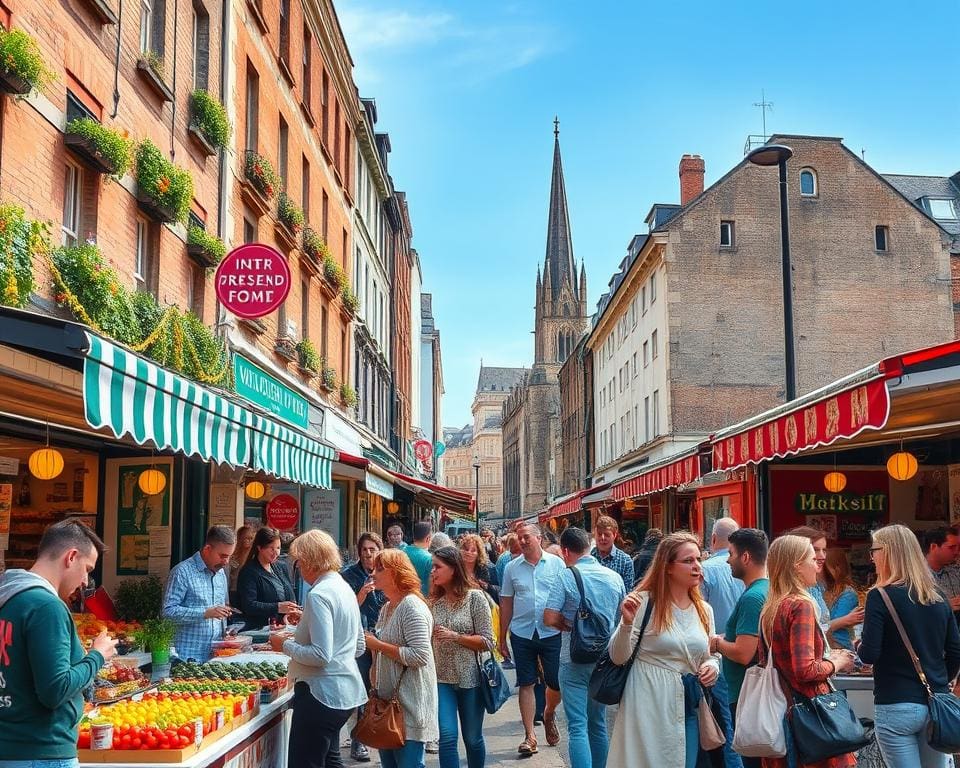

You will find Dublin a compact, walkable capital where culinary Dublin and rich cultural life sit side by side. Stroll from the National Museum of Ireland to a lively market, and you will quickly see how Dublin food culture connects to music, theatre and history.
Historic markets such as Moore Street and modern stalls in the Temple Bar Food Market and Dublin Flea Food vendors show how local produce from coastal fisheries and Irish farms reaches your plate. That long culinary history underpins today’s Dublin gastronomy, from traditional stews to inventive tasting menus.
The city’s cultural institutions — the National Gallery, Abbey Theatre and the Gaiety Theatre — create a backdrop that shapes the dining experience. Chefs draw on literature, music and stagecraft to craft dishes, so the Dublin food scene often feels like a dialogue between past and present.
This article will guide you through Dublin’s food culture: historic roots, contemporary chefs, markets, neighbourhoods and practical tips so your visit satisfies both palate and curiosity about Dublin cultural attractions.
Dublin food culture: where tradition meets innovation
Your journey through Dublin’s food culture begins with its deep culinary roots. Ireland’s strength in grass-fed beef and dairy, potatoes, root vegetables, barley and oats forms the backbone of many classic dishes. Think warming Irish stew, boxty pancakes and creamy seafood chowders that reflect the island’s harvests.
The city’s coastal location brings fresh seafood from Dublin Bay. Brown crab, Dublin Bay prawns and mussels have long featured in local diets. Historic bakeries keep traditions alive by turning out soda bread and wheaten loaves for hearty breakfasts and the afternoon tea custom that Dubliners still enjoy.
Historic food markets and street trades once supplied the city through the 18th and 19th centuries. Their legacy lives on in modern market stalls and artisan stalls that celebrate Irish ingredients and time-honoured techniques.
Historic culinary roots and Irish ingredients
When you taste Dublin, you’re tasting the land and sea. Farmers and fisherfolk supply staples that make dishes memorable. Barley finds its way into stews and breads. Oats appear in porridges and bakes. Seaweed and shellfish remind you of the city’s maritime past.
Traditional eating customs remain in neighbourhood cafés and tearooms. A full breakfast fuels your day. A mid-afternoon tea offers a pause between sightseeing and dinner. These customs help you connect with Dublin’s culinary past.
Contemporary chefs and modern trends
In recent years you’ll notice a renaissance led by chefs who champion local, seasonal produce. Dublin chefs favour provenance and sustainable sourcing. Foraging for sea greens and wild herbs is common on modern menus.
Restaurants range from tasting-menu fine dining to relaxed neighbourhood bistros. Chefs blend influences from Nordic minimalism, modern British techniques and Mediterranean flavours to shape contemporary Irish cuisine. The result is food that feels both rooted and forward-looking.
Michelin-starred kitchens sit alongside gastropubs and street-food kitchens, giving you a wide spectrum of dining experiences while keeping the focus on quality ingredients and skillful cooking.
Markets and artisan producers
Dublin food markets act as meeting places between producers and the public. Temple Bar Food Market and Howth Market showcase breads, cheeses and fresh fish. Weekend markets in Dun Laoghaire and farmers’ markets like Ranelagh offer seasonal produce you can buy to cook during a longer stay.
Artisan producers Dublin relies on include independent butchers, Irish farmhouse cheesemakers, craft bakers, micro-roasters and small-batch charcuterie makers. These suppliers feed restaurants and home cooks alike.
Market stalls serve street-food bites and sell ingredients for your kitchen. Food tours frequently include market visits so you can meet producers, taste samples and learn the story behind each item.
Authentic cultural attractions that complement your palate
Dublin pairs historic charm with memorable food experiences. You can trace eating habits through Georgian coffeehouses, 18th-century spice and tea trades, and the markets that fed the city. These layers create a richer visit when you choose attractions that weave food into their stories.
The city’s museums and historic houses often include culinary threads. Guided tours at the Little Museum of Dublin and Dublin Castle explain past markets and domestic life. Exhibits display cookery tools and household items that reveal how food shaped daily routines.
Stroll from Trinity College toward Temple Bar and the nearby food market areas to combine sightseeing with tasting. You will find cafés and traditional pubs that once hosted writers such as James Joyce and W. B. Yeats. These spots let you savour the same atmosphere where literary figures met and where food appears in notable works.
Historic sites with a gastronomic connection
- Explore Georgian streets and former coffeehouses to learn about club culture and social dining.
- Visit museums with domestic displays to see cookery tools and learn about past food trades.
- Plan walking routes that link landmarks to local food markets for easy tasting stops.
Live music, theatre and food festivals
Dublin’s cultural calendar enhances dining. Pubs host live music nights that pair well with hearty plates. Theatre venues and restaurants in the theatre district offer pre- and post-show menus so you can enjoy dinner around performances.
Time your visit to catch events that celebrate local produce. The Dublin Theatre Festival brings international plays and lively restaurant bookings. The Dublin Fringe Festival combines inventive performances with pop-up food events. Food festivals Dublin such as Taste of Dublin showcase chefs and producers, plus nearby seafood and farmers’ festivals add regional flavour.
To make evenings memorable, book theatre and dining packages or reserve a table near performance venues. Doing so lets you experience both theatre and dining Dublin without rushing between venues. This approach strengthens your sense of food and heritage Dublin while you explore the city’s cultural attractions.
Neighbourhoods to explore for food and culture lovers
Dublin offers tight clusters of culinary and cultural life that are easy to explore on foot. You can plan short walking loops that pair a gallery visit with a café stop or follow longer routes that end at bustling markets. Use the Luas or DART to extend routes beyond the city centre when you want seaside seafood or a brewery tour.
Notable culinary neighbourhoods
Temple Bar is lively for markets, street performers and late-night dining. Expect artisan stalls by day and eclectic small plates and pub grub by night.
Grafton Street and St Stephen’s Green serve elegant cafés and tearooms. You will find bakeries and fine-dining options near Trinity College, ideal for a cultured lunch after a museum visit.
Camden Street and Portobello host neighbourhood restaurants and gastropubs. You can try tasting menus or relaxed plates in family-run venues.
Howth and Dún Laoghaire are coastal villages famed for fresh fish and chips, seafood shacks and harbourside cafés. They make perfect day trips from the city on the DART.
Smithfield and the Liberties are home to artisan producers, microbreweries and the Guinness Storehouse as a cultural draw with food-tour opportunities. You will discover craft bakers, cheesemongers and modern breweries clustered close to historic streets.
Art galleries, street art and cultural hubs
The National Gallery and the Irish Museum of Modern Art (IMMA) pair well with nearby cafés and light lunches. Plan a gallery morning followed by a relaxed meal to get the most from each visit.
Chester Beatty Library is a quieter cultural stop with exhibits that often inspire nearby tearoom choices. Smaller contemporary spaces across the city host pop-up cafés during exhibitions and openings.
Temple Bar and Smithfield act as cultural hubs Dublin visitors feel drawn to for creative events. Street art and murals appear across these areas, frequently alongside weekend food markets and late-night bars.
Walking routes and food trails
Try a Trinity College–Grafton Street–St Stephen’s Green route that ends at a market or intimate bistro. The walk is short and packed with cafés and pastries for sampling as you go.
Explore the Dublin Docklands and Grand Canal on a route that finishes at modern eateries and craft coffee shops. That walk crosses riverfront architecture and new culinary spots.
Take the coastal walk from Howth village and stop at fish cafés and seafood shacks along the harbour. The path rewards you with panoramic views and fresh plates.
- Organised walking food tours blend history, pub heritage and guided tastings. You can book tasting trails that highlight cheese, bread and cider producers.
- Self-guided Dublin food trails are available from local tourism resources and map shops. They let you pace stops at bakeries, cheesemongers and small cafés.
Most inner-city walks range from 20 to 60 minutes between highlights. Combine public transport with your route to save time; the Luas and DART connect central neighbourhoods to coastal villages and outlying food producers.
Practical tips to make the most of your Dublin visit
Plan around seasons: late spring to early autumn is the best time to visit Dublin food scene, with milder weather, outdoor markets and festivals. Winter still has charm — cosy pubs, seasonal menus and Christmas markets — but check opening times. Many restaurants change dishes with seasonal produce like seafood, foraged mushrooms and game, so review menus on restaurant websites before you go.
Book ahead and budget wisely. For dining in Dublin, reserve tables at popular bistros and tasting-menu venues, especially during festival weekends. Casual cafés and street food are generally affordable, mid-range gastropubs sit at moderate prices, and fine-dining restaurants command higher bills. Service may be included on the bill; if not, a tip of 10–15% for good service is customary, and leaving small change at cafés is common but not required.
Use Dublin transport tips to move easily between sights. The Luas trams and Dublin Bus cover central routes, while DART trains take you to coastal towns like Howth and Dún Laoghaire. Taxis and rideshares are plentiful, yet the city centre is highly walkable for combining cultural stops with food discoveries. Check accessibility in advance: major museums, theatres and larger restaurants often have step-free access, but older pubs and historic sites can be limited.
Health, etiquette and resources: the city is accommodating for dietary needs, so inform restaurants of allergies and dietary requirements when booking. Dress tends to be casual; smart casual is preferred in nicer restaurants and theatres, and punctuality for reservations is appreciated. For planning, consult Visit Dublin and official museum or theatre sites for events and walking routes, then leave room for spontaneous finds — an unexpected market stall or pub session is part of the joy of Dublin travel tips and Dublin food tips.