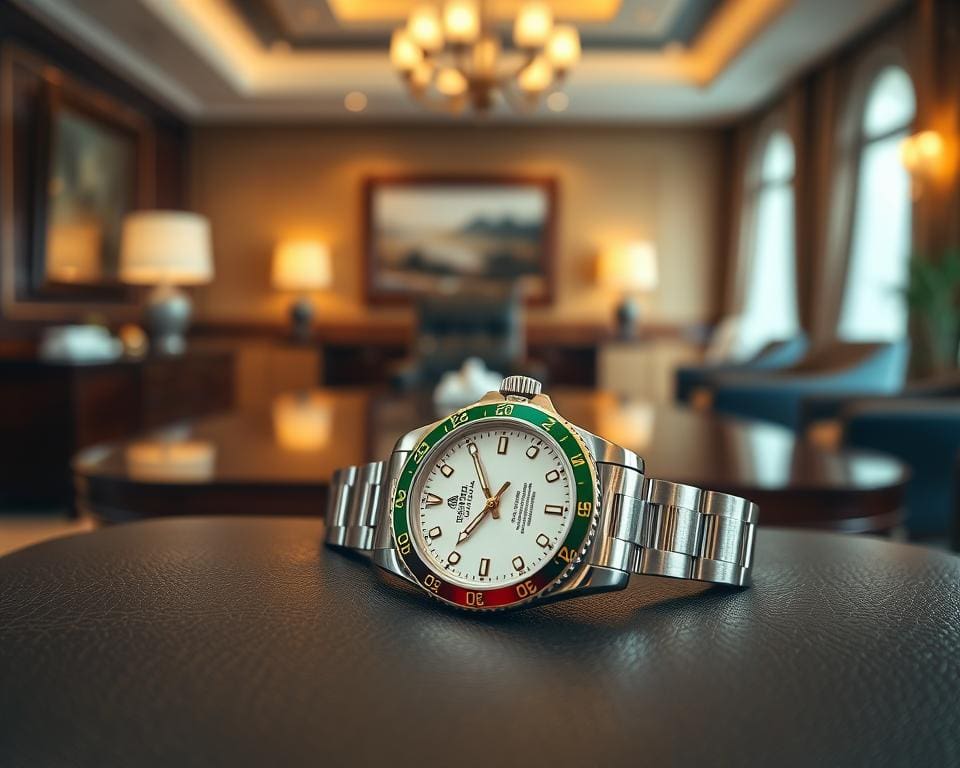

You are about to read a practical guide to identify the best Rolex investment for your goals. This section explains the article’s purpose and the criteria you should use when you decide to invest in Rolex.
No watch guarantees a profit, but Rolex has a long record of strong secondary-market performance compared with many other brands. Rolex is a Swiss manufacturer famed for robust engineering and iconic designs such as the Submariner, Daytona and GMT‑Master II. The brand’s strict control of supply and consistent quality are key reasons collectors and buyers favour it when seeking a luxury watch investment.
In the pages that follow you will learn how Rolex resale value has evolved, the factors that tend to drive appreciation, which models typically gain value and practical steps to choose a Rolex aligned with your objectives. You will also find where to verify prices and trends: authorised Rolex retailers for RRP and availability, auction houses such as Sotheby’s and Phillips for realised sale prices, dealers like WatchBox and Chrono24 for market listings, and specialist publications including Hodinkee and Revolution for expert commentary.
If you are based in the United Kingdom, note UK-specific considerations such as VAT on purchases, potential VAT reclaim when buying abroad and the role of UK auction houses like Bonhams in setting local price benchmarks. These factors can materially affect your net returns when you invest in Rolex.
Understanding Rolex market value and investment potential
When you assess a Rolex as an asset, focus on long-term patterns rather than short-term noise. Rolex market value has climbed for many sport models over decades. You will see steep spikes for rare references and watches with celebrity provenance at Phillips, Sotheby’s and Christie’s.
Pre-owned platforms such as Chrono24 and WatchBox publish indices and listing histories that show resale trends. These charts reveal rising demand for popular references, while also highlighting periods of normalisation after rapid price runs.
How Rolex resale value has evolved over time
Many vintage Rolex prices have appreciated steadily, driven by collector interest and limited supply. Landmark sales of Daytona chronographs and early Submariners often set new benchmarks. Auction houses report realised prices that frequently outstrip original retail by large margins.
Growth is not linear. You will encounter cycles: sudden surges when scarcity or hype appears, followed by corrections when markets cool. Macro events, such as recessions or currency moves, can temporarily depress demand before values resume their trend.
Factors that drive appreciation in luxury watches
Brand strength and controlled output underpin value. Rolex’s deliberate production choices create scarcity that supports higher prices over time. Iconic design has staying power; tool-watch aesthetics remain relevant to new collectors.
Provenance and rarity matter. Discontinued references, special dials and low-production variants command premiums. Condition counts as much as rarity. An unpolished case, original box and papers preserve value. Replacement parts or heavy polishing will reduce resale potential.
Material and configuration influence outcomes. Stainless-steel sport models often outperform precious-metal versions in percentage terms because they suit everyday wear and wider demand. Cultural drivers, such as celebrity exposure and collector trends, can accelerate interest in specific references.
Market indicators to watch before you buy
Monitor supply-versus-demand cues. Authorised dealer waiting lists and time-to-sale on pre-owned marketplaces reveal pressure points. Track the number of listings versus months-on-market to sense tightening or loosening supply.
Use realised auction results rather than asking prices to gauge true market levels. Repeat sales of the same reference give a clearer picture of valuation than isolated listings.
- Follow price indices and dealer reports to spot trend direction.
- Verify authentication, serial numbers and service records before you commit.
- Consider macro and regional factors such as the state of the UK economy, sterling moves and post-Brexit VAT or import changes.
By weighing these Rolex market indicators alongside watch appreciation factors and recent resale trends, you will make a more informed watch investment UK decision. Keep records and be patient; well-chosen pieces often reward long-term ownership rather than quick flips.
Rolex watch models that typically appreciate
The most sought-after Rolex models blend history, design and scarcity. You will find that the Submariner investment story is rooted in broad appeal and long production runs that still include rare early references. Collectors prize untouched dials and original bracelets, which means Rolex dial rarity can be as important as the model name when values rise.
Iconic sport models: Submariner, Daytona and GMT-Master II
The Submariner established itself as a top performer since 1953. Early references such as 5512 and 5513 and unique-dial variants often command premiums. Strong steel Rolex demand for modern steel Submariner references pushes many secondary-market prices above RRP.
The Rolex Daytona has delivered headline auction results, especially for Paul Newman examples. Contemporary stainless-steel Daytonas attract long waiting lists at authorised dealers, boosting Daytona value on the secondary market.
GMT-Master II models with striking bezels — think Pepsi or Batman — have proven resilient. Changes like the ceramic bezel introduction and certain reference updates have influenced GMT-Master II price trajectories, while vintage, limited-production GMTs with distinctive patina attract collector premiums.
Discontinued and limited-edition references that gain value
When Rolex withdraws a reference, scarcity follows and demand can rise. Examples of discontinued Rolex lines or special dial runs have shown sudden appreciation as collectors hunt finite supply.
Limited edition Rolex releases and low-production runs create rarity from day one. Factory-limited pieces, rare colourways and unusual signatures often appreciate faster than mainstream models. Auction discoveries of error dials or exceptional provenance can reset market expectations.
Materials and configurations that affect desirability (steel, precious metals, dials)
Stainless-steel sport models typically show steadier long-term gains. Strong steel Rolex demand reflects broad buyer appeal and durability, which supports resale performance. Gold and two-tone examples can be desirable, yet their markets may swing with fashion.
Original bracelets and correct endlinks matter to collectors. An authentic Oyster or Jubilee in matching reference lifts value. Aftermarket bracelets or incorrect parts reduce appeal and can penalise prices.
Dial condition and rarity are central to collector interest. Exotic colours, tropical ageing and factory errors can create notable premiums. New materials such as Cerachrom bezels changed durability and desirability, while early transition examples often attract attention from serious buyers.
You can read more about Rolex heritage and influential models at Rolex and other leading luxury watch, which helps place model trends in a wider market context.
How to choose the best Rolex for your investment goals
Decide your investment horizon and objective first. Are you aiming for quick resale gains tied to market hype, or steady long-term appreciation? Short-term speculation can bring rapid returns but higher risk. Long-term holding tends to benefit from compound value growth and lower transaction costs, so set a clear Rolex investment strategy before you buy.
Balance wearability with preservation. If you intend to wear the watch regularly, accept that polishing or replacement parts may reduce future resale. If preservation is your priority, keep the case unpolished and maintain factory-fitted parts. Prioritise provenance and documentation: original box, papers and service records are essential for strong resale value and smooth Rolex authentication.
Use practical buying criteria. Prefer high-demand stainless steel sport references for liquidity and steady appreciation, while recognising discontinued or rare models may offer higher upside but more volatility. Have an independent watchmaker or a Rolex-authorised service centre inspect condition and originality. Use reputable channels—authorised dealers, established independent retailers, respected auction houses or vetted pre-owned platforms—to reduce fraud risk when buying Rolex UK.
Consider financial and legal aspects in the UK. VAT is included when buying new from an authorised dealer; buying overseas can trigger import VAT and customs duties. Insure valuable pieces and consider secure storage to protect condition and provenance. Keep receipts, service invoices and authentication paperwork organised to aid future sale and to support your Rolex purchase advice for potential buyers.
Finally, set an exit strategy and monitor the market. Track the indicators discussed earlier and set target prices or time horizons. Decide whether you will sell through auction houses for headline prices or via dealers and private-sales for speed. Above all, balance passion with prudence: choose a watch you genuinely enjoy while following a clear Rolex investment strategy so your purchase remains both pleasurable and purposeful.