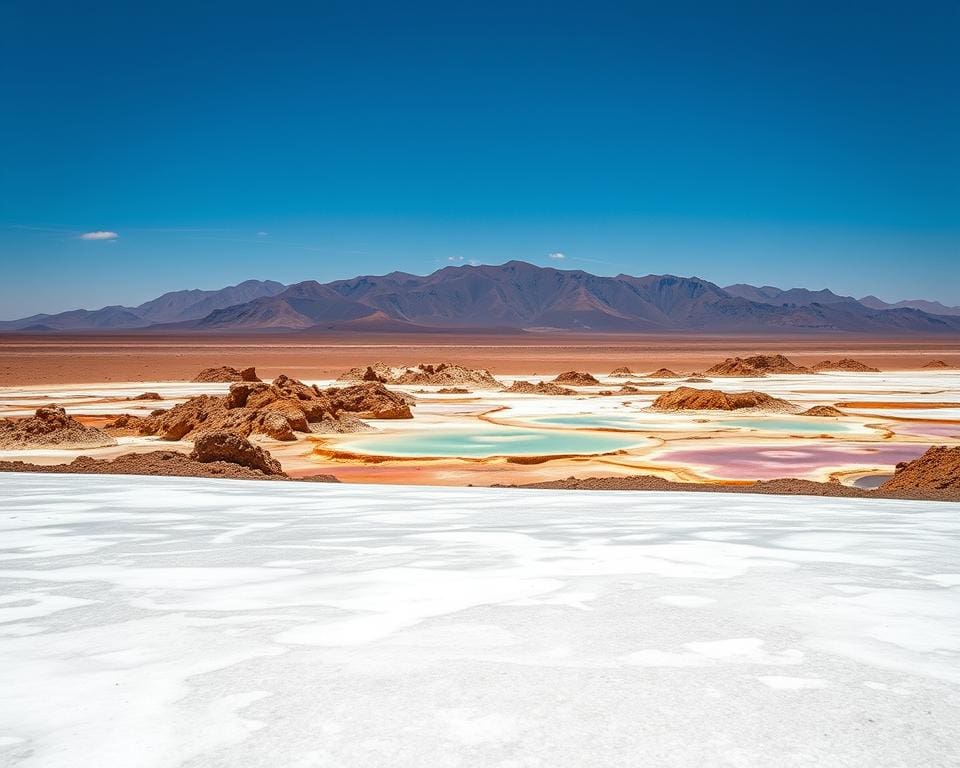

The Danakil Depression in the Afar Region of northern Ethiopia is one of the most extreme and otherworldly places on Earth. Parts of the basin lie around 125 metres below sea level as it forms a striking segment of the East African Rift system. If you seek an Ethiopia adventure that pushes boundaries, this landscape will challenge and reward you.
Adventure travel Danakil draws people because of its rare geological activity, surreal colours and a climate that feels hostile to life. Photographers, scientists and explorers come here for active volcanoes, neon hydrothermal fields and vast salt plains rather than creature comforts. When you visit Danakil Depression you choose encounter over ease.
Expect to hear about Erta Ale’s lava lake, the endless salt flats worked by Afar miners, and Dallol’s acid pools and mineral terraces. You will also meet Afar pastoral communities whose lives are shaped by this harsh environment. These highlights are covered in the sections that follow.
Visiting requires careful preparation, local guidance and respect for safety and culture. This article draws on geological research on the East African Rift, reporting from scientific and travel journalism, and practical guidance from Ethiopian tour operators and international adventure companies. Read on to assess whether adventure travel Danakil suits your sense of exploration.
Extreme landscapes and unique natural wonders of the Danakil Depression
The Danakil Depression sits where three tectonic plates meet, part of an active rift valley shaped by East African Rift volcanism. You will see landscapes forged by heat, salt and movement that few places on Earth can match. Expect raw geology, vivid colours and scenes that challenge your sense of scale.
Volcanic features and lava fields
Erta Ale volcano is one of the world’s few persistently active basaltic lava lakes. Trekking to its rim often means an overnight camel journey or a 4×4 approach from the highlands. Night-time viewing of molten lava and volcanic gases creates an intense, unforgettable spectacle, so guided visits are essential for safety and logistics.
Across the plain you will find extensive Danakil lava fields, recent flows and deep fissures that form jagged terrain. These black basalt expanses can be unstable underfoot. Wear stout boots and watch your step near fresh crusts and cracks.
Scientists come to study rifting and early Earth conditions, making the area a living laboratory. Observing active volcano Ethiopia features in person gives you a direct sense of how continents split and new crust forms.
Salt flats, colourful mineral deposits and hydrothermal pools
The Danakil salt flats stretch for miles and support traditional Afar salt caravans. Workers cut salt into slabs and load them onto camels for long journeys to regional markets. The practice remains a strong part of local life and economy.
Dallol hydrothermal fields present surreal pools, terraces and steam vents. Colourful mineral deposits Danakil produce neon yellows, greens, oranges and turquoise from iron oxides, sulphur and other minerals. Temperatures and acidity can be extreme, so you must keep a safe distance from fragile crusts and scalding vents.
Hydrothermal pools Ethiopia attract photographers and naturalists for their alien palettes and textures. The best light is often early morning or late afternoon. Respect guide advice to protect both yourself and these delicate formations.
Flora, fauna and the survival of life in extreme environments
Life in extreme environments thrives here in surprising ways. Extremophiles Danakil — microbial mats and thermophilic bacteria — persist in hot, acidic pools. Researchers study these organisms for clues about early life on Earth and possible life on other planets.
Macroscopic wildlife Danakil Depression is limited by heat and scarcity of water, yet hardy reptiles, insects and seasonal birds use oases and temporary streams. Afar flora and fauna cling to microhabitats where shade and moisture allow survival.
The Afar people have adapted through salt mining, camel husbandry and deep local knowledge of water and shelter. Their practices show how human culture can persist in harsh landscapes while shaping and protecting fragile ecosystems.
Researchers and visitors share a responsibility to preserve these sites. The Danakil offers unique scientific value for astrobiology and climate study, making careful, guided visits the best way to witness its wonders without causing harm.
Preparing for an adventurous trip: practical tips and safety considerations
Preparing well makes the Danakil more rewarding and far safer. Plan when to visit Danakil around cooler months, typically November to March, as the best time Danakil offers more tolerable daytime temperatures. Nights can still be mild. Avoid the hottest months, June to September, when heat can become dangerous and rare rains may affect access.
When to go and how to reach the region
Most travellers fly from Addis Ababa to Mek’ele (also spelled Mekelle) and join a convoy from there. Learn how to get to Danakil Depression by booking with a registered operator who organises 4×4 transport, permits and security clearance. Allow several days to a week to cover Erta Ale, Dallol and the salt flats, leaving time for acclimatisation and contingency days.
Essential gear, health and environmental precautions
Choose Danakil travel gear that copes with heat, dust and rough ground. Pack lightweight, breathable long-sleeved clothing, a wide-brimmed hat, UV sunglasses and high-SPF sunscreen for sun protection Danakil demands. Sturdy hiking boots protect on lava fields and crusty salt. Bring a reliable head torch, spare batteries and a power bank for remote camps.
Hydration in desert conditions is vital. Carry ample water, electrolyte supplements and high-energy snacks. Tour operators normally supply water, yet you must reinforce personal hydration and avoid alcohol or heavy exertion in peak heat. Carry a comprehensive first-aid kit and consult a travel clinic about routine and destination-specific vaccinations as part of health precautions Danakil.
Respect environmental safety: corrosive hydrothermal pools, unstable salt crusts and volcanic gases present real hazards. Stay on recognised paths, follow guide instructions and never touch colourful pools or inhale fumes. Pack out non-biodegradable waste and avoid disturbing salt-mining operations to support responsible travel Danakil.
Working with local guides and respecting local customs
Using Danakil local guides is essential for safety, route knowledge and logistics. Licensed operators handle permits and liaise with communities, while experienced guides manage interactions with salt miners and pastoralists. Access Erta Ale and other sites is far safer with a guide who knows seasonal changes and practical routes.
Observe Afar culture etiquette when visiting villages. Dress modestly, ask permission before photographing people and accept hospitality politely. Small gifts such as school supplies or practical items can be appropriate if agreed with your operator. Choose firms that practise community-led tourism and employ Afar guides to ensure benefits stay local.
Budget for the full trip, including flights, permits, food and emergency funds. Check trekking package inclusions so you know whether camping gear, meals and acclimatisation days are covered; some companies offer gear rentals. For practical training ideas and endurance preparation you can refer to an endurance-focused guide like this trek training overview.
Adventure activities and experiences that make the Danakil Depression unmissable
If you seek raw landscapes and memorable challenges, Danakil activities deliver. The Erta Ale trek is the headline act: you can hike to a viewpoint or camp on the crater rim to watch the lava lake glow at night. Expect steep ascents, rocky trails and strong winds; itineraries vary from shorter day visits to overnight trips, and reputable operators enforce strict safety protocols and local escort requirements.
A guided Dallol tour reveals terraces, acid pools and vivid mineral colours that seem otherworldly. Walks follow short boardwalk-style routes from safe vantage points so you can photograph the scene without risking fragile thermal features. The sensory mix of heat, sulphur scents and bright minerals is intense, so stay behind cordons and heed your guide’s instructions.
The salt caravan experience connects you with Afar traditions. You may accompany sections of the route, observe miners cutting and stacking salt slabs, and see camel trains crossing glittering pans. These moments are striking for photography and cultural insight; act respectfully, ask before shooting portraits and follow local customs.
Multi-day 4×4 expeditions link key sites and include nights under clear desert skies. Camps are simple but organised by experienced crews who provide food, safety briefings and basic sanitation. A Danakil photography tour often times visits for the best light and composition, while scientific-interest trips require permits and specialist facilitation for sampling and surveys.
Combine the Danakil with northern Ethiopia highlights such as Lalibela, the Simien Mountains or Axum to broaden your trip. Allow extra days for domestic travel and acclimatisation to avoid rushed itineraries. If you prepare well, respect local people and fragile environments, and choose seasoned local guides, your visit will offer once-in-a-lifetime geology, vivid visuals and deep cultural encounters.