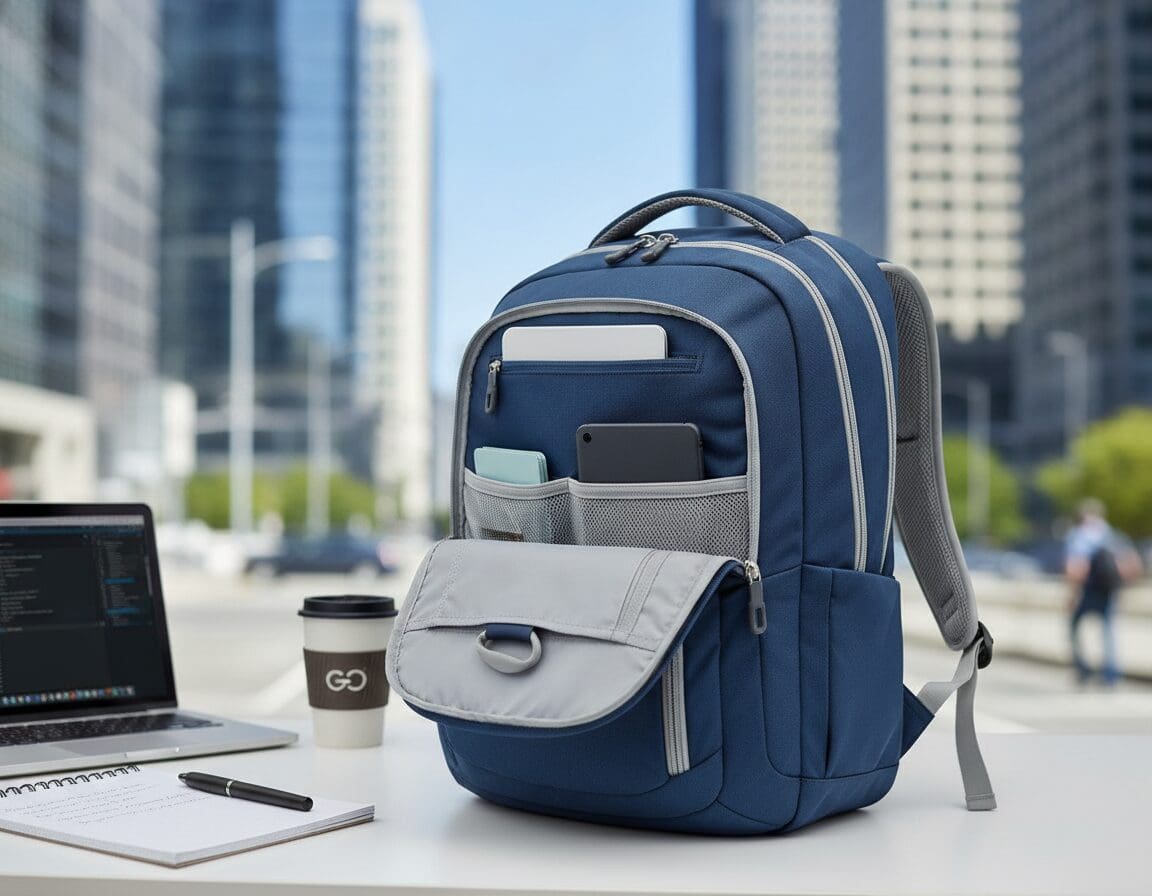

Choosing a single backpack that works for both office days and weekend trips saves you time and money. A well‑chosen work backpack or travel backpack reduces the need for multiple bags and supports a mobile lifestyle common across the UK and Europe.
This guide helps you decide what matters most. You will assess your commute and travel habits, check technical features such as fit, organisation and materials, weigh style and sustainability, and learn practical tips for testing bags in person or online.
Brands such as Bellroy, Samsonite, Rains, Peak Design and Osprey illustrate the market range, from sleek commuter backpack designs to rugged carry-on backpack options. For shopping, compare offers at John Lewis & Partners, Selfridges, Amazon UK and manufacturers’ official sites to find the best backpack for commuting or a business travel bag that suits your needs.
We address common user profiles: daily commuters who use trains or cycle, business travellers needing carry-on compliance, digital nomads on frequent trips, and professionals who require a polished laptop backpack UK for the office.
By the end of Section 1 and the rest of the article you will be able to shortlist commuter backpack models that protect your tech, meet airline carry-on limits and match your budget and aesthetic preferences.
Understanding your needs: balancing work requirements and travel lifestyle
Choosing a commute backpack starts with a clear view of how you move and what you carry. Think about whether you pedal, take the tube, drive or fly. Each mode changes which features matter most to your daily essentials and business travel essentials.
Assessing your daily commute and typical travel scenarios
If you cycle, look for a stable harness, reflective detailing and waterproofing to cope with UK rain and wind. For train and Tube trips, quick-access pockets and anti-theft features save time and stress. If you fly often, a carry-on friendly design with a trolley pass-through makes transit smoother.
Measure average journey times and note how often you travel for work — daily, weekly or monthly. Longer or frequent journeys demand higher comfort and tougher construction from your pack.
Determining the items you carry every day (laptop, documents, chargers)
Make an inventory of your daily essentials. Typical items include a laptop (13″, 14″ or 15″+), tablet, power bank, chargers, wired headphones or earbuds, notebooks, business documents, wallet, keys and a reusable bottle.
Check your laptop’s width, depth and thickness so your laptop bag or sleeve fits snugly without movement. Choose padded sleeves, internal compression straps and a shock-absorbing back panel to protect electronics.
Considering trip length and packing style for travel
Decide whether you favour minimalist packing or full-packer habits. Short business trips of one to three nights suit a compact carry-on backpack. Longer trips often need 30–45L capacity or an extra checked bag.
Minimalist travellers who roll clothes and use a capsule wardrobe can manage with 20–30L. Check carry-on rules for British Airways, easyJet and Ryanair when selecting a size that meets most airline limits.
Setting a realistic budget and prioritising features
Set a price range before you shop. Budget backpacks from about £30–£70 cover basic commuter needs. Mid-range options at £70–£180 offer durability and extras from brands like Rains and Bellroy. Premium packs over £180 bring technical fabrics, lifetime warranties and specialist designs from Peak Design and Osprey.
Rank must-have features: laptop protection, comfortable straps and weather resistance. Treat removable straps, built-in power banks and RFID pockets as nice-to-haves. Factor warranty, repairability and independent reviews into your decision to get the best value for your travel duration and packing style.
Key features to look for in a backpack
Choosing the right bag for work and travel starts with a clear idea of what you need. Focus on practical backpack features that make daily life easier and keep your kit safe when you move between meetings, trains and flights.
Comfort and fit: straps, back panel and weight distribution
Look for adjustable, padded straps and load-lifter straps that keep the weight close to your back. For heavier loads, a sternum strap or hip belt transfers weight to your hips and reduces shoulder strain.
Choose a breathable back panel with mesh or foam channels to prevent overheating on commutes or short hikes. Try a pack with a typical load — laptop, chargers and lunch — to assess comfort.
Torso length matters as much as strap adjustability. An ergonomic backpack that fits your frame will feel lighter and cut fatigue on long days.
Organisation and pockets: keeping work and travel essentials separate
Good organisation stops cables and chargers from tangling. Seek a dedicated laptop sleeve at the rear for TSA convenience and a tablet sleeve or document organiser for papers.
Front quick-access pockets hold phone, Oyster card or tickets. Side bottle pockets and internal compression or packing cubes help when you switch to travel mode.
- Rear-loading laptop compartment for security and screening.
- Internal organisers for pens, power banks and cables.
- External pockets for passports and boarding passes.
Brands such as Bellroy and Peak Design demonstrate how thoughtful layouts improve daily efficiency without bulk.
Durability and materials: weather resistance and wear
Compare materials before you buy. Cordura nylon offers high abrasion resistance. Polyester gives cost-effective durability. Waxed canvas or leather looks smart but needs care.
Decide whether you need a water-resistant backpack for light UK rain or a fully waterproof roll-top for extended exposure. Coatings and taped seams repel showers; roll-tops keep contents dry in heavy downpours.
Check hardware quality. YKK zips, reinforced stitching and an abrasion-resistant base prolong service life and protect fragile items inside.
Security features: lockable zips, RFID protection and hidden compartments
Anti-theft backpack traits reduce the risk of pickpocketing in crowded stations. Lockable main zips and lock loops let you secure openings together.
Hidden pockets against the back panel keep valuables out of sight. RFID-blocking pockets protect passports and cards in busy airports and stations.
Choose understated designs without flashy logos or exposed leather to avoid drawing attention to high-value items.
Weight and capacity: choosing the right size for your needs
Match capacity litres to how you travel. Aim for 15–20L for slim daily commute, 20–30L for work-plus-light-travel, and 30–45L if you need carry-on flexibility.
Balance empty weight and durability. Lightweight fabrics reduce carrying strain but may give up robustness. Check internal dimensions as well as stated volume to ensure your laptop sleeve and accessories fit.
Read product specifications for empty weight and usable space so you do not exceed airline limits or compromise comfort on long journeys.
backpack styles and designs suited for work and travel
You need a bag that looks right at a client meeting and holds everything for a short trip. This section walks you through styles that marry form and function so you can pick a commuter backpack style that fits your day and your suitcase needs.
Sleek commuter backpacks for office environments
For formal workplaces, choose a low-profile design in navy, black or charcoal. Leather trim and subtle branding keep the look professional. Brands like Samsonite and Bellroy make a business backpack with padded laptop protection that still reads as refined.
Match the bag to your wardrobe and office culture. If your office favours smart dress, a leather-accents backpack or briefcase-style option will blend better than a sporty rucksack.
Convertible and hybrid options that blend style and function
If you move between meetings and travel, a convertible backpack that transforms into a messenger or briefcase is useful. Look for detachable straps and roll-top closures for a quick change in appearance.
Companies such as Pacsafe and Peak Design offer hybrid backpack solutions that combine travel organisation with a polished commuter look. Detachable daypacks and modular compartments add practical flexibility for trips and client visits.
Carry-on friendly and travel-focused backpacks
When you fly often, pick a carry-on backpack with a clamshell opening and lockable zips for easy packing and security. A luggage pass-through strap helps when you need to stack the bag on a suitcase handle.
Osprey and Peak Design have travel-oriented options that meet common carry-on limits. Choose models with quick-access passport pockets, compression straps and compartments for chargers and documents to streamline airport routines.
Eco-conscious and sustainable material choices
Sustainable backpacks use recycled nylon or polyester and PFC-free water repellents. You can find fabrics made from recycled PET bottles and plant-based leather alternatives that look smart without the environmental cost.
Patagonia, Freitag, Rains and Fjällräven lead in using recycled and responsibly sourced materials. Check brand transparency for repair services, product lifecycles and warranties to make a greener long-term choice.
How to test and choose the right backpack in person or online
When you try backpack models in store, visit reputable UK retailers such as John Lewis, Rohan or Cotswold Outdoor and take your typical load: laptop, chargers, water bottle and a coat. Adjust shoulder straps and sternum strap, walk for a few minutes and check weight distribution. Verify the laptop sleeve fits and has padding, open all zips to test hardware, and make sure pockets are accessible for daily use.
Assess backpack fitting by checking how the bag sits on your torso. The pack should rest between your shoulder blades and not press the lower back; hip belts should sit on your hips when present. Use this in-person checklist to judge comfort and build quality before you buy, and ask staff about warranty or repair services that add long-term value for frequent travellers.
For online backpack shopping, measure a current bag and your items, then compare backpack measurements and internal dimensions against retailer spec sheets. Read customer images and verified reviews to judge scale, and favour sellers that let you try before you buy by offering free returns in the UK. Confirm warranty terms and repair networks so you can rely on the brand while travelling.
Shortlist two to three models that meet your must-have criteria and compare weight, capacity and likely durability. Consider aftermarket additions such as rain covers, packing cubes or replacement straps if needed. Balance practicality with style so the pack protects your essentials, fits your commute and travel habits, and suits your professional image as a dependable daily companion.