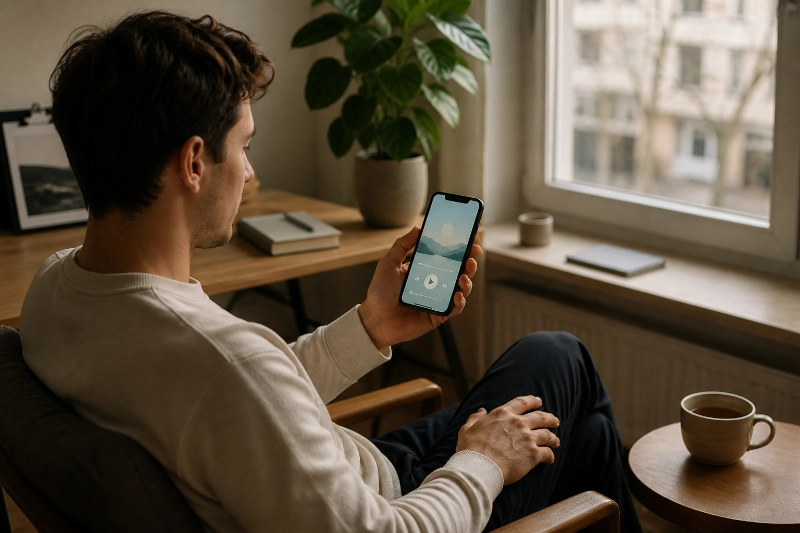

Low Tide Calm is a free nervous system regulation app designed to support you in managing stress, anxiety and ADHD-related dysregulation through short, practical interventions based on widely used nervous system regulation techniques. The app bundles breathwork, grounding, mindfulness and tracking into bite-sized exercises so you can move from a heightened stress response to a calmer, more regulated state without subscription barriers.
If you are wondering what a free nervous system regulation app is, think of a mobile tool that offers paced breathing, grounding prompts and simple mood checks. These nervous system regulation tools for daily use are meant to be quick, practical and accessible during moments of overwhelm or as part of a steady self-care routine.
The core purpose is straightforward: give you on-the-go regulation tools for daily use that are easy to follow in stressful moments. You may experience a sense of calm through guided breathing, improved focus and motivation from small behavioural prompts, greater self-awareness through mood and energy tracking, and a reduced risk of burnout with regular mindfulness practice.
Compared with subscription-based breathwork and mindfulness apps, the Low Tide Calm app stands out for its free, privacy-first model and offline capabilities. When you evaluate regulation apps, look for clear descriptions of exercise types, commonly used grounding techniques, a simple user experience for moments of stress, and transparent privacy practices.
Overview of Low Tide Calm: a free nervous system regulation app
The Low Tide Calm app gives you a compact set of tools to lower stress and steady attention. You get guided breathing, grounding practices, short mindfulness tracks, a simple mood and energy check-in, and a dopamine menu of micro-tasks for quick wins. The design keeps things fast so you can reach regulation tools when you feel tense or scattered.
What Low Tide Calm offers at a glance
The interface is uncluttered, putting core exercises front and centre. Breathwork sessions and grounding practices are available to download so you can use the breathwork app for stress and anxiety without internet. The dopamine menu supplies short, actionable tasks to restore focus when you struggle with motivation.
Who benefits from the app: stress, ADHD, burnout and daily overwhelm
If you face acute stress or panic, you will find step-by-step calming techniques that are easy to follow. Adults with ADHD can use the dopamine menu and micro-tasks to build momentum on chores or work. People recovering from burnout receive gentle pacing for energy management.
Anyone who faces daily overwhelm can open the app and pick quick tools to restore balance. The Low Tide Calm app suits those who need discreet, practical support in moments of distress.
Privacy-first design: private journal and no login app experience
Low Tide Calm offers a private journal and no login app experience so you can record thoughts locally without creating an account. This approach reduces friction when you need help quickly and avoids unnecessary cloud syncing of personal mental health data.
The private journal stores entries in-app or on your device, which protects your notes from external analytics. For users who worry about privacy, the free nervous system regulation app by Low Tide Calm provides a low-barrier, respectful way to practice regulation without sharing personal details.
For those asking what is a free nervous system regulation app, Low Tide Calm demonstrates the idea: compact, evidence-aligned tools delivered in a private, easy-to-use package that fits into daily life.
Guided breathing exercises and grounding tools for stress and anxiety
You can use focused breathwork and grounding tools when stress or overwhelm rises. Low Tide Calm groups short, medium and longer sessions so you can pick an exercise that suits your current need. The app works as a breathwork app for stress and anxiety while keeping routines simple and practical for everyday life.
Types of breathwork you’ll find in the app
Slow diaphragmatic breathing sessions guide you to lengthen exhales and activate calming responses in the body. These can help slow your breathing and reduce feelings of tension and racing thoughts.
Box breathing and paced breathing options use clear counts. The structure gives you an anchor for attention when your mind feels scattered.
Micro-breathing exercises of 60–90 seconds provide instant grounding when you only have a moment. There are versions that energise focus and versions that soothe anxiety, so you can choose based on your nervous state.
How grounding exercises support acute stress reduction
Grounding techniques use sensory anchors such as the 5-4-3-2-1 method, tactile prompts and guided imagery to move attention away from rumination. This shift can help reduce patterns of anxious or repetitive thinking.
Step-by-step grounding lowers physiological arousal by bringing you into present-moment sensation. That makes it useful during panic, dissociation or sudden spikes of anxiety.
Practical tools include short progressive muscle relaxation snippets, anchored visualisation and simple movement prompts. You can do these without a private room and still release tension.
Offline nervous system regulation app features for use without internet
Core breathwork tracks and grounding exercises are available offline, so you can use them while commuting, on a break at work or during travel. The offline nervous system regulation app design keeps tools accessible when connection is poor.
Download preferred exercises in advance and practise short routines so they become easy to reach in moments of need. That makes the app reliable as one of your nervous system regulation tools for daily use.
- Guided breathing exercises and grounding tools for quick regulation.
- Options that suit a busy day or a high-anxiety moment.
- Offline access to the most used sessions through the offline nervous system regulation app features.
Mindfulness, mood tracking and ADHD-focused features
The Low Tide Calm app gives a compact set of tools that fit into busy days. You can choose short practices that rebuild focus without demanding long sits. The design aims to support both burnout recovery and ADHD-friendly pacing so you can practise without added pressure.
The app includes scaffolded mindfulness sessions that respect cognitive load. Rest-focused options use gentle breath awareness and brief body scans with a kindness emphasis. Movement-integrated micro-practices help you reset when stillness feels impossible.
Mindfulness practices tailored for burnout and ADHD
You get short guided meditations that work as energy regulators. Simple cues and varied stimulus prevent boredom and reduce frustration. Each practice is meant to restore concentration in small, repeatable steps.
Mood and energy check-in tracking: patterns, insight and reflection
Built-in mood and energy check-in tracking lets you log feelings several times a day using easy scales and optional notes. Over time the app highlights links between sleep, stressors and activity with your mood and energy. Visual patterns help you spot triggers and notice what lifts your resilience.
Reflection prompts nudge you to interpret trends and try behavioural experiments. For example, you might test a two-minute grounding exercise before a meeting to see if your focus improves.
Dopamine menu for ADHD and focus support: short wins and task starters
The dopamine menu for ADHD and focus support lists quick, achievable tasks to spark small dopamine boosts. Tasks range from two-minute tidy-ups to five-minute focused sprints and sensory resets. Framing these as micro-wins lowers the bar for getting started.
Pair a brief breathwork cue before a task to prime attention. The Low Tide Calm app presents these options so you can pick a starter that matches your energy and regain momentum without overwhelm.
Using Low Tide Calm in daily life: tools, routines and practical benefits
Start your day with a brief morning check-in to assess mood and energy. A 60‑second entry helps you plan realistic goals and pick suitable nervous system regulation tools for daily use from the free nervous system regulation app by Low Tide Calm. This simple habit builds awareness and makes it easier to choose a breathwork app for stress and anxiety when tension rises.
Schedule a short midday reset of two to five minutes. Use paced breathing or a grounding exercise to interrupt accumulated stress and restore focus. These micro-practices are commonly used because paced breathing supports relaxation responses in the body, while grounding anchors attention to present sensations and can help reduce rumination.
Before demanding tasks, try a pre‑task ritual: a dopamine‑menu prompt combined with a paced breath or two. Small achievable tasks create quick wins that follow behavioural activation principles and can improve motivation for people with ADHD. If you need to practise without a connection, the offline nervous system regulation app features allow you to run exercises when internet access is unavailable.
Finish the day with an evening wind-down using longer guided practices to support sleep hygiene and reduce intrusive thoughts. Track trends in the private journal and weekly check-ins to measure impact—look for fewer moments of overwhelm, easier task initiation and steadier sleep patterns. Remember that Low Tide Calm is a supportive self-help tool and not a substitute for clinical care; consider speaking with a GP, psychiatrist or accredited therapist for persistent or more severe mental health concerns.
Is Low Tide Calm the right free nervous system regulation app for you?
Choosing the right tools to manage stress, anxiety or ADHD-related challenges depends on what fits your daily routine and personal preferences. The Low Tide Calm app offers a practical and accessible way to introduce small, repeatable regulation habits without adding pressure or complexity.
Because it combines offline access, simple exercises and a privacy-first approach, it stands out as a free nervous system regulation app that you can rely on in real-life situations. Whether you need a quick reset during a busy day or a structured way to build consistent habits, the app provides flexible support that adapts to your needs.
Rather than replacing professional care, Low Tide Calm works best as a complementary tool alongside therapy, coaching or self-guided wellbeing practices. By starting with small, manageable steps, you can build awareness and support your nervous system over time in a way that feels realistic and sustainable.