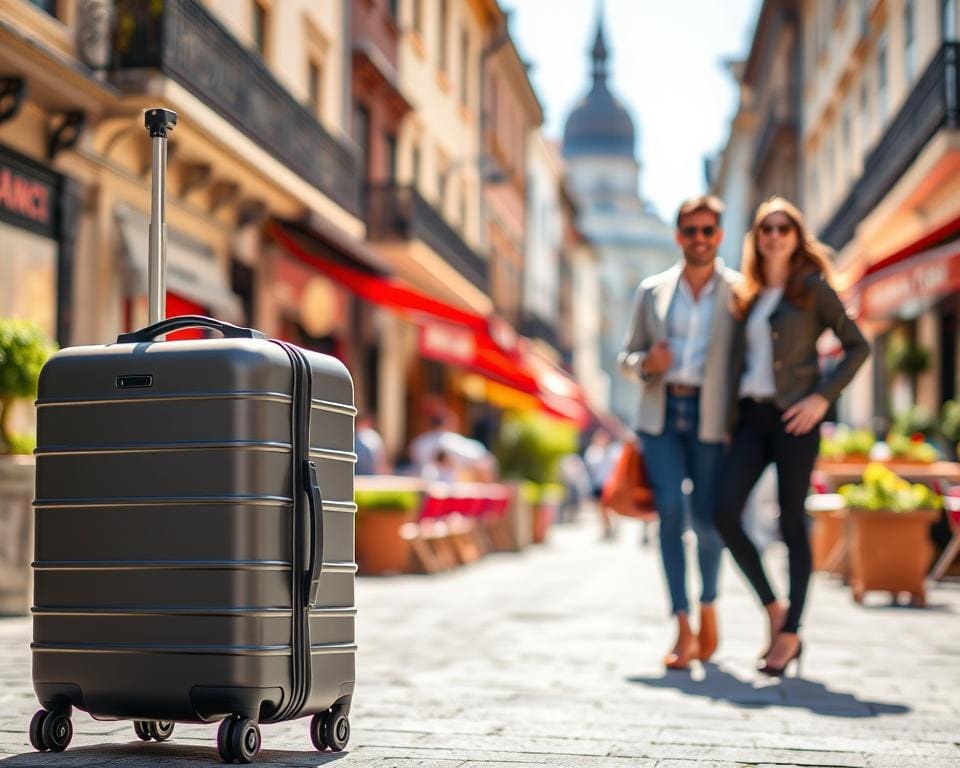

Choosing the right travel suitcase for Europe starts with knowing how you plan to travel. A weekend city break to Paris needs different European travel luggage from an interrail adventure or a two-week multi-country tour.
This short guide helps you weigh the most important factors: trip type and duration, airline and rail limits, material and build quality, wheel and handle systems, internal organisation and security. You will also find examples from well-known brands such as Samsonite, Rimowa, Delsey, Travelpro, Briggs & Riley and CabinZero to illustrate typical choices available in the UK market.
Throughout the article you will see how to match a suitcase for Europe to your itinerary so you balance size, weight, durability, security and style. The next sections examine essential factors, mobility and packing systems so you can identify the best suitcase for European travel and buy luggage for Europe with confidence.
Essential factors when picking a suitcase for Europe
Choosing the right case makes travel simpler. Start by listing the essential suitcase features you need for your itinerary. Think about size, weight, material and security so you can match luggage to the trip ahead.
Considerations for different types of European trips
For short city breaks, a carry-on that fits common low-cost carrier rules keeps you moving. A compact case saves time at airports and on trains.
If you plan rail travel or weekend trips, pick luggage for different trips that is lightweight and manoeuvrable. Soft-sided bags squeeze into tight racks and often add external pockets for quick access.
Multi-stop tours demand robust cases with room to expand. Choose a checked bag built to withstand repeated handling and rough surfaces.
Business travellers should favour smart finishes and internal organisation, including a laptop compartment and garment section for crease-free shirts.
For adventure or mixed-weather trips select water-resistant fabrics and reinforced zips to cope with rain, coastal humidity and cobbles.
Weight limits and airline regulations across Europe
Airline baggage limits Europe vary by carrier and fare. Low-cost airlines such as Ryanair, Wizz Air and easyJet often enforce strict size and weight rules and charge for hold luggage.
Full-service carriers like British Airways and Lufthansa may include checked baggage on some fares. Standard checked weights usually fall between 20 kg and 32 kg. A lightweight case helps you avoid overweight fees.
Always check your airline’s exact dimensions and allowances before you travel. Rules differ between EU and non-EU carriers and can change by season.
Durability and materials suited to varied climates and transit
Deciding between hard shell vs soft shell depends on what you carry. Hard-shell polycarbonate cases protect fragile items and resist water. Brands such as Rimowa and Samsonite offer strong polycarbonate shells.
Soft-shell models use nylon or polyester and give flexibility. They often expand for extra items and provide external pockets for essentials.
Hybrid designs blend a rigid front with a softer rear panel to balance protection and packing ease. Look for reinforced corners, corrosion-resistant zips and quality stitching for longer trips.
Security features to protect your belongings
Security should be non-negotiable. Choose TSA-approved locks for transatlantic segments and added convenience at airports. These locks are widely accepted and let authorised agents inspect luggage without damaging it.
Anti-theft luggage features such as lockable zips, tamper-evident seals and recessed zip channels reduce opportunistic theft. Some models include built-in trackers and weight scales that help when you have multiple connections.
Never place valuables or essential documents in checked bags. Keep passports and electronics in a carry-on or a secure day bag with RFID protection.
travel suitcase: size, wheels and mobility
Choosing the right suitcase for European travel means balancing size, wheel type and handle design. Your itinerary will determine whether a carry-on is enough or if checked luggage is wiser. Think about trains, cobbles and short transfer times when you pack.
Carry-on versus checked luggage for European connections
If you favour fast transfers and want to skip baggage reclaim, a well-packed carry-on works best for 3–7 day trips. Low-cost carriers and short hops often add fees for hold bags, so a compact case saves time and money.
Checked luggage suits longer stays or when you need bulky items and souvenirs. Bear in mind added time at the airport and possible extra charges. For mixed travel with trains, a slightly larger carry-on that fits overhead racks can be the most flexible option.
Wheel types and how they perform on cobbles, pavements and trains
Spinner wheels let you glide upright through airports and smooth streets with ease. They shine on flat surfaces, though small spinner wheels can struggle on historic cobbles and uneven platforms.
Inline skate wheels, the two-wheel design, cope better on rough ground and steps. You can tilt the case and pull it with steady control, which helps on cobbles and narrow station platforms. Think about the spinner vs two-wheel trade-off for your route.
Wheel size and build matter. Larger polyurethane wheels with sealed bearings roll more smoothly and last longer than tiny plastic casters. Check brands like Samsonite and Briggs & Riley for higher-spec wheel systems. Inspect wheel housings and lubricate bearings before long journeys.
Handle design and ease of manoeuvring in crowded stations
Telescopic handles with several height settings cut strain and improve control. Aluminium tubes are light and sturdy. Dual-tube handles give extra stability compared with a single bar. Try handles for luggage handle comfort before you buy.
Ergonomic grips reduce hand fatigue on longer transfers. Low-profile handles that do not catch in luggage racks are handy on trains. A handle that locks at different heights makes boarding and alighting simpler, especially when platforms are busy.
- When using stairs, tilt and pull with inline skate-style cases to keep balance.
- For city breaks with cobbles, favour larger wheels made for rough surfaces.
- If most travel is airport-to-airport, a spinner offers superior manoeuvrability.
Style, organisation and packing systems to suit your itinerary
Choosing luggage goes beyond size and wheels. Your case should reflect how you travel, the items you carry and the way you like to unpack at your destination. Thoughtful organisation saves time at security checks and keeps outfits neat during long transfers.
Internal compartments can transform a case into a compact wardrobe. Look for dedicated shoe pockets, laundry sections and zipped toiletry organisers that sit away from clean clothes. A padded laptop sleeve protects tech for business days. Compression straps stop layers from shifting, reduce creases and keep the suitcase stable on trains and planes.
Packing cubes for suitcases are a simple, lightweight way to sort outfits by day or activity. Brands such as Eagle Creek and CabinZero make modular cubes that speed up customs checks and let you pull a single cube for a day trip. Use leakproof wash bags for liquids if you carry them in cabin baggage and keep toiletries in an easy-to-reach pocket for security.
Internal compartments luggage with a fold-out garment panel or hanger pack suits suits and dresses. Tumi and Briggs & Riley offer designs aimed at business travellers who need wrinkle-free options. Choose a case with removable organisers so you can switch from business layout to leisure setup in minutes.
When you think about suitcase colour choices, balance visibility with practicality. Bright shades and patterned shells make it quicker to spot baggage on busy reclaim belts and reduce the chance of someone taking the wrong bag. Neutral tones such as navy, charcoal or metallic finishes look professional and hide dirt.
Finish matters. Matte shells hide scratches better while glossy cases look premium but show scuffs more easily. Textured polycarbonate offers a middle ground that resists marks yet keeps a smart appearance for varied trips.
Adaptability is key for multi-stop tours. Expandable compartments give extra room for souvenirs, but check your airline’s size rules before filling an expansion. Convertible designs, like backpacks that become wheeled luggage or cases with detachable daypacks, make city breaks and rural excursions simpler.
Simple accessories improve daily use. Lightweight garment bags, shoe sacs and luggage tags protect items and help you stay organised. Consider travel organisation systems that combine cubes, straps and pockets to create a flexible setup for business trips, city breaks and longer tours.
Budget, warranty and trusted brands for peace of mind
When you set a budget, balance initial price against likely use. A budget travel suitcase from Tesco or Argos can be fine for occasional breaks, but you may pay more in replacements. Mid-range options from Samsonite, Delsey and American Tourister usually deliver better build quality and a sensible price. For frequent travel, consider premium names such as Rimowa, Tumi or Briggs & Riley for longer-lived materials and advanced features.
Check the suitcase warranty closely before you buy. Brands differ on coverage: Samsonite often provides multi-year protection for manufacturing defects, while Briggs & Riley is noted for its repair policies. Confirm what the travel suitcase warranty covers—wheels, handles and zippers are common failure points. Choose brands with authorised repair centres in the UK and Europe to make fixes straightforward.
Think about long-term value. Durable luggage brands that offer replaceable wheels and handles save money over time, and high-end suitcases tend to hold resale value. Buy from reputable retailers like John Lewis or authorised Amazon UK sellers to protect your warranty. Before purchase, test handle height and wheel behaviour in-store and verify dimensions, tare weight and internal organisation to match your trips.