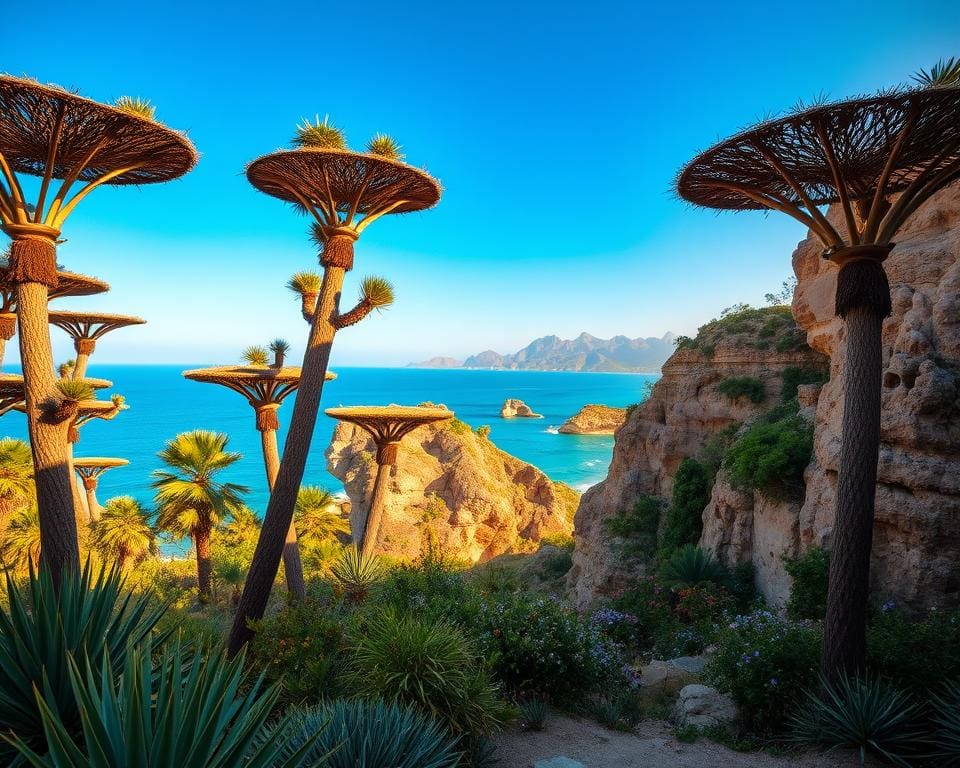

You will find Socotra in the north‑western Indian Ocean, an archipelago that belongs to Yemen and was inscribed as a UNESCO World Heritage site in 2008. Socotra Island spans about 3,796 km² and sits roughly 240 km east of the Horn of Africa and 380 km south of the Arabian Peninsula. That geographic remoteness helped shape a long history of biological isolation.
Visiting Socotra gives you the chance to see species and landscapes that exist nowhere else on Earth. Around one third of the island’s plants are endemic, including the instantly recognisable dragon’s blood tree. Scientists often call the archipelago the “Galápagos of the Indian Ocean” for good reason: its flora and fauna are of high conservation and scientific value.
Your Socotra travel plans should reflect practical realities. Seasonal weather, permit requirements under Yemeni jurisdiction and shifting security conditions mean you must research access carefully. Above all, aim for low‑impact travel to protect fragile ecosystems that UNESCO, Conservation International and the IUCN list as priorities for conservation.
What makes Socotra’s landscapes so extraordinary?
The island greets you with stark contrasts: wind-sculpted mountains, flat coastal plains and isolated limestone plateaux. These varied scenes form the backbone of Socotra landscapes and invite exploration on foot or by boat.
The geology of Socotra dates to ancient times, with Precambrian rocks underlining the Hajhir Mountains. Mount Ṣabā rises to about 1,525 m, anchoring deep wadis, escarpments and karst formations that reveal a long history linked to the break-up of Gondwana.
Caves and sinkholes punctuate the terrain and draw geologists and adventurous walkers. Academic surveys use these features to reconstruct Arabian Sea palaeoenvironments and to chart the island’s unique tectonic story.
Distinctive landforms and geological history
Rugged ridges meet sheer limestone cliffs and broad, dry riverbeds. You will notice how erosion and past sea levels shaped plateaux and coastal shelves, creating the dramatic relief that defines much of the island.
Field studies record escarpments, karst topography and fossil-bearing strata. These elements make Socotra a living classroom for understanding regional geology and long-term isolation.
Iconic flora: dragon’s blood trees and endemic species
One of the first things you will spot is the dragon’s blood tree with its umbrella-shaped canopy. Its red resin served as dye and medicine across centuries and remains a cultural emblem.
About a third of the island’s vascular plants are endemic. You will encounter Adenium obesum socotranum, Boswellia socotrana and Aloe perryi among succulents and hardy shrubs adapted to wind and aridity.
Botanical surveys and herbarium records continue to refine species lists. The distribution of the dragon’s blood tree is tightly linked to altitude and soil, making its groves especially fragile and instructive for conservation work.
Shorelines, beaches and dramatic coastal scenery
The Socotra coast ranges from white sand to rocky headlands, plus coral reefs and tidal flats. Sheltered bays such as Hadibo Bay and Detwah Lagoon host mangroves and tranquil waters that contrast with exposed cliffs nearby.
Seagrass beds and coral communities support turtles, reef fish and invertebrates. Where security and sea conditions permit, snorkelling and diving reveal this marine richness close to the shore.
Iconic vistas at Qalansiyah and Dixam show limestone cliffs meeting turquoise water. Seasonal swell and active tides shape safe access points and influence local fisheries, linking coastal systems to terrestrial microclimates that sustain endemic species.
Wildlife and biodiversity that set Socotra apart
When you step onto Socotra you enter a place where evolution has run its own course. The island’s isolation created a tapestry of life found almost nowhere else on Earth. This section outlines the key groups you will meet and the forces that shaped them.
Endemic species: plants, birds and reptiles you won’t find elsewhere
The island’s plants are central to its identity. You will recognise dragon’s blood trees with their umbrella crowns and the bitter Socotran aloe, Aloe perryi, on rocky slopes. Endemic succulents and many shrubs and herbs occupy niches from limestone plateaux to coastal scrub. These plants form the backbone of local ecosystems and support specialised fauna.
Socotra birds are distinctive and easy to spot for keen observers. Look for the Socotra starling (Onychognathus frater), the Socotra sunbird (Chalcomitra balfouri) and the Socotra warbler, each adapted to different habitats. Offshore islets host seabird colonies such as red-billed tropicbirds that nest on cliffs.
Socotra reptiles show high endemism. Unique lizards include several Hemidactylus and Pristurus geckos found only on the island. Endemic scorpions, spiders and a range of land snails add to the invertebrate richness. Few native terrestrial mammals exist, while marine surveys document dugongs, sea turtles and diverse reef fish.
How isolation shaped unique ecosystems
Plate tectonics and long separation from Africa and Arabia set the stage for evolutionary divergence. Species arrived long ago and, cut off from mainland gene pools, underwent adaptive radiation. You can see ancient lineages that act like living fossils.
Topography creates microhabitats. Mountains trap fog and produce cooler, moister pockets. Sheltered wadis and coastal bends hold humidity. These varied conditions let narrow specialists survive in small ranges, increasing endemic species Socotra counts.
Research teams from international institutions have studied these patterns for decades. Botanical and zoological expeditions, supported by journals and faunal surveys, reveal how speciation proceeds on islands. Ongoing collaborations continue to use Socotra as a natural laboratory for conservation genetics.
Conservation status and threats to biodiversity
Many endemic species Socotra hosts have been assessed by the IUCN Red List. Several are listed as vulnerable, endangered or near threatened because they occupy tiny ranges and face direct pressures. You should be aware that limited ranges raise extinction risk.
Primary biodiversity threats include overgrazing by goats and camels, unsustainable harvesting of plants such as frankincense and aloe, invasive species and climate impacts like prolonged droughts and cyclones. Unregulated development and tourism can damage fragile habitats if left unchecked.
Yemen’s political instability complicates enforcement, funding and field research. Despite these challenges, Conservation International, IUCN partners and local NGOs work with communities on protection measures. Community nurseries, grazing management projects and proposals for biosphere reserve models aim to reduce biodiversity threats and support long-term recovery.
Practical travel information for visiting Socotra
If you plan to visit Socotra, preparation pays off. The island’s services are limited and conditions change with the seasons, so sensible planning will make your trip safer and more rewarding.
Socotra seasons follow a clear pattern. The best window for most visitors is October to April, when weather is milder and seas are calmer for coastal access and boat trips. Avoid the monsoon peak from June to September, when many services close and seas become rough.
Wildlife viewing varies with the calendar. Flowering of dragon’s blood trees and peak bird activity occur in particular months. Check specialist birding and botanical tour operator guides before you book to time your visit for the species you want to see.
Packing should reflect variable conditions. Temperatures are hot at low altitude but cooler in the mountains. Bring sun protection, windproof layers and footwear for rocky trails. Include basic medical supplies and water purification options.
Getting there and getting around
Access routes to the island have shifted over time with political and security changes. Historically, Socotra flights operated from Aden and Seiyun, with occasional special arrangements through neighbouring countries. Always confirm current schedules with reputable operators before you book.
Travel requires a Yemeni visa and any local permits. Consult UK government travel advice and established tour operators for up-to-date entry requirements and practical Socotra travel advice tailored to your nationality.
On-island transport is informal. 4×4 vehicles are the norm for reaching remote sites on rough tracks. Organised tours usually include transport and drivers who know the terrain. Short treks and walking are possible in accessible areas, but distances and heat mean you should plan routes carefully.
Medical facilities are limited. Book with experienced operators who handle logistics, local guides and permissions. Take out travel insurance that covers medical evacuation and emergency repatriation.
Accommodation, guided tours and responsible travel tips
Expect modest infrastructure. Hadibo offers guesthouses and small hotels, while remote areas have simple eco-lodges. Standards are basic; set realistic expectations about hot water and power.
Guided tours add value. Choose established natural-history or birdwatching operators who provide local guides. Guides interpret the environment, improve your safety and funnel income to local communities.
Responsible travel Socotra matters. Follow Leave No Trace practices, respect local customs and avoid taking plants, shells or geological samples. Limit disturbance to nesting birds and fragile flora. Support community-led conservation projects when you can.
- Carry cash; card facilities are scarce.
- Pack a medical kit and water purification tablets.
- Check Socotra flights and permits well ahead of travel.
- Seek current Socotra travel advice from official sources.
- Choose low-impact transport and offset travel where possible to reduce carbon footprint.
Culture, history and sustainable experiences on Socotra
You will meet the Socotri people, an Arabised community whose Soqotri language ties them to South Semitic roots rather than modern Arabic. Their daily lives blend pastoralism, fishing and the careful harvesting of resins such as frankincense from Boswellia trees. These livelihoods shape local identity and offer you a window into authentic Socotra culture through family meals, song and craftwork.
Socotra history stretches back through ancient maritime routes that once carried frankincense and myrrh across the Arabian Sea. Anthropological research and historical studies trace long contacts with sailors from the Arabian Peninsula and the Horn of Africa, which influenced trade, language and customs. When you learn this context, visits to coastal settlements and ruined trading sites feel richer and more meaningful.
Traditional knowledge remains central to island life. You can observe resin-tapping techniques for dragon’s blood and Boswellia, the medicinal use of aloe, and artisans shaping fibres and dyes. Herding goats and camels continues to underpin many households, while seasonal fishing patterns dictate rhythms along the shore. These practices are fragile; understanding them helps you engage respectfully.
There are growing options for sustainable tourism Socotra that put community benefit first. Choose community-run homestays, locally guided excursions and conservation-led activities that support education and fair pay. Volunteer or citizen-science projects run by NGOs allow you to take part in tree planting or species monitoring, so your visit contributes to biodiversity protection and long-term livelihoods.
When you plan your trip, favour operators who reinvest in local projects and avoid commodifying sacred sites or interrupting daily life. Responsible engagement helps protect cultural heritage and reduces pressure from overgrazing and unsustainable harvesting. For deeper reading, consult ethnographic studies, UNESCO assessments and reputable responsible-tourism platforms to find guided experiences that respect both Socotra people and the island’s unique environment.