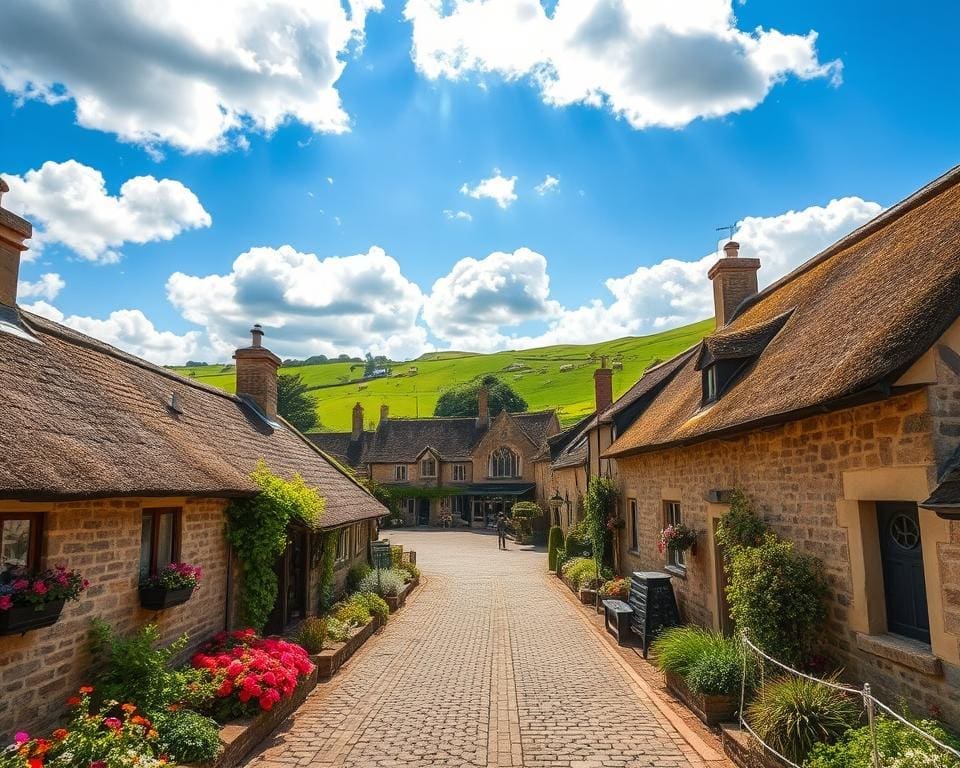

The Cotswolds Area of Outstanding Natural Beauty stretches across Gloucestershire, Oxfordshire, Wiltshire, Worcestershire and Warwickshire. Covering about 2,038 square kilometres, this region is famed for rolling hills, dry stone walls and honey‑coloured limestone buildings that define the picturesque Cotswolds.
This short Cotswolds travel guide will help you choose the best Cotswolds villages and the Cotswold villages to visit whether you are planning a day trip from London, a weekend break or a longer countryside escape. You will find guidance on where to photograph classic cottages and streets, recommended short walks and gardens, plus practical tips on transport and seasonality.
Many settlements grew wealthy on the medieval wool trade, a history still visible in market towns and parish churches recorded by Historic England and the National Trust. Official Cotswolds AONB guidance and transport information from National Rail and local councils underpin the practical advice here.
To glimpse an especially well preserved village atmosphere and to plan a visit, see a focused example of village charm at this Castle Combe feature Castle Combe: a timeless English village. The recommendations that follow aim to help you enjoy the best Cotswolds villages while respecting local communities and preserving the landscape.
Top Cotswolds villages to visit for quintessential British charm
Start with a clear idea of what makes a village feel quintessential. Look for honey‑coloured Cotswold limestone, stone‑slate roofs and mullioned windows. Spot a village green, a parish church tower or an old market house to confirm you are in classic Cotswolds villages.
Small scale matters. Narrow lanes, low stone walls and a local pub or tearoom give the compact centre its charm. Many villages are in conservation areas or have grade‑listed buildings, so you will notice careful planning and preserved character.
What makes a village quintessentially Cotswolds
Architectural detail tells the story. Oolitic Jurassic limestone, Cotswold stone tiles and mullioned windows create a warm, unified look. Look for medieval features such as dovecotes, wool merchant houses and parish churches with towers.
Community life completes the picture. Farmers’ markets, village fêtes and craft fairs show living traditions. National Trust and private trusts manage several properties and landscapes that protect the local scene.
Notable villages to include on a day trip
- Bourton‑on‑the‑Water — low arched bridges over the Windrush and easy rail links from Cheltenham and Moreton‑in‑Marsh.
- Bibury — Arlington Row, one of England’s most photographed rows of weavers’ cottages.
- Castle Combe — film‑set cottages and a timeless High Street near Bath and Chippenham.
- Stow‑on‑the‑Wold — market square, antiques and a handy base for surrounding lanes.
- Chipping Campden — elegant terraced houses from the wool trade and Arts and Crafts links.
- Broadway — a broad High Street with artisan shops and access to Broadway Tower walks.
- Cirencester — the largest town, with Roman history and strong transport links for wider exploration.
Group villages into practical loops. A south‑central circuit might link Bourton, Stow and Broadway. Bibury and Cirencester work well as a central or north‑western pair. Nearest stations include Moreton‑in‑Marsh, Kingham, Kemble and Cheltenham Spa. Expect about two to three hours’ drive from London depending on traffic.
Best times of year to visit for scenery and events
Spring (March–May) brings lambing, fresh green fields and bluebells in nearby woods. You will find milder weather and fewer crowds than in summer.
Summer (June–August) gives the warmest days and the most village fêtes, open gardens and craft fairs. Book accommodation early for this busy season.
Autumn (September–November) offers rich colours, harvest festivals and crisp light that suits photography. Many food festivals run at this time.
Winter (December–February) is quieter and atmospheric, with cosy pubs and Christmas markets. Note that some small car parks and tearooms close on off‑season days.
Check local listings and Visit Cotswolds for dates of Cotswolds events such as textile heritage gatherings, garden open days and village markets so you plan when to visit Cotswolds to match your interests.
Cotswolds villages with the most picturesque streets and cottages
Walk through lanes lined with warm, honey‑coloured stone and you will see why the area draws photographers and day visitors. The oolitic limestone quarried locally gives many streets a golden glow, especially in soft morning light. Traditional roofs use Cotswold stone tiles or slate, which complete the historic look of the villages.
Famous honey‑coloured stone architecture
The region’s stone comes from Jurassic oolitic limestone beds. Stonemasons have worked here for centuries, shaping mullioned windows, steep gables and ashlar facades. You will notice Grade‑listed frontages in Arlington Row, Burford’s terraced weavers’ cottages and the High Street at Chipping Campden.
Conservation uses matching stone and specialist repair. Craftsmen replace worn blocks and use traditional methods so the streets keep their authentic character. This careful work preserves the look that draws so many visitors.
Where to find the best photo opportunities
For quiet Arlington Row photos, aim for dawn when the light is gentle and crowds are few. Bourton‑on‑the‑Water gives reflective river scenes near stone bridges and tearooms. Castle Combe’s central street and ford deliver classic village frames.
Broadway and Broadway Tower offer sweeping views across the Vale of Evesham. Snowshill Manor pairs colourful cottage gardens with stone cottages for detailed foreground interest. Use a wide‑angle lens for streetscapes and a standard zoom for close details.
Think about composition. Include dry stone walls, blossoms or the River Windrush as foreground elements to add scale. Narrow lanes make natural leading lines. Dawn and late afternoon produce warm tones; overcast skies help saturate stone without harsh shadows.
Tips for respecting residents while photographing
Many Cotswold cottages are lived in. Always avoid shooting through windows or into private gardens. If a doorstep image appeals, ask the resident for permission before you raise your camera.
Keep noise low and groups small so you do not block narrow lanes or driveways. Respect quiet hours early in the morning and be mindful of deliveries to local businesses.
Drones have limits near historic buildings and nature reserves. Check Civil Aviation Authority rules and any local bylaws. Seek landowner consent for flights when required.
- Stay on public paths and do not trample verges or flowerbeds.
- Take all litter away and leave scenes as you found them.
- If you plan to sell images, obtain permission from owners or model releases for identifiable people.
Walking routes, gardens and countryside around Cotswolds villages
Within each village you can step straight onto well‑marked paths. Short valley strolls and circuit loops offer easy options for families and casual walkers. Try the Bourton‑on‑the‑Water riverside route, the Castle Combe ford loop or the Stow‑on‑the‑Wold to Lower Slaughter meadow path for gentle terrain and rewarding views.
Many routes link to longer trails such as the Cotswold Way National Trail. Expect signposts, public footpaths and bridleways maintained by local councils. Easy village walks often take from 20 to 60 minutes. Half‑day outings across rolling hills can last two to four hours for fitter walkers.
Wear sturdy footwear for muddy tracks and pack a waterproof. Carry a paper map or use OS Maps and the National Trust app when mobile signal is weak. These simple precautions keep your walk safe and more enjoyable.
You will find outstanding gardens in Cotswolds close to several villages. Hidcote Manor Garden near Chipping Campden showcases Arts and Crafts garden rooms and fine topiary. Kiftsgate Court Gardens offers tiered planting and early spring colour. Snowshill Manor has a charming cottage garden beside sweeping countryside views.
Westonbirt Arboretum near Tetbury presents an international tree collection that is stunning in autumn. National Trust properties such as Owlpen Manor and Dyrham Park sit on many itineraries for those who pair house visits with a short walk around formal grounds.
Opening times vary by season. Book popular gardens in summer and allow 90 minutes to half a day for most visits. Tea rooms and waymarked trails make these outings suitable for mixed groups and families.
Public transport links help you plan days without a car. Key stations include Moreton‑in‑Marsh and Kingham on Great Western Railway services from London Paddington. Cheltenham Spa and Kemble serve wider connections. Use local taxis or station‑to‑village buses to reach quieter hamlets.
Bus services, such as Stagecoach and community routes, serve many hubs but timetables change at weekends. Check schedules before you travel. The Gloucestershire 801/802 and Cotswold Link routes connect popular spots during the day.
Parking Cotswolds villages often means small pay‑and‑display car parks or limited roadside spaces. Parish councils may restrict coach parking, so large vehicles should use designated coach parks at busy locations like Bourton‑on‑the‑Water. Choose central car parks to begin circular routes and avoid retracing lanes.
To reduce congestion, travel by train or bus where practical. Cycle quiet lanes while respecting traffic laws and private driveways. You might join an organised walking group for expert local guides and fewer parking concerns.
Practical tips for planning your visit to Cotswolds villages
When planning Cotswolds trip logistics, choose Cotswolds accommodation that fits your pace. Boutique hotels and cosy country inns suit short stays, while bed-and-breakfasts and holiday cottages are ideal for longer visits. If you prefer more hotel choices and larger supermarkets, base yourself in Cirencester, Cheltenham or Bath and travel into villages each day.
For where to stay Cotswolds villages, book ahead for summer weekends, bank holidays and events such as village fairs. Consider a quieter village within easy driving distance of multiple attractions to avoid congestion. Use local tourist information offices and parish websites to check opening times for pubs, tearooms and shops before you travel.
Follow simple Cotswolds travel tips to be a considerate visitor. Keep dogs on leads near livestock, close gates, observe quiet hours and carry a small amount of cash in case of poor signal or card terminal problems. Note that narrow lanes and uneven stone pavements can affect accessibility, so contact attractions ahead to confirm disabled access and parking.
Pack from a practical Cotswolds packing list: waterproof jacket, layered clothing, comfortable walking shoes, sun protection and a reusable water bottle. If you plan photography, bring extra batteries, memory cards and a compact tripod. Pace your days — two or three villages per day lets you enjoy walks, gardens and local food, and leaves room for unexpected delights while supporting local businesses and conservation-minded travel.