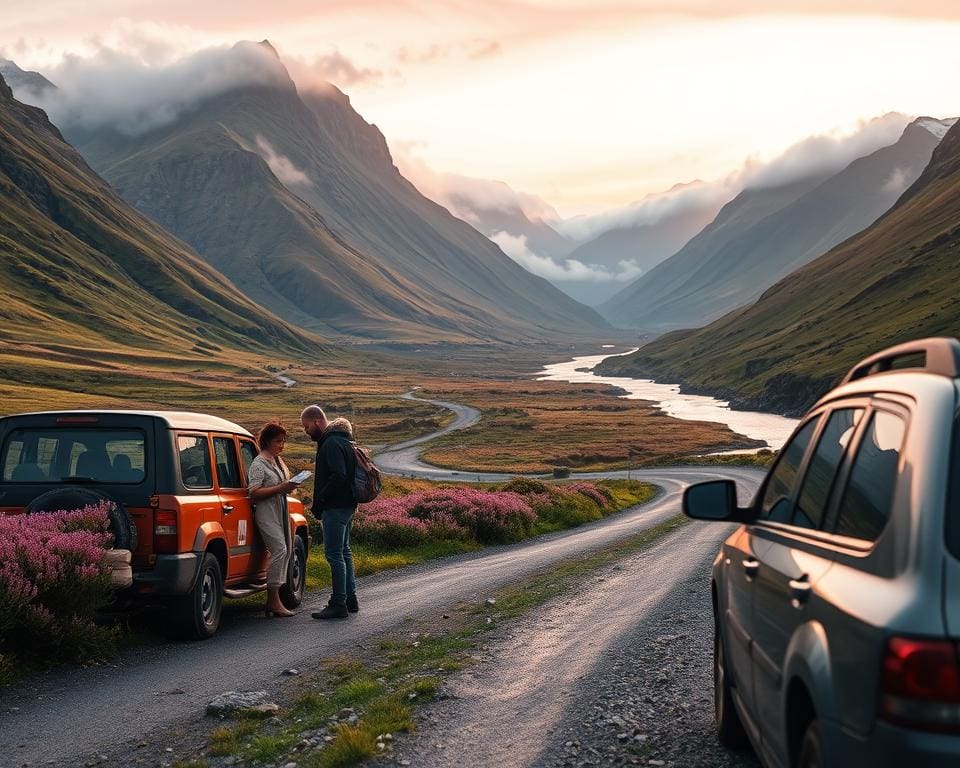

Preparing for a Scottish Highlands road trip begins with clear purpose: you want a practical plan that keeps you safe and flexible across remote roads, single-track lanes and ever-changing weather. This short introduction sets out what you need to know to prepare for Highlands road trip success, from timing and vehicle choice to safety and responsible travel.
The Highlands stretch from Inverness and Loch Ness north to Caithness and Sutherland and west out to Skye and the Outer Hebrides. Services and mobile reception vary widely, so Highland travel planning must account for long distances between petrol stations, sudden weather shifts and narrow roads that slow your pace.
Before you set off, think about time and distance. A weekend can suit a base around Inverness, while a North Coast 500 loop works better with 7–14 days. Vehicle choice matters: a fuel-efficient hatch will do most main routes, but an SUV or raised car helps on rough tracks and island ferries. Use a Scottish road trip checklist to confirm documents, insurance and ferry bookings.
Safety and responsibility are central. Follow Scotland driving tips such as keeping left, using passing places properly and slowing for livestock and wildlife. Respect the Scottish Outdoor Access Code when pausing for walks or wild camping, and carry emergency kit and contact details for RAC or AA assistance.
This article will guide you step by step. Follow the sections that follow to prepare for Highlands road trip logistics, pack the right kit, ready your vehicle and plan routes that balance scenic drives with rest days and reliable accommodation.
For practical route suggestions and ferry advice, consult this detailed guide as part of your Scotland driving tips and Highlands travel planning: Highlands road trip planning resource.
Planning your route and timing for a Scottish Highlands road trip
Choose a clear theme to shape your route, pace and lodgings. A North Coast 500 loop will need different timing to an Inverness to Skye route focused on dramatic coastlines and photography spots Highlands visitors crave. Think about whether you prefer a circular tour or a point‑to‑point plan that returns a hire car to the same depot.
Decide on the best time to visit Scottish Highlands before you book. Summer gives the longest daylight and most services, while spring and autumn suit lower crowds and vivid colours. Winter can be spectacular for snow and solitude, yet harsh Highlands weather limits daylight and requires cold‑weather experience.
Choosing the best season and weather considerations
Plan around seasonal travel Scotland patterns. May and September offer milder conditions and fewer tourists. Check Met Office forecasts for rapid changes in wind and rain, and pack waterproofs and layers. Allow extra time in your flexible itinerary Highlands for weather‑related delays affecting single‑track roads and ferries.
Mapping scenic routes and must-see stops
Map classic scenic drives Scottish Highlands and mark your best stops Highlands. Include Loch Ness and Urquhart Castle, Glen Coe, Portree on Skye and the Road to the Isles via Glenfinnan. If you aim for the North Coast 500, add Applecross, Durness and Ullapool to the plan. Use a mix of hub nights and moving‑night stays to balance driving time and exploration.
Allowing time for detours, wildlife watching and photography
Build days with alternating drive lengths so you can take deliberate detours. Dawn and dusk are prime for wildlife watching Scottish Highlands; keep cameras ready for red deer, eagles and otters. Schedule golden‑hour photography spots Highlands such as Kilt Rock, Quiraing and Loch Torridon.
Using digital tools and offline maps for remote areas
Use navigation apps Scotland and satellite navigation Highlands for route planning, then download offline maps Scottish Highlands for areas with poor reception. Combine Google Maps with Ordnance Survey and Outdooractive for walking routes. Check ferry timetables with Caledonian MacBrayne and local harbours to avoid surprises.
Prepare documents and bookings in advance for peak dates. Pre‑book ferries, car hire and sought‑after hotels, yet keep days free to adapt. For further practical guidance on route choices and timing, consult a detailed planning resource like this guide.
Packing, vehicle preparation and safety essentials
A short checklist keeps you ready for rapid changes on the road. Think about what to pack Scottish Highlands, how to layer for sudden showers and what kit will keep you safe if you stop in a lonely glen. A calm plan saves time and stress when services are sparse.
Clothing and gear for variable Highland weather
Start with a layering system: merino or wicking base layers, a fleece or down mid-layer and a waterproof, windproof outer. Good Highland weather clothing should include sturdy waterproof walking boots and warm socks.
Bring hat, gloves, sunglasses and sun cream. Don’t forget waterproofs and layers Scotland such as a Gore-Tex shell and a packable down jacket for colder evenings.
Carry a waterproof rucksack cover, dry bags for electronics, binoculars for wildlife and a compact tripod if you plan to shoot landscapes.
Vehicle checks, breakdown kit and spare essentials
Complete car checks Highlands before you leave. Check tyre tread and pressures, including the spare, lights, oil, coolant and wipers. Service the vehicle if a long journey is due.
Pack a breakdown kit Scotland: spare tyre, jack, wheel brace, jump leads, warning triangle and a high-visibility vest. Add a torch with spare batteries and basic tools.
Consider a portable tyre inflator, puncture repair kit and reliable UK breakdown cover from RAC, AA or Green Flag that covers remote recovery and islands.
Food, water and first-aid supplies for remote stretches
Plan Highlands road trip food around non-perishable, high-energy items such as nuts, energy bars and dried fruit. If you camp, pack a lightweight stove, fuel and cookware.
Carry extra water in jerrycans for very remote runs because shops and fuel stops can be far apart. Keep a refillable bottle handy for day trips.
Your first aid kit Highlands should include plasters, blister dressings, bandages, antiseptic wipes, pain relief, antihistamines and any personal medication. Add a thermal blanket, whistle and basic CPR guidance.
Fuel planning and understanding single-track roads
Plan fuel stops Scottish Highlands carefully. Many petrol stations are spaced widely and village pumps may close early. Try to keep the tank above half when possible and note opening hours along your route.
Learn single-track road etiquette before you set off. Use passing places correctly, pull in to let others pass and give way to uphill traffic on narrow sections. Be patient with farm vehicles and livestock.
Expect slower average speeds and allow extra time for driving single-track Scotland. Factor blind bends and dawn or dusk animal activity into your daily distances.
Accommodation, permits and local travel tips
When planning where to stay Scottish Highlands, book early for popular spots such as Skye and key stops on the North Coast 500. Options range from luxury hotels and cosy B&Bs to self-catering cottages, hostels, campsites and bothies maintained by the Mountain Bothies Association. If you prefer flexibility, consider a mix of paid lodging and nights under canvas to experience varied Highlands accommodation.
Wild camping is allowed within the Scottish Outdoor Access Code, but you must follow local rules and obtain any required wild camping permits Scotland for managed sites. Avoid enclosed fields, crops and areas near houses, take all litter away and use established sites where possible. Note that parts of Loch Lomond & The Trossachs and other protected zones may have specific restrictions or permit systems.
Support local businesses and check opening times in advance; many remote villages have limited evening dining and rely on small co‑op stores rather than big supermarkets. Observe byelaws, respect Gaelic place names and follow dog control rules, especially near livestock. If you plan to fish or detect metal, check licensing requirements before you go.
Save emergency numbers—999 for emergencies and 101 for non-urgent police matters—and record local Mountain Rescue contact details and nearest clinics. Leave your itinerary with someone at home, confirm ferry and road updates, and back up bookings on a charged device. For practical inspiration on scenery and routes, see this guide to the Highlands’ landscapes and attractions: Why travel to the Scottish Highlands for. Embrace patience and curiosity; local travel tips Highlands often reward those who slow down and explore.