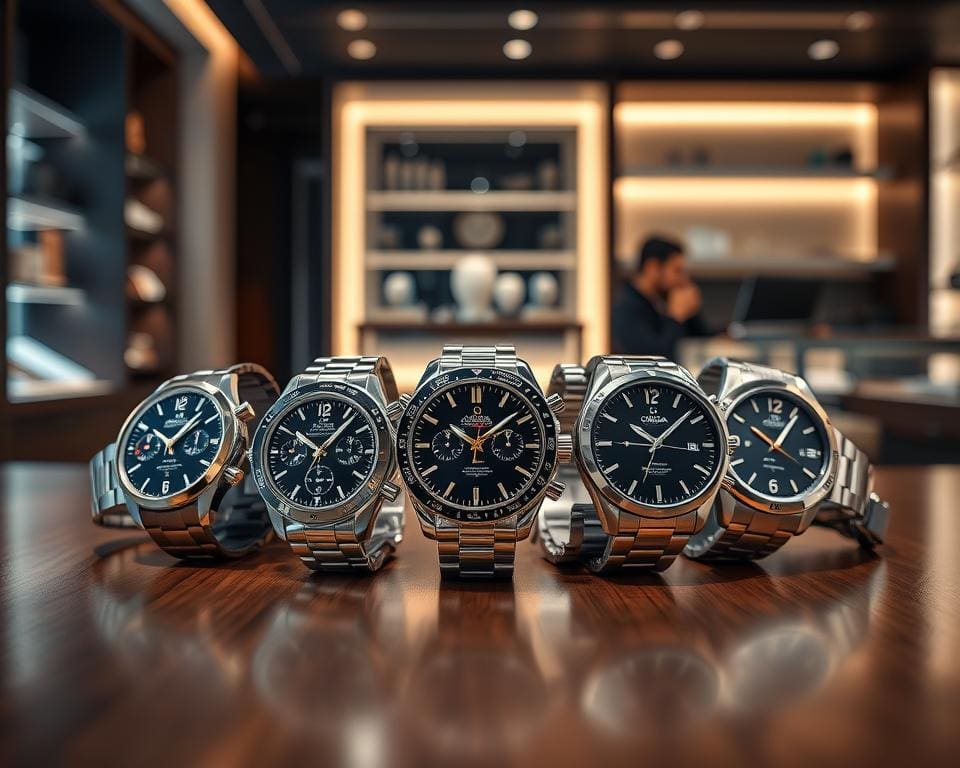

Omega watches have been a leading name in Swiss luxury watches UK since 1848. You will find their reputation rests on precision, technical innovation such as the Co‑Axial escapement, and high‑profile partnerships with NASA, the Olympic Games and the James Bond films.
This section explains why the most popular Omega watches remain so sought after. Popularity is measured by cultural significance, sales figures, collector demand and resale value. Models like the Omega Speedmaster, Omega Seamaster and Omega Constellation repeatedly top lists for both enthusiasts and everyday buyers.
The purpose of this article is to highlight the best Omega models, show what makes them iconic, and outline collector and investment considerations. You will also read practical guidance on choosing a watch to suit your lifestyle and where to buy and authenticate pieces in the UK.
For UK buyers, availability through authorised dealers across Britain matters, as do VAT and import rules for second‑hand purchases. The UK market remains strong for the Omega Speedmaster and Omega Seamaster, which often appear in auction results and dealer inventories.
This overview draws on official Omega communications, auction data from Sotheby’s, Christie’s and Phillips, retail figures from authorised dealers, and industry reference sources such as Hodinkee and WatchTime to ensure reliability.
Iconic Omega watches that defined the brand
You will find that a few Omega models shaped the company’s reputation. Each one brings a clear story, technical merit and collector appeal. Read on to understand why these examples remain sought after and how they fit into your watch wardrobe.
Speedmaster Professional Moonwatch and its legacy
The Omega Speedmaster began life in 1957 as a motorsport chronograph. It earned its Moonwatch legacy after NASA qualified the Speedmaster Professional for space flight and astronauts wore it on Apollo 11 in 1969.
Classic technical features include manual‑wind calibres such as the historic calibre 321 and later 1861 and 3861. Traditional models use a hesalite crystal and a tachymetre scale, giving a purposeful tool watch aesthetic.
Collectors prize early references like the 2915 and 2998. Auction results reflect strong demand. When you shop, check movement type, provenance and whether the watch is a vintage original or a modern Master Chronometer or Co‑Axial version.
Seamaster and its maritime heritage
The Omega Seamaster history begins in 1948 with watches designed for reliable water resistance. The line expanded into distinct families such as Seamaster 300, Diver 300M, Planet Ocean and Aqua Terra.
Look for water resistance ratings, helium escape valves on professional divers, ceramic bezels and screw‑down crowns. Many modern Seamasters carry Master Chronometer certification for accuracy and magnetism resistance.
Public recognition rose after the James Bond partnership started in 1995. Wave dials and skeleton hands on the Diver 300M became signature cues. Early Seamaster 300 examples and rare military pieces attract collector interest, while Planet Ocean models appeal to those wanting serious dive performance.
Constellation: signature design and dress appeal
The Omega Constellation launched in 1952 as a certified chronometer line. Vintage pie‑pan dials and later design elements made it a symbol of refined accuracy.
Modern Constellation models are known for the “griffes” or claws and integrated bracelets introduced in 1982. Cases tend to be dressier, with gold and two‑tone variants, diamond indices in some references and small, elegant proportions.
Vintage Constellations fitted with calibre 561 or 564 remain desirable among collectors. If you seek a sophisticated everyday dress watch, the Constellation compares well with other iconic Omega models for style and precision.
Omega watches for collectors and investors
You should weigh passion and prudence when you look at Omega as a collectible or an asset. Some pieces serve as wearable history, while others act as speculative purchases. Knowing what makes a model sought after will help you spot value and avoid common pitfalls.
Limited runs and special releases
Omega limited editions tied to anniversaries, film partnerships and sporting events draw attention from collectors. Small edition sizes, unique materials and dial variants increase short‑term demand. You should check edition numbers and provenance before paying a premium.
Vintage references that attract premiums
Certain vintage Omega watches command strong prices at auction and in private sales. Early Speedmaster references such as the CK2915 and 105.012, military Seamaster pieces and pie‑pan Constellations are consistently desirable. Condition, original dials and complete paperwork make the biggest difference to realised price.
What drives collectibility and resale value
- Rarity and provenance: documented ownership and ties to notable events raise interest.
- Movement significance: original calibres like the calibre 321 typically enhance value.
- Condition and completeness: original boxes, manuals and service records reassure buyers.
- Market and cultural influence: film exposure, celebrity wear and active communities can push demand.
When investing in watches you must balance emotion with research. Auction records, dealer verifications and expert authentication reduce risk. Compare buying from an authorised retailer with pre‑owned marketplaces and auction houses to understand warranties and authenticity guarantees.
You will see varied Omega resale value across models and eras. Some collectible Omega models appreciate strongly, while others remain steady or fall back with market swings. Keep service history intact and avoid non‑original parts to protect long‑term worth.
How to choose Omega watches for your lifestyle
Choosing a timepiece depends on how you live, work and play. Before you decide, think about daily activities, wardrobe and how much maintenance you want. This short guide helps you choose an Omega watch that fits those needs.
Sport vs dress: matching watch features to use
If you spend time in water or take part in outdoor activities, an Omega sport watch is built for that life. Models like the Seamaster Diver 300M and Planet Ocean focus on water resistance, legible dials and robust cases.
For formal settings pick an Omega dress watch. Constellation and De Ville styles favour slimmer profiles, polished surfaces and leather straps or integrated bracelets that sit neatly under cuffs.
Comfort matters. Check lug‑to‑lug size for wear under a shirt. Choose rubber or NATO straps for active use. Pick leather or a refined bracelet for office and evening wear.
Movement types: automatic, quartz and co‑axial mechanics
Watch movement types determine service needs and performance. Quartz offers top accuracy and low upkeep, ideal if you want precision with minimal fuss.
Automatic movements provide the tactile appeal of mechanical watchmaking. They self‑wind with your motion but need periodic servicing and will show a power reserve specification.
The Co‑Axial movement, based on George Daniels’ design, reduces friction and improves long‑term stability. Many modern Omegas carry Master Chronometer certification from METAS, showing anti‑magnetic resistance and strong chronometric performance. Pick quartz or a Master Chronometer if low maintenance and precision are priorities.
Material choices: stainless steel, titanium, gold and ceramic
Omega materials influence durability, weight and look. Stainless steel is versatile and suits both sport and dress uses. It resists knocks and polishes well.
Titanium is lighter and hypoallergenic with a sporty edge. It works well if you want less weight on the wrist for active days.
Gold and two‑tone options add luxury for formal wear. Omega’s Sedna™ gold gives a lasting rose hue compared with conventional alloys.
Ceramic and advanced composites bring scratch resistance and a modern look to sport models. Technologies such as Liquidmetal™ and Ceragold™ produce high‑contrast, durable bezels.
You should match materials to wear patterns. Choose steel or titanium for everyday rugged use, ceramic for scratch resistance and gold for dressy or investment pieces. That approach will help you select an Omega that serves your lifestyle well.
Where to buy and authenticate Omega watches in the UK
When you want to buy Omega watches UK, start with an authorised Omega dealer UK or a branded boutique. Dealers such as Watches of Switzerland, Goldsmiths and Bremont’s stores that carry Omega give you a full manufacturer warranty, access to the latest collections and direct after‑sales support through Omega‑approved service centres. Use Omega’s official UK store locator to find nearby boutiques in London, Manchester and other major cities so you can try watches on for fit and comfort before you commit.
The pre‑owned Omega market offers value, but requires careful checks. Established platforms like Watchfinder & Co. and major auction houses such as Sotheby’s, Christie’s and Phillips list collectible lots, while marketplaces such as Chrono24 can help you find models with caution. Always ask for service history, movement and case reference numbers, condition reports and box and papers. If anything seems unclear, obtain independent verification from a qualified watchmaker to authenticate Omega watch details before purchase.
Understand pricing, VAT and negotiation when buying in the UK. New pieces include VAT and often carry a retail premium; pre‑owned examples can offer savings but bring higher authentication risk. Balance price with peace of mind by favouring dealers with clear warranty terms and return policies or certified pre‑owned options. Photograph the watch, keep receipts and service records, and consider specialist insurance for high‑value models to protect your investment.
For ongoing care, follow recommended watch servicing UK guidance. Typical service intervals are every five to ten years depending on use and movement. Use Omega Service Centres or authorised watchmakers to retain value and warranty. To authenticate and maintain your timepiece, check serial numbers where possible, have the movement inspected by a professional, and confirm hallmarking on precious metals so your Omega continues to perform and hold its value.