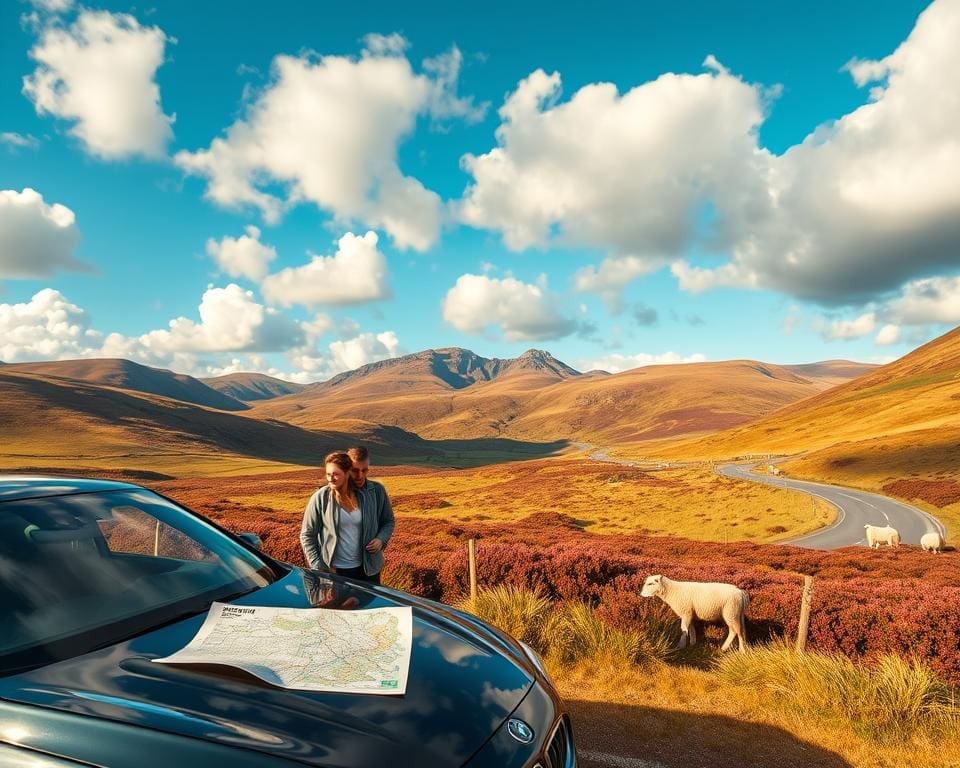

Planning a Scotland road trip begins with clear goals. Decide if you want dramatic scenery on the North Coast 500 and Isle of Skye, culture and history in Edinburgh and Stirling, or wildlife in Orkney and the Cairngorms. Choosing a primary theme will shape your Scottish driving itinerary, pace and where you stay.
Pick sensible start and end points: Edinburgh or Glasgow suit international arrivals, Inverness gives quick Highland access, and Aberdeen opens eastern routes. A circular route reduces backtracking, while there-and-back trips can be simpler if you have limited time or must return a hired car to the same depot.
Scotland’s weather, single-track roads and limited services in remote areas make flexibility essential. Build buffer days for ferry changes, roadworks or poor weather and pre-book ferries, car hire and popular hotels in high season. At the same time, leave room to adapt each day.
Use practical tools: Google Maps and Ordnance Survey maps for route detail, Traffic Scotland and Transport Scotland for closures, and apps for campsite bookings and petrol stops. Check ferry timetables on Caledonian MacBrayne and NorthLink Ferries when planning island legs.
Carry the right documents: a valid driving licence, insurance and vehicle registration, plus any required GB/UK sticker for foreign-registered cars. Post-Brexit rules can affect EU licence holders, so confirm requirements before you travel.
Health and safety matter. Follow NHS guidance for travel within the UK, take travel insurance that covers vehicle recovery and remote evacuation, and pack a roadside kit. Bring waterproof layers, sturdy boots, a physical map backup, a first-aid kit, torch, portable charger and extra food, water and fuel for long stretches.
Respect the land. Follow the Scottish Outdoor Access Code and Leave No Trace principles, avoid unauthorised wild camping and check rules from National Trust for Scotland and Forestry and Land Scotland at specific sites. Small changes in behaviour protect landscapes and communities.
The rest of this guide will help you refine timing and routes, choose transport and accommodation, manage budgets and safety, and select must-see stops so you can turn a rough idea into a safe, memorable Highland road trip. Use these steps to plan a Scotland road trip that fits your interests and the realities of driving in Scotland.
Scotland road trip: choosing your route and timing
Planning your Scotland road trip starts with timing and route choices that match your interests. Think about how daylight, weather and ferry timetables will shape each day. Pick a pace that lets you stop for viewpoints, walks and wildlife without rushing.
Best time to visit and weather considerations
Summer (June–August) gives the longest days and the warmest temperatures, which helps when you want extended sight‑seeing. Expect more visitors at popular sites in August around the Edinburgh Festival Fringe and coastal hotspots.
May and September are strong shoulder months. You get milder conditions, fewer crowds and most facilities open. Winter brings short daylight and the risk of snow in the Highlands, which can close passes and limit travel.
Scotland weather for driving can change fast. You might see sun, rain and strong winds all in one day. Check Met Office forecasts daily and pack waterproofs, extra layers and a good map or offline navigation.
Heavy rain, high winds and snow affect single‑track roads, mountain passes and ferries. Before heading out, confirm sailings with Caledonian MacBrayne, NorthLink Ferries or local harbours for last‑minute updates.
Classic routes and scenic drives
The North Coast 500 is a must for dramatic coastal scenery, sandy beaches, castles and wildlife. Allow more days than the distance suggests to avoid rushed driving and to savour stops.
Your Isle of Skye itinerary should include the Trotternish Ridge, the Old Man of Storr, the Quiraing and Neist Point. Reach Skye via the Skye Bridge at Kyle of Lochalsh or the ferry from Mallaig and factor time for short hikes.
The Road to the Isles from Glasgow and Loch Lomond through Glencoe to Fort William then Mallaig serves mountain lovers. You will pass Ben Nevis and deep glens that reward slow travel.
For a different feel, choose Royal Deeside and the Cairngorms for mountains and wildlife, or the Borders and Dumfries & Galloway for quieter roads, coastal lanes and abbey ruins.
Coastal detours, the A77 and A83, and Hebridean ferry legs open island‑hopping options in Argyll, Mull and Islay. Pick a mix of main routes and tucked‑away lanes to get the best scenic drives Scotland offers.
Plan alternating long and short driving days. Deliberate detours can transform a transfer into a highlight.
How long to allocate and daily driving distances
A long weekend of 3–4 days suits Loch Lomond and Glencoe. One week works well for an Isle of Skye itinerary plus Fort William. Ten to fourteen days cover a broad North Coast 500 loop or multi‑island tour.
If you have three weeks or more, you can include Orkney or Shetland and take a thorough tour of the north. Add at least one rest or contingency day on longer trips for weather delays or unexpected finds.
For comfortable travel, aim for 100–200 km (60–125 miles) as a daily driving Scotland average on scenic routes. You can push to 300 km on transfer days, but single‑track roads and lower average speeds often reduce distance.
Give major sights half a day to a full day. Reserve 30–90 minutes for roadside viewpoints and short walks. Build flexibility into your plan so you can enjoy what you find without pressure.
Practical planning: transport, accommodation and budgeting
Plan your transport, stays and money before you set off so you spend more time enjoying the scenery. Think about comfort, access and how remote your route will be. Small choices now can save stress on single-track roads and ferries.
Hiring a car gives flexibility and access to newer models with roadside assistance. Major firms such as Enterprise, Avis, Hertz and Europcar operate across Scotland, alongside reliable local providers. Compare prices, read insurance terms and note collision damage waiver options and excess reductions.
If you live in the UK or bring your own vehicle from Europe, you save on hire fees and use a familiar car. Check your insurance cover, any required paperwork after Brexit and whether breakdown rescue covers remote areas.
Choose a small car for narrow single-track roads and tight village parking. Pick a larger vehicle or campervan if you carry lots of kit or prefer longer drives without unpacking. For rough tracks, a 4×4 may be necessary; check local access rules first.
Watch add-on costs for additional drivers, child seats and GPS. Take breakdown cover that includes recovery in remote locations. Fuel availability is good for petrol and diesel but limited for LPG, so plan refuelling stops and account for fuel costs Scotland in your budget.
Where to stay: types of accommodation and booking tips
Scotland accommodation ranges from hotels and B&Bs to hostels, self-catering cottages and caravan parks. Bothies offer basic shelter for experienced walkers via the Mountain Bothies Association. Managed campsites and camping Scotland options suit different budgets and styles.
Book ahead in high season and on popular islands. Use Booking.com, Airbnb or VisitScotland-accredited listings, or ring providers directly for the best rates or last-minute rooms. For long stays, self-catering lets you cut meal costs.
Decide whether to base yourself in hubs like Inverness for the NC500 or Portree for Skye, or move each night. Staying put reduces packing and lets you explore locally. Moving nightly gives variety but adds driving time.
Check essentials: ensuite bathrooms, parking, EV charging, laundry and pet policies. Confirm accessibility if you have mobility needs. If you choose wild camping, follow the Scottish Outdoor Access Code, respect landowners and leave no trace.
Budgeting and cost-saving strategies
Break down likely expenses into fuel, accommodation, food, attractions, ferries, tolls, car hire and parking. Ferry costs to islands vary by season. Prepare for fluctuating fuel costs Scotland and add a contingency of 10–20% for delays or repairs.
- Budget style: camping Scotland, hostels and self-catering keep daily costs low.
- Mid-range: B&Bs, occasional restaurants and paid attractions sit in the middle.
- Luxury: hotels and guided tours push costs higher.
Save money by travelling in shoulder seasons and staying mid-week. Buy groceries at Tesco, Sainsbury’s or Lidl to reduce dining out. Use National Trust for Scotland membership or combined attraction passes if you plan many visits.
Book vehicle ferries early in busy months to avoid higher fares. Seek park-and-ride options in Edinburgh and Glasgow to dodge city parking charges. Keep a small emergency fund for breakdowns, medical needs or weather-driven extensions.
Experiences and logistics: must-see stops, safety and sustainability
Plan your must-see Scotland stops with realistic timings. Visit Loch Ness and Urquhart Castle near Inverness early or late to avoid crowds and get the best viewpoints. On the Isle of Skye, aim for Portree harbour at dawn for calm water photos, and schedule Old Man of Storr, Quiraing, Fairy Pools and Neist Point across different days to manage parking limits and light for photography.
Drive classic routes like the North Coast 500 and Glencoe with set expectations. Allow an hour or two at Dunrobin Castle, half a day for Durness beaches and Smoo Cave, and a morning for John o’ Groats. Use Fort William as your base for Ben Nevis walks and the gondola. In the Cairngorms you can join rewilding tours, watch red deer and ospreys, and learn about beaver projects around Loch of the Lowes.
Respect Scotland road trip safety on single-track roads: use passing places, pull left when safe and choose lower gears on steep slopes. Check Met Office forecasts, carry warm layers and hi‑vis if walking near roads. Keep emergency numbers to hand — 999 for emergencies — and consider RAC or AA membership for breakdown cover. Mobile signal is patchy; download offline maps, carry a paper map and share your itinerary with someone at home.
Travel sustainably to protect wildlife watching Scotland and fragile habitats. Take ferries to Mull, Iona, Islay and the Outer Hebrides, support local cafés and distilleries, and choose eco-certified accommodation like Gleneagles when possible. Keep distance from seals and birds, use responsible boat operators, carry a reusable bottle and pack out waste. For further notes on scenery and conservation, see this guide on Highland views and habitats: Highlands scenery and conservation.