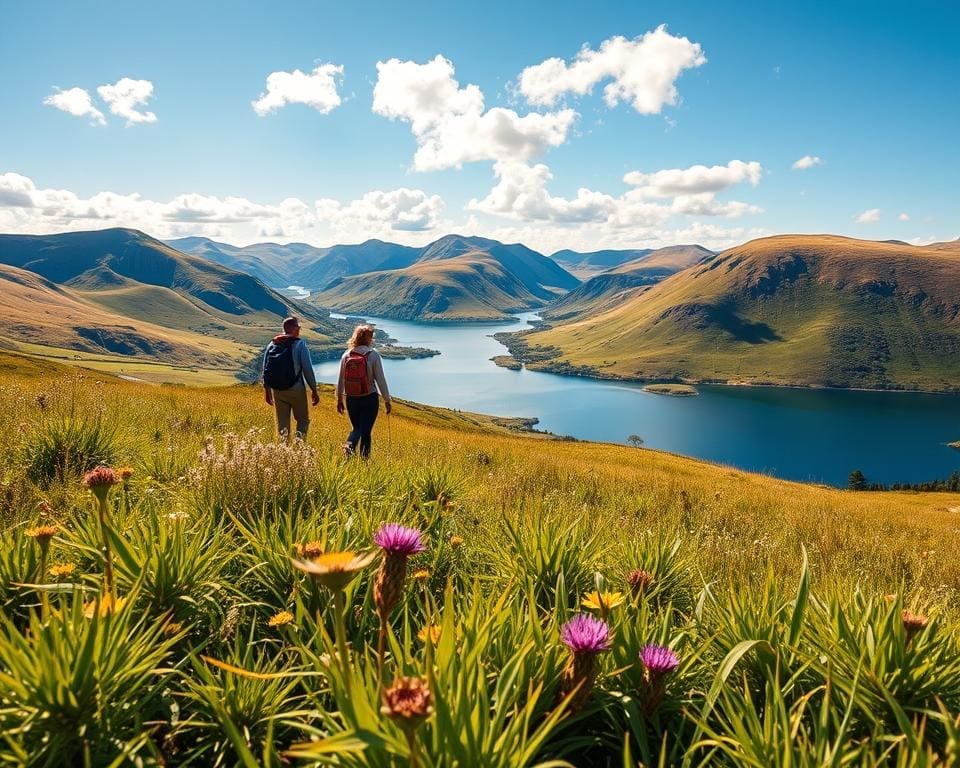

The Lake District National Park in Cumbria is England’s largest national park and a UNESCO World Heritage Site. Its mix of glacial lakes, rugged Cumbrian fells, ancient woodlands and sheltered valleys gives nature lovers UK a remarkable range of landscapes to explore.
At around 2,362 square kilometres, the park suits short Lake District walks and longer expeditions alike. You can reach key bases such as Windermere, Keswick and Ambleside via Oxenholme and Penrith stations, the A591 corridor and local buses, making the English Lakeland surprisingly accessible.
The region’s cultural links add depth to the scenery. Visits to Dove Cottage, Hill Top and Brantwood reveal how William Wordsworth, Beatrix Potter and John Ruskin drew inspiration from the land. Their homes and local museums enrich the experience of Lake District nature.
The park changes with the seasons. Spring brings wildflowers and lambing, summer offers boating and long daylight hours, autumn paints woodlands in colour and winter gives crisp air and occasional snow on higher tops. Check conditions in winter before you set out.
Conservation is central here. Organisations such as the National Trust, the Lake District National Park Authority and the RSPB work to protect habitats. As a visitor, stick to paths, take litter home and follow the Countryside Code to help preserve this special place.
For practical planning, you’ll find camping, bunkhouses, independent B&Bs, National Trust cottages and eco lodges. Carry Ordnance Survey maps, consult visitor centres and remember mobile coverage can be limited in remote valleys.
Stunning landscapes and scenic viewpoints
The Lake District offers a patchwork of glacial valleys, ribbon lakes and steep crags that change with the light. You will see smooth lake shores beside jagged ridges, woodland in sheltered dales and open moorland on high ground. This contrast makes the area rich in visual variety and ideal for exploring fells and lakes on foot or by vehicle.
Diverse terrain from fells to lakes
Glaciers carved long lakes such as Derwentwater and Ullswater, leaving deep basins and steep sides. Southern Fells contain Scafell Pike, England’s highest peak, while the Central Fells include the Helvellyn range. The Northern Fells around Skiddaw and the western valleys of Wasdale and Wast Water offer contrasting rock and scree.
Wooded valleys like Borrowdale sit beside open commons such as Ennerdale. Lowland meadows around villages give softer scenery and different habitats for plants and wildlife. You can link these varied landscapes via short walks, longer ridge routes or scenic drives through passes such as Kirkstone and Honister.
Iconic viewpoints and photographic opportunities
Some viewpoints are essential for first-time visitors. Orrest Head rewards a short climb with wide views over Windermere. Catbells frames Derwentwater with a classic ridge silhouette. Aira Force captures water tumbling into Ullswater beneath wooded banks. Tarn Hows gives picture-postcard reflections. Wastwater Screes show dramatic west-facing slopes, while Striding Edge on Helvellyn provides one of the most thrilling ridgelines in the park.
- Best light: aim for sunrise and late afternoon to capture golden tones and long shadows.
- Seasonal tips: spring brings blossom and lambs, summer offers calm reflections, autumn gives warm colour and winter can add snow to the high tops.
- Composition hints: use foreground interest or a human figure to convey scale on photographic locations.
For quieter scenes, head to Kentmere valley, the back of Skiddaw or the small tarns near Hawkshead. If you want practical planning advice for scenic drives and water routes, check this guide: scenic trip planning.
Accessible routes for all abilities
Routes range from flat lakeside promenades to steep summits. Windermere promenade and Keswick’s lakeshore paths suit gentle walkers and families. Orrest Head and Loughrigg Fell are short, manageable ascents that reward you with views without a hard scramble.
For experienced walkers, Striding Edge to Helvellyn and the ascent of Scafell Pike from Wasdale Head demand sure-footedness, good kit and stable weather. Always consult graded walk descriptions, use Ordnance Survey maps and check the Mountain Weather Information Service before you set out.
Many attractions offer adapted access. Brockhole on Windermere, The Lakeside and Haverthwaite area and several National Trust sites provide paths and facilities that help visitors with limited mobility enjoy Lake District viewpoints.
Abundant wildlife and habitats in the Lake District
The Lake District offers rich Lake District wildlife across lakes, fells and ancient woodlands. You will find varied habitats close together, so a short walk can take you from reedbeds to heather moor. This makes wildlife encounters easy to plan and rewarding for any nature lover.
Birdlife and rare species to spot
For birdwatching Lake District is a top destination. Look for peregrine falcons on crags and ospreys, notably at Bassenthwaite where RSPB projects monitor returns. Upland bogs hold curlew and lapwing while lakeshores and rivers often reveal heron and kingfisher.
Wooded valleys can host ravens and redstarts. You may spot otters on quiet rivers and lakes. Red deer range in remote valleys and grey seals appear on coastal fringes. In summer watch dragonflies, damselflies and meadow butterflies in flower-rich meadows.
Flora across seasons
Spring brings carpets of bluebells, wild garlic and primroses in woodlands. Heather colours the high fells through summer while autumn shows bracken and lichen-splashed stone walls. Winter reveals hardy mosses and alpine plants on higher crags.
Notable botanical sites include the oakwoods of Borrowdale and Blencathra and limestone outcrops such as Orton Scar. Traditional haymeadows and wildflower meadows support pollinators and preserve native flora shaped by historic farming.
Conservation areas and responsible wildlife watching
The Lake District National Park contains many SSSIs, SACs and Local Nature Reserves. Organisations such as the National Trust conservation teams, RSPB and Cumbria Wildlife Trust manage habitats and species recovery projects. You can support this work through volunteering or donations.
When you watch wildlife, keep distance and use binoculars rather than approaching. Keep dogs under control during the ground‑nesting bird season and stick to marked paths in fragile areas. Do not feed animals and follow reserve codes.
Join guided wildlife walks, record sightings via apps like iRecord and take part in citizen science events to contribute to long‑term monitoring. For local walking routes and nature trails that cross these habitats, see a practical guide to Hawkshead and nearby waters at Hawkshead and Esthwaite Water.
Outdoor activities and practical travel tips for nature enthusiasts
You can choose from gentle lakeside walks to full ridge routes when enjoying Lake District activities. Try an easy stroll around Windermere or opt for classic ascents such as Scafell Pike and Helvellyn. For multi-day routes, consider linking sections of the Coast to Coast or the Cumbria Way, and hire a qualified mountain guide for technical terrain.
On the water, boating Windermere is a popular option and you can also kayak on Ullswater and Coniston. Local hire centres and operators such as Windermere Lake Cruises provide craft and safety briefings. Always wear buoyancy aids, check weather forecasts from the Met Office and carry essentials before you set off.
If you prefer two wheels, cycling Cumbria offers paved leisure routes like Lakeside and Haverthwaite and tougher singletrack in Grizedale Forest. Bike hire shops supply graded routes and kit so you can match terrain to ability. For wildlife-focused experiences, join guided birdwatching walks or RSPB events at Bassenthwaite, and try boat-based tours for otter and seabird spotting.
Plan visits outside peak July–August weekends for more tranquillity and book accommodation and popular attractions in advance. Use public transport where possible, or arrive early at designated car parks to avoid narrow rural roads and limited parking at trailheads. For safety, pack layered clothing, waterproofs, sturdy boots, map and compass, a charged phone and an emergency kit; on higher fells, consider a personal locator beacon. Follow the Countryside Code, use official campsites for wild camping Lake District stays where guidelines allow, and support local visitor centres in Keswick, Ambleside and Windermere for up-to-date advice.