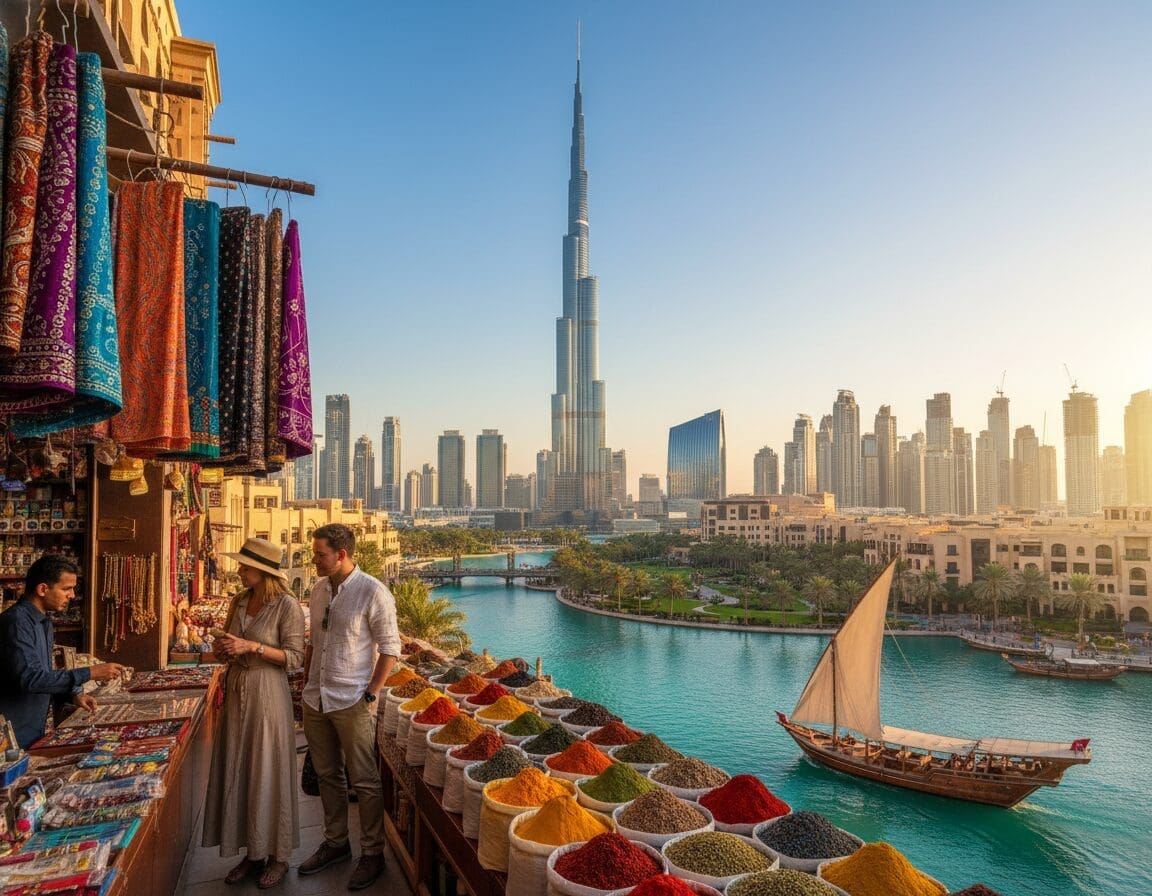

Dubai is a dynamic city where futuristic skyline sights sit alongside wide desert dunes and enduring Emirati culture. This Dubai travel guide is written for UK travellers and shows how to build a balanced itinerary that mixes iconic landmarks, family-friendly attractions and authentic local experiences.
You can expect to cover key Dubai attractions for tourists in four to seven days. That span gives time for the Burj Khalifa and Dubai Frame, a family visit to Dubai Aquarium or Atlantis, a traditional stroll around Al Fahidi Historic Neighbourhood, plus a morning or evening desert safari.
For practical planning, aim to visit between November and April when the weather is milder. Check current UAE visa rules and ensure your passport meets validity requirements before you travel. Local currency is the United Arab Emirates dirham (AED), and tipping of around 10–15% is common where service is not included.
Respectful dress is expected at mosques and in traditional districts, and familiarise yourself with local laws on public behaviour and alcohol. Later sections will give visit Dubai tips on transport, seasonal planning and the best ways to enjoy Dubai first-time visitors experiences without wasting time.
Essential sights and landmarks to visit in Dubai
When you plan your first trip, these landmarks give a clear sense of Dubai’s scale and style. Visit world-class observation decks, sprawling malls and inventive urban islands to see how modern Dubai architecture shapes the skyline. A mix of timed-entry attractions and open-air viewpoints helps you balance schedules and spontaneity.
Burj Khalifa: tips for visiting and booking tickets
Book Burj Khalifa tickets online ahead of time to secure a preferred slot. Sunset times sell out quickly, so choose non-peak hours if you want clearer views and lower prices. Options include general admission, priority access and combination tickets that bundle attractions like Dubai Aquarium.
Arrive 30–45 minutes before your slot for security checks and lift boarding. Allow time for photos on any outdoor terrace and check visibility forecasts to avoid hazy days. The high-speed lifts and accessible facilities make the visit suitable for families with strollers.
Dubai Mall and the Dubai Fountain: what to see and when
Dubai Mall attractions range from the Dubai Aquarium & Underwater Zoo to the ice rink and VR Park. Plan a mix of shopping and experiences so you do not rush through highlights. Expect security screening at entrances during busy periods.
Dubai Fountain showtimes are most frequent in the evening, with performances every 30 minutes after sunset. Daytime musical fountains run at set times too. For the best outlook, watch from the waterfront promenade or book a restaurant with fountain-facing tables in advance.
Palm Jumeirah and Atlantis The Palm: best viewpoints and activities
Palm Jumeirah viewpoints include The Pointe on the trunk, beachfront promenades and select helipad spots. A monorail ride gives an elevated view along the fronds and helps you plan where to stop for photos.
Atlantis The Palm offers Aquaventure Waterpark, The Lost Chambers Aquarium and a selection of fine-dining venues. Day passes are an option if you do not stay overnight. Allow extra travel time for cross-city journeys, as traffic can be heavy.
Dubai Frame and other modern architectural highlights
For a distinctive panorama, book a timed Dubai Frame visit around sunset for dramatic light across both old and new districts. Tickets are best reserved online to avoid queues.
Other modern Dubai architecture to photograph includes the Museum of the Future, Burj Al Arab and Dubai Opera. Scout vantage points such as Jumeirah Beach Road and Al Sufouh for sweeping skyline shots, and respect access restrictions near private hotels and venues.
things to do Dubai: experiences that define your first trip
Start your first visit with a mix of high-octane adventure, quiet traditions and waterfront evenings. These hands-on experiences give a clear sense of Dubai’s contrasts, from desert horizons to glass-and-steel skylines. Plan each activity with timing and comfort in mind so you get the most from every moment.
Desert safari: choose a tour that matches your pace. Options range from morning or afternoon trips to overnight safaris with stargazing. If you want thrills, pick a dune-bashing package in a 4×4; if you prefer calm, consider family-friendly camps or private luxury tents.
Most operators include hotel pickup and drop-off, camel rides, sandboarding, henna and a traditional buffet with live entertainment. Check that seat belts are fitted, drivers are experienced and vehicles carry insurance. Bring sunscreen, sunglasses and light layers because desert temperatures fall after sunset.
Traditional abra ride on Dubai Creek offers a quick, affordable crossing between Deira and Bur Dubai. The wooden water taxi takes about ten minutes and gives you a slice of old trading Dubai. Pay in dirhams and aim for cooler hours or sunset for gentler light and better photos.
After the crossing, explore Al Fahidi Historic Neighbourhood, Dubai Museum and the souks. Combine the Dubai abra ride with a walking tour of Deira to experience spices, gold and local markets up close.
Stroll the Marina promenade for an evening by the water. The Dubai Marina walk is lined with cafés, restaurants and tall towers, perfect for people-watching before boarding a dhow. A Dubai Marina dhow cruise serves dinner as the skyline lights up and gives you a relaxed view of the city after dark.
Choose shared or private dhow cruises and book early during peak months. Dress smart-casual for dinner cruises and pick departures after sunset for the best illuminated vistas. The Dubai Marina dhow cruise is a comfortable way to combine dining and sightseeing.
Visit observation decks to see Dubai from above. At The Top at Burj Khalifa and The View at The Palm you’ll find sweeping panoramas. Rooftop bars and the Museum of the Future viewpoint offer different angles, so check age limits and reservation rules before you go.
For sunsets, head to Kite Beach, Jumeirah Beach Residence promenade, La Mer or Dubai Creek. Arrive 30–45 minutes before sunset for prime viewing and better photos. If you plan to shoot low-light images, use a tripod where allowed and try HDR to balance bright skies with foreground detail.
Cultural attractions and authentic local experiences
Dubai rewards curious visitors with a rich mix of history, markets and living traditions. Spend time in older districts, join guided visits and try local dishes to get a true sense of place. These experiences are calm, accessible and great for first-time travellers.
Al Fahidi Historic Neighbourhood: museums and heritage houses
Stroll narrow lanes and admire preserved wind-tower architecture at the Al Fahidi Historic Neighbourhood. You will find art galleries, cosy cafés and the Dubai Museum inside Al Fahidi Fort. A guided walking tour from the Sheikh Mohammed Centre for Cultural Understanding helps you grasp local history and customs.
Visit in the morning when it is cooler and less busy. Heritage houses converted into small museums give clear, intimate glimpses of daily life before the skyscrapers.
Gold Souk and Spice Souk: bargaining tips and cultural etiquette
Deira’s traditional markets offer a bracing sensory mix. Use Dubai Gold Souk tips when shopping for jewellery: start lower than the asking price and compare several shops. For gold, ask about karat purity and request a certificate for expensive pieces.
Master Spice Souk bargaining by staying polite and friendly. Dress modestly, ask permission before taking photos and use your right hand for transactions and greetings.
Jumeirah Mosque: visiting hours and guided tour information
Jumeirah Mosque opens guided visits to non-Muslim guests through organised programmes such as those run by cultural centres. Jumeirah Mosque tours explain Islamic practices, mosque design and required dress standards.
Wear modest clothing; women may need a headscarf, which is sometimes available to borrow. Check tour times in advance to pick a daytime session for a respectful learning experience.
Local festivals, markets and Emirati cuisine to try
Plan for seasonal highlights like the Dubai Shopping Festival and Dubai Food Festival for lively events and bargains. Smaller markets such as Ripe Market, Al Seef and Boxpark present local crafts and street food.
Sample Emirati cuisine Dubai with dishes like majboos, harees, luqaimat and Arabic coffee with dates. Seek reputable restaurants and cultural venues that offer tasting menus and guided hospitality sessions.
When offered food, accept politely, use your right hand where customary and be mindful of public consumption rules during Ramadan.
Practical tips, planning and getting around Dubai
When getting around Dubai, start with a Nol card for the Metro, trams and many buses. The Red and Green lines link major attractions, and services are air‑conditioned and punctual. Use the RTA Dubai app to check routes and times so you can plan each day with confidence.
For short trips, taxis and ride‑hailers like Uber and Careem are plentiful and metered; expect surge pricing at busy times. If you want freedom to explore beyond the city, hire a car but ensure you carry proper insurance and are comfortable with local driving conditions. The Dubai transport guide helps you weigh costs and convenience.
Budget realistically: metro fares are inexpensive, while mid‑range meals, Burj Khalifa tickets and theme parks add up quickly. Carry some UAE dirham from ATMs or exchange GBP before you travel, and use contactless payments where accepted. These Dubai travel tips will keep your spending on track.
Plan your timing around the best season—November to April for milder weather—and pack accordingly. Follow Dubai weather and packing advice by bringing breathable clothes, a light jacket for cooler evenings, sun protection and modest attire for cultural sites. Note emergency numbers (999 police, 998 ambulance) and the British Embassy contact before you go, and book key experiences early for more flexibility.