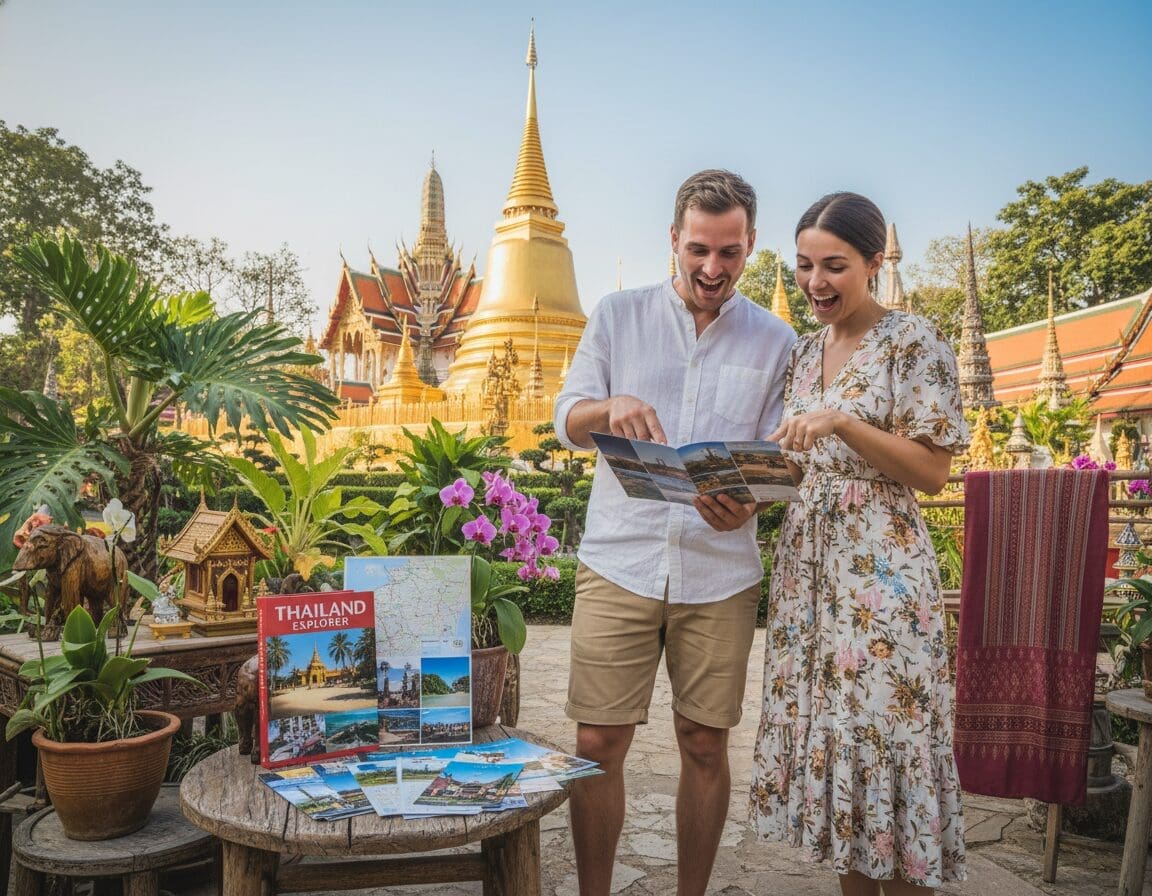

This short Thailand travel guide gives you practical, up‑to‑date advice for visiting Thailand from UK airports and planning a smooth trip. You will find clear pointers on Thailand trip planning, travel to Thailand, budgeting, transport and cultural etiquette so you know what to expect before you go.
The tips are aimed at UK travellers, whether you are taking a city break in Bangkok or Chiang Mai, an island holiday in Phuket, Koh Samui, Koh Phangan or Koh Tao, or seeking quieter spots such as Isaan, the Trang islands or northern hill‑tribe areas. The tone suits solo travellers, couples and families who want realistic, reliable guidance.
Key takeaways include when to go, how to budget, getting around safely, vaccination and insurance reminders, and must‑see experiences across cities, islands and rural provinces. This Thailand travel guide draws on official sources such as the UK Foreign, Commonwealth & Development Office, major operators like Thai Airways and Bangkok Airways, and trusted publishers including Lonely Planet and Rough Guides to keep recommendations accurate.
Practical notes: the currency is the Thai baht (฿); ATMs and card acceptance are widespread in Bangkok and popular islands but can be limited in remote areas. Thai is the national language, and English is commonly spoken in tourist hubs but less so in rural provinces. Common flight routes from UK airports include direct services and one‑stop options via Middle East or Asian hubs.
Before you travel to Thailand, check visa‑free stay conditions and entry requirements in the dedicated section, and make sure your travel insurance and vaccination advice are up to date. These early checks will make your Thailand trip planning simpler and let you enjoy the trip with peace of mind.
Thailand travel tips for planning your trip
Planning helps you make the most of your time in Thailand. Start by matching your dates to seasonal weather Thailand and your tolerance for heat, rain or crowds. Decide whether you prefer cooler mountain air, island beaches or lively city nights before booking flights and accommodation.
Best time to visit and seasonal considerations
Thailand has three main seasons: hot (March–June), rainy or monsoon (July–October) and cool/dry (November–February). Northern provinces such as Chiang Mai will feel much cooler at night in the cool months. The west coast islands near Phuket suit November–April. East-coast islands like Koh Samui are often better January–September.
Peak months give more reliable sunshine but higher prices and crowds. Shoulder months can cut costs but bring heat or brief heavy rain. If you travel in April, expect Songkran celebrations that affect transport and bookings.
How to budget: costs for accommodation, food and transport
Set a realistic Thailand travel budget before you go. Dorm beds can start from about £5–£15 per night. Mid-range rooms usually fall between £20–£70. Resorts and boutique hotels often begin at £100 a night.
Street food and market meals are cheap and safe when you follow hygiene cues; expect roughly £1–£5 per meal. Restaurant dining ranges from £5–£15 for mid-range options.
Flights on carriers such as AirAsia, Thai Lion Air and Nok Air can save you time and money on long hops. Trains and buses remain economical choices. Factor in transfers, ferries and local taxis or Grab fares when you plan daily spend.
Include extras in your budget: national park fees, tour costs, equipment hire and travel insurance that covers medical evacuation. Keep an emergency fund for unexpected costs.
Choosing your itinerary: cities, islands and off-the-beaten-path options
Pick an itinerary that reduces back-and-forth travel. A typical two-week loop works well: Bangkok, then Chiang Mai, then a southern beach region. Choose either the Andaman Sea or the Gulf of Thailand for a calmer island hop.
Allow 3–4 nights in Bangkok to see major sights and adjust to time differences. Plan 2–4 nights in Chiang Mai for markets and nearby treks. Give islands at least 4–7 nights for proper rest and exploration.
For quieter alternatives, head to Isaan for local culture, Nan for serene hills or Trang islands for less commercial beaches. Use Thailand itinerary ideas to tailor days to your interests in history, food or diving.
Visa, passport and entry requirements for UK travellers
UK passport holders usually receive visa exemption for tourist stays up to 30 days by air and 15 days by land. Rules can change, so check the Royal Thai Embassy or the FCDO before travel.
Make sure your passport has at least six months’ validity and spare blank pages for stamps. Immigration officers may ask for proof of onward travel and accommodation details at arrival.
If you plan a longer stay, look into tourist visas, extensions through Thai Immigration or multiple-entry options. Processing times vary, so apply well ahead if you need a Thailand visa UK document.
Getting around Thailand and staying safe
Travelling in Thailand is straightforward if you plan a little. This section covers practical transport options, basic health checks and simple precautions to keep your trip smooth and secure.
Domestic transport: flights, trains, buses and ferries
Domestic flights link Bangkok, Chiang Mai, Phuket, Krabi and Koh Samui. Major carriers include Thai Airways, Bangkok Airways, AirAsia, Thai Vietjet and Nok Air. Low‑cost airlines run frequent services; book early to get cheap fares and check baggage rules before you fly.
The State Railway of Thailand serves scenic routes and overnight sleepers to Chiang Mai and down south to Surat Thani. You can book via 12Go or the State Railway site. Second‑class sleepers are comfortable for longer journeys, while third‑class seats suit short trips.
Long‑distance buses offer VIP and air‑conditioned services between major towns. They can be faster and cheaper than trains on some routes. Buy tickets from reputable operators at bus terminals such as Mo Chit for northern departures from Bangkok.
Island transfers use ferries, high‑speed catamarans and local long‑tail boats. Check tide and weather conditions, confirm schedules in advance and be aware of port taxes and harbour transfer charges.
Local transport tips: tuk‑tuks, taxis and motorbike rentals
Tuk‑tuks and motorbike taxis are handy for short hops in towns and tourist areas. Agree a fare before you start when you use a tuk‑tuk. Motorbike taxis move quickly but offer minimal protection, so keep trips short and secure your belongings.
Use metered taxis in Bangkok and major cities. If a driver refuses the meter, find another vehicle. Ride‑hail apps such as Grab show fares up front and provide driver details for extra security.
Motorbike hire is common on islands and in tourist towns. Ask for an International Driving Permit, inspect the bike for damage, insist on helmets and confirm your insurance covers motorbike use. Accidents involving tourists are frequent, so ride with caution.
Health and safety: vaccinations, travel insurance and emergency numbers
Make sure routine vaccines such as MMR and tetanus are up to date. Consider hepatitis A, typhoid, hepatitis B, Japanese encephalitis for long rural stays and rabies if you expect animal contact. See NHS Fit for Travel or visit a GP or travel clinic 6–8 weeks before departure for tailored Thailand health advice.
Your travel insurance must include medical evacuation and cover activities like diving or trekking. Keep both digital and printed copies of your policy and emergency numbers to hand.
Drink bottled or purified water and be cautious with ice in remote places. Use insect repellent with DEET to lower dengue and malaria risk in certain areas. Protect yourself from the sun and carry a basic first‑aid kit.
Save emergency numbers in your phone: police 191, local ambulance services and the British Embassy in Bangkok for consular help.
Scams to watch for and how to protect your belongings
Be aware of common scams in Thailand. Expect offers for tuk‑tuk tours that end at gem shops, fake tour operators selling trips to closed attractions, taxi drivers overcharging or taking long routes and jet‑ski damage scams on some beaches.
Use reputable tour companies like Viator or GetYourGuide and book through recognised local agents. Always insist on metered taxis or use ride‑hail apps. Avoid unsolicited offers and never leave valuables unattended on beaches.
Split your cash and cards between luggage and person. Use hotel safes for passports and extra cash and photograph valuables before you travel. Use ATMs at banks or busy, well‑lit areas and avoid public Wi‑Fi when banking; a VPN helps protect your data.
If you are targeted, report the incident to local police and contact the British Embassy for assistance. Keep receipts and any evidence for insurance claims or disputes.
Cultural etiquette, food and must-see experiences
When you travel in Thailand, small gestures matter. Observe Thai etiquette by showing respect for the monarchy and Buddhism; avoid critical remarks and always remove your shoes before entering temples. Dress modestly at sacred sites, cover shoulders and knees, and do not touch Buddha images. Learn the wai—palms together—as a greeting and return it politely. Avoid pointing with a finger and never touch someone’s head, which is considered sacred.
Thai food is central to the experience. Follow a simple Thai food guide: choose busy street stalls for fresher dishes like pad thai, som tam and mango sticky rice, and ask for mai phet if you prefer less spice. Shareable plates are common, so use serving spoons when offered and avoid sticking chopsticks upright in rice. If you have allergies or dietary needs, carry translated allergy cards or learn phrases such as mai sai prik and mai sai nam pla to keep meals safe.
Plan must-see Thailand attractions but balance popular sites with quieter alternatives. In Bangkok, visit the Grand Palace, Wat Pho and a long-tail boat ride through the canals. Head north to Chiang Mai for Doi Suthep, night markets and accredited elephant sanctuaries like Elephant Nature Park. In the south, try snorkelling around Koh Tao, rock-climbing in Railay and island-hopping to Phi Phi. Book diving courses, cooking classes and treks in advance during high season to avoid disappointment.
Respect local customs for a more meaningful trip. Keep public behaviour calm, tip modestly for taxi drivers and guides, and ask permission before photographing people. Take part in festivals such as Songkran and Loy Krathong for unique cultural moments, but expect crowds and higher prices. Choose responsible tours, support community projects and avoid attractions that exploit wildlife to ensure your visit aligns with sustainable travel and genuine Thailand culture tips.