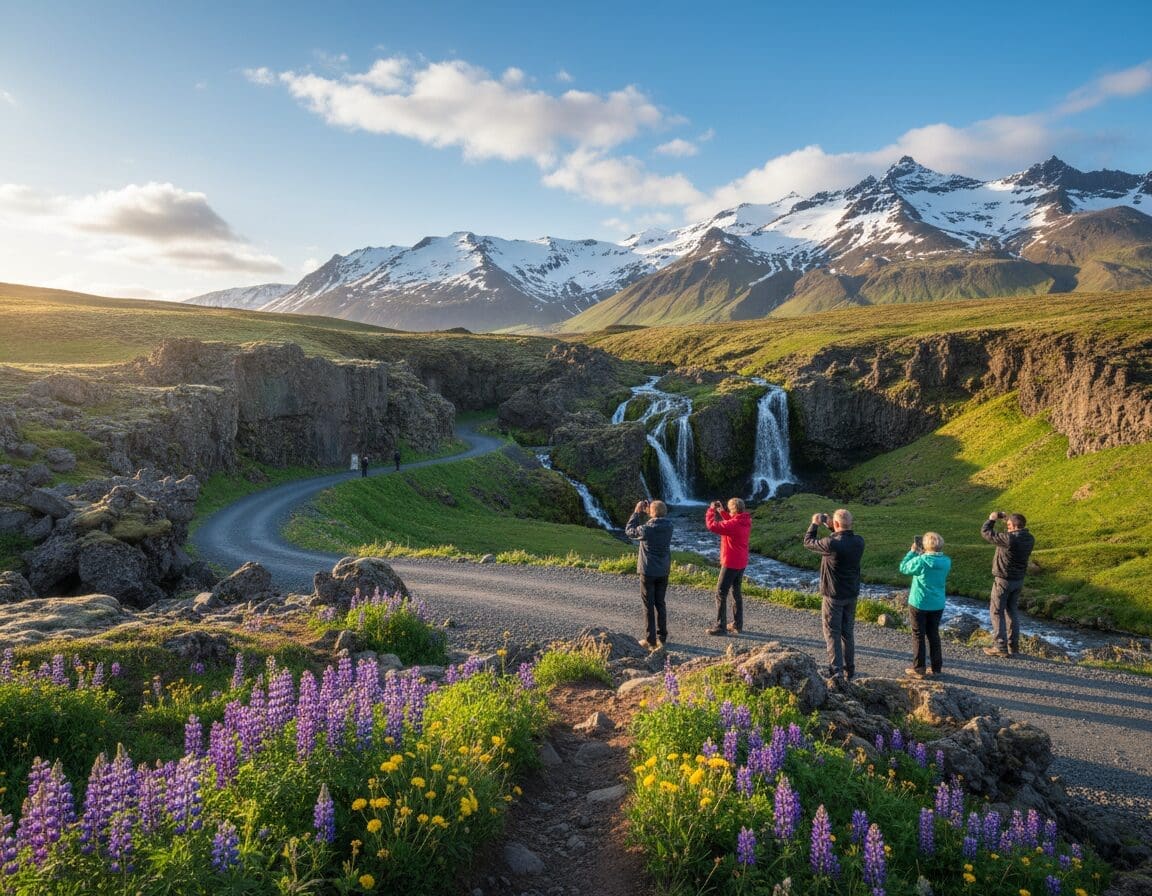

Iceland is compact yet wildly varied. On a single drive you can pass glaciers, volcanoes, geysers, lava fields and dramatic coastlines. This guide helps you work out what to see in Iceland and how to shape an efficient, memorable Iceland road trip.
Most travellers use the Ring Road or regional loops to link sights. Driving is the main way to reach remote spots, so understanding Ring Road attractions and alternative routes is key to good Iceland sightseeing.
A week on the island lets you follow a focused clockwise or anti‑clockwise Ring Road plan and hit major South and West highlights. If you have 10–14 days or more you can include the Westfjords and Eastfjords for a deeper experience and more varied Iceland travel highlights.
Weather changes quickly and roads can be testing in winter. Pack layers, waterproofs and sensible footwear. Check SafeTravel.is and road.is for live alerts before and during your journey to stay safe.
This opening section sets expectations: the article blends practical planning with a curated list of must‑see natural attractions, lesser‑known cultural stops and photography tips so you can make the most of your Iceland road trip.
Iceland road trip: planning, route options and practical tips
A successful Iceland road trip starts with clear planning. Think about your priorities, how many days you have and what kind of landscapes you want to see. Weather can change quickly, so build flexibility into your plans and choose accommodation that lets you adapt when needed.
Choosing the best time to travel
Summer (June–August) brings near‑midnight sun, milder temperatures and open highland F‑roads, making sightseeing and longer driving days easier. Shoulder months of May and September give fewer crowds, lower prices and solid daylight for photography. Winter (November–March) delivers the Northern Lights, ice caves and stark snowy scenery but far shorter daylight and more challenging roads.
Daylight varies dramatically — expect almost 24 hours of light in June versus four to five hours in mid‑winter around Reykjavík. Pack windproof, waterproof clothing and sturdy boots because storms and rapid temperature shifts are common year‑round.
How to plan your route around the Ring Road and alternative loops
The Ring Road (Route 1) is roughly 1,332 km of mostly paved road that links the island’s main towns. You can drive the core loop in seven to ten days if you limit long stops. For shorter trips, focus on the South Coast or the Snæfellsnes Peninsula for condensed highlights.
Consider alternatives: the Westfjords reward extra time and a 4×4 with dramatic, remote coastlines; the Diamond Circle in the north centres on Lake Mývatn and Dettifoss; Snæfellsnes can act as “Iceland in miniature”. Average sensible driving days are two to four hours between major stops when you factor in sightseeing and weather delays.
Vehicle hire, fuel and driving conditions
Choose a vehicle to match your route. For a summer Ring Road loop, a small 2WD often suffices. For highlands, Westfjords or winter travel, select a 4×4 with higher clearance. Reputable hire firms include Avis, Europcar and Blue Car Rental, along with reliable local companies. Inspect insurance carefully for CDW, SCDW and gravel or sand protection.
Fuel is widely available in towns but costs more than in the UK. Plan for long stretches without services and top up before leaving population centres. Expect single‑lane bridges, sheep on the road and strong winds. Obey speed limits — typically 90 km/h on rural paved roads — and heed signage for F‑roads, which require suitable vehicles and may carry fines if attempted illegally.
Use road.is and vedur.is for live updates and register remote trips with SafeTravel.is to improve safety.
Accommodation and booking strategy
Iceland accommodation ranges from hotels and guesthouses to farm stays, mountain huts and campsites. In summer, hostels and campsites are budget friendly, but guesthouses and hotels fill rapidly. Book core nights in towns such as Vík, Höfn, Akureyri and Egilsstaðir to avoid long detours.
Balance pre‑booking with flexibility: reserve key stays and guided excursions in advance, then leave a few nights free to respond to weather. Choose refundable options when possible and use established platforms like Booking.com or local tourism sites to find trusted listings.
Apply sensible daily distances, check vehicle cover before you commit to a car hire Iceland option and plan sleeps so you can enjoy sights without rushed drives. These practical steps will help you make the most of the best time to visit Iceland and craft a Ring Road itinerary that suits your pace.
Must-see natural attractions and iconic stops
Iceland packs a short list of geological wonders into a small island. Plan your stops so you see towering falls, glacial ice, steaming springs and striking coastlines without rushing. A handful of sites define the classic road-trip experience and reward a little extra time on foot.
Waterfalls you shouldn’t miss
Start with a trio of famous cascades that are easy to reach from the Ring Road. Gullfoss sits on the Golden Circle with paved paths and wide viewing platforms that suit most visitors.
Seljalandsfoss is unique for the path that takes you behind the curtain of water; bring waterproofs and firm footwear for the spray. Skógafoss drops in a broad sheet and offers a staircase to the top for sweeping views and frequent rainbows on sunny days.
For higher-energy spectacles, consider Dettifoss in the north, Europe’s most powerful waterfall by volume. Svartifoss in Skaftafell shows dramatic basalt columns, while Háifoss and the small oasis of Gjáin require longer hikes and seasonal planning.
Glaciers, ice caves and glacier lagoons
Vatnajökull National Park holds Europe’s largest ice cap and a network of outlet glaciers. Guided glacier hikes and ice-climbing trips are offered by reputable operators such as Glacier Guides and Arctic Adventures; never go without certified guides and proper kit.
Jökulsárlón is the iconic glacier lagoon where icebergs calve from Breiðamerkurjökull and drift toward the sea. Boat tours run in summer and the nearby Diamond Beach often scatters glittering ice fragments on black sand.
Ice caves Iceland become accessible in winter months from November to March. You must only enter with experienced guides because conditions change fast and avalanche risk exists.
Geothermal features and hot springs
Geysir geothermal area offers boiling pools and regular eruptions from Strokkur, a natural stop on the Golden Circle. The Blue Lagoon near Keflavík is the best-known spa with silica-rich waters; book in advance to secure your slot.
If you prefer quieter bathing, try the Secret Lagoon in Flúðir, the Mývatn Nature Baths in the north or the Reykjadalur hot river near Hveragerði, reached after a short walk.
Geothermal plains at Hverir near Lake Mývatn display bubbling mud pools and fumaroles. The air smells strongly of sulphur and the light makes striking photographs.
Black sand beaches and coastal wonders
Reynisfjara near Vík features basalt sea stacks called Reynisdrangar and towering columnar cliffs. Respect warning signs and stay away from sneaker waves; the Atlantic can surge without warning.
Dyrhólaey provides a dramatic arch and puffin nesting cliffs in summer with wide coastal panoramas. For dramatic dunes and mountain backdrops, visit Stokksnes near Höfn to see Vestrahorn.
On the Westfjords, Látrabjarg offers some of Europe’s best bird cliffs and close puffin-viewing in summer. Marine wildlife sightings are common from organised whale-watching trips out of Húsavík, Reykjavík and Akureyri, while seals often rest near Jökulsárlón and coastal coves.
Hidden gems, cultural experiences and photography tips
When you travel beyond the Ring Road you’ll find Iceland hidden gems that feel almost private. Visit the Snæfellsnes Peninsula for Kirkjufell and nearby falls, and explore Berserkjahraun lava fields in Snæfellsjökull National Park as a day trip from Reykjavík. Head east to Seyðisfjörður for colourful timber houses and a lively arts scene, or allocate extra days for the Westfjords to see Dynjandi waterfall and the red sands of Rauðisandur; a 4×4 will help on gravel tracks.
Immerse yourself in Iceland culture with simple, local experiences. Try skyr, fresh seafood and lamb dishes, and seek rye bread baked in geothermal ovens at places such as Laugarvatn Fontana. Spend time at Þingvellir to feel the weight of history, and visit Harpa, Hallgrímskirkja and the National Museum of Iceland for context on settlement and Viking heritage. Check festival dates for Reykjavík Arts Festival or Iceland Airwaves if you want music or art alongside scenic touring.
Use practical photography tips Iceland shooters rely on. Pack a sturdy tripod for long exposures, a polarising filter to deepen skies, a wide-angle lens for sweeping landscapes and a telephoto for wildlife. In summer, take advantage of prolonged golden hours; in winter chase blue hour lighting and the Northern Lights. Always include foreground interest such as lava, ice or driftwood to add depth, and avoid unstable cliff edges and wet black sand near sneaker waves for safety.
Plan flexibly to embrace off-the-beaten-path Iceland discoveries. Carry spare batteries and waterproof protection, buy extra memory cards, and consider cloud backups once you reach towns. Buy travel insurance that covers vehicle recovery and guided activities, and consult official resources for road and weather updates. Respect private land and closures, follow Leave No Trace principles, and you’ll leave with better photos and a deeper sense of Icelandic cuisine and culture.