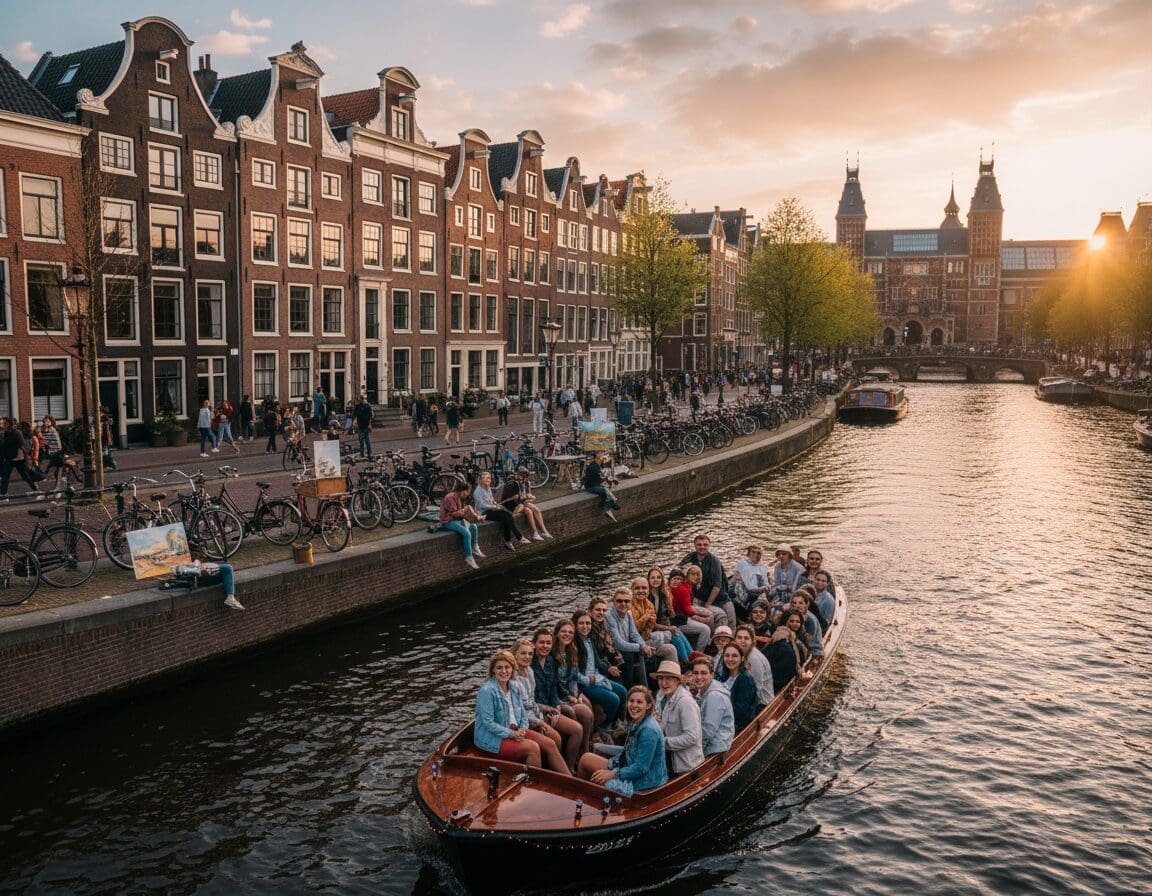

Amsterdam is a compact, highly walkable capital where world-class museums sit beside 17th century canals. This Amsterdam travel guide introduces you to popular attractions Amsterdam offers, from the canal ring to lively neighbourhoods such as the Jordaan and De Pijp.
You will find practical notes on opening hours, peak seasons and transport options. The city receives millions of visitors each year, with hotspots clustered around Museumplein, Dam Square and the Grachtengordel, a UNESCO World Heritage Site dating from the Golden Age.
Plan ahead: many museums and the Anne Frank House require timed-entry tickets, especially in spring and summer. Use an I amsterdam City Card or NS and GVB passes where suitable, hire a bike only if you are confident with Dutch cycling culture, and aim for off-peak mornings for popular attractions.
This article is structured so you can jump to sections on Amsterdam attractions, must-see landmarks, cultural museums, outdoor activities and food and nightlife. Read on to craft an itinerary that balances indoor highlights and outdoor Amsterdam sightseeing with the top things to do Amsterdam visitors love.
Amsterdam attractions: essential landmarks and must-see sights
Start your visit with a sense of place. Amsterdam blends grand 17th-century planning with lively neighbourhood life, so a short plan helps you see the highlights without rushing.
Canal ring and UNESCO heritage status
The Grachtengordel, or canal ring, uses concentric waterways such as Herengracht, Keizersgracht and Prinsengracht to frame the old city. You will spot elegant merchant houses and narrow bridges that explain why the area gained recognition as UNESCO Amsterdam.
Walk the Nine Streets for boutique shopping and pause at Magere Brug for photos. Choose a morning or late-afternoon stroll to avoid crowds. A canal boat tour gives you architectural context that complements walking the quays.
Rijksmuseum highlights and ticket tips
The Rijksmuseum displays the national collection, including Rembrandt’s The Night Watch and Vermeer’s The Milkmaid. The Gallery of Honour and the maritime and domestic exhibits show Dutch art and history across centuries.
Book Rijksmuseum tickets online with a timed entry to skip long queues on busy days. Plan to spend at least two to three hours to see the main galleries, longer if you want temporary shows or the Asian Pavilion.
Anne Frank House: visiting information and best times to go
The Anne Frank House preserves the secret annex where Anne and her family hid, offering a powerful, personal account of wartime persecution. The route through preserved rooms and interpretative displays is deeply moving.
Tickets must be booked in advance because slots sell out quickly. Check Anne Frank House opening hours before you travel and aim for early morning or late-afternoon visits to encounter fewer people. Be mindful of restricted photography and limited accessibility in parts of the historic building.
Vibrant cultural experiences and museums to explore
Amsterdam offers a compact cluster of museums that suit short visits and deeper dives alike. You can plan a focused morning at one gallery and an afternoon at another, turning a single day into a rich cultural experience. Below are highlights to help you choose what fits your interests and timeframe.
Van Gogh Museum overview and what to expect
The Van Gogh Museum houses the largest collection of Vincent van Gogh’s paintings and drawings, including Sunflowers, The Potato Eaters and many self-portraits. Letters and studies give context to his practice and life.
You should book timed-entry Van Gogh Museum tickets in advance, especially for summer weekends. Audio guides and guided tours are offered in multiple languages. Allow around 1.5–2.5 hours to see the permanent displays and any temporary exhibitions that frame Van Gogh within 19th-century and modern-art contexts.
Stedelijk Museum for modern and contemporary art
The Stedelijk Museum Amsterdam focuses on modern and contemporary art and design. Its collections include painting, sculpture, photography and graphic design from the twentieth century to the present.
Look out for works by Piet Mondrian and Karel Appel, alongside international modernists and cutting-edge multimedia installations. Timed tickets help during busy periods. You can combine a visit here with the Van Gogh Museum and Rijksmuseum on Museumplein for a coherent cultural day.
Interactive and lesser-known cultural venues
Interactive museums Amsterdam include NEMO Science Museum, which offers hands-on displays and a rooftop view, and Eye Filmmuseum, which stages screenings and film exhibitions across the IJ. These venues are ideal if you travel with family or prefer immersive formats.
Smaller gems such as FOAM for contemporary photography, Huis Marseille for photographic collections, Hermitage Amsterdam with rotating loans from Saint Petersburg, the Torture Museum and KattenKabinet offer niche experiences beyond the major houses.
- Check opening hours for smaller museums and consider combined passes to save on multiple entries.
- Plan timed tickets for peak times and look for late openings or special events that mix exhibitions with talks or music.
- Use Museumplein as a hub to move efficiently between the Van Gogh and Stedelijk Museum Amsterdam and nearby cultural attractions Amsterdam.
Outdoor activities, parks and neighbourhood walks
Amsterdam invites you outdoors with leafy parks, lively districts and waterside routes. Start your day at a green space near Museumplein, then explore smaller streets, markets and waterfront viewpoints. You can mix gentle strolls with active cycling and a relaxed boat ride to see the city from every angle.
Vondelpark offers calm and activity in equal measure. You will find wide lawns, ponds, playgrounds and paved pathways that are perfect for wandering after a museum visit. Check listings for Vondelpark events during summer when the open‑air theatre stages performances and free concerts. There are cafés such as Vondelpark3 where you can pause for a coffee or picnic items.
Cycling is allowed on designated lanes in the park. If you are not confident in busy Dutch bike traffic, stick to walking paths and follow signage. The park stays open year‑round and makes for an easy escape from crowds.
De Pijp rewards you with lively streets and market flavours. A De Pijp walking route often begins at Sarphatipark and leads you through cafés, vintage shops and the Albert Cuyp Market. Sample stroopwafels, browse fresh produce and absorb the neighbourhood’s bohemian mood as you move from plaza to side street.
The Jordaan remains one of the city’s most picturesque quarters. A Jordaan neighbourhood walk takes you past narrow canals, independent boutiques, small galleries and cosy brown cafés. Start near the Anne Frank House and follow Prinsengracht or Westerstraat, pausing in hidden courtyards and hofjes to feel the area’s intimate scale.
Wear comfortable shoes for cobbles and expect narrow pavements in older parts of the city. Avoid walking in bike lanes and be mindful of rush‑hour cyclists along main canals.
Canal boat tours give you a new view of Amsterdam’s architecture. Choose from hop‑on, glass‑topped sightseeing boats or themed evening cruises that include dining and illumination. Book ahead in high season and look for operators that offer commentary in English if you prefer context as you glide beneath the bridges.
For cycling beyond the centre, follow established Amsterdam bike routes along the Amstel, through the Plantage and across canal bridges. Plan a two to four hour route if you want to explore parks and riverbanks outside the tourist core. Hire from reputable shops or use OV‑fiets and consider an electric bike if you prefer less strain.
Public transport complements walking and cycling. Trams, buses and the metro reach most districts, and free ferries from Amsterdam Central cross to Noord for views of the harbour and NDSM Wharf. Buy an OV‑chipkaart or use contactless payment where accepted, and remember local etiquette: give cyclists priority and avoid walking in marked bike lanes.
Food, markets and nightlife near top attractions
You will find a lively food scene close to Museumplein, De Pijp and the Jordaan that blends traditional Dutch snacks with global cuisine. Bite-sized treats like bitterballen, herring and poffertjes sit alongside Indonesian rijsttafel and Surinamese dishes, so dining near Rijksmuseum or after a Van Gogh visit is easy and varied.
For market browsing, head to Albert Cuyp Market in De Pijp for stroopwafels, cheeses and fresh produce, or visit the Bloemenmarkt on Singel for tulip bulbs and quick photo stops. Jordaan’s Noordermarkt and Lindengracht Market buzz on Saturday mornings with organic produce and antiques; take care with belongings in crowded aisles and use contactless payment where possible.
Your evening options range from relaxed wine bars and small live-music venues around Museumplein and De Pijp to cosy brown cafés in Jordaan. If you prefer more energetic scenes, Leidseplein and Reguliersdwarsstraat host clubs and theatres. Plan evening activities Amsterdam-style by checking timetables, booking ahead for popular restaurants, and using taxis or rideshare apps late at night.
Consider a guided food tour to sample Dutch treats and learn culinary history, or book an Indonesian rijsttafel for a communal meal. Tipping is appreciated but not compulsory; rounding up or adding 5–10% is common. Be mindful of local rules on alcohol and cannabis, and stay aware of your surroundings when enjoying Amsterdam nightlife.