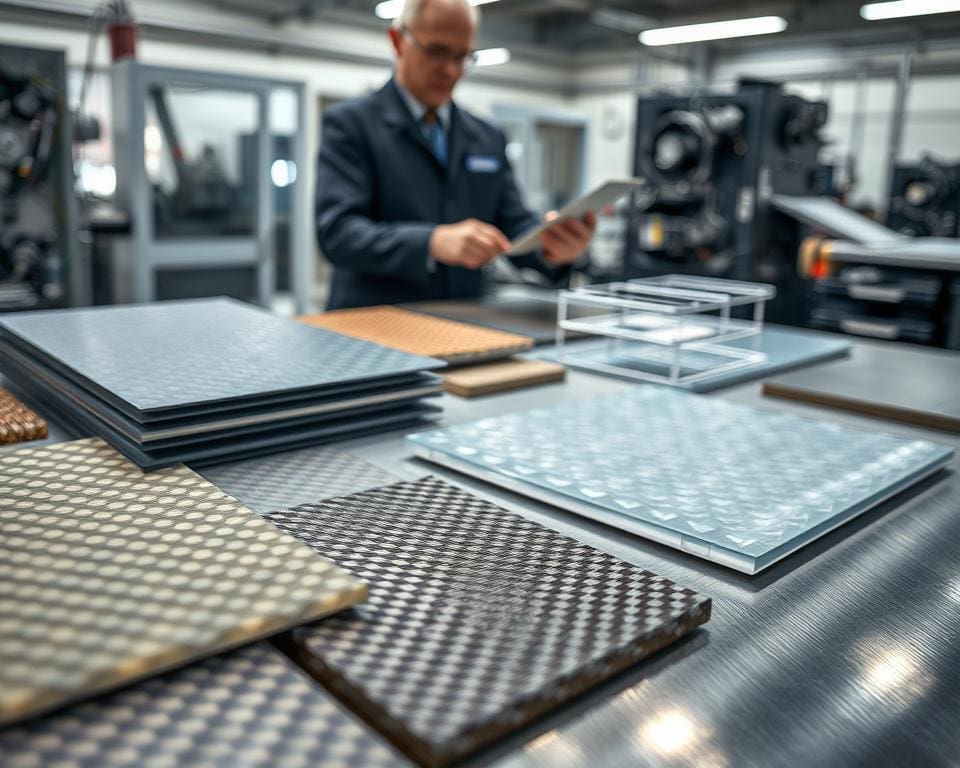

High-performance materials are at the heart of modern engineering. From Rolls-Royce Trent engines to the carbon-fibre wings on the Airbus A350, material innovation is enabling lighter, stronger and more efficient systems. For the UK, meeting net-zero ambitions and improving infrastructure durability depends on selecting the right engineering materials.
Global trends make this urgent. Electrification of transport and demands for better fuel efficiency push automotive and aerospace sectors to adopt advanced materials in engineering. Climate change raises operating temperatures and weather extremes, so structures and machines must withstand harsher conditions to deliver engineering resilience.
The scope of high-performance materials is broad. It covers advanced alloys such as titanium and nickel‑based superalloys, engineered composites like carbon-fibre-reinforced polymers, high-performance polymers such as PEEK, advanced ceramics including silicon carbide and alumina, and specialised coatings for thermal barrier and anti‑corrosion protection. Material selection is driven by mechanical, thermal, chemical and environmental performance needs.
This article will define these materials, give sector examples, and explain how they improve resilience and efficiency. It will also explore sustainability and practical design, testing and implementation considerations for engineers working on UK projects and international programmes.
Why are high-performance materials key in engineering?
Engineering progress rests on clear choices about materials. A concise definition of high-performance materials helps design teams set targets for strength, stiffness and fatigue life while meeting manufacturing and service demands. These materials combine high specific strength and stiffness with controlled thermal expansion, corrosion resistance and tailored failure modes to meet exacting project aims.
Defining high-performance materials and their distinguishing properties
High-performance materials show exceptional material properties (strength, stiffness, fatigue) that outperform conventional alloys and plastics. Carbon-fibre composites offer very high stiffness-to-weight ratios. Titanium alloys balance strength with corrosion resistance and lower density than steel. Nickel‑based superalloys keep strength beyond 700°C in turbine sections.
Functional traits range from electrical conductivity or insulation to chemical inertness and low density. Manufacturing compatibility matters. Techniques such as resin infusion, powder metallurgy and additive manufacturing influence selection. Standards from ASTM, ISO and British Standards guide tensile, fatigue, creep and fracture toughness testing to verify claims.
Examples from aerospace, automotive and civil engineering
Aerospace composites dominate modern airframes. The Boeing 787 and Airbus A350 use carbon‑fibre-reinforced polymers to reduce mass and improve fuel economy. Rolls‑Royce relies on nickel superalloys and ceramic matrix composites in hot sections to raise turbine temperatures and efficiency.
Automotive lightweight materials include aluminium alloys and advanced steels for crash structures, plus CFRP and thermoplastic composites in performance and electric vehicles to extend range. Jaguar Land Rover and Bentley pursue composite and alloy advances while battery chemistries and thermal management materials improve safety and energy density.
Civil infrastructure materials tackle durability and longevity. Fibre-reinforced polymer rebar and external FRP systems strengthen bridges during rehabilitation. Ultra-high-performance concrete enables longer spans with thinner sections. Corrosion-resistant coatings and stainless steels protect marine structures on major UK projects.
How advanced materials solve persistent engineering challenges
Reducing weight without losing strength raises payload and range in transport applications while cutting energy use. Improved thermal and chemical resilience lets components operate in harsher environments such as engines, chemical plants and offshore platforms.
Greater fatigue life lowers maintenance and downtime by extending service intervals. Design freedom from composites and additive manufacturing simplifies assemblies and reduces part count. Lifecycle thinking supports retrofitting ageing assets and lowers whole-life costs through longer service life and quieter maintenance schedules.
Benefits of using high-performance materials for resilience and efficiency
High-performance materials transform how engineers meet resilience and efficiency targets across UK infrastructure and transport. Small changes in material choice can yield large gains in performance, lower emissions and reduced operating costs.
Improved strength-to-weight ratios deliver clear operational advantages. A 10–15% weight reduction in a regional aircraft or light commercial vehicle can cut fuel burn by a similar percentage, boosting range or payload. In wind turbines, lighter blades increase energy capture while reducing foundation demands. These strength-to-weight ratio benefits drive better fleet economics and help meet stringent UK energy efficiency targets.
Energy savings materials play a central role in cost and carbon reduction. Switching from conventional steels to advanced aluminium alloys or carbon-fibre composites reduces fuel use and lowers lifecycle emissions. Operators from Stagecoach to Rolls-Royce report lower per-kilometre energy use after material upgrades, improving competitiveness and helping to meet regulatory standards.
Longevity and corrosion resistance extend asset life and cut maintenance cycles. Stainless steels, duplex alloys and polymer composites resist marine and industrial environments, reducing inspection frequency for bridges, pipelines and offshore platforms. Structural strengthening with fibre-reinforced polymers (FRP) has lengthened service life in many UK projects, lowering whole-life costs.
Lifecycle cost engineering explains the trade-off between higher initial material cost and lower lifecycle outlay. Choosing a pricier alloy or coating often reduces repair, replacement and downtime costs. Asset owners find that total cost of ownership falls when maintenance intervals stretch and failure rates decline.
Materials that perform under extreme conditions enable higher efficiencies and safer operation. Nickel superalloys and ceramic matrix composites allow gas turbines and aero-engines to run at higher temperatures, lifting thermal efficiency. Using certified high-temperature materials boosts power output while maintaining safety margins under demanding duty cycles.
Fatigue performance is critical for components under cyclic loads. Aerospace and rail sectors rely on materials with high fracture toughness and slow crack growth to extend service lives of airframes and axles. Better fatigue performance reduces unscheduled maintenance and improves operational reliability.
Wear and surface engineering cut losses in heavy industry and motorsport. Advanced ceramics, PVD coatings and nitriding treatments lower abrasion and adhesion, protecting moving parts and bearings. These improvements support longer maintenance intervals and retained performance in harsh environments.
Certification remains essential when deploying advanced materials. Compliance with CAA/EASA rules in aerospace and ISO/BS standards for industrial components ensures safety, traceability and acceptance. Careful material selection, combined with proven testing, unlocks the resilience and efficiency gains that modern engineering demands.
Sustainability and innovation driven by advanced material selection
Choosing the right materials shapes both performance and planet impact. Engineers must weigh embodied carbon against operational savings. A cradle-to-grave view helps justify lighter designs that cut fuel use across a product’s life.
Reducing carbon footprint through lightweighting and material efficiency
Lightweight structures deliver major operational savings for road and air transport. By reducing mass, designers lower fuel demand and emissions over decades of service. Topology optimisation and multi‑functional parts shrink embodied carbon while keeping strength.
Assessments that include manufacturing, use and end‑of‑life reveal true benefits. This lifecycle approach supports UK and EU decarbonisation targets and backs supply‑chain choices that favour lightweighting carbon reduction.
Recyclability, circular design and material lifecycle thinking
End‑of‑life planning matters for advanced composites and alloys. Thermoset CFRP has posed recycling challenges, yet new routes such as mechanical, chemical and pyrolysis recovery are gaining traction.
Thermoplastic composites ease reuse, while design for disassembly lets manufacturers reclaim high‑value aluminium and steel. Policy drivers like Extended Producer Responsibility spur investment in closed‑loop systems across automotive and aerospace supply chains.
Academic centres from Imperial College London to the University of Manchester work with industry to scale recycling methods. These partnerships strengthen circular design engineering and improve the recyclability of composites in real‑world applications.
Enabling new technologies: composites, ceramics, high-performance polymers and alloys
Composites permit integrated, aerodynamically efficient shapes used in drones and next‑generation aircraft. Advanced ceramics raise turbine temperature limits and extend tool life. Polymers such as PEEK and PEKK combine low mass with chemical resistance for medical and aerospace parts.
Additive manufacturing unlocks bespoke alloy chemistries and topology‑optimised components with less waste. Catapult centres and universities accelerate these innovations so industry can adopt enabling technologies materials at scale.
These material choices encourage sustainable materials engineering that balances performance, reuse and long‑term carbon targets. The path forward links research, standards and industry practice to make low‑impact engineering tangible and repeatable.
Design, testing and implementation considerations for engineers
Selecting the right material starts with a structured materials selection process that balances strength, cost, manufacturability, availability and environmental impact. Use tools such as MatWeb, Granta and finite-element analysis to compare options, and involve suppliers like Hexcel, Toray, ATI and ArcelorMittal early to check lead times and grade customisation. This approach reduces uncertainty and sets clear expectations for procurement and production.
Design for manufacturability must sit at the heart of concept development. Recognise constraints from resin transfer moulding, filament winding, powder metallurgy and additive manufacturing; these affect tolerances, surface finish and residual stresses. Apply non-destructive testing and process monitoring for traceability, and ensure the team follows engineering testing standards to meet safety-critical requirements.
Testing, certification and validation materials are essential steps before scaling. Progress from coupon tests to subcomponent trials and full-scale qualification, using accelerated life and environmental conditioning. Adhere to ASTM, ISO and British Standards, and address sectoral regimes such as EASA/CAA, vehicle type approval and Building Regulations to secure sign-off and market access.
Plan for implementation challenges composites and other advanced materials will bring. Build supply-chain resilience with local sourcing where possible, define repair and maintenance protocols, and invest in workforce training for new joining methods and inspection techniques. Pilot projects, phased roll-out and rigorous FMEA will help capture field data and drive continuous improvement, unlocking resilient, efficient and sustainable systems across the UK.