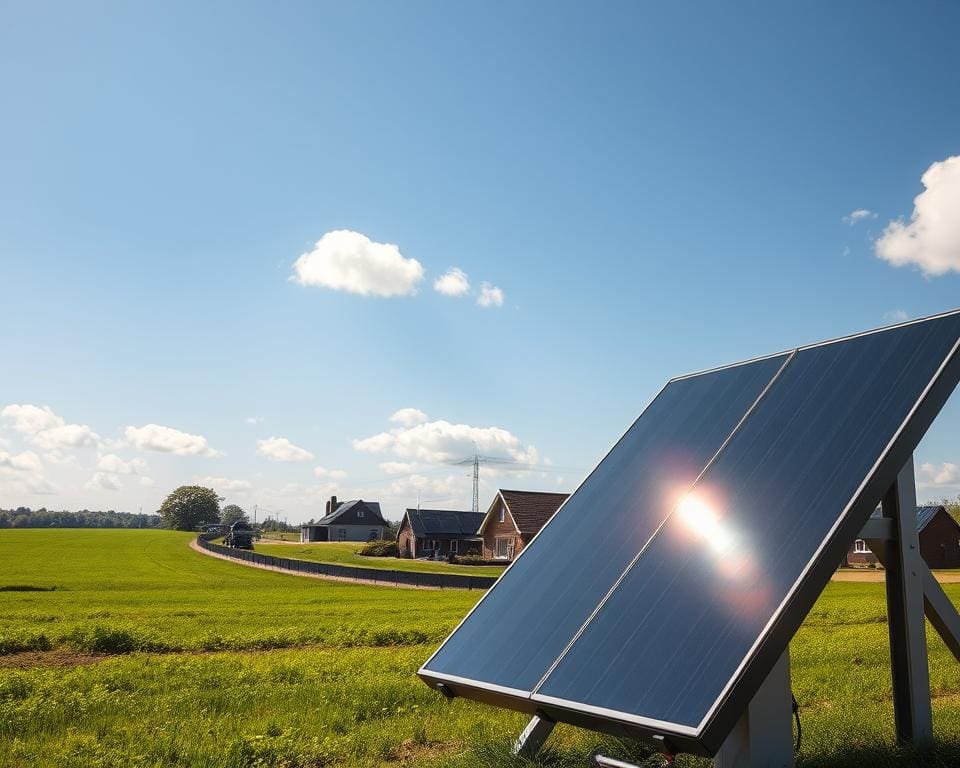

Solar boilers, often described as solar thermal boilers when linked to water‑heating systems, capture heat from sunlight through rooftop collectors and transfer it to water or a heat transfer fluid. This simple process makes them a practical tool for sustainable heating in homes, community buildings and businesses across the United Kingdom.
Despite Britain’s changeable weather, solar boilers UK can deliver useful heat year‑round. When combined with insulation, efficient boilers or heat pumps, they reduce reliance on gas and oil and help meet renewable heat UK objectives set out in national decarbonisation plans.
The benefits are clear: lower carbon emissions, smaller energy bills over time and seamless integration with district heating and hybrid systems. Later sections will examine technology, environmental impact, costs and real UK case studies to give homeowners, community leaders and business decision‑makers evidence‑based guidance.
Read on for a practical, inspirational look at how solar thermal boilers can contribute to sustainable heating and the wider push for renewable heat UK.
How do solar boilers support sustainable energy use?
Solar boilers turn sunlight into useful heat for hot water and some space heating. They pair solar collectors with heat exchangers and storage to serve homes, schools and community buildings. This approach can cut reliance on fossil fuels and help to reduce carbon heating across whole neighbourhoods.
Overview of solar boiler technology
Solar boiler technology uses flat‑plate or evacuated tube collectors to absorb solar radiation. A heat transfer fluid moves that energy to a cylinder via a heat exchanger. Systems can be direct where water is heated on site, or closed‑loop with antifreeze for UK winters.
Typical setups include thermosyphon systems for simple, low‑maintenance needs and pumped systems for larger or roof‑remote installations. When sized well, a solar thermal array can supply 30–60% of annual domestic hot water demand in temperate climates.
Brands such as Vaillant, Viessmann and Worcester Bosch work with certified solar thermal specialists to supply panels, cylinders and controls. Regular servicing and proper installation keep performance steady over decades.
Key environmental benefits for households and communities
Solar boilers deliver clear environmental benefits solar boilers bring to homes and local systems. They cut household CO2 by displacing gas and oil used for hot water. Scaling installations across a town lowers local air pollution and dependency on imported fuels.
Community heat projects that include solar thermal arrays boost energy security. Local generation reduces exposure to volatile energy markets. Pairing solar boilers with insulation, low‑flow fittings and smart controls maximises savings and environmental impact.
Social housing schemes and community centres with solar thermal systems show lower communal bills and reduced fuel‑poverty risks. Visible arrays on schools or leisure centres help educate the public about renewable heat.
Case studies from across the UK demonstrating real-world impact
Social housing retrofits in England have paired solar thermal with fabric upgrades. Monitored projects report sizeable cuts in communal hot water costs and improved tenant comfort.
In Scotland and Wales, farms and small businesses have used solar thermal to replace diesel or LPG for water heating. These rural applications show measurable savings and help to reduce carbon heating in off‑grid settings.
Educational and civic installations often provide steady seasonal yields. When schools and leisure centres combine solar thermal with controls and maintenance plans, payback times improve and long‑term performance is sustained.
- Correct sizing and integration are essential to secure predicted savings.
- Annual servicing and training for maintenance staff protect performance.
- Community projects gain most when local stakeholders join planning and funding.
How solar boilers work and their place in renewable heat systems
Solar boilers capture sunlight and turn it into usable heat for homes and businesses. A compact array of components sits at the heart of each installation. Together they reduce reliance on fossil fuels and boost energy resilience.
Basic components: collectors, heat exchangers and storage
Solar collectors mounted on a roof gather solar energy. You can choose flat‑plate collectors for durability and value or evacuated tube collectors when efficiency in low light matters. Both types perform well in UK conditions when sited with good exposure.
Heat exchangers transfer energy from the collector loop to the domestic hot water or central heating circuit. Indirect systems use a closed glycol loop paired with a plate or coil heat exchanger to protect drinking water and avoid freezing in winter.
Thermal storage takes the captured heat and holds it until needed. Hot water cylinders with integrated coils are common. Correctly sized storage maximises solar contribution through evenings and overcast days.
Types of solar thermal systems suitable for boilers
- Domestic hot water systems designed to supply baths, showers and appliances.
- Combi‑system compatible setups that pre‑heat a store and reduce boiler firing.
- Central heating pre‑heat arrangements with larger stores for space heating in well‑insulated homes.
- Process heat arrays sized for agriculture, hospitality and light industry needs.
Integration with existing boilers, heat pumps and district heating
With conventional boilers, solar thermal usually pre‑heats the hot water cylinder so gas or oil boilers top up to the set temperature. This lowers fuel use and eases boiler cycling.
To integrate solar with heat pump systems, controllers manage when the solar loop or the heat pump runs. Solar thermal can supply high‑temperature DHW or reduce the heat pump’s workload. Hybrid heating systems UK often pair these technologies to cut electricity demand while keeping comfort high.
For communal networks, solar arrays can feed buffer stores or low‑temperature district heating. Proper heat exchangers, controls and hydraulic compatibility are essential. Designs must address flow temperatures, anti‑legionella measures and suitably sized stores for reliable hybrid operation.
For practical guides and sizing tools, see this short primer on solar water heaters and home systems at solar water heaters: affordable energy for. The right design lets homeowners integrate solar with heat pump setups and extract maximum benefit from renewable heat.
Economic and policy drivers for adopting solar boilers in the UK
The decision to fit a solar boiler blends practical finance with public policy. Upfront costs vary by collector type, system size and installation complexity. Typical domestic installs often sit in the low thousands, rising for larger or bespoke systems.
Operating savings show up through lower gas, oil or electric bills. Payback periods commonly range from seven to fifteen years. The return on investment solar heating is strongest where households use lots of hot water and couple panels with insulation and efficient cylinders.
Lifetime and maintenance matter. Well‑maintained solar thermal systems can run for 20–25 years. Periodic servicing, glycol changes in closed loops and corrosion checks keep performance steady and protect long‑term value.
Available grants, incentives and regulations
National direct subsidies for solar thermal have reduced, yet local councils and devolved administrations sometimes fund renewable heating or retrofit packages. Local schemes can make a real difference to affordability.
The Boiler Upgrade Scheme focuses on heat pumps and biomass, so homeowners seeking solar solutions should explore Boiler Upgrade Scheme alternatives. Solar thermal may appear within broader retrofit grants or low‑carbon funding pools.
VAT treatments and planning rules can affect final costs. Many domestic roof‑mounted systems avoid planning permission, yet listed buildings and conservation areas need special checks. Commercial and community projects can access green finance, loans and ESCO models.
Market trends and installer accreditation to watch for
Seek installers with strong credentials. MCS accreditation remains a benchmark where applicable. Trade bodies such as the Renewable Energy Association help identify reputable firms with proven solar thermal experience.
Look for product marks like Solar Keymark and compliance with British Standards for cylinders and plumbing. Hybrid systems pairing solar thermal with heat pumps and smart controls are gaining traction across the UK market.
To protect the investment, get multiple quotes, request written performance projections and insist on warranties and clear aftercare commitments. These steps sharpen the financial case and improve the expected return on investment solar heating delivers.
Practical considerations for homeowners and businesses
Before installing solar boilers, arrange a thorough site assessment with an accredited installer. A proper survey checks site suitability solar thermal by examining roof orientation and tilt, shading from trees or neighbouring buildings, and available roof area. South-facing roofs at 30°–45° are ideal, but east/west arrays can still perform well. If roof space or structural capacity is limited, consider ground-mounted collectors as an alternative.
Match system size to your hot water demand profile to avoid oversizing or undersizing. Ask for a solar thermal checklist UK that outlines projected annual solar fraction, payback estimates and warranty terms. Request details on collector types, storage options and how the system will integrate with existing boilers, heat pumps or district heating so the solar contribution is maximised without compromising comfort.
Choose professional installation and commissioning to secure safe, efficient operation. Accredited installers provide hydraulic integration, controller configuration and safety tests at handover. Routine maintenance solar boiler routines include annual checks of pumps, controllers and loop pressure, plus glycol testing or replacement every 5–10 years. A maintenance agreement helps sustain long-term performance.
Optimise controls and plan for winter and low-sun strategies by using differential controllers, time schedules and hot-water priorities. Ensure safety and hygiene measures—such as periodic thermal disinfection to manage legionella risk—are included in the design and comply with building regulations. Consider end-of-life recycling for copper, aluminium and glass and schedule responsible decommissioning when the system reaches its lifespan.