
What makes modern HVAC systems more efficient? At its simplest, modern HVAC refers to contemporary heating, ventilation and air conditioning systems such as high-efficiency gas condensing boilers, air-source and ground-source heat pumps, hybrid systems, high-efficiency air conditioning units, mechanical ventilation with heat recovery (MVHR/HRV) and integrated smart controls.
Efficiency matters in the UK because households face rising energy bills and mounting regulatory pressure. The Department for Business, Energy & Industrial Strategy frames policy through Net Zero targets and Building Regulations Part L, while consumers seek energy efficient heating and cooling to cut costs and carbon emissions.
Key gains from modern HVAC efficiency include advances in variable-speed compressors and reversible heat pumps, smarter thermostats and zoned controls, improved heat exchangers and low‑GWP refrigerants, plus energy recovery ventilation. The article will also cover design, installation and maintenance practices that make efficient home climate control deliver real savings.
Authoritative guidance from the Energy Saving Trust and CIBSE underpins the claims, and manufacturers such as Daikin, Mitsubishi Electric and Trane illustrate how technology is evolving. Practical examples and supplier choices, including a helpful comparison of heating approaches, can be explored at best heating systems for modern homes.
The promise is simple: UK HVAC improvements now make comfortable, low‑carbon living attainable for many homeowners. The sections that follow unpack the technologies and steps that deliver measurable savings and environmental benefits.
What makes modern HVAC systems more efficient?
Modern heating and cooling rely on smarter components and wiser control. Small, targeted upgrades deliver comfort and cut energy use. The right mix of hardware and software lets households respond to changing weather, occupancy and tariffs with minimal waste.
Variable-speed compressors and zoned control
Variable-speed compressors match output to demand by ramping up or down rather than switching full on and off. This removes the inefficiency of frequent cycling found in fixed-speed units, giving steadier temperatures, quieter operation and lower running costs.
Zoned heating uses multiple thermostats, motorised dampers or additional indoor units to warm only occupied rooms. In a Victorian terrace, for example, a multi-split layout can serve a kitchen in the morning and bedrooms at night, reducing wasted heat. Manufacturers such as Mitsubishi Electric and Daikin promote inverter-driven models and CIBSE guidance supports zoning strategies to cut energy use.
Heat pump advances and reversible systems
Air-source and ground-source heat pumps now deliver higher seasonal performance factors and better low-temperature performance. Improvements such as scroll and twin-rotor compressors plus cold-climate models help maintain efficiency during chilly UK winters.
Reversible heat pump systems provide both heating and cooling from one unit, replacing separate boiler and air-conditioning equipment. This reduces the installation footprint and simplifies maintenance. Schemes like the Boiler Upgrade Scheme encourage uptake of heat pumps UK, while brands such as NIBE and Vaillant supply MCS-accredited solutions.
Smart thermostats and connected controls
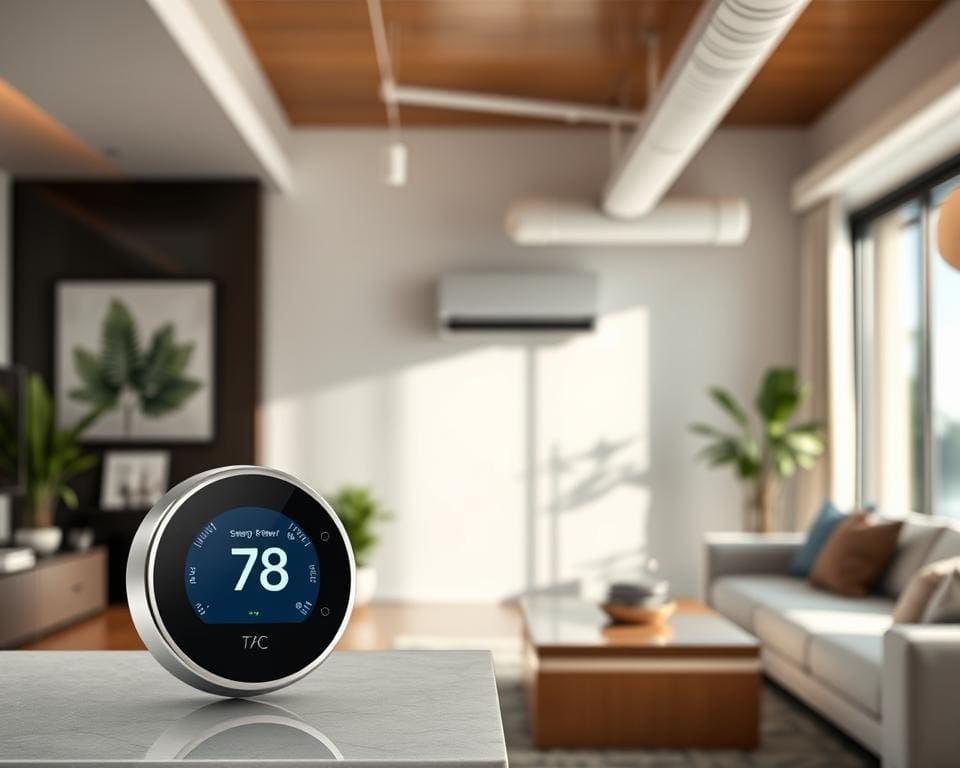
Smart thermostats learn routines and adjust schedules to cut unnecessary runtime. Devices from Nest, Hive and Honeywell Home pair learning algorithms with geofencing, adaptive scheduling and remote access to keep comfort high and consumption low.
Connected HVAC controls link thermostats to weather forecasts, time-of-use tariffs and smart meters so systems run when carbon intensity and costs are lower. Open standards such as OpenTherm, Modbus and BACnet help installers integrate components securely and optimise performance. Read more about smart heating benefits on this guide.
Key technologies driving energy savings in modern HVAC
Modern heating, ventilation and air conditioning systems cut energy use through smarter components and better design. Homeowners and specifiers can choose technologies that lower bills, reduce emissions and improve comfort. The paragraphs that follow outline four practical advances that make a measurable difference in British homes.
Inverter-driven compressors
Inverter-driven compressors use a variable-frequency drive to match motor speed to demand. This avoids repeated start–stop cycles and keeps the system near its most efficient operating point. Typical inverter systems save about 20–40% energy compared with fixed-speed compressors depending on duty cycle and climate.
Applications range from domestic air-source heat pumps to variable refrigerant flow installations in larger homes and small commercial properties. Improved Seasonal Coefficient of Performance (SCOP) and SEER ratings are common when inverter-driven compressors replace conventional units.
High-efficiency heat exchangers and airflow design
Heat exchangers with microchannel tubing and enhanced fin geometries boost heat transfer while cutting refrigerant charge. New coil materials resist corrosion and keep performance high over time.
Optimised airflow design matters as much as coil technology. Correct duct sizing, low-resistance filters and fans with electronically commutated motors maintain capacity with lower power draw. Follow CIBSE procedures and UK Building Regulations guidance to size ducts and specify ventilation correctly.
Advanced refrigerants with lower global warming potential
The industry is shifting from high-GWP HFCs such as R410A to alternatives like HFO refrigerants, R32 and small-charge options such as R290. These low-GWP refrigerants reduce lifecycle warming impact and comply with the F-Gas phase-down retained in UK law.
Trade-offs include new flammability classifications (A2L, A3) that require trained installers and mitigations. Manufacturers such as Daikin, Mitsubishi Electric and Panasonic publish equipment lines that use lower-GWP refrigerants, while RACCA offers guidance and F-Gas certification ensures competent handling.
Energy recovery ventilators and heat recovery systems
Mechanical ventilation with heat recovery (MVHR) and energy recovery ventilator (ERV) systems recover heat from exhaust air to precondition incoming fresh air. ERV units also transfer moisture, which helps indoor humidity control in certain climates.
Well-designed MVHR can reclaim 60–90% of heat from extract air in well-insulated homes, reducing ventilation heat losses and easing the load on heat pumps. These systems work best in airtight buildings and need scheduled filter changes and occasional core cleaning to retain efficiency.
Design, installation and maintenance practices that boost efficiency
Good design and careful installation turn efficient equipment into a high-performance system. Start with precise measurements, follow recognised standards and plan for the realities of UK homes, from Victorian solid walls to new-build airtight flats.
Proper sizing and load calculations for UK homes
Accurate heat load calculation prevents oversizing and short cycling. Use BS EN 12831 for heating load and CIBSE Guide A for internal gains when assessing varying insulation, thermal bridging and fabric types.
Engage MCS accredited installers or chartered building services designers to choose emitters and set flow temperatures for heat-pump compatibility. Correct HVAC sizing UK ensures the system matches real demand.
Quality installation techniques to prevent losses
Careful installation keeps energy where it belongs. Ensure correct refrigerant charge, insulate refrigerant and heating pipes and reduce duct runs. Seal ductwork to leakage standards and place outdoor units to avoid recirculation and cold pockets.
Use certified tradespeople such as Gas Safe registered engineers for boilers and technicians with F-Gas or MCS accreditation for renewables. Common faults like undercharged refrigerant or oversized ductwork harm efficiency and may void warranties.
Regular maintenance, filter changes and system tuning
A planned maintenance schedule sustains performance and cuts energy use. Arrange annual servicing for boilers and heat pumps. Clean or replace filters on a monthly to quarterly basis for MVHR and HVAC systems, depending on occupancy and air quality.
Tasks such as coil cleaning, fan checks, lubrication and refrigerant leak inspection reduce drift and extend equipment life. Follow manufacturer intervals from brands like Worcester Bosch, Vaillant, Mitsubishi Electric and Daikin to keep warranties valid.
Commissioning and performance monitoring
Proper HVAC commissioning verifies flows, temperatures and control logic at handover. Test sensors, confirm control sequences and adjust setpoints so the installation meets design intent.
Adopt simple performance monitoring tools such as smart thermostat logs, energy metering and remote building management for larger homes. Ongoing system tuning and performance monitoring detect faults early and allow optimisation of comfort and cost.
Benefits for homeowners and the environment
Efficient HVAC delivers clear homeowner savings through lower energy use and smaller bills. Modern heat pumps and inverter-driven systems typically cut annual heating and cooling costs compared with older boilers and fixed-speed air conditioners, and case studies from the Energy Saving Trust and manufacturer data show meaningful reductions in fuel bills. Available UK support such as the Boiler Upgrade Scheme, local authority grants and Energy Company Obligation measures can reduce upfront costs and improve payback periods, making energy bill savings UK easier to achieve.
Beyond cost, efficient systems raise comfort and air quality. Variable-speed compressors, zoning and mechanical ventilation with heat recovery (MVHR) keep temperatures steady, reduce noise and supply filtered fresh air. This consistent modulation helps prevent damp and mould in airtight retrofit homes and improves health outcomes for allergy sufferers or those sensitive to humidity and indoor pollutants.
There are strong environmental gains too. Higher-efficiency equipment and low-GWP refrigerants cut direct and indirect greenhouse gases, supporting reduced carbon emissions and the UK’s Net Zero targets. Replacing oil or LPG boilers with electric heat pumps powered by renewable electricity lowers lifecycle emissions and helps households comply with evolving Building Regulations and rental standards, often increasing property appeal.
Looking ahead, efficient HVAC boosts long-term resilience and value. Homes become ready for electrification, time-of-use tariffs and smart-grid interactions, and they integrate more smoothly with rooftop solar and battery storage. Falling heat pump costs, growing MCS and TrustMark installer networks and ongoing product improvements mean the benefits of efficient HVAC will expand, offering sustained homeowner savings and a pathway to low-carbon heating.