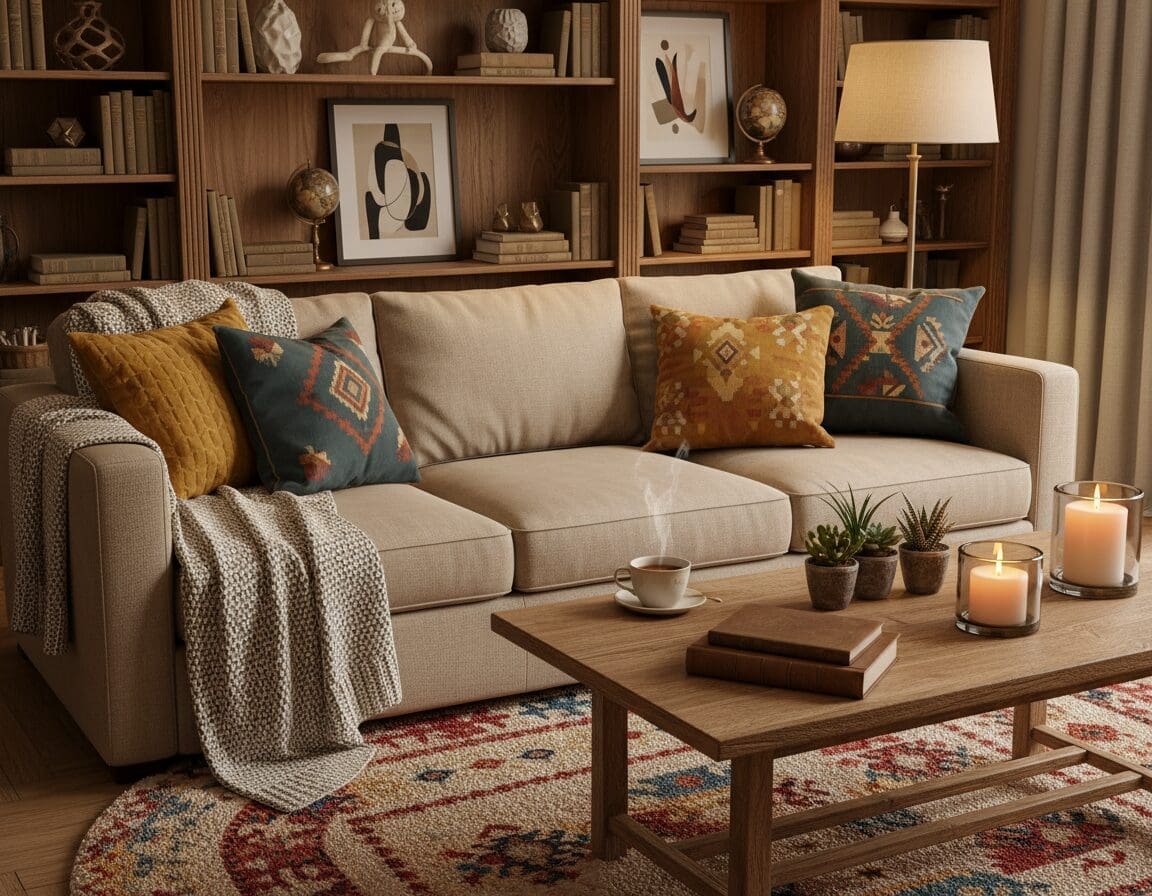

You want a cosy living space that feels warm, welcoming and practical without a full renovation. Cozy home decor blends comfort, texture and visual harmony so small, considered changes can have a big impact on how your comfortable living room feels.
This guide is for homeowners and renters across the United Kingdom. You will be walked through layout, lighting, colour, textiles, personal touches and budget-friendly maintenance so you can make smart choices that suit your home and lifestyle.
We will cover optimising layout and flow, layering textiles and soft furnishings, selecting lighting and colour schemes, adding plants, artwork and keepsakes, plus low-cost strategies for upkeep. The advice draws on trusted UK sources: John Lewis & Partners and Dunelm for soft furnishings, CIBSE guidance on layered lighting, and Energy Saving Trust tips for retaining heat with curtains and rugs.
Expect measurable outcomes: improved comfort, a warmer ambience, better use of space, a more consistent style and easier daily maintenance. To start, identify the focal point of your living room — a fireplace, TV or bay window — and consider whether your furniture orientation supports it. That simple action begins the transformation with immediate results.
Setting the foundation: layout, lighting and colour schemes for a warm atmosphere
Start by seeing layout, lighting and colour as a single system. Your choices for furniture arrangement UK, layered lighting and a warm colour palette work together to shape a cosy atmosphere. Plan them in tandem so each element supports the others.
Optimising layout for comfort and flow
Place seating to encourage conversation and relaxation. Position sofas and chairs facing each other around a central coffee table or focal point so people can talk and unwind easily.
Keep clear pathways to make the room feel more spacious. Aim for 60–90 cm (2–3 ft) for main walkways and avoid blocking doors or natural traffic routes.
Match furniture scale to room size to prevent clutter. Choose compact modular sofas or slender-legged pieces for small rooms. Use storage ottomans and nesting tables to reduce visual mess. Measure before you move and use masking tape to map layouts on the floor.
Choosing lighting to enhance cosy home vibes
Layered lighting delivers depth and flexibility. Combine ambient ceiling or recessed lights with task lamps by seating and accent lights for art or shelving. This approach gives you control over mood and function.
Pick warm-coloured bulbs and fit dimmers where possible. Aim for bulbs around 2,700–3,000K to create a welcoming glow. Look for energy-efficient LED options at B&Q, Screwfix or IKEA that offer warm tones and long life.
Add candles and fairy lights for intimate impact. Battery-operated LED candles and string lights are safe and easy to place on trays or in lanterns to boost atmosphere without fuss.
Selecting colour schemes that feel inviting
Choose warm neutrals and muted tones to make a calm base. Warm greys, soft taupes, dusky blues and sage greens are reliable choices that support a cosy atmosphere without dominating the room.
Use accent colours sparingly to keep the scheme restful. Introduce richer hues through cushions, throws or a single accent wall rather than painting the whole room in a bold shade.
Consider textured paints or wallpapers for subtle depth. Grasscloth, linen-look vinyl or suede-effect paint add tactile interest and pair well with a warm colour palette. Test swatches at different times of day and use light neutral trims to reflect daylight in smaller UK living rooms.
cozy home decor: textiles and soft furnishings to add warmth
Textiles are the quickest way to make a room feel warm and lived in. Your choice of soft furnishings UK can change acoustics, improve thermal comfort and create visual softness with little effort. A few well-chosen items lift mood and add personality without major renovation.
Layering rugs, throws and cushions
Start with a neutral ground rug, then add a smaller high-pile or patterned rug on top to create depth. Layering rugs works well to define seating zones and give underfoot warmth.
Mix wool, faux fur, linen and knitted fabrics to build tactile interest. Use anti-slip underlays under layered rugs to protect floors and keep things safe.
Vary cushion sizes and patterns sparingly. Place larger plain cushions at the back and introduce patterned cushions as accents. Pair cosy throws and cushions in complementary tones for a cohesive look.
Choosing curtains and blinds for insulation and ambience
Choose thermal curtains to trap heat and reduce draughts, a useful feature in many UK homes with older glazing. Heavy lined curtains offer both insulation and a soft, luxurious backdrop.
Pair heavier curtains with sheer voiles to keep light while maintaining privacy. Hang curtains 10–15 cm above the frame and let them graze the floor to make ceilings feel taller.
Select header styles that suit your room. Eyelet and pencil pleat headers change drape and fullness. Shops such as Dunelm and Next Home stock a wide range of lined options suitable for British interiors.
Practical tips for maintaining soft furnishings
Rotate and flip cushions and rugs to even out wear and fading. Regular small changes extend the life of your pieces and keep the room looking fresh.
Follow fabric care labels when washing and use specialist upholstery cleaners for stains. For delicate or structured items, consider professional dry-cleaning to retain shape and colour.
Plump cushion inserts often and choose fills that match your needs, from duck feather to down alternatives or high-resilience foam. Vacuum upholstery weekly with an attachment and air textiles occasionally to reduce dust and refresh fibres.
Personal touches and decor accents to make your living space inviting
Make your living room feel like yours by adding a few considered pieces that bring comfort and personality. Aim for a balance between curated display and practical storage so the space remains snug without tipping into clutter. Small updates can transform the room and keep it feeling fresh through the seasons.
Incorporating plants and natural elements
Choose low‑maintenance specimens that suit your light. Snake plant, pothos and ZZ plant cope with low light and are widely stocked at B&Q, Dobbies and independent garden centres across the UK. Match pot size to the plant and pick compost from trusted brands such as Thompson & Morgan to avoid overwatering and root stress.
Introduce natural materials for tactile warmth. A wooden coffee table, stone coasters or seagrass baskets give organic texture and work well alongside soft furnishings. Bring home seasonal blooms from supermarkets like Sainsbury’s or from a local florist to refresh the look affordably and add scent and colour.
Displaying meaningful accessories and curated clutter
Create simple decor vignettes on side tables and shelves using framed photos, favourite books and small keepsakes. Group items in odd numbers for a balanced composition that reads well from across the room. Use trays and boxes to corral remotes, candles and matches so practical items look intentional.
Rotate accessories to keep the scheme lively. Try a seasonal swap or a one‑in, one‑out rule to prevent overcrowding. For hidden storage, choose sideboards or media consoles from IKEA or Barker and Stonehouse to hide everyday clutter while keeping surfaces calm.
Choosing artwork and mirrors to enhance comfort
Select prints and paintings with calming palettes and familiar motifs such as landscapes or botanical studies to support relaxation. Keep frame styles or colours consistent for a cohesive look when you hang multiple pieces.
Hang a mirror opposite a window to amplify daylight and give the impression of more space. Plan a gallery wall carefully using paper templates or cut‑outs before you commit to pinholes. Look to independent UK artists on Etsy or local galleries for original pieces, or choose affordable prints from Desenio to suit your budget.
Finish with a few cosy accents like a textured throw, soft lamp light and a small cluster of living room accessories that feel personal. Thoughtful choices create a room that welcomes you and rewards quiet moments.
Practical, budget-friendly strategies for maintaining a cosy living space
Keeping a warm, inviting living room needn’t cost a fortune. Start by rearranging existing pieces to refresh flow and sightlines; moving a sofa, swapping a rug or changing the focal wall can feel like a full revamp with zero spend. For low-cost home updates, swap cushion covers and throws seasonally—retailers such as H&M Home, Dunelm and Next Home offer affordable covers that let you refresh colour and texture without buying whole cushions.
Upcycling furniture is a smart way to add character while staying frugal. Visit local charity shops, Facebook Marketplace and Gumtree for finds such as side tables or lamps, then revive them with a coat of paint, new hardware or an updated lampshade. A small investment in a statement rug, pouffe or new lampshade often delivers more impact than replacing large items, and it is central to effective UK decorating on a budget.
Maintenance preserves the cosy feel and extends the life of your textiles. Clean windows and frames seasonally to maximise natural light and warmth, and vacuum sofas and rugs weekly to reduce dust and maintain fluff. Store off-season throws and cushions in breathable bags in a cool, dry place and use cedar blocks or lavender sachets to deter moths; these simple steps help you maintain cosy home comfort without extra expense.
Plan smartly to avoid impulse buys. Create a short wishlist, prioritise projects by impact and cost, and set a modest fund for routine updates so improvements remain manageable. Measure doors, window widths and rug areas before you buy to prevent returns. Use mood-board apps like Pinterest or Houzz to collect ideas, photograph your space before shopping, and consult Energy Saving Trust guidance when choosing thermal curtains or window treatments to balance comfort and efficiency.