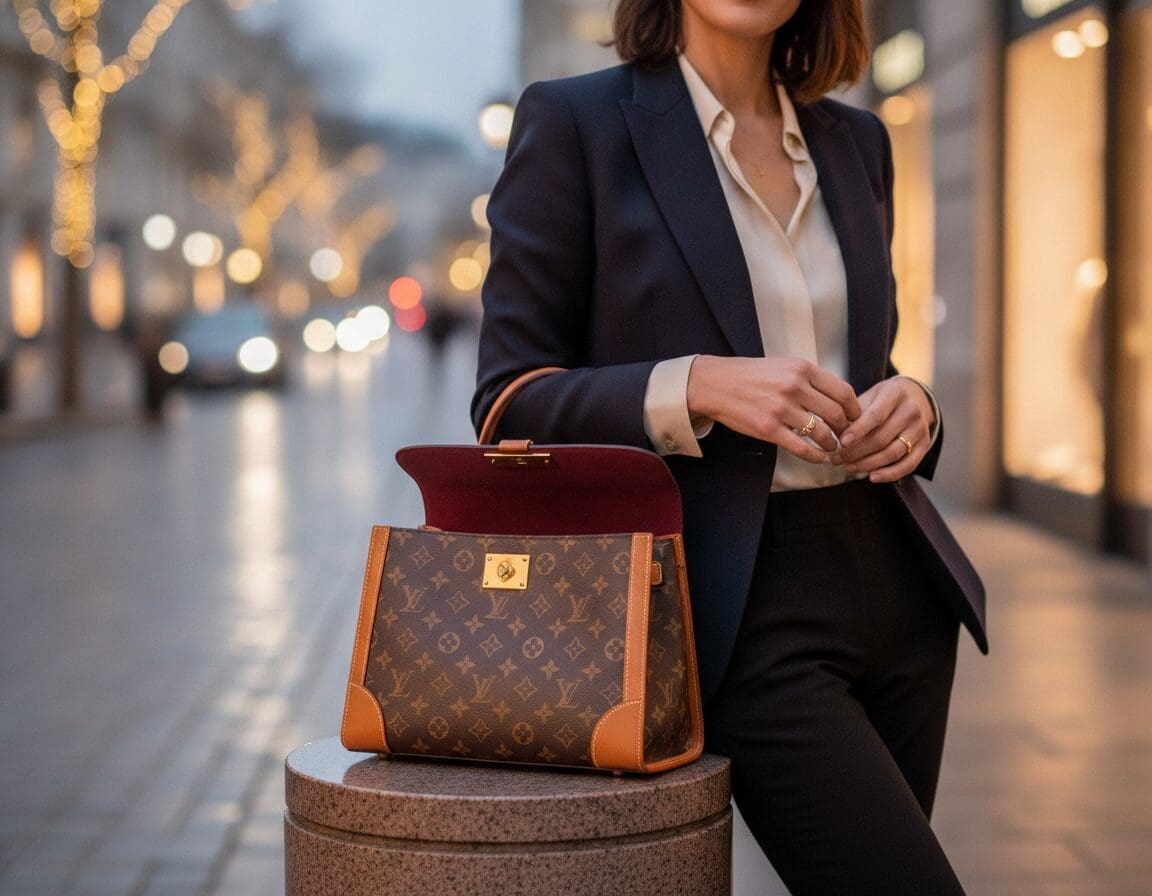

You already know the name Louis Vuitton from shop windows on Bond Street and displays in Harrods and Selfridges. The Louis Vuitton bag has kept a steady presence from its 1854 founding in Paris through to today’s catwalks and London Fashion Week shows. That long view of Louis Vuitton history explains much of the appeal you see on the high street and at red-carpet events.
In the UK market, the LV bag reputation is shaped by more than heritage. British celebrities and influencers often carry pieces in street-style shoots, while department stores and flagship boutiques make the brand easy to spot. This constant visibility helps explain why Louis Vuitton is iconic for many buyers here.
Your decision to own a Louis Vuitton bag usually rests on several pillars. Heritage and craftsmanship give the product credibility. Recognisable branding and enduring silhouettes deliver instant style. Limited editions and a strong resale market add practical value. These drivers—heritage, craft, design, culture and investment—are the themes the article will unpack in detail.
As you read on, you will learn how the brand’s early reputation for trunks led to modern handbags, how ateliers maintain quality, and how signature motifs create immediate recognition. The next sections examine materials, iconic shapes and the resale market so you can judge what owning a Louis Vuitton bag means for your style and your wallet.
Heritage and craftsmanship behind the luxury label
You will find the roots of the brand in 1854 Paris, when Louis Vuitton began making flat-topped trunks that changed travel. The history of Louis Vuitton charts a shift from practical luggage to covetable handbags and accessories across the 20th century. Georges Vuitton introduced the Monogram canvas in 1896 to deter counterfeiters and give the house a clear visual signature.
As the maison grew, it joined LVMH and worked with creative directors such as Marc Jacobs and Nicolas Ghesquière. They refreshed lines while respecting Louis Vuitton heritage. You will notice heritage references in runway revivals, museum displays at the Musée Louis Vuitton and archival pieces that inform new collections.
Origins and evolution of the brand
The brand began by solving a traveller’s problem: stackable, water-resistant trunks. That innovation set a standard for design and function. Over decades, trunks gave way to leather goods and iconic silhouettes. You can track the evolution through the monogram, Damier patterns and the expansion into fashion and accessories.
Traditional techniques and artisanal workshops
Skilled artisans in ateliers across France, Spain and Italy carry out precise tasks such as leather cutting, saddle stitching and edge finishing. LV craftsmanship is rooted in handwork; techniques like saddle stitch and careful piping extend a bag’s life and finish.
You will see multi-stage inspections along production lines, from pattern cutting to final checks. Training and apprenticeship programmes help pass skills to new generations. This investment in hands-on learning keeps artisanal leatherwork alive within the company.
Materials sourcing and quality control standards
Materials range from Monogram and Damier coated canvases to vachetta cowhide trim, calfskins and select exotic leathers. Hardware uses polished brass or palladium finishes to match design intent. The choice of canvas supports weather resistance and easy care, while vachetta leather develops a unique patina over time.
Suppliers are chosen for traceability and compliance with regulations such as CITES for exotic skins. Luxury manufacturing standards include documented sourcing, controlled tannery relationships and recycling measures in production. You will see rising emphasis on responsible sourcing and supply-chain transparency as part of quality and ethical commitments.
Louis Vuitton bag: timeless design and recognisable branding
You will spot a Louis Vuitton bag design from across a room. The house blends visible symbols with subtle variants so you can choose a statement piece or a quieter option for daily wear.
Signature motifs and monogram impact on brand identity
Georges Vuitton created the Monogram canvas in 1896 as an anti-counterfeiting device. Its repeating LV emblem and floral motifs became an instant hallmark of the maison.
The constant use of the monogram across trunks, handbags and accessories builds rapid visual recognition. A Louis Vuitton bag is identifiable from a distance, which reinforces its signaling power.
Branding psychology plays a clear role. You can opt for overt monogram pieces or pick Epi leather and monochrome lines when you prefer restraint. The maison enforces trademarks and pursues counterfeits to protect design integrity.
Iconic silhouettes that have endured decades
Classic models such as the Speedy, Keepall, Alma, Neverfull and Twist carry defining shapes that you can rely on. The Speedy’s compact form suits everyday city life. The Neverfull functions as a versatile tote for work and travel.
These iconic LV silhouettes last because they combine practical proportions with enduring style. They adapt to new materials, hardware and sizes while preserving core lines that pass between generations.
Appearances in celebrity wardrobes and popular culture help keep each silhouette relevant. Customisation options let you make a familiar shape feel personal.
How limited editions and collaborations maintain desirability
Seasonal capsule drops and artist partnerships inject novelty into established silhouettes. Past projects with Takashi Murakami and Stephen Sprouse are examples of how creative alliances can refresh classics.
Limited edition Louis Vuitton releases often include numbered pieces, special linings or signatures that show provenance. Those markers boost collectibility and resale interest.
LV collaborations widen the brand’s cultural reach and attract new audiences. Short runs and unique prints create urgency among buyers and drive demand on the secondary market.
Fashion influence and cultural relevance in the UK
Your first view of Louis Vuitton UK often comes from flagship stores on New Bond Street and Regent Street or from grand displays inside Harrods and Selfridges. These locations keep the brand visible on high streets and in luxury districts, helping to shape London fashion through constant presence.
Your encounters with the label extend beyond shops. Brand exhibitions, pop-ups and runway shows at London Fashion Week place Louis Vuitton in the cultural conversation. Press coverage and in-store events turn product launches into moments that matter to shoppers and commentators.
You will notice celebrity handbags UK driving attention. Actors, musicians and TV presenters appear with classic monogram pieces on red carpets and in editorial shoots. Social media posts by public figures speed up trends and normalise luxury for a wider audience.
Street culture plays a big role in LV street style Britain. Classic clientele wear the house’s icons alongside youngsters who remix monogram pieces with trainers, vintage denim and contemporary streetwear. This cross-generational use keeps the brand relevant across scenes.
Your choice of bag in the UK often reflects practical needs. Damp weather and daily commuting make canvas and treated leather popular. Functional shapes like the Neverfull and versatile totes answer the demands of urban life while retaining signature style.
UK fashion journalism shapes how you view these bags. Coverage in Vogue UK, The Guardian’s style pages and British GQ highlights trends, calls out craftsmanship and debates cultural meanings. Reviews and features guide buying habits and influence public opinion.
You will see two strong narratives in public debate. Some buyers treat Louis Vuitton as a status symbol, using celebrity endorsements and visible logos to signal success. Other buyers focus on craftsmanship and heritage, valuing construction quality and longevity.
Sustainability and ethics also inform your decisions. Interest in provenance and longevity has boosted pre-owned markets and vintage trading in the UK. This shift affects both resale dynamics and how retailers present pieces to a more eco-aware audience.
- Retail footprint: New Bond Street, Regent Street, Harrods, Selfridges.
- Media influence: Vogue UK, The Guardian style pages, British GQ.
- Public figures: actors and musicians who carry celebrity handbags UK on red carpets and shoots.
Looking at how people wear and talk about the brand makes its LV cultural impact UK clear. You will find Louis Vuitton woven into everyday London fashion and into wider conversations about style, value and sustainability across Britain.
Investment value and resale market for designer handbags
The global resale market for designer handbags is robust, and Louis Vuitton consistently performs strongly. You will find that recognisability, durable materials and steady demand support Louis Vuitton bag resale values. Market reports and auction results show classic pieces often outperform lesser-known labels on resale platforms.
In the UK you can access pre-owned Louis Vuitton through Vestiaire Collective, The RealReal, specialist consignment stores and established auction houses. These venues handle many handbag resale UK transactions and supply the authentication and provenance records buyers need. Using reputable channels reduces the risk of counterfeits and helps preserve resale value.
Several factors determine LV investment value. Model desirability matters most: silhouettes such as Speedy, Neverfull and Alma tend to hold value. Condition, original packaging, receipts and authentication certificates also affect price. Limited editions and high-profile collaborations can enjoy outsized appreciation, while celebrity visibility and wider fashion trends influence short-term swings.
If you are treating a purchase as an investment, choose timeless models, neutral colours or the iconic monogram, prioritise mint condition and retain documentation. Be aware of risks: market fluctuations, evolving tastes, restoration costs and potential tax implications if you sell frequently in the UK. Use professional authentication and, for vintage Louis Vuitton value, consider trusted restoration to safeguard worth over time.