
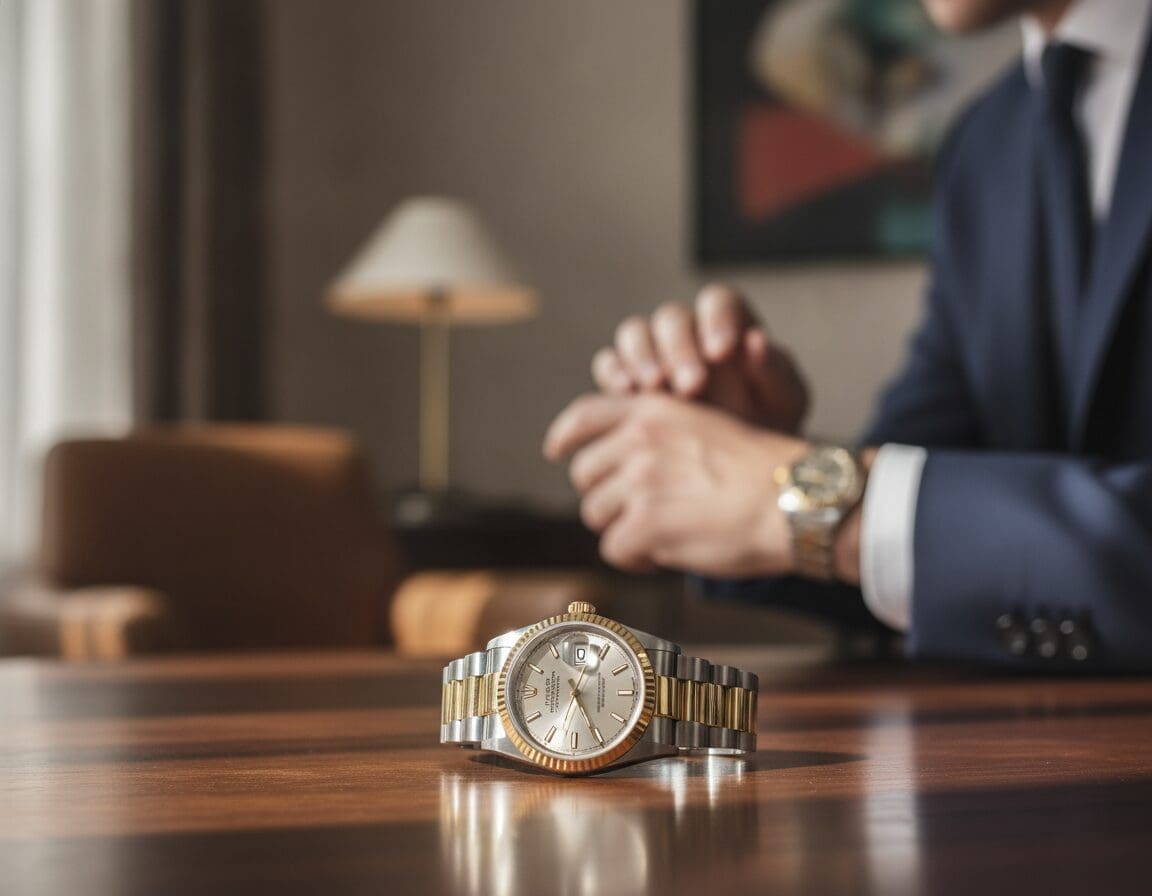
You want a clear reason for why Rolex matters beyond surface glamour. A Rolex watch is instantly recognisable; its crown logo and models like the Submariner, Daytona and Datejust carry cultural weight. That recognition often opens doors, but the appeal runs deeper than status alone.
Consider the measurable strengths that justify the Rolex luxury label. Precision engineering, robust materials and long-term serviceability give a tangible Rolex value. For many owners the watch is a daily tool and a family heirloom, not merely a symbol.
In the United Kingdom the market dynamics shape how you access and keep a Rolex. Authorised dealers, specialist retailers and auction houses influence availability and pricing. The pre-owned market in the UK also affects resale prospects and aftercare options, reinforcing why Rolex UK remains in demand.
This article examines three pillars that explain why Rolex is more than ornamentation: heritage and legacy; craftsmanship, materials and performance; and the emotional, cultural and investment value that sustains its reputation. Each section will show how practical benefits and cultural meaning combine to make a Rolex watch a durable, desirable choice.
Heritage and legacy behind the brand
You will find that Rolex history begins with a clear mission. The founding Rolex story centres on one man’s belief in precision and durability. Hans Wilsdorf set up the company in 1905 to make reliable wristwatches when pocket watches still dominated. His drive for accuracy and his bold marketing and distribution choices built a global reputation that still matters to your view of the brand.
Founding principles and early innovations
Wilsdorf’s aim was simple: create timepieces that kept excellent time and could withstand daily use. That belief led to early innovations such as chronometer-certified wristwatches and the pursuit of waterproof protection. You can trace how his insistence on certification gave Rolex credibility among professionals and collectors.
Historic milestones that shaped watchmaking
A few watchmaking milestones changed the industry and your expectations of a wristwatch. The 1926 Oyster case proved water resistance was possible for everyday wear. The 1931 Perpetual rotor introduced reliable self-winding. Later models like the Datejust in 1945 and the Submariner in 1953 combined useful functions with rugged construction. These developments set standards for robustness and functionality across the trade.
Role in exploration, aviation and professional fields
Rolex exploration history shows watches used in demanding environments. Divers relied on the Submariner and Sea‑Dweller during deep-sea work. Mountaineers turned to the Explorer for high-altitude climbs. Pilots, especially those flying long-haul routes, used the GMT‑Master to track multiple time zones with ease. Motorsport professionals favoured the Daytona for precise timing.
You can see a constant theme: technical progress tested in the real world. That continuity of proof keeps the brand’s heritage relevant to how you value a Rolex today.
Rolex watch: craftsmanship, materials and performance
You can expect Rolex craftsmanship to combine meticulous hand-finishing with industrial precision. Rolex movement design begins in-house and moves through strict quality gates so each watch meets its timekeeping goals. The brand’s approach means you get a watch built for daily wear and specialised tasks.
In-house movement design and precision standards
Rolex develops its own calibres from concept to assembly. These in-house calibres undergo COSC chronometer checks and further in-house trials to meet the Superlative Chronometer standard, which targets accuracy to about −2/+2 seconds per day.
Key components such as Parachrom hairsprings and optimised escapements reduce sensitivity to shocks and magnetic fields. This focus on the Rolex movement gives you reliable timekeeping across varied conditions.
Proprietary materials and finishing techniques
Rolex materials are chosen to resist wear and preserve appearance. Oystersteel provides corrosion resistance and a fine polish. Everose gold resists fading so your watch keeps its tone for years.
Cerachrom bezels deliver scratch resistance and UV stability. Finishing techniques like careful brushing, polishing and chamfering protect edges and lift the aesthetic. Together, these treatments support both look and longevity.
Rigorous testing for durability and reliability
Rolex testing covers water resistance, pressure and depth checks for dive models and thermal and magnetic resistance assessments. Shock trials and long-term wear simulations mirror real-world use.
Many models carry certification for professional tasks, such as diving depth ratings, robust chronograph function and reliable GMT operation. The testing regime ensures your watch performs to its stated role.
Servicing, longevity and lifecycle value
Servicing Rolex involves movement overhaul, replacement of worn components, re-lubrication, pressure testing and refinishing. Using authorised service centres and genuine parts preserves performance and provenance.
Regular care keeps a Rolex running for decades and supports strong resale value. You may pay more up front, yet proper maintenance makes the watch a durable asset across its lifecycle.
Emotional, cultural and investment value
Your first Rolex often marks a life milestone: a promotion, a graduation, or a retirement. The weight of the case, the smoothness of the crown and the rhythmic sweep of the hands all create a tactile bond. That sensory connection, together with familiar design cues carried across decades, helps a Rolex become an heirloom watch that links moments and generations.
Rolex cultural value is visible in film, sport and public life, where figures from Sir Edmund Hillary to modern actors and athletes have been photographed wearing the brand. Such visibility amplifies desirability and makes Rolex a widely recognised sign of achievement. This cultural cachet feeds the emotional value of watches by attaching personal stories to a broader social meaning.
From a financial angle, Rolex investment performance on the secondary market often outperforms many other luxury goods. Rolex resale value is supported by factors you can verify: limited production runs for some references, strong demand for vintage Submariner and steel Daytona models, sound provenance and good condition. Remember that not every reference will appreciate; rarity, market trends and service history determine outcomes.
If you are buying in the UK, consider VAT and import implications when choosing new versus pre-owned. Long waiting lists at authorised retailers can push buyers to reputable pre-owned dealers or auction houses. Keep the original box, papers and service records to protect provenance and maximise Rolex resale value. Together, the emotional significance, cultural standing and investment attributes make a Rolex not just a luxury object but a durable, portable piece of cultural capital you can pass on.