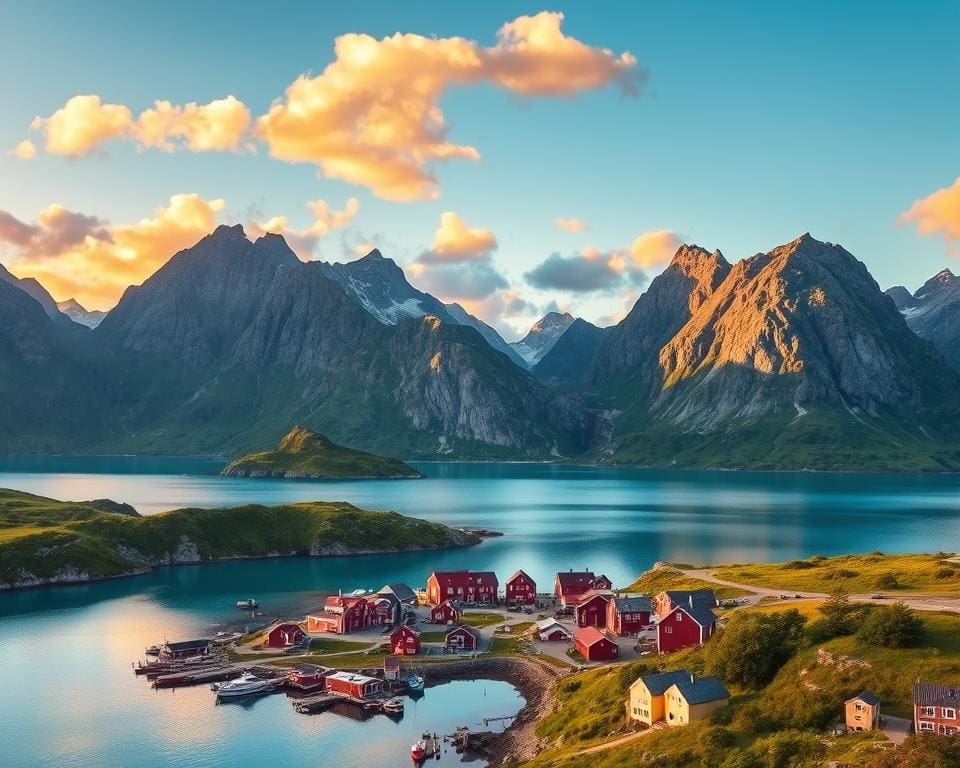

The Lofoten Islands lie above the Arctic Circle in northern Norway. You will find towering peaks, sheltered bays, white‑sand beaches and fishing villages such as Reine, Henningsvær and Svolvær that feel both timeless and welcoming.
Seasonal change shapes everything here. Winter brings polar night and aurora displays, spring melts the snow, late spring and summer deliver the midnight sun, and autumn paints the landscape in rich colours. These Lofoten seasons alter the light, the wildlife and the choice of activities you can enjoy.
Getting there from the UK is straightforward. You can fly to Bodø or Evenes (Harstad/Narvik Airport) and continue by ferry or regional flight to Svolvær and Leknes. The E10 scenic road links the main islands, while ferry operators such as Torghatten Nord and coastal voyages with Hurtigruten offer alternatives. Hiring a car or booking an organised tour makes exploring easier.
When you plan to visit Lofoten, think about what you want to do. If you aim to see the aurora, winter is best; for endless daylight and hiking, choose summer. Bird colonies and whale watching follow different timetables. This seasonal travel guide helps you match your interests—photography, outdoor pursuits or local culture—with the right time to travel to Lofoten.
This short guide is written for travellers from the United Kingdom who seek nature, photography and safe outdoor experiences in the Arctic islands. Read on for practical tips on how to visit Lofoten through the year and make the most of Norway travel in every season.
Year‑round highlights: what makes the Lofoten Islands special
You will find a compact region where jagged granite mountains rise straight from deep fjords and sheltered beaches sit beside wind‑scoured skerries. Short, steep walks such as the trail to Reinebringen or Offersøykammen reward you with wide panoramas. Some viewpoints are reachable by car, which makes Lofoten landscapes accessible even if you prefer gentler sightseeing.
Geology shapes the scenery. Precambrian rock sculpted by ice and sea has left steep peaks, narrow valleys and tidal flats that make coastal walks dramatic and varied. Classic sands at Haukland and Uttakleiv give way to sea cliffs and tiny islets that frame every view.
Seabird colonies draw you to offshore islands. Røst and other breeding sites host puffins, guillemots, kittiwakes and gannets in spring and summer. You can join guided trips for safer, closer encounters with Lofoten wildlife while keeping a respectful distance from nests.
Marine life adds to the spectacle. Orcas and humpback whales appear during herring migrations in winter and spring. Harbour porpoises and seals are common near fjord mouths. Birdwatching Lofoten is rewarding whether you travel by boat or scan cliffs from shore.
Light here is a photographer’s tool. Extended daylight in summer and long golden hours in spring and autumn create ideal conditions for Lofoten photography. Polar night months offer deep blue tones and regular aurora displays for moody night work.
Practical tips improve your shots. Carry a compact tripod for low light, ND filters for silky seas and a wide‑angle lens for fjords and peaks. Weatherproofing pays off because conditions can change in minutes.
Human stories link landscape and livelihood. Fishing villages Lofoten show traditional cod fisheries, stockfish drying racks and rorbuer clustered on the shore. You can visit working hjell and learn about the seasonal skrei fishery that shaped island life for centuries.
Cultural stops add depth. Small museums such as the Lofotr Viking Museum, local galleries and craft shops give context to everyday life. Cafés and guesthouses in Reine and Henningsvær welcome you with seafood dishes that spotlight fresh cod and stockfish.
Community scale matters. You will notice a quieter rhythm than in Norway’s cities, with warm hospitality from fishermen and artisans. Local festivals and market days offer chances to meet residents and learn about living with the sea.
Winter in the Lofoten Islands: northern lights, snow and quiet coastlines
Winter transforms the islands into a quiet, snow‑draped landscape that invites slower travel. You will find long nights that set the stage for northern lights Lofoten displays, salted coastlines under frost and empty beaches that feel private even near small villages. Plan for shorter daylight hours when organising activities and transfers.
Seeing the aurora borealis and best viewing practices
The aurora season runs from late September to early April, with peaks from December to March. Cloud cover is common, so flexibility helps. Use aurora‑forecast tools from the Norwegian Meteorological Institute and specialist apps to pick likely nights.
For the best experience, seek dark spots away from street lights: outer coastlines, beaches and fjord shoulders give clear horizons. Join a guided aurora tour if you prefer local knowledge of microclimates and safe viewing spots. For photography, use a wide aperture, high ISO and 5–20 second exposures on a sturdy tripod. Bring spare warm batteries because cold reduces battery life.
Winter activities: skiing, snowshoeing and ice fishing
Cross‑country skiing and freeride options exist on accessible slopes and low mountains. Local operators offer guided ski tours and backcountry safety briefings so you can enjoy Lofoten skiing with reduced risk. If you prefer gentler movement, snowshoeing Lofoten routes explore snowy valleys and coastal ridges with minimal gear.
Popular starting points for snowshoe routes include areas around Henningsvær, Reine and Leknes. You can also try ice and sea‑shore fishing: guided cod trips, ice fishing on sheltered lakes and shore angling teach traditional methods. Ensure you follow licensing rules for fishing where they apply.
Other winter choices include sea‑safari boats where conditions allow, cultural visits to museums and cosy nights in traditional rorbuer savouring local cuisine.
Practical travel tips for winter: transport, clothing and daylight hours
Polar night affects northern Lofoten in December–January, giving very limited daylight in the far north. Further south you will notice longer days. Reduced daylight influences sightseeing, so schedule outdoor trips for the brightest hours.
Roads and ferries can be affected by snow and wind. The E10 is usually kept clear, yet smaller roads and mountain passes may close in severe weather. Check local road reports from Statens vegvesen and consider renting a car with winter tyres or booking guided transfers.
Dress in layers: merino base layers, insulating mid‑layers and waterproof outer shells. Wear warm boots, gloves and a hat. Carry crampons or microspikes for icy trails and an emergency kit if you head into the hills. Before any backcountry travel, check avalanche warnings from the Norwegian Avalanche Warning Service and hire a local guide if you are unfamiliar with terrain.
Spring and summer experiences: midnight sun, hiking and local festivals
Long daylight defines the Lofoten summer. From late May to mid‑July the midnight sun Lofoten brings near‑continuous light the further north you travel. That extra daylight extends sightseeing and gives photographers golden hours at unusual times.
To sleep well, choose accommodation with blackout curtains and plan activities around cooler morning and evening light. Expect midges in lowland marshes some evenings. Use the long days for relaxed pacing and take time to savour the islands rather than rushing.
Extended daylight and the midnight sun phenomenon
The midnight sun Lofoten appears most strongly in June. You can hike, dine and stroll at midnight under soft, warm light. That makes for unique ambience and landscape shots without harsh shadows.
If you struggle with continuous daylight, pack an eye mask and set gentle routines. Bookings at peak times fill fast, so reserve rooms and guided tours in advance.
Hiking, cycling and sea‑kayaking routes
Lofoten hiking ranges from steep climbs to gentle coastal walks. Classic ascents include Reinebringen and Himmeltindan. Trails around Nusfjord and Kvalvika Beach reward moderate fitness and careful route planning.
Cycle along the E10 and quieter island roads. Bike hire is available in Leknes and Svolvær. Be ready for wind and swift weather changes when you set out.
Sea kayaking Lofoten offers paddles among skerries and hidden coves. Choose operators who supply drysuits and guided options for multi‑day trips. Follow Leave No Trace principles and obtain any required permits for camping.
Seasonal wildlife: puffins, whales and migrating birds
Lofoten puffins return in late spring and breed through summer. Top viewing spots include the Røst archipelago and boat trips from fishing harbours.
Herring migrations can draw orcas and humpbacks in spring. Join reputable whale‑watching operators that follow responsible wildlife guidelines and keep safe distances.
Spring brings a brief alpine bloom and returning migratory birds. Meandering meadows and cliff edges offer close encounters with seabirds and a vivid seasonal palette.
Summer events, markets and community activities
Summer festivals and markets bring local life to the fore. Expect seafood events, open‑air concerts, art walks and historic reenactments at places such as the Lofotr Viking Museum. Village markets sell produce, handicrafts and cured stockfish.
Community tourism includes farm stays, fishing experiences and gallery openings. Food tours focus on Arctic char, cod and foraged ingredients. Book accommodation, car hire and boat trips well ahead during the busy Lofoten summer.
For practical planning and road‑trip ideas, see a useful primer on seasonal travel and daylight variations at this travel guide.
Autumn on the Lofoten Islands: colours, calmer trails and cultural rhythms
In Lofoten autumn arrives between late August and October with crisp air and a vivid palette. Tundra and birch woodlands shift to gold, russet and ochre, while snow‑tipped peaks provide contrast. The changing sea and sky deepen coastal hues and create dramatic reflections in the fjords — ideal for photographers seeking striking compositions.
As a shoulder season Lofoten becomes quieter, so you can enjoy quieter trails and more solitude on popular routes. Many paths remain accessible before heavy snow, but weather is changeable. You will find lower prices for rorbuer and tours and greater availability in restaurants, making quiet travel Lofoten a practical choice for flexible itineraries.
Autumn also marks an important phase in the fishing calendar. Cod migrations influence local fisheries and you may witness cod catches and the processing of stockfish, alongside harvest festivals and smaller markets. These community rhythms let you experience everyday island life and speak with residents when they are not overwhelmed by summer visitors.
Plan for shortening daylight and varied conditions: check forecasts, wear waterproof layers and sturdy boots, and book essential ferries and guided activities in advance. Lofoten hiking autumn offers excellent light for landscape work, and nights lengthening later in the season improve your chances of aurora sightings. Travel with flexibility and you will make the most of this quiet, richly coloured season.