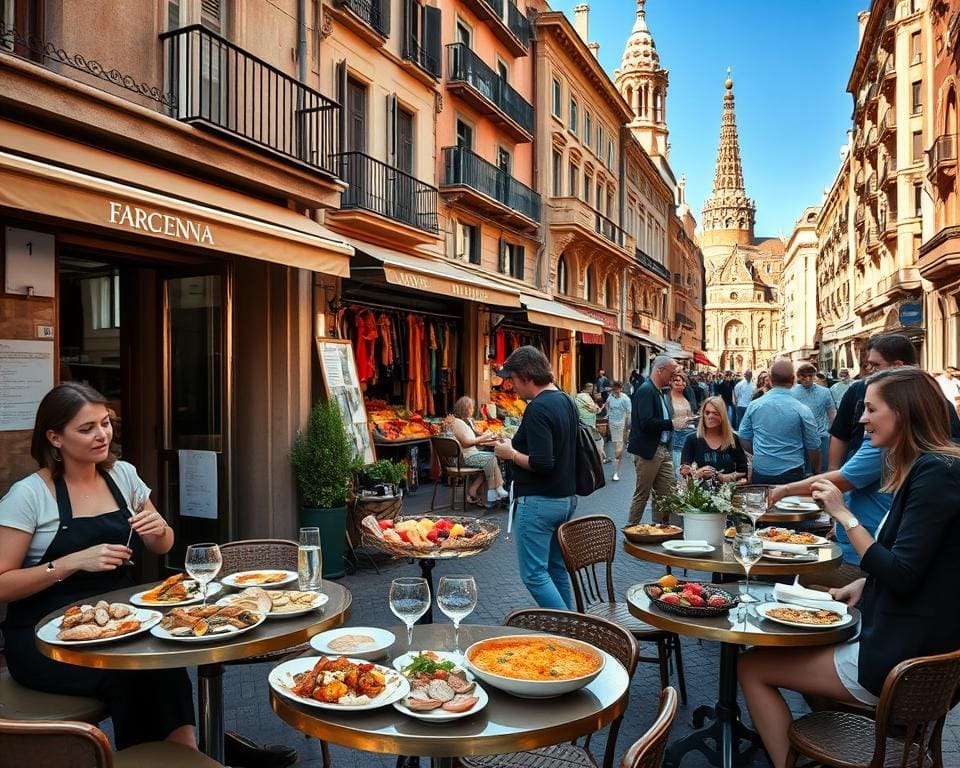

Barcelona is a place where food and culture are tightly woven into daily life. You will find centuries-old Catalan traditions beside cutting-edge restaurants, so the Barcelona culinary scene suits both classicists and adventurous diners.
As the capital of Catalonia, Barcelona culture reflects a distinct regional identity and two main languages, Catalan and Spanish. That heritage shapes festivals, markets and the way meals are shared, while the Mediterranean climate delivers fresh seafood, ripe vegetables and olive oil that define local cooking.
The city’s reputation on the international food map is clear: family-run bodegas and tapas bars sit alongside Michelin-starred venues. Whether you want authentic, homely tapas or inventive tasting menus, food and culture Barcelona offers a wide spectrum to explore.
Getting there and getting around is straightforward for UK visitors. Frequent flights and Eurostar links via Paris make travel Barcelona for food easy, and the metro, buses and commuter trains connect markets, museums and eateries. Many central neighbourhoods are highly walkable, letting you move from a market stall to a gallery in minutes.
This guide will take you through local dishes to try, markets and modern dining, historic neighbourhoods and cultural landmarks, festivals where food plays a central role, and practical tips to get the most from your visit. For a complementary view of the city’s blend of history and contemporary life, see this perspective on Barcelona’s appeal here.
Experience Barcelona food culture: tapas, markets and modern cuisine
You will find Barcelona’s food culture lively and varied. Streets, markets and small bars invite you to taste a mix of traditional dishes and inventive plates. Local flavours range from humble tapas to high-end tasting menus, so plan to wander and sample widely.
Traditional tapas and pintxos you must try
Tapas are small plates meant for sharing, while pintxos come from the Basque tradition and often sit skewered or plated in pintxo bars. Both styles are popular in the city and suit a social crawl.
- Try patatas bravas and croquetas with ham or mushroom.
- Order boquerons, bombas and huevos rotos at busy counters.
- Explore El Raval, Poble Sec and El Born for varied bar scenes.
Fresh seafood and Catalan specialities
Barcelona sits on the coast, so Barcelona seafood appears on many menus. Expect fresh fish, shellfish and stews that change with the catch of the day.
- Look for suquet de peix, grilled sardines and fideuà as classics.
- Sample Catalan staples such as escalivada, esqueixada and botifarra.
- Finish with crema catalana for an authentic sweet note.
Food markets and where to taste local produce
Markets work as both shopping hubs and tasting destinations. La Boqueria on La Rambla is the best-known spot for produce, jamón counters and tapas stalls.
- Visit Mercat de Sant Antoni for a modern market experience.
- Explore Mercat de la Concepció for flowers and gourmet stalls.
- Buy olive oil, jamón ibérico, local cheeses and DO Penedès wines from stallholders.
Innovative restaurants and the contemporary dining scene
Barcelona modern cuisine mixes Catalan tradition with global techniques. You will find many Michelin restaurants Barcelona and small experimental kitchens across the city.
- Book ahead for tasting menus and seek lunch menú del día for value.
- Look in Eixample and Sant Antoni for contemporary bistros and farm-to-table spots.
- Try food halls such as El Nacional for a variety of choices under one roof.
Historic neighbourhoods and cultural landmarks to explore
You can wander Barcelona neighbourhoods that blend past and present. Each district offers a different way to pair culture with dining. Pick routes that let you pause for tapas, coffee or a long lunch as you move between sights.
Barri Gòtic: medieval streets and hidden gastronomic gems
The Gothic Quarter’s narrow medieval lanes feel like a step back in time. Plaça Reial and Plaça Sant Jaume anchor the area. You will find atmospheric streets that hide traditional tavernas, family-run restaurants and speciality food shops.
Explore side streets to locate authentic tapas bars and historic cafés. Combine visits to Barcelona Cathedral and Roman ruins with stops for small plates. Seek venues with local clientele to avoid tourist-oriented eateries on main thoroughfares and enjoy better value.
El Born: artisan shops, galleries and intimate eateries
El Born mixes medieval charm with creative energy. The Picasso Museum and El Born CCM sit near artisan boutiques and independent galleries. You will notice a concentration of intimate bars and contemporary Catalan restaurants ideal for evening dining after gallery visits.
Try small-batch chocolate shops, craft bakeries and late-night pintxo bars along Carrer de l’Argenteria and nearby streets. Choose El Born restaurants where chefs use seasonal Catalan produce for a more authentic experience.
Eixample and Modernisme architecture you can walk between
Eixample’s grid layout makes it simple to plan walking routes. Wide avenues such as Passeig de Gràcia showcase Modernisme Gaudí and works by his contemporaries. Landmarks like Casa Batlló, La Pedrera and the Sagrada Família sit within easy reach.
Many high-end restaurants, contemporary cafés and elegant bars populate Eixample. Pair architectural sightseeing with refined dining by booking a nearby table for lunch or dinner. Time your visit to avoid peak tourist crowds and enjoy a calmer stroll between monuments.
Festivals, traditions and cultural events that shape the city
Barcelona lives by a calendar of street parties and late-night museum programmes that invite you to taste Catalonia as you explore. The city blends culinary flair with music and performance so you can build an evening that pairs a concert at Palau de la Música Catalana with a nearby meal or follow an outdoor gig with tapas on a rooftop.
Local festivals where food plays a central role
La Mercè lights up late September with processions, castellers and stalls selling regional treats. If you time your trip for La Mercè food you will sample street versions of classic dishes and seasonal sweets across neighbourhood squares.
Sant Jordi on 23 April mixes books and roses with citywide pastry stalls that honour Sant Jordi food traditions. Look for rose-shaped cakes and sweet specialties sold beside bookstands along Passeig de Gràcia and La Rambla.
Festa Major de Gràcia in August turns the Gràcia streets into themed neighbourhood parties. Shared food stalls, grilled favourites and community paellas make it easy to taste local flavours while wandering decorated lanes.
Tast a la Rambla and similar wine events bring producers from the Penedès and other DO regions into the city. These fairs let you pair Catalan wines with small plates and discover artisan cheeses and cured meats.
Music, dance and performance venues that complement dining experiences
Barcelona music venues span intimate jazz clubs in El Born to flamenco tablaos and large concert halls. Book a table near the venue so you can savour a tasting menu before the show or enjoy late tapas after the final encore.
Open-air summer concerts and rooftop bars add skyline views to dinner. Venues such as those around Montjuïc host nights where live music, light shows and seasonal menus create memorable evenings.
Supper-club events and chef-led pop-ups are on the rise. These dinners merge live performers with curated tasting menus, offering immersive nights where food and music are part of the same experience.
Museum nights and cultural passes for immersive visits
Nit dels Museus Barcelona opens museums late with special programming and often complementary food stalls or themed menus. Attending on a museum night lets you move between exhibitions and tasting stations in a single evening.
Practical cultural passes such as the Barcelona Card and Barcelona Pass save time with skip-the-line options and museum discounts. Use these passes to combine gallery visits with recommended nearby eateries and market stops.
Always check event calendars in advance because festival dates and museum nights vary each year. Planning ahead helps you lock in reservations for popular Barcelona cultural events and secure tickets to sought-after shows.
Practical tips for food and culture lovers visiting Barcelona
Plan your trip for late spring (May–June) or early autumn (September–October) to enjoy mild weather, lively markets and key festivals. Barcelona travel tips: avoid the peak heat and crowds of July–August, since many locals take August holidays and some small bars close. Check weekday versus weekend schedules for markets like Mercat de la Boqueria and Santa Caterina to match your visits with the best stalls.
Adopt local meal rhythms: lunch is usually 13:30–15:30 and dinner often starts after 20:00. Use Barcelona dining tips by booking ahead for popular restaurants and trying the menú del día at lunchtime for good value. Service is commonly included, so tipping 5–10% for excellent service is appreciated but not required. For quick discoveries, sample market counters and neighbourhood bars where spontaneous tasting is easy.
If you have dietary needs, many places will adapt dishes; explaining requirements in Catalan or Spanish helps. Useful phrases include Sóc vegetarià/Sóc vegetariana and Sense gluten. For payment, the euro is standard and cards and contactless are widely accepted, though some small bars prefer cash. When moving around, use the metro, buses, trams or taxis, or buy a T‑casual or Hola Barcelona travel card. Walking between close neighbourhoods often reveals hidden eateries and shortcuts.
Keep belongings secure in busy areas like La Rambla and on the metro to reduce pickpocket risk, and be cautious with backpacks in crowded markets. Barcelona cultural tips: learn a few polite phrases in Catalan and Spanish, respect the unhurried pace of meals, and follow staff cues when seated at communal counters. Use official resources such as Barcelona Turisme, the Michelin Guide, local market websites and trusted food blogs to plan where to eat Barcelona and map a sensible itinerary that pairs museums with market visits. These Barcelona markets advice and planning steps will help you make the most of both food and culture during your stay.