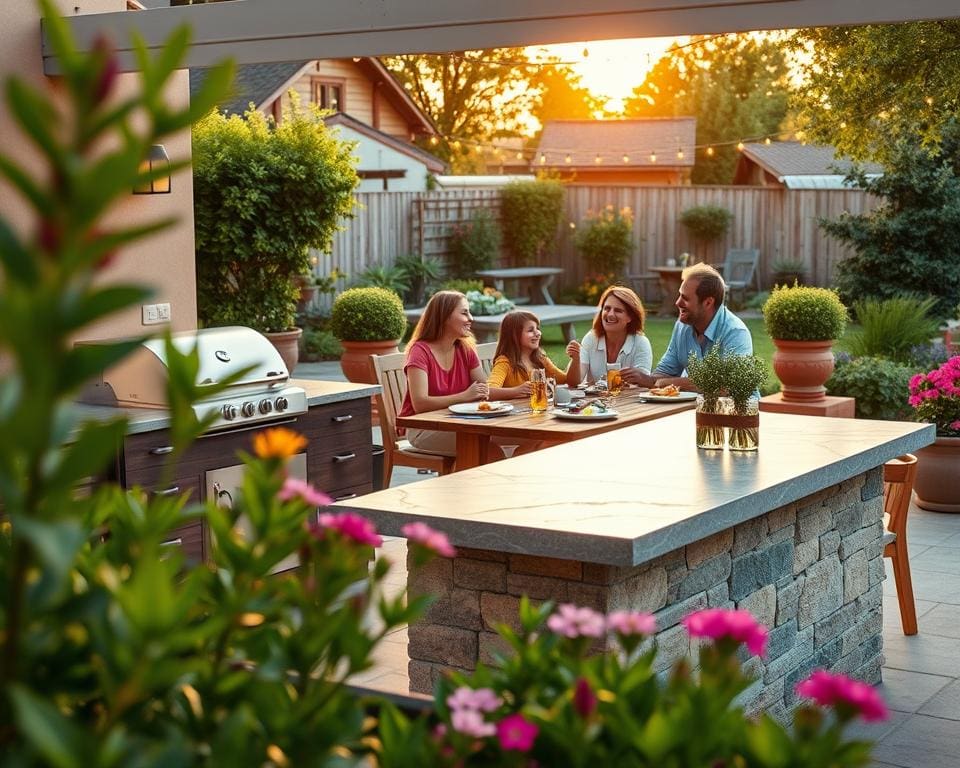

An outdoor kitchen is more than a barbecue beside the patio. It creates a practical extension of your home, with space to prepare food, cook meals, dine and welcome guests in the garden.
With a well-planned outdoor cooking space, you can stay involved while food is on the grill. You can chat with friends, keep an eye on children and enjoy each stage of an outdoor gathering without moving between the kitchen and garden.
A garden kitchen can also support relaxed alfresco dining and make your social garden more useful throughout the year. The right design will suit your cooking habits, available space and budget, whether you have a small terrace or a large lawn.
This guide explores the key choices for safe, comfortable outdoor entertaining in the UK. You will learn how location, layout, appliances, seating, lighting, materials, weather protection and maintenance can shape a durable outdoor kitchen based on practical UK garden design.
How an outdoor kitchen transforms your garden into a social space
A social outdoor kitchen makes meal preparation part of the occasion. You can cook beside your guests instead of working alone indoors. This keeps conversation flowing and lets everyone share the experience.
A built-in barbecue, pizza oven or wide preparation counter can become a natural talking point. Guests may watch the food being prepared, help with serving or move between the cooking and dining areas. Clear access means you can stay involved without leaving the cooking space for long.
Bringing cooking, serving and alfresco cooking into one layout reduces trips between the house and garden. This makes outdoor entertaining easier to manage, especially when you are serving several dishes. A nearby counter can hold plates, drinks and serving bowls.
Your garden entertaining area can support many occasions. It may host a relaxed breakfast, a children’s party, an evening barbecue or a larger summer gathering. Flexible seating helps the space adapt to each event and makes family garden gatherings feel easy and relaxed.
Position the kitchen along the natural flow of your garden. This can make it a garden focal point without creating a crowded area around hot appliances. Keep flames, hot surfaces, gas bottles and electrical equipment away from busy paths and seating.
Create clear zones for cooking, serving, dining and relaxing. The zones should feel connected, yet each one needs enough space for safe movement. An island or breakfast bar can offer informal seating while keeping guests close to the action.
Comfortable furniture helps your outdoor dining area work for different group sizes. Benches suit larger gatherings, while lounge chairs support quieter conversations. Cushions, throws and soft lighting can extend the evening, while fire pit ideas for garden parties add warmth during cooler months.
Co-ordinated worktops, planting, lighting and seating can make the kitchen feel like a proper outdoor room. A compact cooking station may suit occasional use. If you entertain often, extra storage, refrigeration, preparation space and permanent dining furniture can make each gathering more comfortable.
Planning an outdoor kitchen for cooking and entertaining
Good garden kitchen planning connects cooking, dining and relaxation. Start by mapping the usable space, measuring the route from your home and noting where people tend to gather. A clear plan helps you create a practical outdoor kitchen location with room to move.
Choosing the best location for your garden kitchen
Place the kitchen close to the house if you often carry food, crockery and drinks between both kitchens. Firm, level paving creates a safer route in wet weather. It can support easier access for guests, delivery of supplies and daily cleaning.
Keep the cooking zone near the main seating area so you can stay part of the conversation. Your garden dining layout should leave enough space around hot appliances. Guests should not need to pass close to a grill, flame or sharp cooking tools.
Study the prevailing winds at different times of day. Smoke from charcoal and wood can travel towards doors, windows or seats. Strong gusts can affect a gas flame. Choose a position that limits smoke nuisance without placing fuel-burning appliances in a closed space.
Check sunlight and shade before you build. Afternoon sun can make cooking uncomfortable, while a pergola, canopy, parasol or mature planting can provide relief. A covered outdoor kitchen needs good ventilation and must follow safety guidance for its appliances.
Keep a built-in barbecue and outdoor pizza oven away from timber fencing, sheds, dry planting, cladding and overhanging branches. Follow the clearance distances set by the manufacturer. A level, durable base improves stability, drainage and outdoor kitchen safety.
Plan water, drainage, gas and electrical services at the start. Retrofitting these systems can damage paving and raise costs. A Gas Safe registered engineer should connect UK gas appliances. A suitably qualified professional should complete electrical work.
Selecting practical outdoor kitchen appliances
Choose outdoor kitchen appliances that match the way you cook. A built-in barbecue suits regular grilling and can form the main cooking point. An outdoor pizza oven works well for shared meals, provided its base is stable and heat clearances are respected.
An outdoor hob gives you control for sauces, pans and side dishes. An outdoor sink makes food preparation and washing up easier. If you entertain often, a garden kitchen fridge keeps drinks, salads and fresh ingredients close to the cooking area.
Include weatherproof storage for pans, utensils, fuel and serving dishes. Select sealed cupboards made for outdoor use, with raised feet where possible. Store logs away from flames, and keep gas cylinders in a safe, ventilated position that follows the supplier’s guidance.
Services should suit the final layout rather than dictate it. Leave access for repairs and cleaning around each appliance. A durable worktop, non-combustible surface and clear drainage route help your kitchen perform through changing British weather.
A fire pit can support simple cooking and relaxed conversation. Fuel choices include wood, LPG gas and bioethanol. Wood offers warmth and cooking appeal but creates ash and smoke. LPG gives quick control with less smoke, while bioethanol burns cleanly and suits portable use. Read this guide to planning a safe fire pit space before adding one.
Keep an extinguisher nearby and check local rules on smoke and permitted hours. Never use a fuel-burning appliance in an enclosed kitchen without suitable ventilation and professional advice. These steps support a safer example of UK outdoor kitchen design.
Creating comfortable seating and dining areas
Plan outdoor kitchen seating around conversation rather than a single viewing angle. A circular or semi-circular arrangement helps guests face the cook. Allow about 1.5 to 2.5 metres between seats and a fire, based on the pit size and manufacturer’s advice.
Place the garden dining area close enough for easy serving. A table near the kitchen suits full meals, while a smaller breakfast bar works for drinks and quick snacks. Your garden dining layout should keep walkways open between the kitchen, house and lawn.
Choose outdoor furniture that suits the space and the local climate. Timber benches bring a natural feel, while powder-coated metal and durable composite materials need little care. Weatherproof cushions with water-repellent covers add comfort, yet soft furnishings should stay well away from flames.
Use weatherproof storage for cushions during poor weather. A breathable deck box can reduce mould, while waterproof covers protect larger pieces. Keep drainage holes clear so rain does not collect beneath seats or tables.
Layer garden lighting around cooking and dining zones. Warm LED path lights can guide movement, while low uplighters or pendant fittings add a gentle glow. Use dimmers where possible, and keep cables protected from water, heat and foot traffic.
Lavender, miscanthus and hedging can soften the space and buffer sound. Keep scented plants and dry foliage away from heat sources. With suitable shelter, clear ventilation and adaptable outdoor furniture, your layout can support year-round outdoor entertaining.
Design ideas and maintenance for a stylish outdoor cooking space
Good outdoor kitchen design ideas should reflect your home and garden. A stainless steel outdoor kitchen gives a clean, modern look, while treated timber feels warmer and more traditional. A natural stone garden kitchen adds texture and visual weight. Porcelain patio tiles are hard-wearing and can echo flooring used indoors. Choose surfaces that resist rain, frost, stains, temperature changes and frequent cleaning. Outdoor-rated materials are safer than indoor products, which may fade or deteriorate in ultraviolet light.
Plan worktops, cabinet fronts and paving as one scheme. Match brickwork, render, timber or stone to help the kitchen feel part of the garden. Avoid very glossy or slippery finishes where water may collect. Effective outdoor kitchen lighting should include task lights above worktops, sinks, hobs and cooking areas. Use ambient lighting to highlight planting, seating and walls. Concealed strip lights, wall fittings and low-level path lights can add warmth and improve visibility. Outdoor electrical work should be completed by a competent professional.
Sheltered seating, patio heaters and weather-resistant accessories can extend use into cooler evenings. Keep heaters clear of walls, furniture and fabrics, and follow the operating instructions. Place herbs, grasses and container plants around the kitchen, not beside hot appliances. Dry foliage and overhanging branches can create a fire risk. Outdoor rugs, washable cushions, serving boards, storage baskets and robust tableware add comfort without creating too much work.
Regular outdoor kitchen maintenance protects safety and appearance. Clean barbecue grilles, remove grease and empty charcoal or wood ash only when it is fully cool. Check burners as advised by the manufacturer. Seal natural stone when needed, treat timber regularly and clean stainless steel with suitable products. Wash hands before food preparation, separate raw and cooked ingredients, and keep chilled food cold. Use fitted covers or ventilated storage for rain, frost and debris, but cover appliances only when cool. Each season, inspect drainage, joints, fixings, hoses, electrical connections, seals, doors, rust and water damage. A qualified professional should assess any suspected gas or electrical fault.