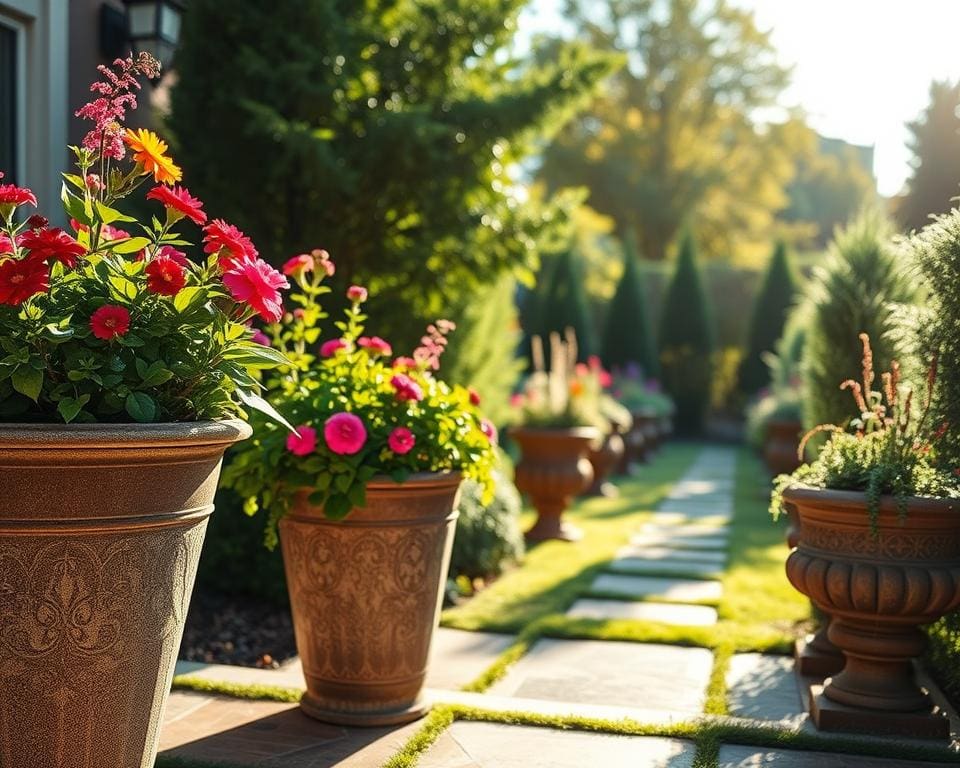

Large planters offer a simple way to add trees, shrubs, flowers, herbs and ornamental grasses where open soil is limited. They bring colour, texture and height to patios, terraces, balconies, courtyards and fully paved gardens.
With the right outdoor planters, you can soften hard paving and create a clear focal point. Tall patio planters can frame a doorway, surround seating or mark the edge of a dining area. They can also guide movement along a path or define a garden boundary.
Container gardening gives you useful flexibility. You can move planters, change seasonal displays and refresh your garden greenery without lifting paving or building new beds. Terrace planters also help you make the most of compact outdoor spaces.
Your choice of planter will depend on the available space, the plants you want to grow, sunlight, wind and the time you can give to maintenance. These paved garden ideas will help you choose suitable outdoor planters, create year-round displays and care for healthy plants in a paved garden.
Choosing outdoor planters for patios and paved gardens
Good planting starts with the space around it. Measure the patio, note door and gate widths, and check balcony load limits before you buy. Review sun exposure and wind, too. These details help you choose plants and containers that suit the setting without blocking paths or creating safety risks.
Leave room to water, prune and clean around each pot. A planter should not cover a drain, narrow a doorway or obstruct a route used by a pushchair or wheelbarrow. For practical guidance, explore this guide to choosing outdoor planters for different garden layouts.
Selecting the right planter size and shape
Choose a container for the plant’s mature root system, not its size at purchase. Check the expected height, spread and root depth first. Trees, shrubs and large ornamental grasses need deeper, stronger containers than herbs, bedding plants and other annuals.
Compare container sizes with the plant’s long-term needs. Large outdoor pots suit trees and bold shrubs, while deep planters support strong roots and help compost stay moist. Wide planters work well for spreading plants, mixed displays and groups of seasonal colour.
Tall garden planters suit architectural plants and narrow spaces. Square or rectangular forms can line a wall, mark a boundary or frame a patio edge. Trough-style patio containers create a continuous display where separate round pots may appear disconnected.
Round pots soften hard paving and create useful focal points beside seating, entrances and paths. Keep the proportions balanced with nearby furniture, walls and paving. Oversized containers can anchor a large terrace, while a small patio often needs fewer, well-placed pots.
Large volumes of compost dry out and cool down more slowly than small ones. This gives roots steadier conditions during warm or unsettled weather. Leave clear gaps between containers so you can reach every plant with ease.
Comparing materials for outdoor planters
Modern outdoor planters come in many finishes, from simple resin to concrete-effect designs. Fibreglass planters are light, strong and easy to move. Plastic outdoor planters offer a practical, low-cost choice for exposed patios and flexible planting schemes.
Ceramic planters bring colour and a smooth finish to entrances or seating areas. Terracotta pots have a warm, traditional look, yet their porous sides can dry compost quickly. Choose glazed ceramic or frost-resistant planters where winter temperatures may cause cracking.
Metal planters create a clean, industrial feel and suit contemporary paving. Corten steel develops a rich surface, though runoff may stain light stone. Stone planters provide a substantial appearance, while composite and concrete-effect finishes can reduce the load on raised terraces.
Match the material to how often you need to move the container. Lightweight choices are useful when you refresh displays or shelter plants in winter. Heavier materials suit permanent positions where you want a firm, grounded look.
Considering drainage, weight and stability
Good outdoor planter drainage protects roots from waterlogged compost. Select planters with drainage holes and place them where excess water can escape without harming paving. Use free-draining compost with grit, and keep holes clear with a breathable liner.
Container drainage matters most during wet British winters. Raise pots slightly on feet or a suitable stand where water gathers. A gravel layer alone cannot replace open drainage holes, so check the base before planting.
Heavy garden planters may remain steady in strong gusts, yet they can exceed a balcony’s safe load. On exposed sites, use wind-resistant planters with a broad base. Stable patio pots should stand on a level, solid surface and remain clear of fragile paving edges.
For large containers, plant caddies or castors make movement easier when the surface is firm. Secure tall designs if children or pets use the area. Check the planter’s filled weight, since wet compost, mature roots and stored water can add considerable pressure.
Creating year-round greenery with large patio planters
Large planters make it easier to enjoy year-round patio plants in a paved garden. Build each display around a permanent framework of evergreen shrubs, compact conifers, hardy ferns or architectural grasses. These plants keep their shape through the colder months.
Good choices for many UK gardens include Skimmia japonica, Euonymus, Hebe, Sarcococca, clipped bay, dwarf conifers and hardy evergreen ferns. Check each plant’s final size, light needs and hardiness before planting. Local wind and frost levels can affect performance.
Use evergreen planters as a stable base, with seasonal colour added around the edges. Spring bulbs bring early flowers, summer bedding plants create rich colour, and autumn foliage adds warmth. Winter container plants, such as winter pansies, can keep the display lively when most flowers have faded.
Ornamental grasses bring movement, texture and soft sound on exposed patios. Shrubs with berries, coloured stems or scented winter flowers can add interest when flowering plants are dormant. Sarcococca is valued for its fragrance, while Skimmia can provide glossy foliage and bright berries.
Layering helps a large container look full without appearing crowded. Place a taller plant in the centre or at the back. Add medium-height fillers around it, with trailing plants near the rim. This approach creates depth and softens hard paving.
Colour can link your seasonal container displays to the wider garden. Match flowers and foliage with nearby brickwork, rendered walls, paving or outdoor furniture. Repeating the same planter finish or using a limited plant palette can make separate containers feel like one design.
Large containers protect roots from rapid temperature changes better than small pots. Plants in containers still face more cold than those planted in the ground. Use reliable outdoor planter guidance when checking soil volume, drainage and winter protection.
Group containers by light and watering needs. Full-sun plants need open positions, while shade-tolerant plants may scorch in strong afternoon light. Reflected heat from walls, prevailing winds and roof terrace exposure can change how often plants need water.
Year-round greenery does not require every plant to stay in place. Rotate bedding plants, replace tired trailing plants and prune permanent shrubs when needed. These simple patio planting ideas keep the structure fresh without removing the garden’s lasting shape.
Planting and caring for greenery in paved gardens
For successful planting outdoor planters, start with a clean container and clear drainage holes. Place heavy stone or concrete planters in their final position before filling them. Use quality, peat-free compost for patio planters, or choose ericaceous, loam-based or cactus compost for specialist plants. Set each root ball so its existing compost sits level with, or just below, the rim. Leave a small gap at the top to make watering easier and prevent overflow. Firm the compost gently around the roots, then water well.
Good watering container plants habits matter because pots hold less moisture than open ground. Check the compost below the surface rather than following a fixed timetable. Water when it feels dry, especially during warm, windy or sunny weather. Direct water onto the compost and let excess moisture drain through the base. Evergreen plants may still need water in dry winter weather. Apply slow-release fertiliser or liquid feed during the growing season when feeding potted plants, following the product instructions and avoiding excess.
Regular patio planter maintenance keeps plants healthy and attractive. Remove faded flowers, damaged leaves and dead growth, then use pruning container plants methods suited to each variety. Check for pests and disease, and rotate pots when possible so growth stays even. Inspect drainage holes, pot feet and planter walls for blockages, cracks or movement. Thin or repot crowded plants, and refresh the top layer of compost when established plants need new nutrients. Pansies, primroses, marigolds, sweet peas, basil, rosemary, broccoli, carrots and spinach can all add seasonal interest. You can find more ideas for plants for this month.
Winter container care may include moving tender plants to a sheltered spot, raising pots above cold, wet paving and protecting vulnerable foliage. Reduce watering during cold spells, but do not let evergreen plants become completely dry. Plan for mature growth when arranging containers, including wall-mounted planters and trellises for vertical space. A cottage-style layout can soften paving, while structured planting and seasonal colour create a clear design. Native plants support pollinators and wildlife, while seasonal greenery can reduce water use, ease urban heat and help improve air quality. With sound drainage, suitable plants and steady care, your patio or terrace can stay welcoming throughout the year.