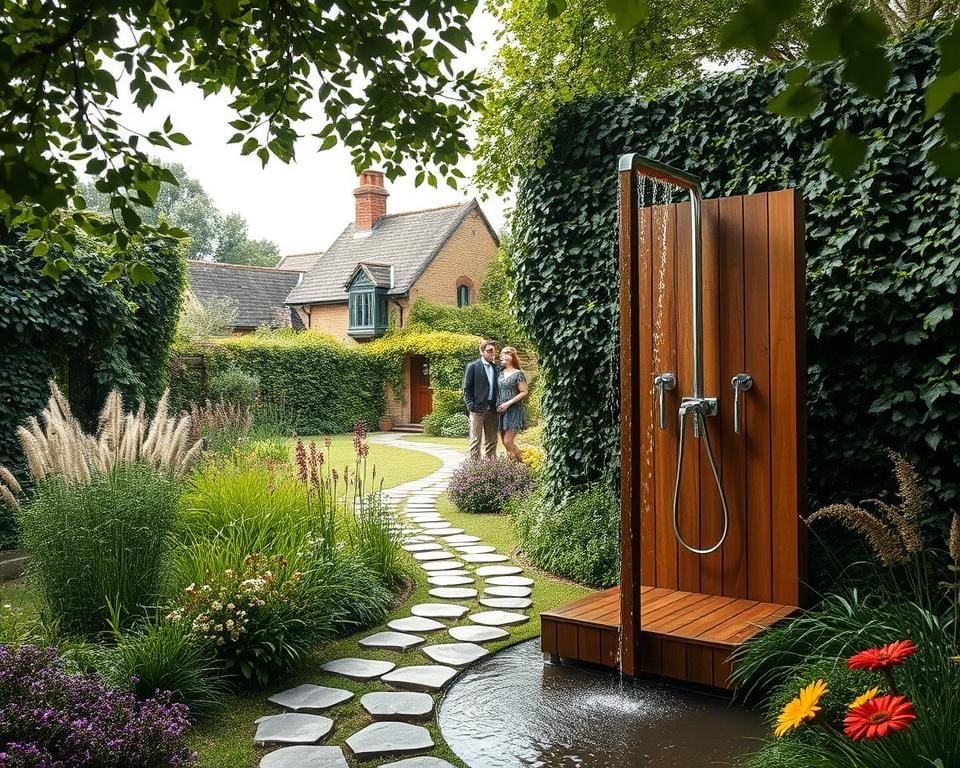

An outdoor shower can be a practical and attractive addition to your UK garden. It gives you a simple place to rinse, cool down and clean up without walking through the house. With the right design, it can also become a useful feature within your outdoor living space.
You may use a garden shower after swimming, gardening, exercise or a day with the children. It can also help when you are entertaining or relaxing outside during warm weather. These everyday uses show why the outdoor shower benefits can extend beyond simple convenience.
A well-planned external shower can reduce mud, grass and sand brought indoors. It may also improve comfort and make your garden easier to enjoy. Lighting, planting and suitable surfaces can help it blend with existing landscaping. For more garden improvement ideas, consider how the shower will connect with patios, paths and other features.
Your options range from a cold-water shower linked to a garden tap to a permanent installation with hot and cold water. You could also add an enclosure, drainage and decorative finishes. The best choice depends on your intended use, available space, budget, privacy needs and the position of water and drainage services.
Careful planning is essential before installation. Consider safe water temperatures, non-slip flooring, effective drainage, privacy, frost protection and exposure to the weather. You should also check relevant UK plumbing and building requirements to create a safe and lasting feature in your garden design.
How an outdoor shower improves convenience in your garden
An outdoor shower gives you quick access to water when garden life gets messy. A well-placed garden rinse station can sit near the lawn, pool or back door. It brings garden convenience to everyday tasks while supporting good outdoor hygiene.
Rinse off after gardening, swimming and outdoor activities
A post-gardening shower lets you wash soil from your hands, arms and legs after planting, digging or composting. It is useful after mowing, playing sport or returning from the beach. You can use the outdoor washing area for a quick outdoor clean-up without walking dirt through the house.
Near a swimming pool, hot tub or paddling pool, a poolside shower makes it simple to rinse after swimming. You can remove chlorine, salt, grass and leaves before entering the water or coming indoors. A washable garden space beneath the shower helps keep this routine neat.
A handheld attachment adds more flexibility. With suitable drainage, it can support an outdoor boot wash for muddy footwear, gardening tools, bicycles and other equipment. Keep the flow away from windows, doors and neighbouring properties to limit splashback and protect privacy.
Keep mud, grass and sand out of your home
Rinsing outside stops mud, grass, sand and excess water from spreading across floors, carpets and upholstery. This helps create a mud-free home and can reduce household mess after wet walks or active afternoons. A garden clean-up station near the main source of dirt saves time and effort.
Choose a surface that is easy to wash and safe underfoot. Good drainage supports sand removal and prevents puddles from forming. A planned outdoor bath area can make cleaning easier while keeping the surrounding garden tidy.
Create a practical washing area for children and pets
A children’s outdoor shower is useful after play in mud, sandpits, paddling pools or garden sprinklers. An adjustable height, handheld spray and easy-clean surfaces make rinsing simpler. These features fit well with family garden ideas that encourage active outdoor play.
A dedicated pet washing station can help with pet paw washing after a wet walk. You can rinse a muddy coat before your dog enters the house, using a gentle pet product rather than household cleaning chemicals. A dog shower offers a practical space for this task, though it is not a replacement for a suitable pet-grooming facility.
Keep children and animals supervised, check the water temperature and provide secure footing. Place the outdoor washing area close to the activity that creates the most dirt, while leaving enough distance from living spaces for safe, comfortable use.
Outdoor shower design ideas that complement your garden
A well-planned outdoor shower should feel like part of your garden, not a separate utility fitting. Match its colours, materials and proportions with nearby planting, paving, fencing and the style of your home. This approach helps your outdoor shower design sit naturally within the wider space.
There are several garden shower ideas to suit different plots. A freestanding model works well in a small garden or for seasonal use. A wall-mounted shower can save space beside a house, garage or garden room. For stronger privacy, choose a built-in design with a tiled alcove or a full shower enclosure.
Coordinate the shower base with your existing paving. Porcelain tiles, natural stone, brick and gravel can create a smooth link with the garden landscaping. Select a stable, slip-resistant surface that remains safe when wet. Stainless steel, brass and high-grade plastics can withstand rain, spray and changing temperatures.
Privacy can come from a timber screen, slatted fencing, rendered wall or brickwork. A trellis with evergreen plants gives year-round cover and suits a softer setting. Keep planting clear of the drain, since frequent splashing may harm roots and encourage algae. A simple screen can create a warm, informal look, while a tiled alcove can make the shower feel like an extension of the house.
Choose finishes that reflect your garden’s character. Brushed stainless steel suits a clean, modern setting. Timber, stone and muted tiles work well with natural garden materials. Dark metal fittings can give a more architectural appearance and turn the shower into a contemporary garden feature.
- Add a shelf for shampoo, soap and garden clothing.
- Fit hooks for towels and robes.
- Use weather-resistant timber, stainless steel or powder-coated metal.
- Keep storage away from direct spray so items stay dry between uses.
Plan the shower’s position with care. Face it away from prevailing winds, direct views and busy paths. Good orientation improves comfort and protects privacy. Lighting can make an evening shower safer and more inviting. A qualified electrician should design and install any electrical work near water under UK requirements.
Performance matters as much as appearance. Look for adjustable spray settings, water-saving technology and easy-clean fittings. Check flow rates before purchase to balance pressure with responsible water use. Rainfall and massage settings can add a spa-like touch; a guide to spa-style showerheads may help you compare features.
Open joints, accessible fittings and durable surfaces make cleaning easier. You can remove limescale, soap residue, fallen leaves and algae without taking apart the structure. With these details in place, a stylish outdoor shower can support daily use while blending neatly into your garden.
Outdoor shower benefits for comfort, cooling and outdoor living
An outdoor shower can become a cooling garden feature when warm weather raises the pace of garden life. It gives you quick garden heat relief after gardening, exercise, sunbathing or outdoor entertaining, without bringing dirt indoors.
Choose a system that suits your routine, space and budget. A cold-water shower is often simpler and less expensive to install, while a heated system can provide greater comfort during cooler UK weather.
Cool down during warm summer days
A summer outdoor shower offers a fast way to cool your skin after time in the sun. A gentle mist can calm overheated skin, while a rain setting creates a soothing flow for a more refreshing rinse. You can explore rain and mist showerheads for a more tailored experience.
Hot water needs careful control. Water heated by the sun can become too hot in some systems, so you should not rely on unregulated temperatures. A thermostatic mixing valve can reduce scalding risks when it is correctly specified, installed and maintained.
Temperature controls matter most when children or vulnerable people use the shower. Adjustable pressure and flow can support gentle cooling or a more invigorating rinse.
Extend the time you spend enjoying your garden
A comfortable shower makes it easier to move between gardening, swimming, relaxing and socialising. This supports outdoor summer living and turns a simple washing point into part of your garden wellness routine.
Place the shower near a pool, hot tub, deck or seating area to create an outdoor relaxation space. Towel hooks, a changing area and waterproof cushions can add comfort without taking up much usable garden space.
Guests can rinse before and after using a pool or hot tub. You can manage muddy feet, grass and everyday mess without repeated trips through the house, which makes outdoor entertaining easier.
Combine privacy, style and functionality
A private outdoor shower should feel secure without feeling enclosed. Good shower screening blocks direct views, leaves room for safe movement and allows fresh air to circulate.
Co-ordinated paving, attractive fittings, planting and discreet storage can turn the shower into a stylish garden feature. This approach supports functional garden design while adding garden comfort and a clear sense of garden relaxation.
Your layout should reflect how you use the space. A family garden may need easy-clean surfaces and strong privacy, while a compact urban garden may suit a foldaway fitting or wall-mounted shower. With the right details, the area can support summer garden ideas and become a natural part of outdoor living.
How to plan a safe and sustainable garden shower
Start with a careful site assessment before you install a safe outdoor shower. Check the position of water supplies, drainage, electrical services, boundaries, windows and access routes. Consider privacy from nearby homes and public paths. Leave enough room to move safely, then choose a firm, level surface with a non-slip shower base that stays secure when wet.
Plan outdoor shower drainage so wastewater cannot collect beside foundations, damage paving or create slippery areas. A suitable system may need to connect to an approved drain, depending on your site and local rules. Use low-flow controls, a timed or push-button valve and leak-resistant fittings for a water-saving shower. Rainwater may suit some non-potable uses, but washing water needs safe treatment and professional advice.
Use a qualified professional for plumbing linked to mains water, hot-water systems or internal pipework. Check current UK plumbing regulations, building control considerations and any local restrictions before work begins. Requirements can vary with the property and drainage plan. For frost protection, insulate external pipes where suitable, and isolate and drain the system before freezing weather to help prevent burst pipes.
Keep your sustainable garden shower secure, well lit and screened from public sightlines. Inspect it often for leaks, blocked drainage, algae, limescale, loose fittings and worn surfaces. Choose cleaning products and materials that suit nearby planting, pets and local drainage. With careful planning, controlled water use and reliable safety measures, your shower can support outdoor living without adding avoidable maintenance or environmental harm.