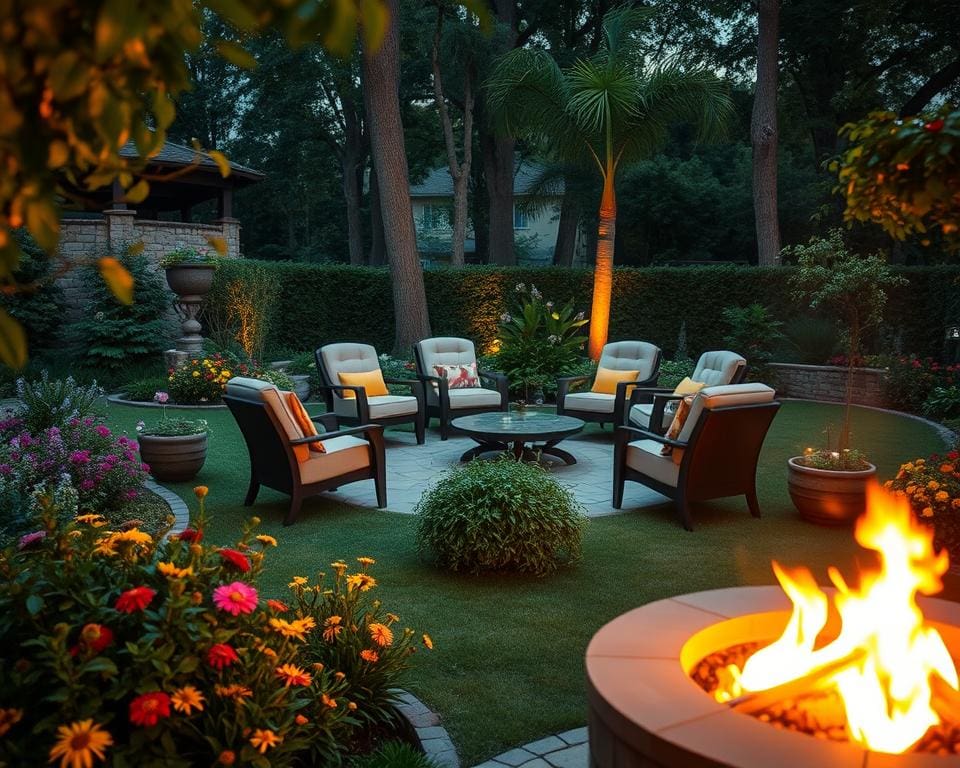

A garden fire pit is a practical and atmospheric addition to your outdoor space. It can help you enjoy your garden on cool spring and autumn evenings, as well as mild summer nights.
The gentle heat makes an outdoor seating area more comfortable. You can relax, dine and enjoy outdoor entertaining for longer, without retreating indoors when the temperature falls.
After sunset, the glow of an outdoor fire pit becomes a natural focal point. It creates a calm setting for conversation and can make a patio, terrace or lawn feel more inviting.
A patio fire pit should suit your garden rather than dominate it. Consider the available space, fuel type, appearance, upkeep and local safety needs. Its scale and position should also work with your furniture, paving, planting and lighting.
Used as part of a wider garden heating plan, the right fire pit can support comfort throughout the year. This guide explores the main types, seating ideas, UK safety responsibilities and ways to make the most of your fire pit in every season. For further inspiration, explore these outdoor entertaining ideas.
Choosing the right garden fire pit for your outdoor space
Your garden layout, fuel preference and maintenance routine should guide your choice. Compare the main outdoor heating options before you buy, and check the product’s heat output, running time and intended use. The guidance in this garden fire pit planning guide can help you assess your space.
Wood-burning, gas and bioethanol fire pits
A wood-burning fire pit gives you real flames, radiant heat and the familiar sound of burning logs. It creates a strong campfire feel, yet produces smoke, ash, sparks and embers. Use seasoned or kiln-dried firewood for a steadier burn. Wet wood tends to make more smoke and gives less heat.
A gas fire pit suits you if you want quick control and simple operation. Models may use bottled LPG or a mains gas connection. An ignition switch and flame control let you adjust the heat with ease. Gas designs create less smoke and ash than wood-burning models, which makes them useful near patios and seating areas.
Follow the maker’s instructions when connecting, using and storing gas bottles. A bioethanol fire pit burns liquid fuel and often needs no logs or flue. Its flame looks clean, but bioethanol remains highly flammable. Store the fuel safely and refill the burner only when it is cool.
A smokeless fire pit can reduce smoke, yet it will not remove every safety concern. Flame size does not show the full heat output. Check ventilation needs, surface requirements and outdoor approval before you buy. Clear instructions, stable construction and suitable controls matter more than appearance alone.
Finding the ideal size and design
A small garden fire pit can provide compact outdoor heating on a balcony-sized terrace or modest patio. A large fire pit needs more room around it, with enough space for seats and safe movement. Measure the usable area before choosing a bowl or table.
A garden fire bowl creates a simple focal point and suits relaxed seating areas. A second garden fire bowl may work in a broad garden, but keep each flame well away from furniture, fences and overhanging branches. A fire pit table can combine warmth with a practical surface for drinks.
For a terrace, a patio fire pit table offers a neat, social layout. Choose a stable base on level paving, concrete or compacted gravel. Confirm that the model is made for outdoor use and that its heat does not threaten decking, artificial grass or nearby planting.
Materials, durability and weather resistance
A steel fire pit brings a clean, modern look and can suit contemporary patios. A cast iron fire pit offers a traditional style with strong heat retention, though it needs care to limit corrosion. A stainless steel fire pit resists rust and suits damp British weather.
Choose a weather-resistant fire pit with a sound burner, bowl or liner. Heat-resistant finishes can protect steel, while regular care helps preserve the surface. Keep nearby cushions and rust-resistant garden furniture away from direct flame and heat.
Use a breathable fire pit cover when the unit is cool and dry. Store removable grills and tools in a dry place. A well-chosen design should match your garden, your fuel routine and the level of care you can provide.
How a garden fire pit creates a welcoming outdoor seating area
A garden fire pit can anchor your outdoor seating area and give a patio or terrace a clear focal point. Its gentle warmth draws people together and helps shape a natural setting for conversation, drinks and relaxed garden entertaining.
Place sofas, armchairs, benches or movable garden chairs at a comfortable distance from the flames. Follow the clearance stated in the manufacturer’s instructions. This keeps guests away from smoke, hot surfaces and stray embers.
Choose seating that suits your space and the way you use it. Weather-resistant sofas create a relaxed feel, while folding chairs can give you more flexibility. Arrange seats so guests can see one another, rather than facing every chair towards the fire pit.
A fire pit table can hold drinks and small plates during an evening outdoors. A fire bowl or freestanding model may work better as a centrepiece, with separate side tables placed around it. Keep every surface stable and easy to reach.
Your garden furniture layout should leave clear paths around the fire pit. You need enough room to walk without brushing against furniture, trailing blankets or hot components. Keep access to the controls and extinguishing equipment clear at all times.
Cushions, throws and outdoor rugs can make patio seating feel softer and more inviting. Keep all fabrics well away from flames, embers and heated parts. Store loose textiles indoors when the fire pit is in use.
Low-level lanterns or suitable outdoor lights can keep the wider space visible after dark. Use gentle lighting that supports outdoor living without distracting you from the fire. Screens, fencing and planting can add privacy, but keep them away from sparks, radiant heat and flames.
Plan your cosy garden for more than one purpose. A flexible arrangement can support quiet drinks, family gatherings and outdoor meals without making the fire pit the only feature. Leave enough personal space to keep conversation comfortable and the area calm.
Garden fire pit safety and responsible use
Good garden fire pit safety starts before you light the first flame. Read the product instructions, check local guidance and plan how you will manage heat, smoke and sparks. These simple steps support responsible fire pit use and safer evenings outdoors.
Positioning your fire pit safely
Choose a stable, level non-combustible surface, such as suitable paving or concrete. Follow the maker’s advice about the base. Uneven ground can make a fire pit unstable, so use the supplied stand and never rely on unsuitable supports.
Safe fire pit placement needs plenty of space. Keep the unit away from your house, sheds, garages, fences, decking, wooden structures, overhanging branches, dry grass, outdoor fabrics and stored fuel. The correct fire pit clearance and fire pit distance from house vary between models, so check the instructions before use.
Good patio fire safety includes a check of the wind. Strong or changing winds can carry smoke, sparks and embers towards buildings, neighbours, plants or people. Never use a fire pit indoors, in a conservatory, inside a tent, or beneath a low roof or enclosed structure unless it is made and certified for that setting.
Gas and bioethanol models need fresh air around the burner. Keep fuel containers away from heat, flames and direct sunlight. These fire pit precautions reduce the risk of leaks, overheating and sudden flame spread.
Using fire pits responsibly in the UK
UK rules can differ by council and location. Check the fire pit rules UK, garden fire regulations and current UK fire pit guidance that apply to your area. Garden fire pits are not covered by every bonfire rule, yet bonfire rules and local nuisance laws may still affect how you use them.
Be considerate of fire pit neighbours. Smoke nuisance can affect nearby homes, washing and breathing. Avoid damp wood, treated timber and household waste, since they can create heavy or harmful smoke. Follow local fire safety advice and avoid lighting a fire when wind could carry smoke across neighbouring gardens.
Keep suitable fire safety equipment close by. Depending on the fuel, this may include a fire extinguisher, bucket of water, hose or dry sand. Water is not suitable for every fire, especially those involving flammable liquids or electrical parts. Check the manufacturer’s advice before choosing your response.
Inspect the pit before each use. Look for cracks, loose parts, blocked burners, damaged hoses, fuel leaks and excessive rust. Regular fire pit maintenance supports safer outdoor fire safety and helps you spot faults before they become serious.
Keeping children and pets safe
For strong family garden safety, explain that flames, hot metal and ash can cause burns long after the fire appears to fade. A child-safe fire pit should sit beyond easy reach, with firm supervision whenever it is lit.
Use sturdy fire pit barriers where suitable, while keeping chairs, toys and garden tools away from the heat. A pet-safe garden fire pit needs the same care. Keep dogs and cats at a safe distance, since sparks, hot surfaces and unfamiliar fuel smells can cause harm.
Extinguishing and storing your fire pit
Learn how to put out a fire pit before lighting it. Let wood burn down only when the instructions allow it, spread the embers with a suitable tool and use water or sand as advised. For gas and bioethanol models, turn off the supply and follow the maker’s steps for extinguishing outdoor flames.
Never leave a lit fire pit unattended. Once it is cold, remove ash safely and inspect the unit. Good fire pit storage protects the equipment from rain and damage. Fit a suitable fire pit cover only when the appliance is fully cool, dry and clean.
Making the most of your fire pit throughout the year
A year-round garden fire pit can extend your outdoor season from spring to winter. On crisp spring evenings, it creates a warm focal point for breakfast or conversation. Keep cushions and blankets nearby, but move them well away from flames when they are not in use. This simple feature can support outdoor living all year.
For summer garden entertaining, light the fire after sunset only when the weather and wind allow safe use. It should add warmth and atmosphere, not replace shade or general garden lighting. In autumn, autumn garden heating makes outdoor meals more inviting. Keep dry leaves, branches and other vegetation away from sparks, embers and hot surfaces. For more design inspiration, explore these stylish outdoor fire-table ideas.
A winter fire pit needs extra care. Check for frost damage, slippery paving and unsuitable wind before lighting it. Do not use the fire pit during extreme or unsettled weather. Choose compatible fire pit accessories, such as a fitted cover, approved spark guard, cooking grate, heat-resistant gloves and purpose-designed tools. Never place ordinary cookware, decorative items or an unsuitable cover over a lit fire pit.
Clean ash, inspect burners and fuel connections, and check finishes and fixings throughout the year. Store fuel correctly, respect neighbours and supervise every fire. Extinguish it fully after use. With the right design, position and maintenance, your fire pit can offer lasting warmth and a welcoming place for gatherings in every season.