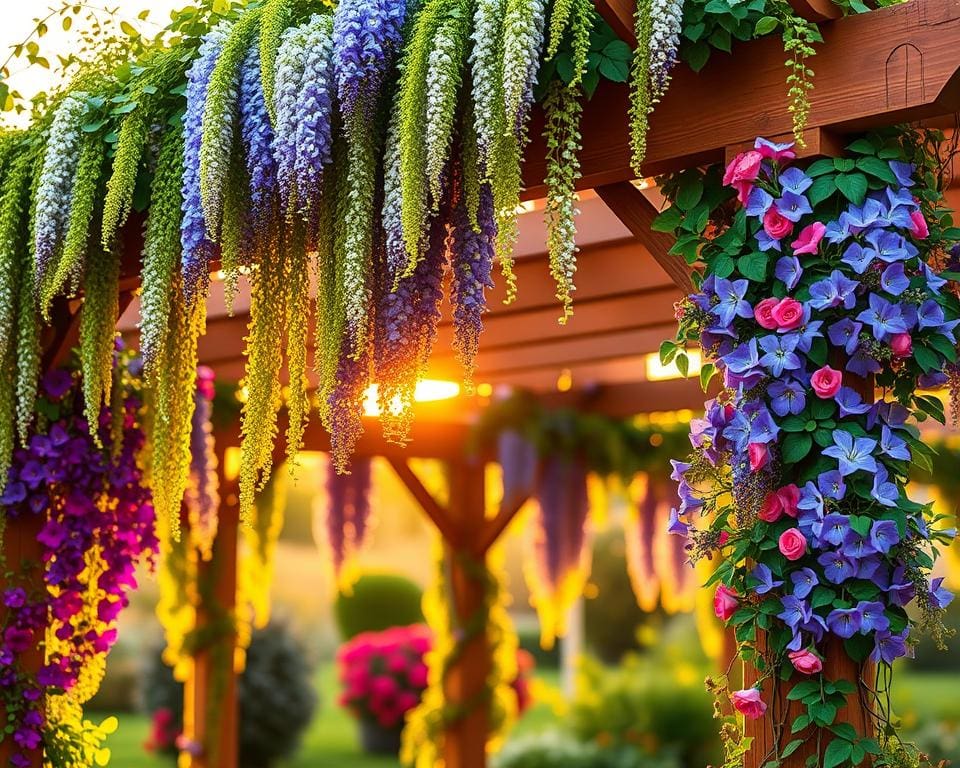

Climbing plants for pergola structures can add shade, privacy and colour to your garden. They also soften timber or metal frames, creating a more settled outdoor space. Before choosing your plants, consider the pergola’s aspect, soil, strength and the speed of coverage you want.
The best pergola climbers fall into three main groups. Flowering pergola plants bring colour and scent, while evergreen pergola climbers offer cover throughout the year. Fast-growing options can create shade sooner, although they often need more pruning and support.
No single climber suits every structure. Wisteria produces striking hanging flowers but becomes heavy as it matures. Clematis offers many flower colours and seasons, while honeysuckle adds fragrance and wildlife value. Ivy provides dependable evergreen cover and is one of the most practical plants to cover a pergola.
Your choice also affects installation. Self-clinging plants attach to surfaces, twining climbers wrap around supports, and some plants need tying to wires, trellis or horizontal beams. These differences influence future training and maintenance. You can find further pergola design ideas before you plant.
Check the posts, beams and rafters first, especially if you are considering vigorous climbers or climbing plants for shade. A mature plant may become far heavier when wet or covered with snow. Good soil, steady moisture during establishment, suitable support and regular pruning are just as important as plant choice. The right pergola planting ideas will help you achieve the shade, colour and privacy you want.
Best climbing plants for pergola shade, colour and year-round interest
The right climber can turn a pergola into a seasonal focal point. Flowers bring colour, fragrance and movement, while berries can provide food for garden wildlife. Your choice should match the light, the strength of the structure and the level of care you can provide. A pergola can shape a garden and give plants room to grow, much like these useful shade ideas for outdoor spaces.
Flowering climbers for a colourful pergola
Wisteria creates one of the most dramatic displays. Wisteria floribunda and Wisteria sinensis produce long, cascading flowers in spring or early summer. A wisteria pergola needs strong beams and firmly fixed supports. This vigorous, woody plant can become very heavy as it matures.
Regular pruning keeps wisteria within bounds and helps it flower well. Check its ties and supports each year. A weak frame may not withstand the weight of mature stems.
Clematis offers a flexible choice for sun and partial shade. Large-flowered forms create bold blooms, while viticella types are often vigorous and floriferous. A clematis pergola can provide flowers across several seasons when you mix varieties with different flowering times.
Keep clematis roots cool and moist while the upper growth receives light. Mulch or plant low-growing companions over the root area. Good drainage remains vital, since waterlogged soil can damage the roots. Evergreen Clematis armandii gives winter foliage in a sheltered position, though cold or exposed sites may cause damage.
Climbing roses bring cottage-garden character, fragrance and long flowering displays. Rambling roses suit larger structures and often grow with great vigour. Climbing roses can flower repeatedly, depending on the variety, and can be guided along pergola beams.
Roses do not cling to surfaces by themselves. Tie them to wires, trellis or beams with soft ties. Guide flexible stems into a horizontal or fan-shaped pattern to encourage flowers along the plant, rather than only at its tip.
Honeysuckle, including Lonicera periclymenum, gives a natural look with tubular, scented flowers. It can attract bees, butterflies and other pollinators. Jasmine is another choice for scented climbers. Common jasmine suits many UK gardens, while star jasmine needs a warm, sheltered spot and may need winter protection.
Grapevines such as Vitis vinifera cultivars provide broad leaves, summer shade and edible fruit. Plant them in a sunny, sheltered position. They need a strong framework and careful winter pruning to preserve fruiting wood and prevent crowded growth.
Evergreen climbing plants for year-round coverage
Evergreen climbing plants for pergola structures keep their leaves through much of the year. They can create year-round pergola coverage and soften a bare frame during winter. Suitable evergreen climbers UK gardeners often consider include ivy, evergreen honeysuckle and star jasmine.
An ivy pergola offers dense foliage and useful winter garden screening. Ivy is self-clinging, but its weight increases over time, so inspect the structure before planting it. Use a sturdy frame and keep growth away from gutters, roofs and fragile surfaces.
Evergreen honeysuckle gives leafy cover with fragrant flowers in summer. It suits a natural planting style and can support garden wildlife. In colder areas, select a sheltered position and protect young plants from harsh winds.
Light levels affect flowering. A plant in deep shade may produce healthy leaves but few blooms. You can extend interest by combining early clematis with summer honeysuckle, roses or jasmine, followed by late foliage and fruit.
Fast-growing climbers for quick pergola coverage
Fast-growing climbers for pergola coverage can fill a new frame within a few seasons. Vigorous climbing plants such as wisteria, rambling roses, honeysuckle and grapevines provide quick pergola coverage when they receive suitable soil, water and support.
Rapid-growing pergola plants need regular guidance. Tie new stems to beams or trellis before they become tangled. Prune crowded growth to improve airflow and keep doors, paths and seating areas clear.
For privacy climbers UK gardeners can rely on, combine dense evergreen foliage with flowering plants. Ivy gives reliable cover, while honeysuckle and roses add seasonal colour. Fast growth should never outweigh structural safety, since mature climbers can become heavy and difficult to control.
How to choose climbing plants for pergola conditions
Successful choosing pergola climbers starts with the conditions around your structure. Check sunlight, wind, soil and available space before buying plants. Your garden aspect affects the leaves, stems and flowers from spring to autumn.
Sun, shade and aspect
South-facing sites receive stronger light and more heat. Wisteria, many clematis varieties, climbing roses, grapevines, jasmine and honeysuckle can suit these positions when the soil stays moist. These are among the best climbers for sun, yet hot paving and walls can increase water loss and scorch tender leaves.
Suitable south-facing pergola climbers may need extra care during dry spells. Look at the light at both the base and top of the frame. Roots may sit in shade beside paving, while upper growth receives full sun.
Partial shade suits honeysuckle, ivy, some clematis varieties, climbing hydrangea and certain climbing roses. Flowering may be lighter than in full sun. For north-facing pergola plants, focus on foliage, texture and reliable coverage rather than a mass of flowers.
Climbing plants for shade can create a calm, leafy cover. Climbing hydrangea tolerates shade and produces attractive foliage with white flower heads. It is deciduous, grows into a substantial plant and may take time to settle. Give it a strong frame and patience while it establishes.
Light levels change through the year. Nearby trees may cast deep shade once their leaves appear. A pergola that looks bright in winter may be much darker in summer. Wind exposure needs attention, too. Strong gusts can damage long stems, loosen ties and strain the frame when foliage is dense.
Plant size, weight and pergola strength
Match the mature plant to the pergola structure for climbing plants. Wisteria and climbing hydrangea can become heavy, woody specimens. These heavy climbers need sturdy posts, secure joints and a well-fixed climbing plant support.
Check the frame before planting. Pergola load-bearing plants should only grow on a structure built to carry their weight. Wet foliage adds pressure after rain, while strong winds can pull against stems and wires. Use these checks when comparing pergola trellis ideas, since thin decorative screens may not support a mature climber.
Allow room for stems to spread without blocking paths or gutters. A vigorous rose may need regular tying and pruning. A slower plant can suit a smaller frame, even if coverage takes longer. Read the mature height and spread on the plant label before planting climbers.
Soil, watering and hardiness
Good soil supports strong roots and steady growth. Improve the soil for pergola climbers with garden compost before planting. Garden soil preparation should include removing weeds, loosening compacted ground and checking drainage. Avoid planting into dry rubble beside paving without adding organic matter.
Watering climbing plants matters most during their first growing seasons. Soak the root area deeply, rather than giving a light splash each day. Mulch can slow evaporation, yet keep it clear of the main stem. In hot, exposed gardens, drought-tolerant pergola plants may need less water once established.
Check winter temperatures before choosing from the hardy climbers UK gardeners commonly grow. Protect young plants from harsh frost and drying winds. A sheltered spot can suit less hardy varieties, while an exposed pergola calls for tough plants with flexible stems and reliable root systems.
How to plant, train and maintain pergola climbers
For how to plant climbing plants for pergola coverage, choose a mild day from autumn to early spring. The ground must be workable, not frozen or waterlogged. Container-grown plants can be planted at other times, but they need careful watering. Dig a hole wider than the root ball and loosen the surrounding soil. Add organic matter if needed, without creating a separate soil pocket. Plant at the depth advised for the species, especially with clematis, roses and grafted plants.
Water thoroughly after planting and check the soil during dry spells. Install the climber support before, or at the same time as, planting to avoid disturbing roots later. Guide young stems towards the pergola with soft ties. Keep them loose and adjust them as the stems thicken. Training pergola climbers works best when roses and grapevines are guided horizontally or diagonally, helping flowers and fruit to form along the stem. Tie clematis and honeysuckle gently to wires, trellis or battens.
Good tying climbers practice allows air to move through the foliage. Crowded growth can encourage fungal problems and make pruning harder. Follow the needs of each plant when pruning climbing plants, as wisteria, roses, grapevines and clematis groups need different methods. Remove dead, damaged or diseased stems, along with growth that blocks paths, enters gutters or overwhelms nearby plants. You can find further ideas for using plants on vertical surfaces in this guide to vertical gardens.
Regular pergola plant maintenance also protects the structure. Check for cracked timber, rot, loose fixings, movement and overloaded sections after storms. Keep stems away from cables, drainage and fragile surfaces. Feed during the growing season when suitable, but avoid excess nitrogen, which can produce weak, leafy growth. Renew mulch, remove weeds and watch leaf colour, flowering and growth rate. With strong support and steady care, your pergola can remain attractive, safe and manageable for many years.