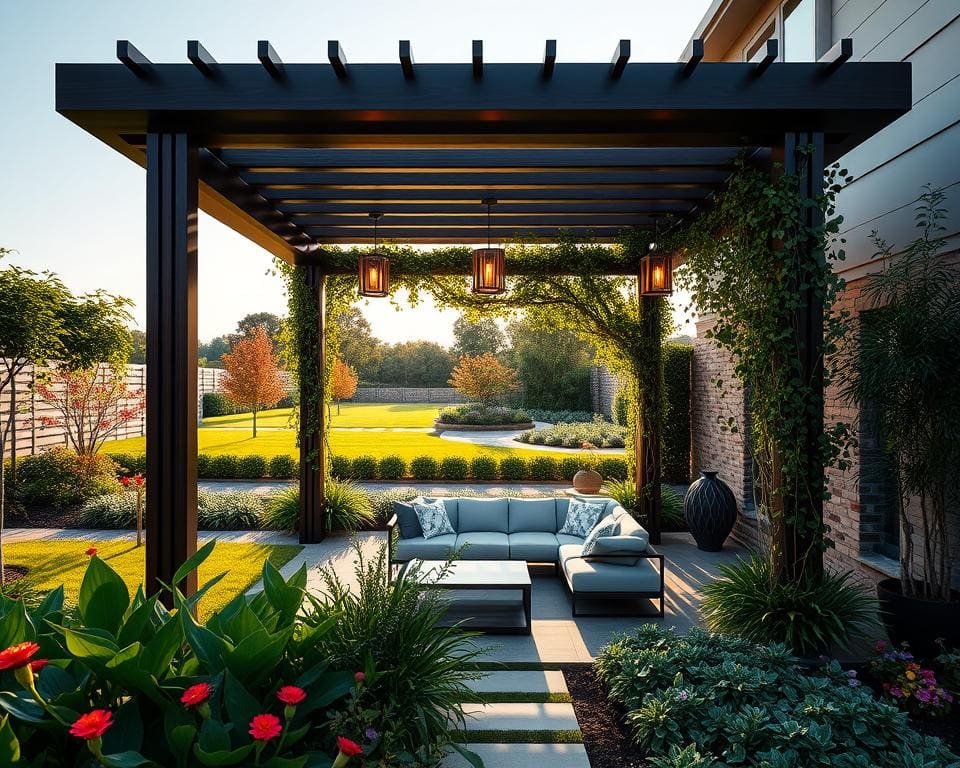

A garden pergola can add shade, shape and character to your outdoor space. With upright posts and open beams, it creates a clear frame without blocking light and air. This makes it a useful choice for modern gardens.
You can use a modern garden pergola to support outdoor living, from relaxed seating and family meals to summer entertaining or working outside. The design can stand alone or attach to your home, depending on your space, access and preferred connection with the house.
The level of garden shade depends on the pergola’s position, size and roof spacing. A retractable canopy, slatted roof, climbing plants or outdoor blinds can provide more cover when needed. Explore these practical pergola ideas before choosing your structure.
Good pergola design should suit your garden’s proportions, planting, seating needs and maintenance plans. The Royal Horticultural Society offers useful guidance on garden structures and climbing plants. Before building, check the latest advice from the UK Government’s Planning Portal, especially for larger, attached structures, listed buildings and conservation areas.
With suitable materials, careful positioning and adaptable features, a pergola can become a stylish garden structure for every season.
How a garden pergola creates shade and structure
Your pergola position shapes the way you use the garden. It affects sunlight, shade, shelter and privacy throughout the day. Study the sun’s movement in the morning, at midday and in the evening before deciding where to place a pergola.
Think about your main use too. Breakfast, daytime reading, evening dining and entertaining need different settings. A spot that feels bright in the morning may become too exposed or too shaded later. Good pergola planning starts with your daily routine, not just a midday view.
Choosing the right position for your pergola
Garden orientation guides your choice. In a south-facing garden or west-facing garden, a pergola can soften strong sunlight. An open roof may not give dense pergola shade when the sun sits low, so consider side screens, planting or adjustable covers.
Check the ground before fixing posts or pouring foundations. Look for poor drainage, tree roots, underground services and nearby boundaries. Stable foundations, well-fixed posts and suitable timber treatment help create a safe garden structure. Corrosion-resistant metalwork can suit a modern UK garden design.
Measure your furniture and access routes before setting the pergola dimensions. Allow space for chairs to move, plants to grow and surfaces to be cleaned. Leave a clear route around the structure for maintenance, especially beside fences and walls.
- Measure tables, chairs, loungers and the space needed to pull them out.
- Check drainage and ground stability around each proposed post.
- Review boundary distances, height limits and access for installation.
The Planning Portal explains that permitted development rules may apply to some outbuildings and garden structures. Conditions vary. Check the latest requirements with your local planning authority if the pergola is near a boundary, unusually high, attached to your home or part of a protected property.
Using pergola design to define outdoor living spaces
A pergola can divide the garden without the solid barrier of a wall or shed. Use it to mark the move from the house to the lawn, frame an outdoor dining area or guide you towards a garden seating area. This simple form of pergola zoning can make a large space feel more ordered.
Support the garden layout with a change in paving, decking, gravel, planting or furniture. A pergola walkway can connect separate areas and give the eye a clear route through the garden. Keep the footprint open enough to prevent the garden from feeling cramped.
Height, width and post spacing affect the sense of enclosure. Closely spaced posts, woven panels and outdoor curtains can improve pergola privacy. A wider arrangement keeps airflow and garden views open. Evergreen planting can strengthen garden privacy, yet it may create deeper shade and need regular trimming.
Climbing plants can soften the frame and provide seasonal shade. Hydrangea and wisteria can add colour and natural cover when given suitable support. Choose plants for light levels, soil, hardiness and the size of the structure. Deciduous climbers let in more winter light after losing their leaves.
For a wider range of garden shade ideas, compare pergolas with other shade solutions for every garden, such as sun umbrellas and fabric canopies.
Balancing sunlight, shelter and garden views
Consider the pergola roof options before construction. Slatted roofs offer filtered light, while adjustable louvres give more precise sunlight control. A retractable pergola canopy can provide flexible pergola shelter for changing British weather. Fabric covers should be firmly secured, since strong winds can strain both the canopy and its frame.
Outdoor curtains and woven screens give extra shelter and privacy. They need regular care and secure fixings. Planting offers a softer solution, yet it needs training, pruning and strong support. Combine two methods if you need daytime shade without losing garden views.
Use the structure to frame attractive planting, trees or open lawn. Avoid placing solid screens where they block a valued outlook. Good pergola planning balances protection with light, airflow and a comfortable connection to the rest of the garden.
Modern pergola ideas for comfortable outdoor living
Think of your pergola as an extension of your home. It can frame a dining area, reading corner, cooking zone or relaxed garden entertaining space. Good modern garden pergola ideas begin with the way you plan to use the space each day.
Plan the furniture before choosing the frame. An outdoor dining pergola needs room to pull out chairs and walk around the table. Lounge furniture needs clear access, side tables and space for footstools. Modular pieces can adapt when you host guests or need more floor space.
Materials set the tone. Painted or stained timber adds warmth and visible grain, while powder-coated aluminium suits a clean, contemporary pergola. Galvanised steel creates a strong industrial look, and composite elements can reduce upkeep. Choose finishes that relate to your home, paving and garden planting.
A simple frame in charcoal, grey or soft white can complement modern architecture. Natural timber may suit a period property or a softer planting scheme. This link to outdoor furniture and pergola planning can help you match structure, layout and comfort.
Roof design affects comfort throughout the year. Fixed slats provide filtered shade, while a retractable canopy leaves the space open when you want more sun. A bioclimatic pergola uses adjustable louvres to respond to changing sunlight and light rain.
A pergola is not always a watertight outdoor room. For dependable rain protection, choose a roof system with suitable falls, drainage and weather-resistant materials. Check the Met Office guidance for local wind, rain and temperature patterns before selecting a lightweight canopy or freestanding structure.
Thoughtful pergola lighting extends use into the evening. Integrated LED strips, downlights, wall lights, festoon bulbs and solar lanterns can create useful layers. Position fittings to limit glare. A qualified electrician should install fixed connections, outdoor sockets and other mains-powered equipment.
Comfort comes from more than shade. Outdoor heaters, fire pits, blankets and quick-drying cushions can make pergola seating inviting in cooler weather. Follow each appliance’s instructions, allow safe clearance from timber and fabric, and provide good ventilation around flame-based heating.
Side screens, trellis panels, curtains and slatted walls can improve privacy without hiding every view. Carefully placed climbers or tall planting soften the structure. Built-in benches, planters, storage and serving surfaces make a small pergola work harder, especially when open sections keep the design visually light.
- Allow space for lighting cables, water access and drainage.
- Plan sockets for an outdoor kitchen, fridge or portable equipment.
- Choose weather-resistant frames, covers and quick-drying cushions.
- Use pergola accessories with care to limit cleaning and seasonal storage.
A durable finish and a simple layout often need less maintenance than a crowded design. Review wind exposure, drainage and winter storage before buying. With careful planning, your pergola can support dining, rest and entertaining across the seasons.
How to design a stylish pergola for every season
An all-season pergola should respond to changing sunlight, rain, wind, temperature and garden use. In spring, combine fresh bulbs, new planting and flexible shade to soften the frame. Movable furniture lets you follow warmer parts of the garden. In summer, use adjustable roof panels, a retractable canopy, climbing plants and pale textiles to reduce glare while allowing air to move freely. Comfortable seating and durable garden furniture will support year-round outdoor living.
Autumn calls for careful rain management and regular leaf clearance. A suitable roof fall, gutters and drainage channels can stop water collecting near the seating area. Choose weather-resistant frames, such as powder-coated aluminium, and use teak or treated timber where its natural character suits the garden. Outdoor fabrics such as olefin resist mould, while synthetic rattan and rope furniture need simple, regular cleaning. Covers can protect furniture from rain, fading and surface damage.
For a winter pergola, add evergreen screening, sheltered seating and discreet outdoor lighting. The structure can still frame planting and provide a strong architectural focus when it is not used each day. Deciduous climbers offer summer shade but allow more light through in winter. Evergreen climbers provide lasting privacy, although they need pruning and firm support. Select plants for the aspect, soil, planting depth and mature size. Heavy climbers require a frame that can carry their full weight.
Good pergola maintenance protects both appearance and safety. Inspect the frame each season for movement, cracked timber, corrosion, loose bolts, damaged roof parts, blocked drainage and growth that strains the structure. Timber may need cleaning, staining or painting, while metalwork needs checks for damaged coatings and trapped water. Store cushions, canopies and accessories in a dry, ventilated place during severe weather. Keep heaters and flames away from combustible items, leave walkways clear, use non-slip surfaces and ensure electrical work is suitable for outdoor use. A restrained palette of materials, repeated finishes and careful pergola planting will help your garden pergola UK design feel connected to the house and wider garden. For plant advice, consult the Royal Horticultural Society; check the Planning Portal for current rules, and follow manufacturer guidance for roofs, heaters, electrics and fixings.