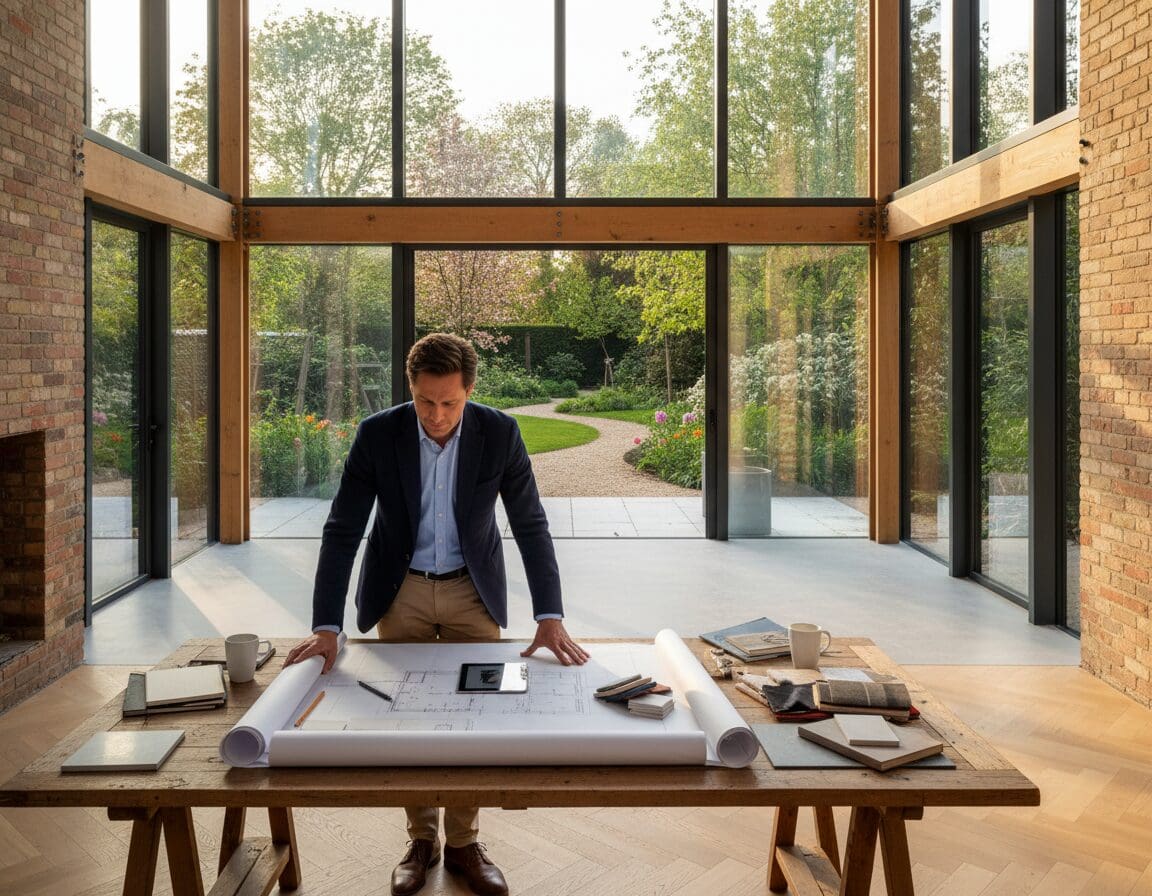

Planning a successful home extension starts with a clear idea of what you want to achieve. Whether you seek a larger kitchen-diner, an extra bedroom, a dedicated home office or ground-floor accessible space, sensible extension project planning turns ambition into lasting comfort and value.
Begin by testing feasibility: check site constraints, neighbour boundaries and permitted development rights. Early contact with your local council and a pre-application discussion can save time. Use the Planning Portal and RIBA to find guidance and professionals when needed.
Next, map the core stages at a high level. Move from initial concept and feasibility (typically 2–6 weeks) to design and planning application (6–16 weeks), then contractor selection (2–8 weeks) and construction (from about 8 weeks for small works to six months or more for larger builds). Allow contingency for weather and supply delays.
Set a realistic budget and funding route early. Options include savings, remortgage, home improvement loans or bridging finance. Aim for a 10–20% contingency and factor in costs for snagging and handover. Good extension project planning keeps finances aligned with your goals.
Work out sustainability aims at the start. A fabric-first approach, high-performance glazing, provision for air-source heat pumps and future solar PV or EV charging will improve comfort and help long-term running costs. Balancing lifestyle benefits with resale value is central to successful UK home extensions.
Finally, avoid common pitfalls: underestimating costs and timescales, overlooking party-wall issues, poor contractor choice and weak attention to insulation and energy performance. With careful planning a house extension can deliver usable space, higher property value and years of enjoyment.
home extension planning: setting goals and assessing feasibility
Start by turning aspiration into a clear brief. Define extension objectives around daily routines, future needs and measurable targets such as additional square metres, number of rooms, storage and the level of natural light you require. Ask yourself, what do I want from my extension: more living space, a dedicated workspace, accessibility improvements or rental income? Use those answers to shape extension desired outcomes and to separate must-haves from nice-to-haves.
Defining your objectives and desired outcomes
Draft a succinct brief that lists intended uses, preferred adjacencies such as kitchen-to-garden flow, fixed elements like stairs and chimney, and long-term flexibility. Gather inspiration from Grand Designs episodes, magazines and Pinterest to refine style and function while staying realistic about constraints. Talk through the brief with everyone in the household so the plan reflects family routines, children’s needs and ageing-in-place considerations.
Assessing site constraints and opportunities
Carry out a site assessment for extension by measuring footprint, boundary lines and orientation. Note sun path, overshadowing, drainage, trees, protected species and existing utilities. Commission a land survey and, where needed, topographical or drainage surveys before finalising designs.
Record property constraints such as conservation area status, listed building listing, article 4 directions and flood risk zones that may limit materials, height or form. Identify extension site opportunities: south-facing gardens for light, level changes that allow undercroft storage, reconfiguring internal layouts without major structure, and connecting indoors with outdoor living through bi-fold doors or roof terraces.
Consider the Party Wall Act and neighbour relations. Early communication reduces disputes and avoids delays when an award is likely.
Budgets, funding options and realistic costing
Set realistic extension budgets by researching realistic costs for extensions UK. As a guide, small single-storey rear extensions often start from around £20,000–£40,000 for basic work. Larger or higher-spec projects commonly range from £40,000–£150,000+ depending on size, finish and region, with London and the south-east typically more expensive.
Break costs into components: design fees, planning and building regulation fees, structural engineer fees, site preparation, foundations, structural works, roofing, glazing and doors, internal finishes, kitchens and bathrooms, M&E, landscaping, temporary works and professional warranties. Allow contingency of 10–20% for predictable projects and 20%+ for complex renovations with unknowns.
Explore extension funding options including personal savings, remortgaging, additional borrowing or second-charge loans, unsecured personal loans and bridging loans for time-sensitive purchases. Check VAT rules on repairs and certain conversions where relevant.
Get at least three detailed contractor quotes with like-for-like breakdowns. Use staged payments tied to milestones and retain a final sum to ensure satisfactory completion. Consider whole-life costs such as running costs, maintenance and energy-efficiency savings that may justify higher upfront spend.
Understanding planning permission and permitted development rules in the UK
Learn the difference between full UK planning permission and permitted development rights. PD allows small extensions without a planning application if they meet size, height and other conditions. Many domestic rear extensions and loft conversions can fall under permitted development rights, subject to limits and local restrictions.
Common PD limits for single-storey rear extensions normally allow up to 6 metres for terraced or semi-detached homes and up to 8 metres for detached houses under certain schemes. Local councils may remove PD through Article 4 directions and PD does not override conservation area rules or listed building protections.
Planning permission is usually required for major changes such as alterations to front elevations in conservation areas, large side extensions that affect the street scene, raising roofs or adding storeys, or when proposals breach PD conditions. Seek pre-application advice from your local planning authority and consult the Planning Portal for forms and validation guidance.
Remember Building Regulations remain separate. Even if your proposal falls under permitted development, you may need approval for structural safety, thermal performance, ventilation, drainage and fire safety. Routes to compliance include full plans submission or a building notice.
Architects and planning consultants can help navigate UK planning permission and planning rules for extensions, prepare applications and manage conditions so your design meets policy and practical constraints.
Design, contractors and technical considerations for a seamless extension
Good design links imagination to reality. Start by assembling a small project team so you can balance style, structure and cost from the outset. Working with architects and extension design consultants brings clarity to your brief and ensures planning and building regulations are addressed early.
Working with architects, designers and technical consultants
An architect develops concept sketches, planning packs and construction drawings. Architectural technologists prepare technical details and liaise on building regulations. Structural engineers design foundations and beams. M&E consultants advise on heating, ventilation and electrics.
To find an architect UK, search the RIBA directory for chartered practitioners. Look for RICS or CIAT accreditation when you need technologists. Review portfolios for similar extension projects and ask for references. Agree fee structures up front: fixed fees, percentage of construction cost or hourly rates are common.
RIBA stages describe key deliverables from strategic definition through occupation. Expect concept sketches, planning applications, technical drawings and a specification. Early-stage workshops with architect and contractor help align design intent with buildability and budget.
Choosing the right contractor and checking credentials
A strong contractor will protect your schedule and quality. Ask for at least three detailed, itemised quotes that include a schedule of work, timescales and payment terms. Check whether subcontractors will be used and who manages site health and safety.
When you choose a contractor, check for a valid business address, proof of insurance and memberships such as the Federation of Master Builders or TrustMark. Confirm VAT registration where turnover requires it and request written warranties and a clear deposits policy.
Carry out checking contractor credentials like gas-safe registration for gas works and NICEIC or NAPIT certification for electrical work. Avoid choosing solely on price; unusually low bids may indicate corners cut. Use a written contract such as JCT Minor Works or a bespoke contract prepared by a solicitor.
Structural, insulation and energy-efficiency considerations
Extension structural considerations include foundations suited to soil type, proper tie-ins to existing fabric and correctly sized steel or timber beams for new openings. Address party-wall detail and strategies to limit differential movement between old and new work.
Thermal performance should meet or exceed Building Regulations Approved Document L. Follow insulation standards, specify best-practice U-values for walls, floors and roofs and design continuous insulation to avoid thermal bridges. Airtightness and proper ventilation are essential.
High-performance glazing with low-E coatings, warm edge spacer bars and thermally broken frames reduces heat loss. Consider MVHR for airtight builds or adequate trickle vents and extract fans for simpler schemes. Commission SAP or equivalent energy modelling to verify compliance and guide choices for energy-efficient extensions UK.
Acoustic insulation matters where extensions face busy streets or adjacent living spaces. Plan heating compatibility and size radiators or underfloor heating for new floors to maintain comfort and efficiency.
Materials, finishes and matching the existing property
Choices of construction system affect speed, cost and performance. Traditional brick and block, timber frame, steel-frame and off-site modular each have strengths. Timber frame or modular systems often deliver faster builds and strong thermal performance. Masonry can match street scenes more easily.
Select extension materials that relate to the existing building. Match brick type, coursing, mortar colour and roof tiles where possible. If exact matching is impossible, choose complementary materials so matching finishes feel intentional rather than forced.
Internally, prioritise durable finishes, moisture-resistant plasterboard in wet areas and integrated storage to keep spaces uncluttered. Specify responsibly sourced timber, low-VOC paints and recycled insulation for sustainability. Consider thresholds and step levels to ensure accessibility and safe transitions between old and new.
- Vet contractors: proof of insurance, memberships, references and recent examples of work.
- Request three itemised quotes and a clear change-order procedure.
- Insist on named site manager, regular site meetings and written variations policy.
- Use energy modelling and comply with insulation standards for energy-efficient extensions UK.
- Choose materials for home extensions that balance matching finishes with long-term durability.
Project management, timelines and living through a build
Effective project management is the backbone of any successful extension. Whether you opt to manage the build yourself, let the contractor lead, or appoint an independent project manager or clerk of works, clear coordination of trades, deliveries and inspections keeps costs and disruption down. The manager should act as the single point of contact for decisions, maintain quality control and health & safety, track the budget and produce a simple programme so everyone understands the plan.
Use a phased timeline for clarity: pre‑design and feasibility (2–6 weeks), technical design and planning submission (6–12 weeks), tender and contractor selection (2–6 weeks), mobilisation and site setup (1–2 weeks), groundworks and foundations (2–4 weeks), structural build (4–8 weeks), first fix M&E and plastering (2–6 weeks), second fix, finishes and landscaping (4–8 weeks), and snagging and handover (1–4 weeks). This sample schedule reflects typical extension timelines UK for a mid‑sized rear extension and helps set realistic expectations.
Living through building works need not be chaotic. Create a temporary kitchen and a protected living area, schedule the noisiest tasks to daytime hours, and consider short‑term decamping for major projects. Protect existing finishes, arrange secure storage for tools, and set up clear rubbish removal and site security plans. Practical measures make daily life manageable and reduce friction between household routines and on‑site activity.
Good communication underpins progress: hold regular site meetings, circulate weekly progress reports with photographic records, issue written instructions for any variations, and ensure the contract includes a dispute resolution route. At practical completion produce a snagging list, retain a small sum for defects and confirm contractors will address items within the defects liability period. Finally, register warranties and guarantees, update home insurance, consider an EPC reassessment and set an ongoing maintenance schedule for rooflines, glazing seals and exterior finishes to protect your investment after handover.