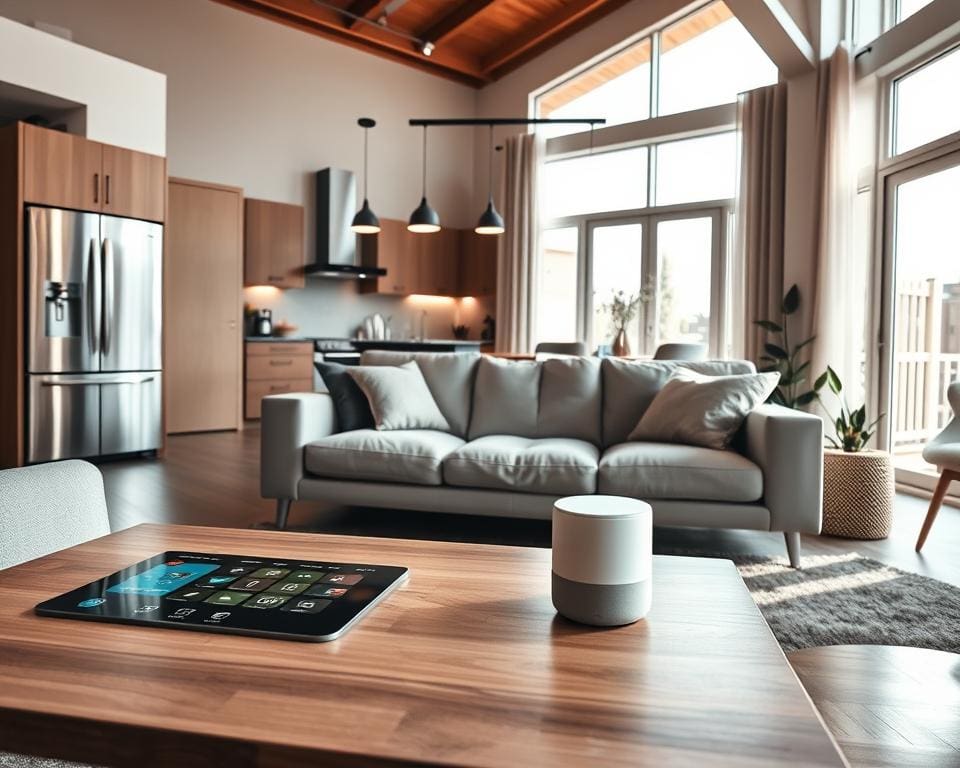

Smart technology reshapes how people live at home by linking devices, systems and software to simplify daily life. This smart home definition covers products from Amazon Echo and Google Nest to Philips Hue and Hive, and describes a network where lighting, heating, security and appliances work together to automate and optimise routine tasks.
In the UK, connected homes must suit terraced houses, semi‑detached properties, flats and new‑build developments alike. Retrofit solutions are as important as factory‑fitted systems, because most British homes are older and need upgrades that do not require major renovations.
Rising household connectivity, better broadband and mobile networks, and more affordable devices are driving adoption. Practical concerns — energy bills, net zero goals, an ageing population seeking independent living, and worries about security — make the smart technology role UK both timely and useful.
This article will explain how smart systems are structured, outline home automation benefits such as comfort, efficiency and security, and guide homeowners on choosing, installing and maintaining systems responsibly. Readers will find clear, practical advice and examples to help make connected homes work for British lifestyles.
For a practical overview of devices that simplify daily life, see this guide on smart gadgets and setups that compares popular options.
What is the role of smart technology in modern homes?
Smart technology reshapes how households live, work and save energy. It brings sensors, apps and automation together so domestic tasks run with less fuss. For UK readers this means systems that suit a London flat, a suburban semi or a countryside cottage.
Defining smart technology for UK households
The smart technology UK definition covers internet‑connected devices, sensors, actuators and software that monitor and control home functions automatically or on command. Examples include Google Nest and Hive thermostats, Philips Hue lighting, Amazon Alexa and Google Assistant voice control, Yale smart locks and Arlo cameras.
Use cases range from scheduled heating and remote appliance control to occupancy sensing and safety alerts. These systems work with varying broadband quality and adapt to flats and cottages alike. Integration with SMETS2 smart meters supports energy monitoring and better household decisions.
Key components: devices, connectivity and platforms
Smart home components fall into clear groups: sensors (motion, temperature, humidity), actuators (smart switches, valves), controllers (hubs, bridges) and user interfaces (apps, voice assistants, wall panels). IoT devices sit at the heart of this mix, collecting data and triggering actions.
Connectivity matters. Wi‑Fi offers direct cloud links for many mainstream products. Zigbee, Z‑Wave and Thread use mesh networks to improve range and reduce power use. Bluetooth suits low‑power accessories. Choice of connection affects reliability and battery life.
Home automation platforms such as Amazon Alexa, Google Home, Apple HomeKit and Samsung SmartThings shape interoperability. Broad ecosystems give wide device support. Some homeowners prefer local control and fewer cloud dependencies. Trade‑offs include vendor lock‑in and subscription services.
How smart systems differ from traditional home improvements
Smart systems are dynamic rather than static. An intelligent heating schedule learns patterns and reacts to sensors. A conventional programmer follows fixed timers without adaptation.
Installation can be incremental. A retrofit smart home approach lets owners add a single thermostat or a set of smart bulbs and expand later. Traditional upgrades such as loft insulation often require larger one‑off investments.
Software underpins ongoing improvement. Firmware updates and cloud features can add capabilities over time. That contrasts with physical upgrades that age without changing. Life cycle tasks include security patches, account management and occasional subscription review, which differ from the maintenance of double glazing or new radiators.
Benefits of smart home technology for comfort, efficiency and security
Smart systems change how we live. They bring practical comfort, help cut bills and strengthen safety in everyday life. These gains show in routines, energy use, home security and support for older people.
Enhancing comfort and everyday convenience
Personalised scenes set lighting, temperature and blinds for morning, work or evening. Voice control with Amazon Alexa or Google Assistant delivers hands‑free operation. Geofencing can switch settings when residents arrive or leave.
Remote control of appliances and automated cleaning robots save time. Products such as Dyson robots and iRobot vacuums, plus smart ovens and washers from Bosch and Samsung, let you start tasks and run diagnostics from a phone.
Connected devices work together. A PIR sensor can trigger hallway lights, a smart speaker can play a pre‑set playlist and a thermostat can nudge the temperature to a chosen level. These are clear smart home benefits.
Energy efficiency and cost savings for British homes
Smart thermostats from Nest and Hive optimise heating schedules and learn household patterns. That optimisation can lower bills, which matters most during periods of high energy prices in the UK.
Real‑time monitoring with smart meters and energy monitors supports behaviour change. Tariff‑aware platforms that link to Octopus Agile let households shift use to cheaper hours and reduce peak demand.
LED smart bulbs, smart plugs and appliance scheduling cut wasted power. Using energy saving smart tech across heating, lighting and white goods helps meet Net Zero aims by smoothing demand and integrating home batteries or EV charging.
Improving home security and peace of mind
Smart locks, video doorbells like Ring and Nest Hello, and networked cameras deter intruders and provide remote visual confirmation. Two‑way audio allows homeowners to speak with visitors from a phone.
Instant notifications for motion or door opening offer timely alerts. Automated lighting on detection creates the impression of occupancy and can discourage theft.
Where desired, systems link to professional monitoring and police liaison services. Users must balance convenience with privacy and follow UK data protection rules, securing accounts with strong passwords and two‑factor authentication to protect stored footage.
Accessibility and assisted living applications
Assisted living technology supports independent living through voice control, fall detection sensors and medication reminders. These tools reduce reliance on constant in‑person care.
Telecare systems can integrate with NHS and social care packages, helping carers monitor remotely and respond when needed. Specialist providers such as Tunstall offer proven solutions for homecare.
Customisable interfaces, large displays and tactile controls make devices easier to use. Social benefits appear too: voice assistants reduce isolation and video calls keep families connected, showing the human side of smart home benefits.
Choosing, installing and maintaining smart technology in modern homes
Start by defining clear goals: do you want to improve security, cut energy bills, boost convenience or support accessibility? Once priorities are set, choose smart home devices that deliver the most impact for your budget. Favour reputable brands such as Philips Hue, Google Nest, Hive, Yale, Ring, Bosch and Samsung for reliability, warranty and support, and check explicit interoperability like Zigbee, Z‑Wave and Matter to future‑proof your setup.
Decide whether to install yourself or hire a professional. Many consumer products offer simple DIY setup, but boilers, hard‑wired security and complex integrations are best left to Gas Safe engineers or certified electricians who are NICEIC or NAPIT registered. When you install smart home UK systems, plan Wi‑Fi coverage carefully: mesh networks, Ethernet backhaul and sensible hub placement make a big difference to performance.
Security and privacy must be part of every smart home security setup. Change default passwords, enable two‑factor authentication, keep firmware updated and use a guest Wi‑Fi or VLAN for IoT devices. Maintain devices with regular firmware updates, periodic sensor tests and backups of settings. Factor in subscription fees for cloud storage and be alert to product end‑of‑life or cloud service changes when you choose smart home devices.
Plan for growth by selecting open standards to ease future additions and to improve interoperability. Keep a schedule for battery replacement and responsible disposal through local council schemes. For persistent faults, use manufacturer support, community forums or professional services. Also review insurance, document installations and follow data protection guidance for cameras and recordings to ensure both legal compliance and long‑term peace of mind.