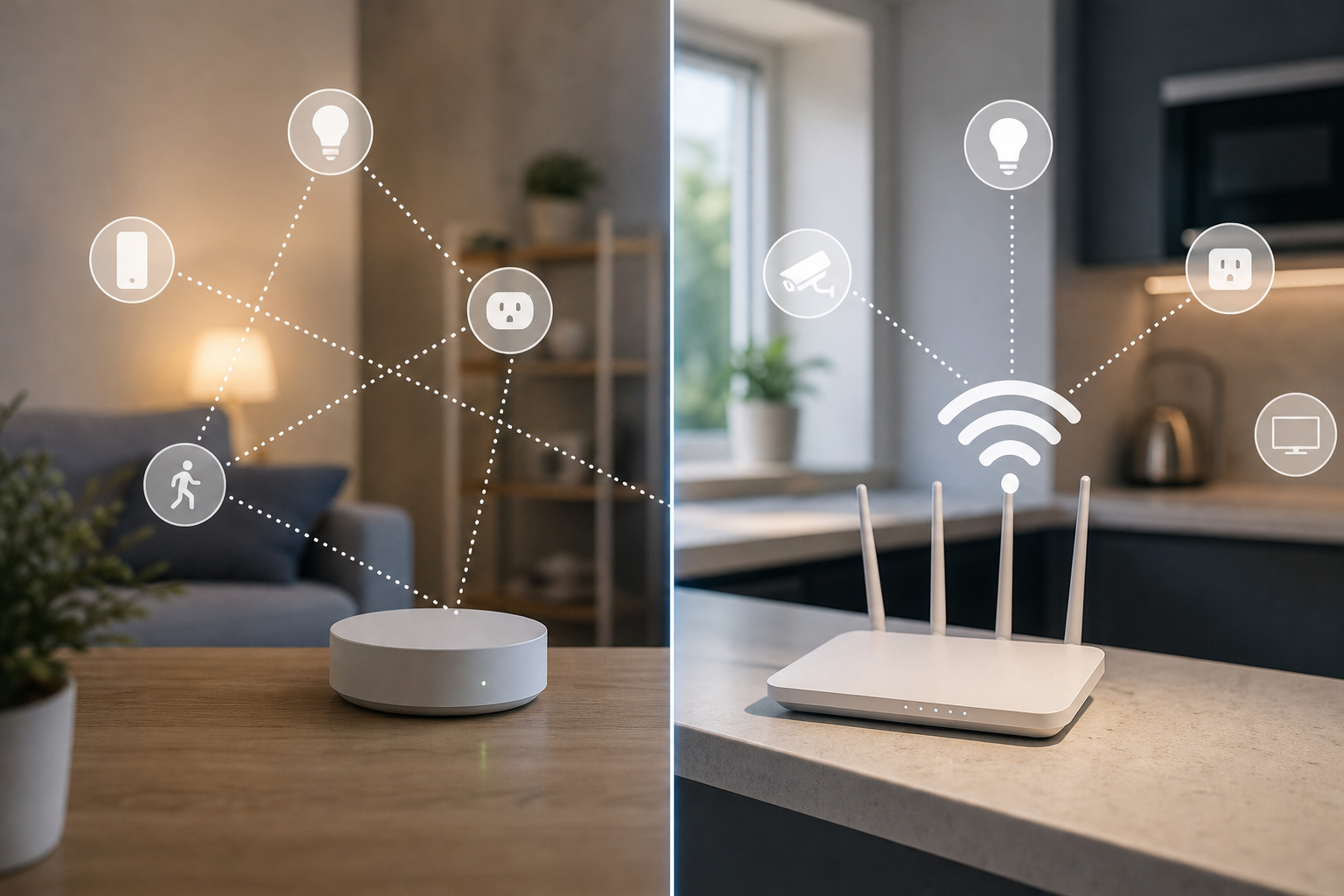

Choosing the right connectivity protocol is a foundational decision for any business implementing a smart building or office automation strategy. While many managers instinctively lean towards the familiarity of Wi-Fi, the industrial and commercial sectors often find that a dedicated mesh network offers superior stability. When weighing Zigbee vs Wi-Fi: Which Is Better for Smart Devices?, the answer depends entirely on the scale of your deployment, the power constraints of your hardware, and the existing network infrastructure of your premises.
Understanding the Core Technologies
To make an informed decision, it is essential to understand how these two technologies operate. Wi-Fi is a high-bandwidth wireless network standard designed for high-speed data transfer. It connects devices directly to a central router or access point. This makes it ideal for devices that require significant data throughput, such as security cameras or smart displays.
Zigbee, conversely, is a low-power, low-data-rate wireless mesh network. Unlike Wi-Fi, where every device communicates with a central hub, Zigbee devices can pass data to one another. This creates a "mesh" where the signal hops from one device to the next until it reaches the central gateway. For B2B applications, this means a larger coverage area without needing to install expensive Wi-Fi extenders every few metres.
Comparing Performance and Infrastructure
When deploying smart technology across a commercial warehouse or a multi-storey office, the physical layout of the building dictates the choice of protocol. Wi-Fi is ubiquitous, meaning almost every modern business already has the necessary infrastructure in place. However, adding fifty or a hundred smart sensors to a standard corporate Wi-Fi network can lead to significant congestion, potentially slowing down critical business operations and employee laptops.
Zigbee operates on a separate frequency or channel, ensuring that your smart lighting or HVAC sensors do not compete for bandwidth with your company's primary data traffic. Because Zigbee is designed specifically for small packets of data—such as a "turn on" command or a temperature reading—it is far more efficient for large-scale IoT (Internet of Things) deployments.
Power Consumption and Battery Life
One of the most significant advantages of Zigbee is its energy efficiency. Wi-Fi is power-hungry because it maintains a constant, high-bandwidth connection to the router. For battery-powered devices, this often results in frequent battery replacements, which increases maintenance costs and labour for facilities management teams.
Zigbee devices spend most of their time in a "sleep" state, waking up only to transmit small bursts of data. This allows sensors to operate for several years on a single coin-cell battery. In a B2B context, reducing the frequency of maintenance visits across a large site provides a clear operational advantage.
Range and Network Stability
While a single Wi-Fi router has a limited radius, Zigbee expands its reach through its mesh architecture. Every mains-powered Zigbee device acts as a repeater. If a sensor in a far corner of a warehouse is too distant from the hub, it simply sends its signal through a nearby smart plug or light switch.
This self-healing nature means that if one device fails, the network automatically finds an alternative path to route the data. Wi-Fi lacks this inherent redundancy; if a device is out of range or the router fails, the connection is lost entirely.
Key Differences for Business Implementations
When evaluating the operational impact, businesses must consider the total cost of ownership and the ease of scalability. Wi-Fi devices are often cheaper to purchase individually because they do not require a dedicated hub. However, the hidden cost lies in the potential need for network upgrades to handle the increased device load.
Zigbee requires an initial investment in a coordinator or gateway. Once this hub is installed, adding new devices is generally faster and does not put any additional strain on the corporate internet connection. This separation of "operational technology" from "information technology" is a preferred strategy for many IT managers who wish to maintain strict security and performance boundaries.
To summarise the technical trade-offs, consider these specific factors:
- Bandwidth: Wi-Fi handles high-definition video and large files; Zigbee handles simple triggers and sensor data.
- Scalability: Zigbee supports hundreds of devices on a single mesh without slowing down the local area network.
- Power: Zigbee is the superior choice for battery-operated sensors; Wi-Fi is best for mains-powered equipment.
- Setup: Wi-Fi is "plug-and-play" for a few devices; Zigbee is more efficient for systemic, building-wide installations.
Choosing the Right Protocol for Your Use Case
The decision often comes down to the specific application. If a business only needs three or four smart plugs in a small reception area, Wi-Fi is the most logical choice. There is no need to introduce a new hub when the existing router can handle the load.
However, for comprehensive building management, the choice shifts. If you are installing smart lighting across ten floors or monitoring humidity in a cold-storage facility, the mesh capabilities of Zigbee are indispensable. By implementing a dedicated protocol, you ensure that the smart environment remains responsive regardless of how many employees are using the Wi-Fi for video conferencing.
The debate of Zigbee vs Wi-Fi: Which Is Better for Smart Devices? usually concludes that a hybrid approach is most effective. High-bandwidth devices like IP cameras stay on Wi-Fi, while the vast array of sensors and switches move to Zigbee. This balanced architecture prevents network bottlenecks and ensures maximum uptime for critical business infrastructure.
Frequently Asked Questions
Do I need a special hub to use Zigbee devices?
Yes, Zigbee requires a coordinator or gateway to translate the Zigbee signal into a format that your local network and smartphone can understand.
Can Zigbee and Wi-Fi work together in the same office?
Yes, they can coexist perfectly because they handle different types of data and can be configured to operate on different channels to avoid interference.
Is Zigbee more secure than Wi-Fi for business use?
Both use strong encryption, but Zigbee can be more secure because it operates on a separate network, isolating your IoT devices from your primary data servers.
Will adding more Zigbee devices slow down my internet?
No, because Zigbee devices communicate with each other and a central hub rather than connecting directly to your internet router's wireless bandwidth.
Which protocol is easier to install for a non-technical manager?
Wi-Fi is generally easier for a small number of devices, but Zigbee is easier to scale once the initial hub is configured.