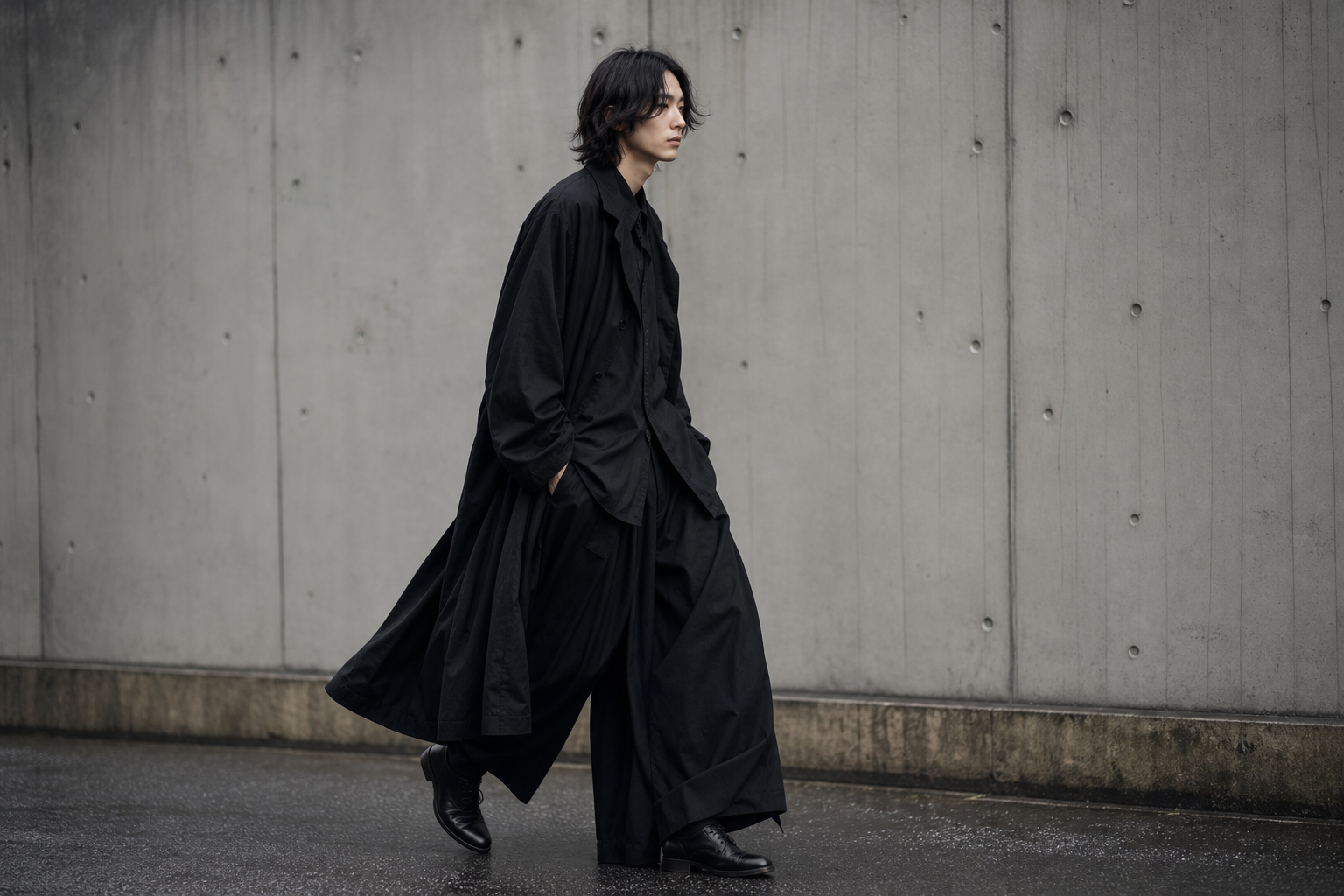

Fashion is often viewed as a tool for highlighting the human form, yet some of the most influential designers have spent their careers doing the exact opposite. Yohji Yamamoto stands as a pioneer in this regard, challenging traditional notions of silhouette and gender. By prioritising the space between the fabric and the skin, he redefined modern elegance. Understanding Yohji Yamamoto and the beauty of oversized clothing allows B2B fashion professionals and retailers to grasp how volume can be used as a sophisticated design language rather than a mere lack of fit.
The Philosophy of Space and Ma
At the heart of Yamamoto’s work is the Japanese concept of Ma, which refers to the pure space or gap between objects. In Western tailoring, the goal is often to create a garment that contours precisely to the body, emphasising the waist or shoulders. Yamamoto rejects this restrictive approach. He views the air between the garment and the wearer as a vital component of the design.
This philosophy transforms the act of dressing into an architectural exercise. Instead of the clothes serving the body, the body inhabits the clothes. For business owners in the luxury apparel sector, this shift is crucial. It moves the value proposition from "flattering the figure" to "providing a sanctuary." The oversized silhouette is not about hiding the body, but about liberating it from the expectations of conventional beauty standards.
Yohji Yamamoto and the Beauty of Oversized Clothing in Modern Retail
Integrating avant-garde concepts into a commercial setting requires a nuanced understanding of aesthetic value. When we examine Yohji Yamamoto and the beauty of oversized clothing, we see a blueprint for how "anti-fashion" can become a sustainable luxury staple. The oversized aesthetic offers several strategic advantages for brands focusing on longevity and inclusivity.
Versatility Across Body Types
One of the primary benefits of oversized tailoring is its inherent inclusivity. By removing the reliance on rigid measurements, garments become more adaptable to various body shapes. This reduces the need for extensive sizing tiers and lowers the risk of returns due to fit issues—a significant pain point in B2B e-commerce.
The Psychology of Comfort and Power
There is a distinct psychological shift that occurs when wearing voluminous clothing. It conveys a sense of effortless confidence and intellectualism. In a professional context, this translates to a "power dressing" style that does not rely on the traditional corporate suit. It suggests a wearer who is comfortable in their own skin and unafraid to occupy space.
Technical Mastery of Volume and Drape
Creating a garment that is large without looking sloppy requires immense technical skill. Yamamoto’s mastery lies in the balance of weight, fabric choice, and cutting techniques. An oversized piece must still possess structure; otherwise, it loses its intentionality.
The use of heavy wools, gabardine, and crisp linens allows the fabric to hold a shape independent of the wearer. The drape is carefully calculated so that the garment moves fluidly during motion. For manufacturers and sourcing agents, this highlights the importance of fabric GSM (grams per square metre) and weave density. To achieve this look, the following elements are essential:
- Precision Pattern Cutting: Using oversized patterns that maintain a proportional relationship to the shoulders and neckline.
- Fabric Weight Selection: Choosing materials that provide enough structure to prevent the garment from collapsing.
- Asymmetrical Detailing: Implementing uneven hems or off-centre buttons to create visual interest within a large volume of fabric.
- Tonal Palettes: Sticking primarily to black and neutral tones to ensure the focus remains on the silhouette rather than the colour.
The Impact of Monochrome Aesthetics
While the volume is the most striking feature, the colour palette is equally intentional. Yamamoto is famously associated with the colour black. To him, black is not a symbol of mourning, but a colour of modesty and strength. It allows the viewer to focus entirely on the shape and the texture of the material.
In a B2B context, the reliance on a monochrome palette simplifies production cycles and inventory management. It creates a timeless aesthetic that transcends seasonal trends. When a garment is designed with a focus on volume and a neutral colour, it becomes a "permanent collection" piece rather than a fast-fashion item. This approach encourages a more sustainable consumption model, where quality and form take precedence over fleeting colour trends.
Challenging Gender Norms through Silhouette
The beauty of oversized clothing is that it effectively erases the traditional boundaries between masculine and feminine attire. By obscuring the curves of the body, Yamamoto created a gender-neutral language that was decades ahead of its time. This is particularly relevant for contemporary brands looking to expand into unisex or gender-fluid collections.
The oversized blazer or the wide-leg trouser does not demand a specific gender to look sophisticated. It shifts the conversation from "who is wearing this" to "how does this garment interact with the environment." For retailers, this opens up a broader market demographic and aligns the brand with modern social values regarding identity and expression.
Frequently Asked Questions
Why is oversized clothing considered a luxury aesthetic?
It is considered luxury because it requires superior fabric quality and expert tailoring to ensure the volume looks intentional rather than poorly fitted. The focus shifts from basic utility to artistic expression and architectural form.
How does the concept of Ma influence garment design?
The concept of Ma focuses on the intentional void between the fabric and the skin. This allows for greater freedom of movement and creates a dynamic silhouette that changes as the wearer moves.
Can oversized silhouettes work in a professional business environment?
Yes, provided the fabrics are high-quality and the tailoring is precise. An oversized blazer paired with structured trousers creates a modern, intellectual professional look that signals creativity and confidence.
What are the best fabrics for achieving a Yamamoto-style drape?
Heavy wool gabardine, boiled wool, and high-density linens are ideal. These materials have the necessary weight to hold a structural shape while still allowing for fluid movement.
How do oversized garments contribute to sustainable fashion?
These garments are often more durable and inclusive of different body types, meaning they stay in use longer. Their timeless silhouettes also ensure they do not go out of style as quickly as trend-led clothing.