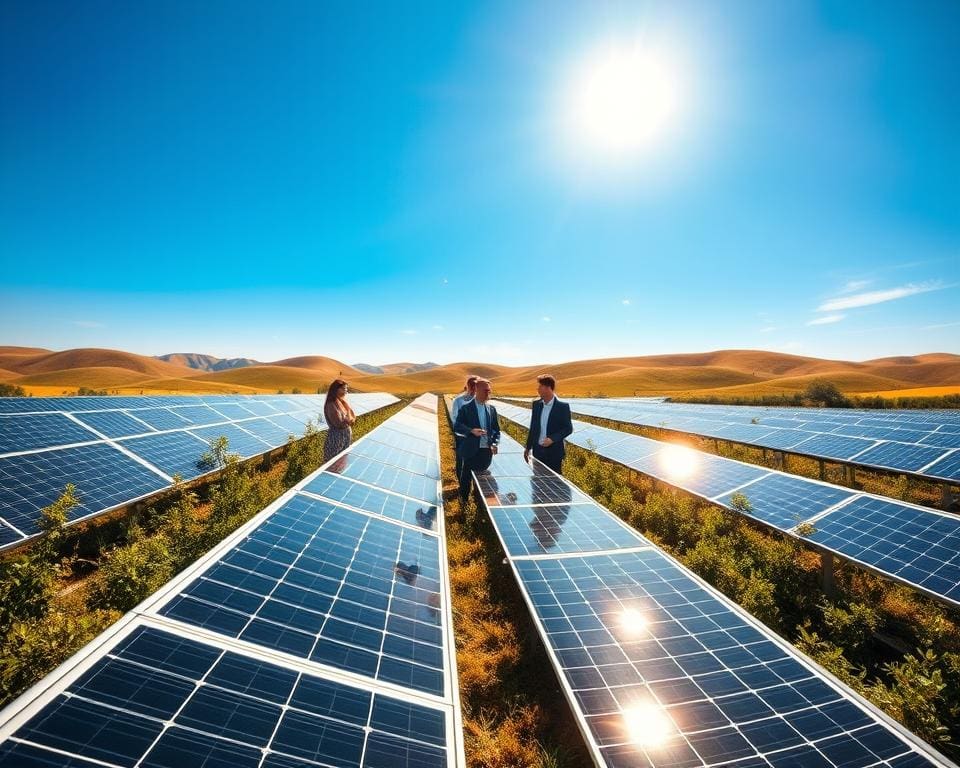

Rising energy prices in the United Kingdom make solar panels a practical option for many households. You can reduce your electricity bills by generating power at home, protect yourself from future tariff rises and enjoy the wider solar energy benefits that come with lower grid dependence.
Installing solar for home UK also improves resilience when paired with battery storage. A domestic solar panels system can keep essential circuits running during short outages and reduce exposure to wholesale price spikes.
There is a clear environmental case too. Every kWh your panels produce displaces grid electricity and cuts greenhouse gas emissions, delivering fast carbon payback and lasting savings over a 25–30 year lifespan.
Homeowners with south-, south-west- or south-east-facing roofs and unshaded roof space see the best returns. Owner-occupiers and small landlords often benefit most from the combination of bill savings, potential uplift in property value and available warranties.
The sections that follow explain the specific benefits to your wallet and home, how PV systems work, carbon savings and practical UK installation considerations. To get started, assess your roof suitability and obtain multiple quotes to compare systems, warranties and installers, or read more on solar advantages at what are the benefits of installing solar.
Benefits of installing solar panels for your home and wallet
Installing solar panels offers clear gains for your household budget and property. You generate electricity on-site, which helps to reduce energy bills by cutting the amount you buy from the grid. Many UK homes with typical 3–4 kW systems can save several hundred pounds each year, and adding a domestic battery can store daytime generation for evening use to boost savings.
Reduce your energy bills
You use the power your panels produce before you import from the grid, so every kilowatt-hour produced lowers what you would otherwise pay in retail tariffs. Warranties from manufacturers such as Q CELLS, REC and LG offer product and performance guarantees that protect long-term expectations. That certainty helps when you calculate solar return on investment and decide the right system size for your consumption.
Generate income with feed-in tariffs and export payments
The original UK solar feed-in tariff closed to new applicants in 2019, but existing recipients still receive payments. New systems can earn through export payments under the Smart Export Guarantee, where suppliers buy surplus electricity. Rates vary by supplier; you can use an aggregator or shop around to improve returns.
For larger or community projects, power purchase agreements provide structured revenue. Export payments are usually modest for domestic setups and rarely trigger additional tax, though you should check HMRC guidance if you scale up or supply multiple properties.
Increase your property’s resale value
Energy-efficient homes with low running costs appeal to buyers. Properly documented, owned solar systems can increase sale price and speed up a sale. To maximise buyer confidence, provide MCS certification, warranties and service records. Mortgage lenders often recognise MCS, which helps when you want to increase property value with solar.
Avoid lease agreements that complicate transfers. Owned systems with transferable warranties and clear paperwork deliver the best outcomes for resale and the strongest solar return on investment.
solar panels: how they work and what to expect
You want a clear picture of how solar panels work before you commit. This short guide explains the main solar PV components, the factors that shape performance and realistic output and payback figures for homes in the UK.
Basic components of a solar PV system
Solar panels, or modules, convert sunlight into direct current (DC) using crystalline silicon or thin‑film cells. Leading brands in the UK include LONGi, REC, Q CELLS and Canadian Solar.
An inverter turns DC into alternating current (AC) you use at home. You can choose string inverters or microinverters. Microinverters fit to each panel and often improve output where partial shading occurs.
Mounting rails and roof hooks secure panels to tiles or flat surfaces. Installers should use corrosion‑resistant fittings that meet British Standards.
Optional battery storage, such as Tesla Powerwall, LG Chem or Sonnen, stores surplus generation for later use and raises self‑consumption and resilience.
A monitoring system provides real‑time data on generation and consumption so you can check system health and savings.
Certified installation and MCS paperwork give assurance of quality and help with insurance and mortgage requirements.
Performance factors: roof orientation, shading and panel efficiency
Roof orientation solar matters. In the UK, a south‑facing roof at about 30–40° tilt usually gives the best yield. South‑west and south‑east faces remain strong options. East or west orientations still produce useful energy but typically less than true south.
Shading from chimneys, trees or neighbouring buildings cuts output sharply. Microinverters or power optimisers reduce losses from partial shading better than a single string inverter.
Panel efficiency affects how much power you get per square metre. Higher efficiency panels, such as PERC or half‑cut cell designs, let you fit more capacity on limited roof space.
Temperature, soiling and occasional snow influence short‑term output. Regular inspections and occasional cleaning keep panels closer to rated performance.
System losses from inverter efficiency, cabling and mismatch, plus annual degradation of about 0.5–1%, reduce gross generation to the net energy you can use.
Estimated energy generation and payback period
A typical 3 kW system in the UK often generates roughly 2,400–2,700 kWh per year, depending on location and roof orientation solar. A 4 kW system produces proportionally more.
Payback period solar depends on installation cost, your electricity price, export income and whether you add batteries. With current costs, many owned systems reach payback in about 7 to 15 years.
Batteries increase upfront cost and can extend payback, yet they raise self‑consumption and resilience during outages.
Panels commonly come with 25‑year performance warranties and typically keep producing past that at reduced efficiency. Inverters may need replacement within 10–20 years depending on model and warranty.
If you want accurate predictions for your home, ask an MCS‑certified installer for a bespoke estimate that models your consumption, roof specifics and local sunshine data.
Environmental advantages and carbon savings
Generating electricity from solar PV on your roof directly reduces the amount of grid power you need. In the UK grid mix there is still gas and imported generation, so every kWh you make contributes to carbon savings and lower household emissions.
Typical domestic systems in the UK often save hundreds to over a thousand kilograms of CO2 each year, depending on system size and sunlight. Pairing solar with battery storage or timed charging for an electric vehicle means solar reduces emissions even more by cutting imports at peak times.
You can support national targets by choosing rooftop panels. Widespread adoption of renewable energy UK helps ease daytime demand on centralised plants and lowers transmission losses, which improves local resilience during short outages.
Lifecycle impacts matter. Panels and inverters have embodied emissions from manufacture and transport, yet over their service life they usually deliver net carbon savings many times greater than those initial costs. Recycling schemes and manufacturer take-back options in the UK reduce end-of-life impacts.
Small changes at home make a big difference. Improving insulation, lowering thermostat settings and using smart controls increases the amount of solar you consume, boosting carbon savings while cutting bills.
For practical tips on switching to home renewables and managing generation with controls and batteries, see how to switch to renewable energy at, which outlines steps to maximise solar environmental benefits and show how solar reduces emissions in real homes.
- Local generation lowers transmission losses and grid strain.
- Storage and controls increase self-consumption and resilience.
- Recycling and improved manufacturing reduce lifecycle impacts.
Practical considerations for installing solar panels in the UK
Begin with a site survey by MCS-accredited solar installers UK to check your roof’s strength, orientation, tilt and shading. A professional survey will also review electrical connections and structural integrity. If the roof is unsuitable, consider ground-mounted arrays, carports or mounting on an outbuilding to get the best yield.
Most domestic installs are permitted development, so planning permission solar is rarely needed if size and height limits are met. However, check with your local planning authority for conservation areas or listed buildings. Building Regulations must be met for electrical work and structural mounts; installers who are registered with NICEIC or equivalent usually handle notifications and compliance.
When comparing solar costs UK, get at least three quotes that list components, warranties and expected output. Ask for MCS certification and proof of public liability insurance. MCS certification is often required for finance, warranties and the Smart Export Guarantee. Consider financing options such as green loans or energy-efficiency mortgages and look at the total cost of ownership, not just the headline price.
Installation typically follows enquiry, survey, design and a short installation period of one to three days for a domestic system. Your installer should handle DNO notifications and commissioning, and set up remote monitoring. Plan for minimal routine maintenance, keep warranty paperwork safe, and discuss future expansion, inverter replacement and integration with an EV charger or heat pump to maximise self-consumption.