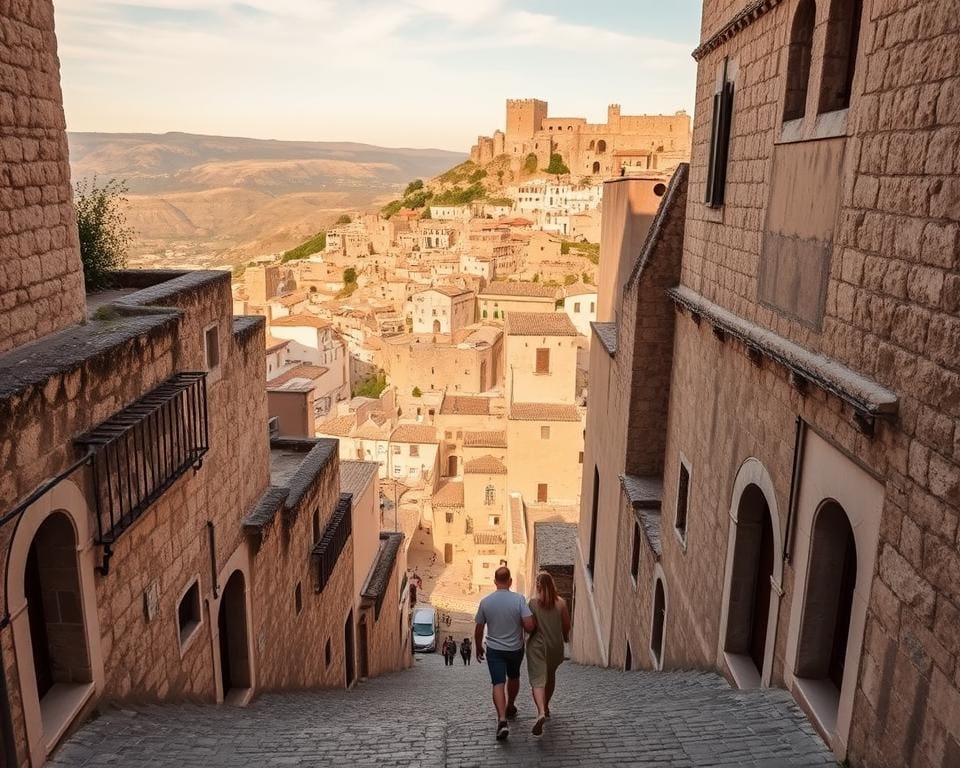

When you choose to visit Matera you step into one of Italy’s most extraordinary historic cities. The Sassi di Matera — cave homes carved into limestone cliffs — create a canyon-like landscape that feels cinematic and intimate at once.
Matera travel rewards you with unrivalled historical continuity: people have lived here for thousands of years. That living heritage, combined with UNESCO recognition and film locations seen in international cinema, makes Matera a compelling stop for your next trip.
The city blends archaeology and contemporary culture. You can explore restored cave hotels, boutique restaurants and art galleries, all set among ancient streets. Matera tourism now offers a revived cultural scene without losing the authenticity of the Sassi di Matera.
Practical travel from the UK is straightforward. Bari is roughly an hour away by car, with train and bus connections that suit short breaks or longer stays. Whether your interests lie in history, photography, gastronomy or slow travel, you will find plenty to enjoy when you visit Matera.
This article will next take you deeper into Matera’s history and UNESCO status, show must-see sights and cultural attractions, guide you through local life and food, and offer practical tips to plan a sustainable, rewarding visit.
Discover Matera’s unique history and UNESCO heritage
When you arrive in Matera you step into a living archive. The history of Matera unfurls across stone terraces, cave façades and narrow lanes. This short introduction prepares you for three focused topics that reveal how people, faith and environment shaped this place.
Origins and development of the Sassi cave dwellings
You will learn that the Sassi origins lie in troglodyte living carved from the calcarenite of the Murgia plateau. Archaeology shows continuous habitation from the Paleolithic through the Neolithic into medieval times.
The town divides into Sasso Caveoso and Sasso Barisano. Their terraced layout links cave houses with narrow lanes. Cistern systems collected rainwater, a clever response to scarce surface supplies.
Layers of construction tell a clear story: prehistoric caves, medieval expansions, rock‑hewn churches and convents, plus later facades and staircases. That stratification creates the unique urban fabric of rupestrian settlements.
UNESCO World Heritage designation and its significance
UNESCO Matera was inscribed in 1993 as the Sassi and the Park of the Rupestrian Churches of Matera. The designation recognised a rock‑cut settlement that preserves a near‑vanished European way of life.
Inscription criteria cited cultural tradition, the typology of human settlement and the integrity of rupestrian architecture and art. The listing brought international attention, scholarly research and tourism interest.
That global recognition unlocked funding for conservation and created new opportunities to study and share the city’s layered past with visitors.
How preservation efforts shaped the modern city
Your understanding deepens when you see mid‑20th‑century debates that led to evacuations in the 1950s and 1960s over sanitation. Many cave houses were abandoned and fell into ruin before attitudes shifted toward rehabilitation.
Restoration milestones include adaptive reuse of Sassi cave dwellings as private homes, boutique hotels and museums. Conservation work on rupestrian churches and frescoes preserved fragile art while infrastructure upgrades improved access.
Preservation Matera now relies on local initiatives and regulatory frameworks that balance protection with community needs. Cultural tourism has revitalised the economy, yet challenges remain in managing overtourism and safeguarding authenticity.
Experience the must-see sights and cultural attractions
Begin your visit by mapping a few key Matera sights that reveal the city’s layered past. Walk narrow lanes, listen for local stories and plan time for both interiors and open views. A measured pace helps you absorb rupestrian art and everyday life without rushing.
Exploring ancient churches, rock-hewn monasteries and rupestrian art
You should not miss Church of Santa Maria de Idris and San Pietro Barisano for their rock-cut interiors and medieval fresco cycles. The Crypt of the Original Sin stands out for its extensive frescoes with strong Byzantine influences and vivid biblical scenes.
Visit San Nicola dei Greci and nearby hermit cells to sense monastic rhythms. The Murgia park preserves monastic complexes that help you imagine hermit life and religious solitude among the cliffs.
Rupestrian churches offer fragile frescoes that need careful protection from humidity and visitor pressure. Respect barriers and follow local guidelines to help conservation efforts while you admire the painted narratives.
Museums and interpretive centres that bring history to life
Casa Grotta di Vico Solitario presents a furnished cave dwelling so you can visualise daily life in the Sassi. The Museo Laboratorio della Civiltà Contadina displays agricultural tools and customs that shaped regional routines.
MUSMA, the Museum of Contemporary Sculpture, occupies a cave-palace and links sculpture to the rock setting, offering a modern counterpoint to ancient spaces. Matera museums provide multilingual panels and guided tours that explain water systems, storage techniques and social organisation.
Look for interpretive trails and temporary exhibitions at cultural centres that connect past craft to present creativity. Guided walks clarify the engineering behind cisterns and the logic of cave layouts for better context.
Panoramic viewpoints and photography spots for memorable images
Head to Belvedere Piazzetta Pascoli for classic views and to Belvedere Murgia Timone for sweeping panoramas of the Sassi and the plateau. Terraces along Via Madonna delle Virtù deliver close-up scenes of carved facades and stacked homes.
For photography Matera rewards early starts and late light. Aim for golden hour at sunrise or sunset for warm tones and deep shadows. Blue hour yields dramatic illuminated scenes. Quiet mornings often mean fewer people in your frame.
Practical tips: bring a wide-angle lens for interiors and sweeping views, pack a sturdy tripod for low-light exposures inside churches and at dusk, and obey signs to avoid restricted spaces. Thoughtful behaviour protects fragile sites and improves your images for the long term.
Enjoy authentic local life, food and events
When you wander Matera you will find a living culture shaped by simple, seasonal produce and time-honoured recipes. Taste is central to the city’s charm, with Lucanian cuisine grounded in durum wheat pastas, legumes, olive oil and lamb. Small trattorie in the Sassi share space with modern restaurants in the city centre and atmospheric cave dining for memorable meals.
Try signature dishes such as orecchiette or cavatelli dressed in tomato and pecorino, ragù alla materana and lucanica sausage. Look for peperone crusco as a crunchy, smoky note and end with fichi secchi or a zeppola for a sweet finish. Pair your meal with Aglianico del Vulture and sample local DOC olive oils to round out the experience.
Visit Matera markets to pick up seasonal produce, cheeses and cured meats. You can browse specialist food shops and delicatessens to assemble a pantry of regional staples to take home. Weekly markets and neighbourhood stalls are the best places to meet growers and taste fresh ingredients.
Explore artisan shops and workshops to discover local crafts Matera makers keep alive. Ceramics, woven textiles, hand-forged ironwork and carved wood reflect both tradition and contemporary design. Boutiques near Piazza Vittorio Veneto and studios tucked into the Sassi welcome visitors who want authentic souvenirs and insight into craft processes.
Festivals bring the city to life across the year. Holy Week processions preserve ancient rituals, while the Matera Film Festival and music and visual arts events draw international attention. Food-focused occasions celebrate regional produce and offer hands-on tastings and markets.
Seasons shape your visit. Spring and autumn offer milder weather and fewer crowds. Summer delivers extended cultural programming with hotter days. Winter provides atmospheric views and lower rates, although some venues may close or reduce hours. Check municipal and tourism sites for the latest schedules and booking rules before you travel.
Plan your visit: practical tips, itineraries and sustainable travel
Getting to Matera is straightforward: fly to Bari Karol Wojtyła Airport, about 60–70 km away, then hire a car or take a direct bus. Train plus bus options exist but timetables vary. Salerno and Brindisi airports are alternatives with longer transfers. Once in town, local bus services and walking are the main ways to get around, as many streets in the Sassi are pedestrianised or steep. Keep these Matera travel tips in mind when organising transfers and daily plans.
Practical matters matter: the currency is the euro and Italian is the main language, though tourist services often offer English. Shops and museums commonly close for a midday riposo, so plan visits accordingly. Book cave hotels and guided tours well in advance during peak season to secure the best options. If you wonder where to stay Matera, consider family-run cave accommodations in the Sasso Barisano for atmosphere or guesthouses near Piazza Vittorio Veneto for easier access to services.
For a short break, a 1–2 day Matera itinerary works well: Day 1 — arrive, walk Sasso Barisano, visit Casa Grotta and the Duomo, and finish at a panoramic viewpoint for sunset. Day 2 — explore Sasso Caveoso, visit rupestrian churches such as Santa Maria de Idris, see MUSMA and enjoy a local dinner. For 3–5 days add a guided hike in Parco della Murgia, wine tasting in the Vulture area and workshops like a cookery class. Thematic routes can focus on photography, cuisine or heritage for a tailored experience.
Sustainable travel Matera means small choices that matter: respect access restrictions, avoid touching frescoes and stick to marked paths in the Murgia park. Support the local economy by staying in locally owned accommodation, eating at family-run trattorie and hiring local guides. To manage impact, visit outside peak hours where possible, favour public transport or group transfers and be mindful of water and energy use in restored cave hotels. Pack sturdy walking shoes, light layers, a portable charger and a reusable water bottle, and ensure you have appropriate travel insurance and awareness of regional medical facilities. The best months to visit are April–June and September–October for pleasant weather and fewer crowds.