
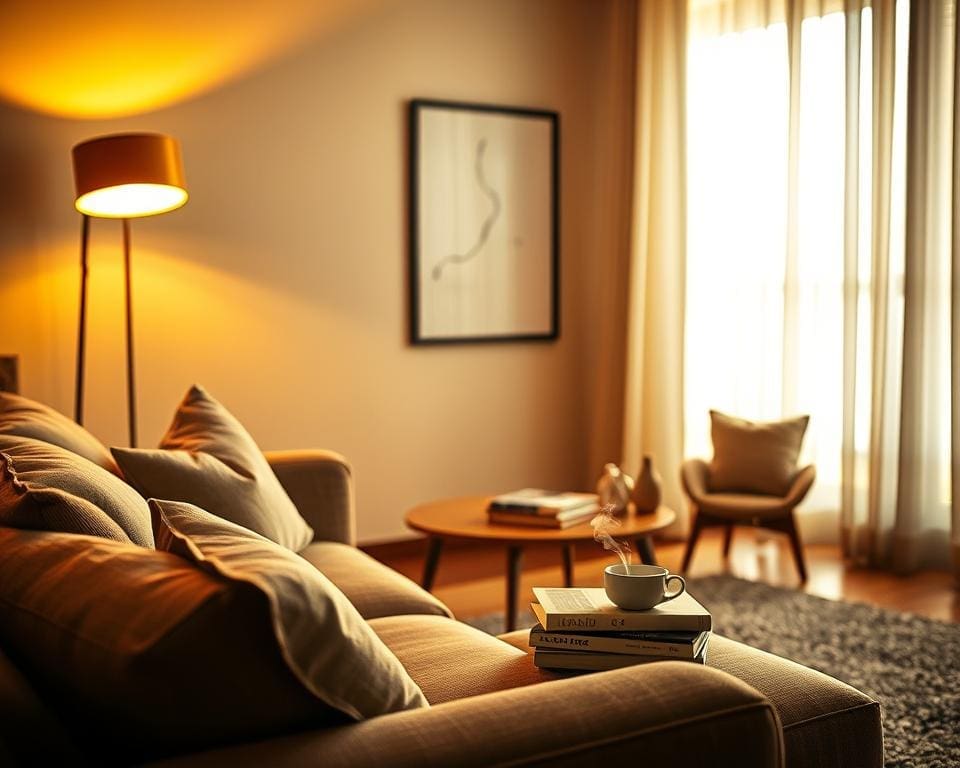
Interior lighting is a purposeful blend of intensity, direction, colour and timing that shapes how we feel and behave. In the United Kingdom, seasonal light variation makes lighting design UK especially important; good schemes can compensate for short winter days and lift mood when daylight is scarce.
At a biological level, light falling on the retina signals the suprachiasmatic nucleus (SCN), the brain’s master circadian clock. That pathway regulates sleep–wake cycles, melatonin and cortisol release, body temperature and alertness. Chronobiology research shows that timed light exposure and spectral content directly influence mental state and energy, which explains part of the link between interior lighting and mood.
Lighting psychology adds another layer. Brightness, contrast, colour and direction alter perceived spaciousness, safety and intimacy. Warm tones tend to feel cosy, cool tones promote alertness, and well-placed accent light can focus attention or create relaxation. These learned associations mean lighting primes emotional responses for work, rest and socialising.
Design therefore becomes central to wellbeing, not just function. Thoughtful mood-enhancing lighting can improve sleep, reduce absenteeism, boost creativity and increase customer satisfaction in hospitality and retail. Architects and designers who integrate lighting psychology and circadian principles deliver measurable benefits for occupants and businesses.
The sections that follow draw on peer-reviewed chronobiology and environmental psychology studies, industry guidance such as CIBSE, and applied case studies from Philips Lighting (Signify) and the Lighting Research Center to explain practical, evidence-based approaches to mood-enhancing lighting.
Why does interior lighting design influence mood?
Thoughtful lighting shapes how a space feels and how people behave within it. Interior choices from fixture type to timing affect alertness, comfort and social interaction. This section explores the physiological and psychological pathways that link light and emotion, with practical evidence from lighting case studies UK.
How light affects the circadian rhythm and sleep
Specialised retinal cells, called intrinsically photosensitive retinal ganglion cells (ipRGCs), contain melanopsin and respond strongly to short-wavelength blue light. When these cells are stimulated they suppress melatonin and shift the circadian phase.
Exposure to higher illuminance and bluer light in the morning advances the circadian phase and promotes daytime alertness. Evening exposure to blue-rich light delays melatonin onset and can impair sleep quality. Practical guidance from bodies such as CIBSE and the World Health Organization recommends morning exposure of several hundred melanopic lux for circadian stimulation and a substantial reduction in melanopic lux in the evening to protect sleep.
In the UK, reduced daylight in winter links to seasonal affective disorder (SAD). Bright, broad-spectrum light therapy can lift mood by compensating for low daylight and supporting circadian cues.
Psychological effects of brightness and contrast
Perceived brightness differs from measured illuminance (lux). Contrast between surfaces and focal points directs attention and alters emotional tone. High overall brightness and strong contrasts can increase alertness and perceived cleanliness. Lower, softer lighting with subdued contrast encourages relaxation and intimacy.
Age and individual differences matter. Older adults need higher illuminance for the same visual comfort. Neurodiverse people can be more sensitive to flicker and glare, which harms mood and concentration. Lighting ergonomics and visual comfort standards such as the SLL Code for Lighting recommend avoiding direct glare and temporal flicker from poorly specified LED drivers.
Colour temperature and emotional responses
Correlated colour temperature (CCT) is measured in kelvin (K). Warm light sits around 2,700–3,000 K, neutral near 3,500–4,000 K and cool at 5,000 K plus. Warm tones tend to feel cosy, relaxed and welcoming. Cool tones support alertness, precision and a sense of clinical cleanliness.
Cultural context shapes preference. In UK homes and hospitality settings people often favour warm light. Offices and retail spaces commonly use cooler tones to aid focus. Tunable white systems let designers shift colour temperature through the day, delivering circadian lighting cues that are warmer in the evening and cooler in daytime to align behaviour with natural rhythms.
Case studies: lighting changes and measurable mood outcomes
Research and practical projects report measurable mood and wellbeing outcomes after lighting interventions. Examples include better sleep latency when evening light was reduced and higher subjective alertness when offices received increased melanopic stimulus.
Manufacturers and design teams such as Signify (Philips) and Zumtobel have documented evidence-based retrofits that delivered occupant satisfaction and energy savings. Care settings reported reduced agitation among residents after optimising daylight and circadian-supportive lighting.
Study results vary with design, measures and context. Differences in temperature, acoustics and activity can confound outcomes. Despite these limits, converging evidence shows that considered lighting changes can alter mood and wellbeing in meaningful ways.
Design principles that shape atmosphere and wellbeing
Thoughtful lighting design principles turn rooms into welcoming places that support mood and daily rhythms. Good design combines technical guidance with human needs to create spaces that feel calm, energising or intimate as required. Below are practical approaches to guide decisions in homes and workplaces across the UK.
Layering light: ambient, task and accent lighting
Layering light gives a room flexibility and visual interest. Start with ambient light for overall illumination, add task fixtures for activities and finish with accent lamps to highlight features.
For living areas aim for ambient levels of about 150–300 lux. Use task lighting of 300–500+ lux at reading chairs and kitchen counters. Accent lighting should be brighter than ambient to create contrast and draw the eye.
Choose ceiling-mounted luminaires or recessed downlights for general light. Pendant lights work well over dining tables. Under-cabinet LED strips make kitchen work surfaces safer. For accents try adjustable spotlights, wall washers or slim track heads. Consider beam angles and glare control when placing fixtures to keep comfort high.
Using dimming and control systems to personalise mood
Simple dimmers let users set scenes and take control of their environment. Scene-setting and smart scheduling adapt light across the day and support circadian needs.
Very low levels (10–20%) help winding down. Mid-ranges (30–60%) suit casual socialising. Full output (100%) supports focused tasks. Occupancy sensors, time-based schedules and app control increase convenience and energy savings.
Choose interoperable systems that match installation needs. Standards such as DALI, DMX, Zigbee and Bluetooth Mesh provide options for integration. Keep interfaces accessible and simple so everyone can benefit from personalised settings.
Colour rendering index (CRI) and perceived comfort
CRI measures how faithfully a light source renders colours. Good colour rendering affects food presentation, skin tone and fabric appearance, which all influence comfort and mood.
Specify CRI 80+ for general interiors. For galleries, retail and hospitality aim for CRI 90+. Look beyond CRI to TM-30 when accurate fidelity matters, since it gives a fuller picture of spectral performance.
Modern LEDs can balance efficiency and quality. Select certified products from trusted brands such as Osram LEDVANCE, Signify or Trilux to ensure consistent CRI and long-term performance.
Natural light integration and biophilic design
Daylight and views of nature support wellbeing and cognitive performance. Integrate natural light early in the design process and plan for seasonal change across the UK.
Maximise daylight with well-placed windows, light shelves, atria and glazed internal partitions. Use blinds, louvers or electrochromic glazing to manage glare while harvesting daylight.
Biophilic lighting tactics include simulating dappled patterns, accentuating natural materials and using dynamic light that varies through the day and year. In higher latitudes plan for darker winters by combining daylight strategies with effective electric lighting and light therapy where needed.
Practical tips for creating mood-enhancing interiors
Begin by setting clear goals for each room: list core activities such as sleeping, working, cooking, relaxing or entertaining and choose lighting aims that suit them. For restful spaces pick warm, low-glare solutions; for focused rooms choose brighter, cooler light. This simple step helps you decide how to light a home for mood and makes later choices much easier.
Design schemes that support multiple modes using layered lighting, dimming and task-specific luminaires. Use ambient light for general comfort, task lamps where precision is needed, and accent fittings to create drama. Where wiring and budget allow, consider tunable white systems to shift CCT through the day and smart bulbs like Philips Hue for consumer-friendly control. These are practical mood-enhancing lighting tips that fit retrofit and new-build projects alike.
Prioritise glare control and colour rendering. Fit diffusers, indirect uplighting and anti-glare downlights, and position adjustable task lights correctly to avoid eye strain. Choose CRI 90+ for artwork, kitchens or food presentation; CRI 80–90 is fine for general living areas. For older occupants or neurodiverse users, raise illuminance levels, reduce flicker and provide clear, labelled scenes to improve accessibility and wellbeing.
Maximise daylight and use efficient LEDs to balance comfort with lower energy use. Arrange furniture to capture daylight, select lighter finishes to amplify natural light, and add mirrors or gloss sparingly to distribute it. Test ideas with temporary lamps and smart bulbs before committing to rewires, and consult the Society of Light and Lighting or an M&E professional for larger schemes. Thoughtful choices will create ambience with light, cut carbon and elevate everyday life.