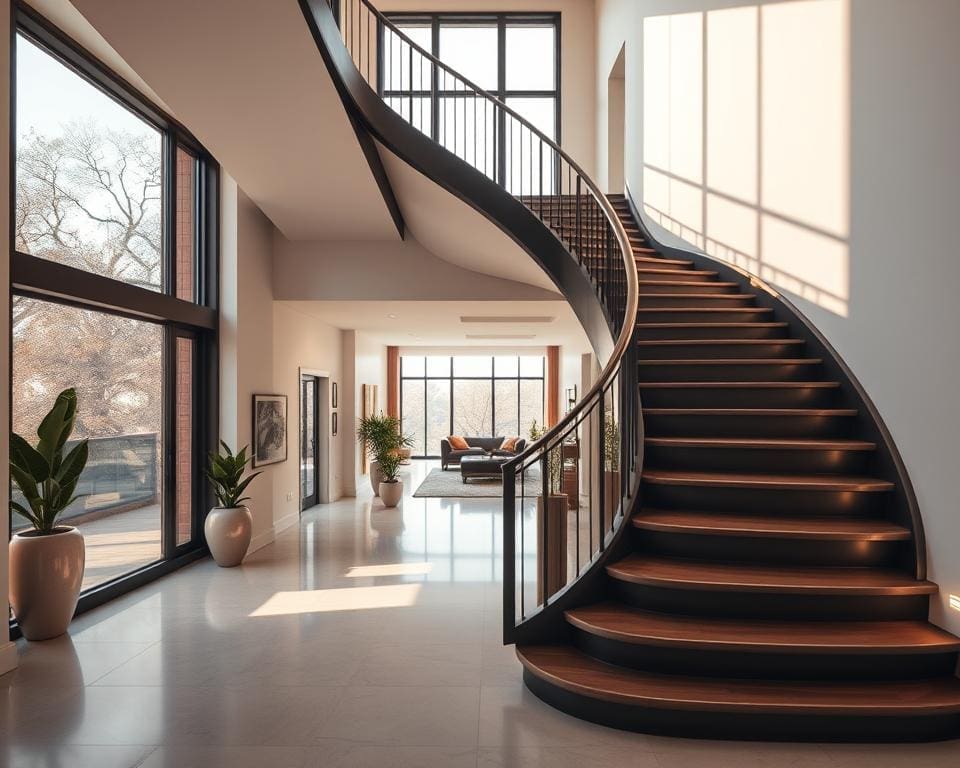
A statement staircase is more than a means of moving between floors; it is an intentional piece of staircase design that defines a home’s character. By combining form, materiality and placement, feature staircases create visual drama and a clear spatial identity that turns circulation into design. In many schemes a staircase becomes an architectural staircase, reading as furniture, sculpture or the structural spine of a room.
In the UK the rise of open‑plan living and a renewed interest in both heritage restoration and contemporary new builds has put statement staircases centre stage. High‑profile publications such as Dezeen, Architectural Digest and Grand Designs frequently showcase bold stair projects, reflecting homeowner appetite for statement staircase ideas that also boost resale appeal and perceived value.
Statement staircases appear at many scales and in diverse styles. They can be a double‑height flight in a Victorian house, a sculptural timber spiral in a compact London mews, or a minimal glass and steel run that frames sightlines in a new build. Across contexts the staircase as focal point influences how spaces are read and how people move through them.
This article sets an inspirational yet practical tone. It will explore the staircase’s role in spatial hierarchy and first impressions, detail the design elements that create drama, and cover structural, regulatory and maintenance considerations specific to the UK. Finally, we will look at how a well‑designed staircase transforms daily life and a property’s market value.
Why are statement staircases design features?
Statement staircases act as more than a route between floors. They shape how a home feels and functions. Thoughtful entrance hall design sets the tone for the rest of the house and a striking stair can become the interior focal point that defines a residence.
The role of a staircase in spatial hierarchy
Stairs often sit on primary circulation routes and organise how rooms relate vertically and horizontally. In a Victorian townhouse a central stair establishes a procession from the front door through to reception rooms.
In contemporary open‑plan houses a sculptural flight can divide zones without walls. Scale, orientation and visibility decide hierarchical importance; a double‑height, centrally placed flight becomes a primary architectural element and anchors the plan.
How visual drama and focal points shape interiors
Visual drama in interiors comes from contrast in scale, texture and silhouette. Staircases use bold materials and geometry to form an interior focal point that draws the eye and secures the composition of a room.
Negative space and clear sightlines matter. A floating or cantilevered stair creates voids that frame views and boost light and depth. British practice, showcased in Architectural Digest and Dezeen, often places the stair as the hero that elevates otherwise simple schemes.
Psychology of movement and first impressions
Movement through a house is partly emotional. The rhythm of treads and risers, the feel of a handrail and shifting light across surfaces influence mood and perception as people ascend or descend.
Entrance hall design and the stair sequence form one of the first impressions home visitors take away. A well‑resolved stair communicates quality, care and a clear design sensibility without sacrificing comfort.
Good circulation design balances drama with usability. Comfortable rise and run, secure handrail placement and inclusive proportions ensure the emotional impact never undermines safety or daily use.
Design elements that make a staircase a statement piece
A staircase can be more than a route between floors; it can be the sculptural heart of a home. Thoughtful choices in materials, form, balustrade detail and lighting shape how a staircase reads within a space and how people feel as they move through it.
Material choices: timber, metal, glass and stone
Timber brings warmth and tactility. Hardwoods such as oak or walnut suit both traditional and contemporary schemes, take finishes well and allow for local repairs. Look for FSC certified timber or reclaimed boards to add character and lower environmental impact.
Steel and stainless steel enable slender profiles and structural strength. Powder‑coated metal can read industrial or minimal, depending on finish and colour. Metal endures heavy use but benefits from protective coatings in coastal sites.
Glass creates transparency and lightness. Structural, toughened and laminated panels reduce visual bulk and let light pass through. Glass demands careful detailing and routine cleaning to keep edges crisp.
Natural stone such as marble or limestone signals permanence and luxury. Stone needs a robust supporting structure because of its weight. Proper sealing and maintenance preserve veining and surface finish.
Form and geometry: cantilevered, spiral, floating and sculptural designs
A cantilevered staircase produces a dramatic floating effect. Cantilevered staircase treads fixed to a hidden spine emphasise horizontality and make walls feel alive, though they require exacting structural design.
A spiral staircase can act as a compact, sculptural centrepiece. A spiral staircase suits tight plans and creates a strong visual motif, yet it can feel less comfortable for frequent use compared with straight flights.
Floating stairs strip the design to treads and minimal fixings. A floating stair reads as light and modern, ideal for open plan spaces where sightlines matter.
Sweeping, continuous flights or bespoke sculptural work from firms such as Foster + Partners or BDP turn a stair into an artwork. These solutions are striking in double‑height halls yet call for extra space and higher budgets.
Balustrades and handrails as decorative features
Balustrades define the staircase’s character. Slim glass panels keep sightlines open. Turned timber spindles give traditional charm. Custom metalwork with brass or bronze finishes delivers richness and patina.
Emerging trends include perforated metal screens, laser‑cut patterns and integrated planter screens that combine ornament with function. Handrail profiles influence how a stair feels to the touch and guide the eye along a route.
Safety and compliance with UK building regulations remain essential. Balustrade height, rigidity and gap sizes must meet standards while still allowing creative expression.
Integration of lighting to enhance drama and safety
Staircase lighting design enhances both atmosphere and usability. Riser LEDs accentuate floating treads. Recessed downlights sculpt form. Uplighting washes textures and reveals wall materials.
Pendants or chandeliers create vertical focus in double‑height spaces and can read as central artworks. Lighting should make step edges visible and avoid glare, using warm LED strips for comfortable colour temperatures.
Smart controls allow scenes for arrival, evening and night. Integrating staircase lighting design with home automation boosts convenience and adds perceived value.
Practical considerations when choosing a statement staircase
Selecting a statement staircase blends art with technical care. Early decisions shape cost, safety and long‑term performance. Engage the right specialists and plan for both visual impact and everyday use.
Structural requirements and working with engineers
Bring staircase engineers in at concept stage, especially for cantilevered, floating or heavy stone and steel designs. They model load paths, specify fixings and confirm how the stair ties into existing floors and walls.
Typical solutions include steel stringers, concealed brackets, bolted stubs into reinforced concrete and load‑bearing newel posts. For timber, glued laminated sections and engineered timbers give the required stiffness without excessive bulk.
Close coordination between architects, builders and specialist stairmakers ensures the design is manufacturable and safe. This teamwork reduces on‑site surprises and keeps the project on schedule.
Building regulations and accessibility in the UK
Compliance with UK building regulations stairs is essential. Relevant rules appear in Part K for protection from falling and Part M for access. Scotland’s Technical Handbooks set parallel requirements.
Practical rules of thumb cover maximum riser height, minimum tread depth, required headroom, handrail heights and gap limits in balustrades. Exact figures change with updates, so verify with a professional before committing.
Good accessibility stair design includes gentle gradients, continuous handrails on both sides and contrasting nosings for visually impaired users. For multi‑storey accessible homes, consider alternatives such as platform lifts where a single stair cannot meet inclusive needs.
Budget planning: cost drivers and long‑term value
Staircase cost depends on form complexity, material choice and bespoke fabrication. Curves, cantilevers and custom metalwork increase time and price. Heavy structural works or finishes add to the total.
Obtain multiple detailed quotes and include design fees and structural surveys in the budget. Think beyond initial spend; a well‑executed statement stair can enhance perceived property value and appeal to premium buyers in the UK market.
Maintenance, durability and material performance
Plan for ongoing stair maintenance from the start. Timber needs periodic sealing or oiling depending on finish. Metal may require touch‑ups to powder coat and extra protection in coastal locations. Glass benefits from frequent cleaning and stone often needs sealing to resist stains.
Choose materials suited to traffic levels: hardwearing hardwoods or stone work well in busy zones. Design for repairability so treads and balustrades can be replaced without major disruption.
Where available, take up specialist aftercare agreements from bespoke stairmakers to preserve appearance and extend life. Regular upkeep protects your investment and keeps the stair safe and beautiful for years.
How statement staircases transform home value and lifestyle
A well-designed statement staircase can lift both the tangible and intangible worth of a property. For buyers in the premium market, a striking stair often improves marketability and can create an uplift in the asking price by providing a memorable entrance and a compelling interior focal point. High-quality photography of a home with an arresting stair design tends to generate stronger interest, which helps resale value staircase performance on the market.
Beyond numbers, a staircase influences daily life as a lifestyle design feature. Sculptural or open stairs that visually connect floors encourage family interaction and natural supervision of children while keeping spaces feeling airy. Tactile materials, considered circulation and choreographed light together create pride of place and a richer everyday experience, enhancing the property’s emotional appeal.
A staircase also offers practical opportunities: integrated shelving beneath a flight, a curated art wall along a sweeping run, or dramatic layered lighting all extend functionality and character. For sellers, balance investment against neighbourhood expectations — an ambitious home transformation stair design best suits houses whose overall standard matches that upgrade. Renovators can add value incrementally through new balustrades, lighting retrofits or resurfacing treads rather than a full replacement.
Think of the stair as more than circulation: it is a chance to make a lasting lifestyle design feature that boosts both market performance and quality of life. Early consultation with an architect, reputable stairmaker and structural engineer will ensure ideas become safe, durable and regulation‑compliant realities that enhance statement staircase value for years to come.