
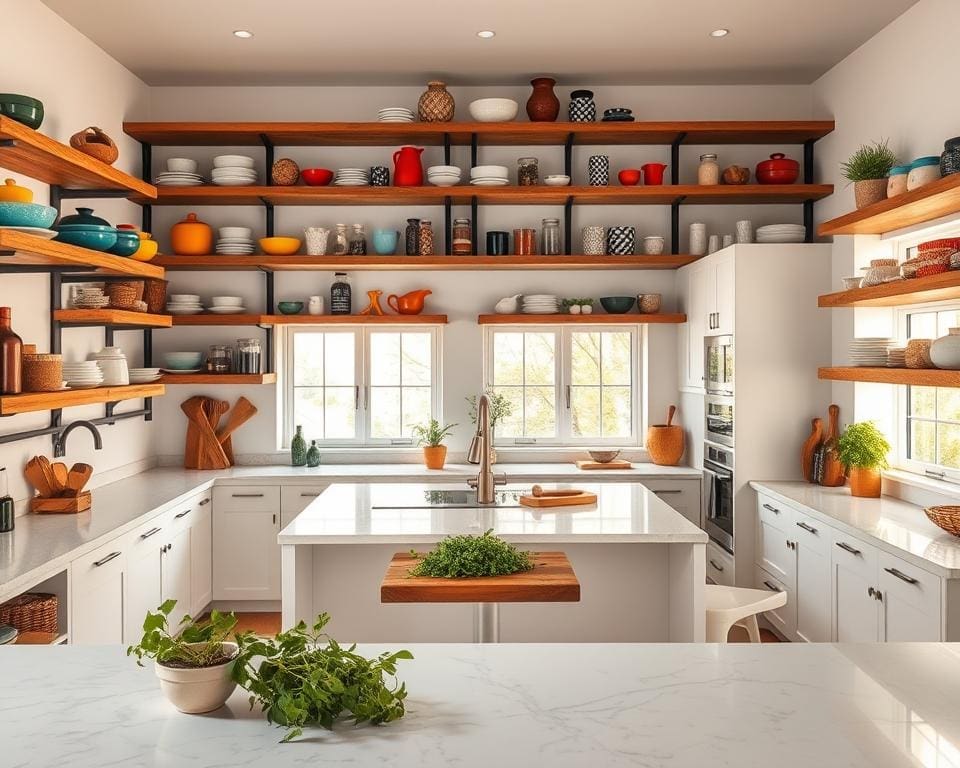
Across the UK, open shelving kitchens have moved from niche to mainstream as homeowners chase a blend of style and function. Social media platforms such as Instagram and Pinterest, alongside magazines like Ideal Home and Grand Designs, have showcased stylish, visible shelving that feels curated rather than cluttered. This exposure helped spark the open kitchen shelves popularity we now see in new builds and refurbishment projects.
Open shelving benefits reach beyond looks. For many living in smaller flats or urban homes, these shelves offer modern kitchen storage that keeps essentials close to hand while making rooms feel airier. Younger buyers and renters particularly favour the personal, lived-in aesthetic that open displays allow, so shelving becomes a stage for personality as much as a storage choice.
This article will explore both sides of the trend: the visual impact and perception of space, practical benefits for UK homes, plus design tips and maintenance advice. The question “Why are open shelving systems popular in kitchens?” captures these practical and aesthetic searches, making the guide useful for homeowners, interior designers and property developers seeking modern solutions.
Why are open shelving systems popular in kitchens?
Open shelving has become a go-to choice for many British households. It blends form and function to create kitchens that feel lighter, more personal and highly practical.
Visual openness and perception of space
Removing upper cabinet doors or swapping cupboards for shelves opens sightlines and reflects light across the room. That effect boosts the open shelving visual space, a real advantage in compact UK kitchens with limited natural light.
Light-coloured timber or white-painted shelves add brightness. Keeping the wall colour continuous behind shelves prevents visual breaks and reduces the bulky feel of closed cabinetry. These small choices support minimal and Scandinavian-inspired schemes that favour airy, uncluttered rooms.
Showcasing crockery and personal style
Open shelves let homeowners showcase crockery, turning everyday plates, glassware and pans into curated displays. Well-known brands such as Le Creuset, Denby and Emma Bridgewater become focal points when arranged thoughtfully.
Grouping items by colour, size or function creates cohesion. Mix practical pieces with plants, cookbooks or a small artwork to add depth. The result is a kitchen that tells a story about taste and hospitality through careful open shelving styling.
Access and everyday convenience
Open shelving provides easy access kitchen storage for frequently used items like mugs, plates and oils. Reachability speeds up food prep and removes the need to open multiple doors during a busy routine.
For multi-generational homes or those with mobility needs, having essentials at eye level is helpful. A quick glance across kitchen display shelves also shows what’s running low, which suits busy households that prize efficiency.
Practical benefits of open shelving for modern UK homes
Open shelving brings a practical edge to contemporary British kitchens. It reduces visual bulk, brightens tight layouts and offers flexible storage that suits a range of households. These benefits make open shelving small kitchens a popular choice in terraced houses, Victorian conversions and modern flats across UK cities.
Maximising small kitchen layouts
Open shelves cut the visual weight of cabinets, so narrow galley kitchens and studio kitchen-diners feel more spacious. Placing shelving above worktops, inside alcoves or as floating units above radiators makes use of vertical space without crowding the floor.
Pair shelves with reflective surfaces such as glass splashbacks or glossy tiles to amplify light and depth. The result is a sense of airiness that helps compact kitchens breathe and appear larger than they are.
Cost-effective storage solution
Open shelving tends to cost less than full-height bespoke cabinetry because it requires fewer materials and simpler fittings. Homeowners can choose ready-made systems, reclaimed timber or budget MDF to keep expenses down.
- Ikea shelving systems and Habitat ranges offer affordable kitchen storage options for tight budgets.
- John Lewis & Partners and independent joiners provide mid-range choices, while reclaimed-wood specialists supply characterful pieces at varied price points.
The lower installation time and reduced hardware needs add further savings, making open shelving attractive to first-time buyers, landlords and renovators working within limited budgets.
Adaptability for different lifestyles and households
Shelves can be added, removed or reconfigured as needs change. That flexibility helps growing families, shared houses and keen cooks who acquire more appliances or larger cookware over time.
In rental properties and listed buildings where permanent alterations are restricted, rental-friendly shelving or freestanding options such as baker’s racks and ladder shelves offer reversible solutions. This approach keeps changes minimal while improving function.
Open shelving adapts to varied aesthetics, from rustic reclaimed wood to sleek metal-industrial or painted contemporary units. That versatility means adaptable kitchen shelving fits diverse household tastes and daily routines.
Design considerations and styling tips for open shelving
Open shelving can transform a kitchen into a lived-in, inviting space. Thoughtful choices about materials, display and spacing will keep shelves looking stylish and useful rather than cluttered. Use the pointers below to refine your approach and create a cohesive scheme that suits daily life.
Choosing materials and finishes that suit your scheme
Decide early whether you want warmth, a contemporary feel or industrial edge. Solid hardwoods such as oak or ash add longevity and warm tones. Plywood or veneered MDF give a clean, modern look at lower cost. Metal shelves in steel or brass bring an urban loft vibe. Glass shelves feel light and contemporary but need careful load assessment.
Finishes matter for upkeep. Lacquered timber resists stains, oiled timber shows natural grain and can be refreshed, while painted shelves create a uniform backdrop for crockery. Powder-coated metal stands up to humid kitchens. Tempered glass should be chosen for strength and safe use with heavier items.
Find materials from local carpenters, reclaimed timber merchants such as English Woodlands, or mainstream UK retailers like Wickes and B&Q for modular options that suit many budgets.
Balancing display and practicality: what to show and what to hide
Keep frequently used crockery and attractive glassware within reach. Display a limited set of cookbooks and a few decorative pieces to inject personality. Hide mismatched packaging, bulky appliances and rarely used gadgets in cupboards or baskets to reduce visual noise.
- Use woven baskets for loose items and labelled ceramic jars for dry goods.
- Organisers for spice jars keep small items tidy and accessible.
- Store food in airtight containers to meet hygiene needs.
Place heavy or fragile items on lower shelves to reduce accident risk. Avoid overcrowding; leave space around groups to prevent breakages and make cleaning easier.
Maintaining visual harmony with colour, texture and spacing
Adopt a restrained colour palette to avoid chaos—limit choices to two or three dominant hues and use neutrals to frame the display. Mix textures such as ceramic, wood and linen to add warmth without clutter.
Shelf spacing tips include leaving breathing room between groups, alternating vertical and horizontal stacks and using asymmetry to achieve a curated look. Measure the height of items before fixing shelves so mugs, plates and jars fit comfortably.
Add small potted herbs for a splash of green and refresh the arrangement regularly. Periodic editing keeps displays current and aligned with the kitchen shelving finishes UK you selected earlier.
Maintenance, durability and common concerns
Open shelving looks warm and practical, but cleaning open shelves does become part of your weekly routine. Aim for a light dust and wipe each week, using mild detergent on painted wood, wood oil for oiled timber and a stainless cleaner for metal. Glassware and crockery should be washed and fully dry before they return to shelves to prevent marks and mould. Store perishables in sealed containers to cut insect risk and make spill clearance simple.
Shelf durability depends on material and fixings. Solid oak or steel brackets will carry heavy loads; floating shelves and thin MDF need stronger anchors or a lighter display. Check manufacturers’ weight limits and, for cast-iron pans or a large jar collection, consult a qualified carpenter or installer to avoid sagging or failure. How to maintain open shelves also means matching your storage to intended use rather than guessing capacity.
Many open shelving concerns centre on dust, grease and visual clutter. Keep shelves away from direct splash zones when possible and fit an extractor fan to reduce kitchen grease. Use washable containers for oils and spices and adopt simple kitchen dusting tips like microfibre cloths and gentle household cleaners. To combat clutter, curate regularly, choose matching storage containers and balance functional pieces with a few decorative items for an organised look.
For renters or owners of listed properties, consider freestanding shelving or reversible fixings to avoid permanent alterations. A mix of closed cabinetry and open shelves often appeals to buyers and supports long-term shelf durability and resale value. Before you fit anything, measure stud positions, decide a display-to-hidden ratio (a useful rule is around 60:40), factor in cleaning routines and, when in doubt, hire a professional to secure fixings safely.