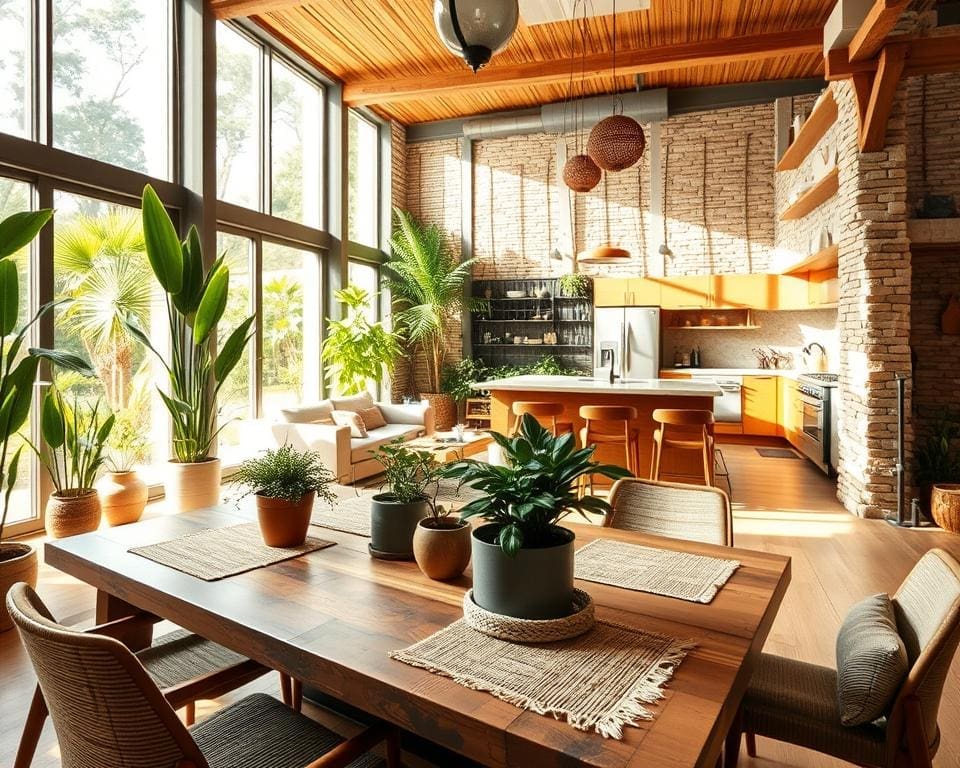
Across the United Kingdom, homeowners and interior designers are choosing sustainable home materials with growing enthusiasm. Climate commitments such as the UK net-zero targets, tighter building regulations and clearer planning guidance have pushed low-carbon choices from niche to mainstream. Media channels and retailers also shape taste: Grand Designs and Homes & Gardens highlight low-impact schemes, while John Lewis & Partners and Habitat stock certified options that make green interior design UK both visible and attainable.
Market forces mirror this cultural shift. Certified products — FSC timber, Cradle to Cradle furnishings and Global Organic Textile Standard fabrics — are more widely available, and the sustainable furniture market continues to expand. Younger buyers, especially millennials and Gen Z, weigh ethical sourcing alongside style and cost, and whole-home carbon reduction and energy efficiency now sit next to aesthetics in buying decisions.
This article takes a product-review approach to eco-friendly home design. It will examine timber, natural fibres, innovative alternatives and low-VOC finishes, assessing environmental and health benefits and suggesting where to buy in the UK. Expect practical guidance on certifications and real brands, plus inspirational examples to help you bring sustainable interiors into your home.
Why are eco-friendly materials popular in home design?
Choosing eco-friendly materials reshapes how homes look, feel and perform. Small choices at design stage can cut emissions, improve indoor air quality and extend the life of fittings. The following points show how practical decisions link to wider goals such as the environmental benefits of sustainable materials and a reduced carbon footprint home.
Environmental benefits and reduced carbon footprint
Specifying low embodied carbon products makes a measurable difference to lifetime emissions. Responsibly sourced timber, recycled metal and composites typically score better in a life-cycle assessment building materials review than virgin alternatives.
Designers and clients in the UK use recognised metrics such as PAS 2050, Environmental Product Declarations and the RIBA 2030 Climate Challenge to compare impacts from extraction, manufacture, transport, installation, use and end-of-life. Choosing locally produced materials further supports a reduced carbon footprint home and strengthens circular supply chains.
Health advantages for occupants
Indoor air quality matters for wellbeing. Low-VOC paints and water‑based finishes, formaldehyde-free adhesives and natural textiles cut volatile organic compounds that trigger irritation and respiratory symptoms.
Public health guidance links better IAQ with fewer complaints and improved comfort. Product labels such as Blue Angel and the EU Ecolabel help buyers spot safer choices. Real-world UK ranges include Farrow & Ball’s water‑based low‑VOC options and Dulux trade low‑VOC products, showing low VOC health advantages are available at scale.
Longevity and life-cycle thinking
Durable, repairable and recyclable materials lower long-term environmental cost. Solid timber, natural stone, high-quality metals and reclaimed items reduce the need for replacement and conserve resources.
Circular economy principles — reuse, remanufacture, repair and recycle — guide smarter procurement. Reclaimed timber and second‑hand furniture from charities or online marketplaces extend product lifespans and make sustainable choices affordable over time.
Clients who weigh upfront cost against service life often find that investment in quality yields lower maintenance and better value. Sustainable building certifications UK can reward those choices with recognised standards that align environmental aims and lasting design.
Sustainable materials that inspire modern interiors
Choosing sustainable materials for interiors brings warmth, purpose and a clear environmental benefit to contemporary homes. Small design choices add up. The right materials improve comfort, indoor air quality and long-term value.
Timber: responsibly sourced and reclaimed options
Timber remains a favourite for its carbon storage, tactile warmth and evolving patina. Look for certified sustainable timber from FSC or PEFC chains and check chain-of-custody documents before purchase. Engineered boards with low formaldehyde emissions suit humid British conditions better than some solid species.
Reclaimed floorboards and joinery offer character and reduced embodied carbon. Suppliers such as The Reclaimed Flooring Company and specialist British sawmills supply reclaimed timber UK and British-grown oak for floors and cladding. Choose natural oil finishes where possible to retain breathability and avoid solvent-heavy lacquers for enclosed rooms.
Natural fibres and textiles: wool, hemp and organic cotton
Natural fibres are renewable and biodegradable. Wool provides durability, flame resistance and thermal insulation; hemp gives tensile strength with low water demand; organic cotton delivers softness without the pesticide load. Look for GOTS and OEKO-TEX Standard 100 certification when shopping for textiles.
UK makers and retailers now stock organic textiles UK across bedding and upholstery. Brands such as Naturalmat offer organic bedding ranges while British wool producers supply rugs and insulation that perform well in UK homes.
Innovative alternatives: cork, bamboo and recycled composites
Cork offers natural resilience, thermal comfort and acoustic damping. Portuguese cork producers supply many of the tiles and wall panels seen in UK interiors. Consider cork for quiet rooms and underfoot warmth; cork flooring benefits include renewable harvest cycles and innate resistance to mould.
Bamboo is a fast-growing grass used in engineered flooring and furniture. Engineered bamboo improves dimensional stability, making bamboo furniture sustainable and attractive for modern schemes. Recycled composites made from ocean plastics, recycled glass and reclaimed wood fibres appear in worktops, tiles and outdoor decking.
Brands active in the UK market now offer recycled PET textiles, recycled plastic decking such as composite boards and recycled glass worktops that reduce virgin material demand.
Low-VOC paints, finishes and adhesives
Volatile organic compounds affect indoor air and long-term health. Choose products with low-VOC paint UK labelling, EU Ecolabel accreditation or strong BRE Green Guide ratings. Farrow & Ball’s Modern Emulsion is a low-VOC option widely stocked in the UK market.
Natural lime and clay plasters recommended by The Ecology Building Society help walls breathe and pair well with sustainable substrates. Low-odour adhesives from established manufacturers, such as Everbuild, make fitting reclaimed timber and natural fibres easier while limiting fumes. Apply finishes with good ventilation and verify compatibility with moisture-retaining materials for best results.
How to choose eco-friendly products for your UK home
Start with a clear decision framework. Define your priorities — embodied carbon, indoor air quality, longevity and local production — then use those priorities to guide purchases. Ask suppliers for sustainable product certifications such as FSC or PEFC for timber, GOTS and OEKO‑TEX for textiles, EU Ecolabel, Cradle to Cradle and Environmental Product Declarations (EPDs). This process helps you choose eco-friendly products UK with confidence and reduces guesswork when you buy sustainable home materials.
Make practical shopping choices by visiting specialist retailers and mainstream shops that offer verified eco ranges. See materials in person at showrooms, request samples to test colour and odour, and consider trusted UK suppliers like Ethical Superstore for textiles or The Reclaimed Flooring Company for timber. Local craftsmen and bespoke joiners can supply locally sourced timber and bespoke items that cut transport impacts. Use this eco-friendly interior buying guide to compare options and to identify the best eco home products UK for your budget and style.
Factor whole-life cost into every decision. Look beyond the purchase price to maintenance, repairability and resale value. Prefer reclaimed, refurbished or remanufactured items where possible, and review supplier datasheets for evidence of chain-of-custody. When installers are needed, choose contractors experienced with breathable substrates, natural finishes and reversible fixings to maximise durability and minimise waste.
Plan for end‑of‑life now by learning disposal and recycling routes: municipal recycling centres, furniture reuse schemes and specialist take‑back programmes from suppliers. Prepare items for reuse by using detached fittings and documented materials lists. Choosing eco materials is a design-led decision that improves aesthetics and health while supporting the UK’s climate goals — practical, beautiful and responsible choices transform modern living spaces.