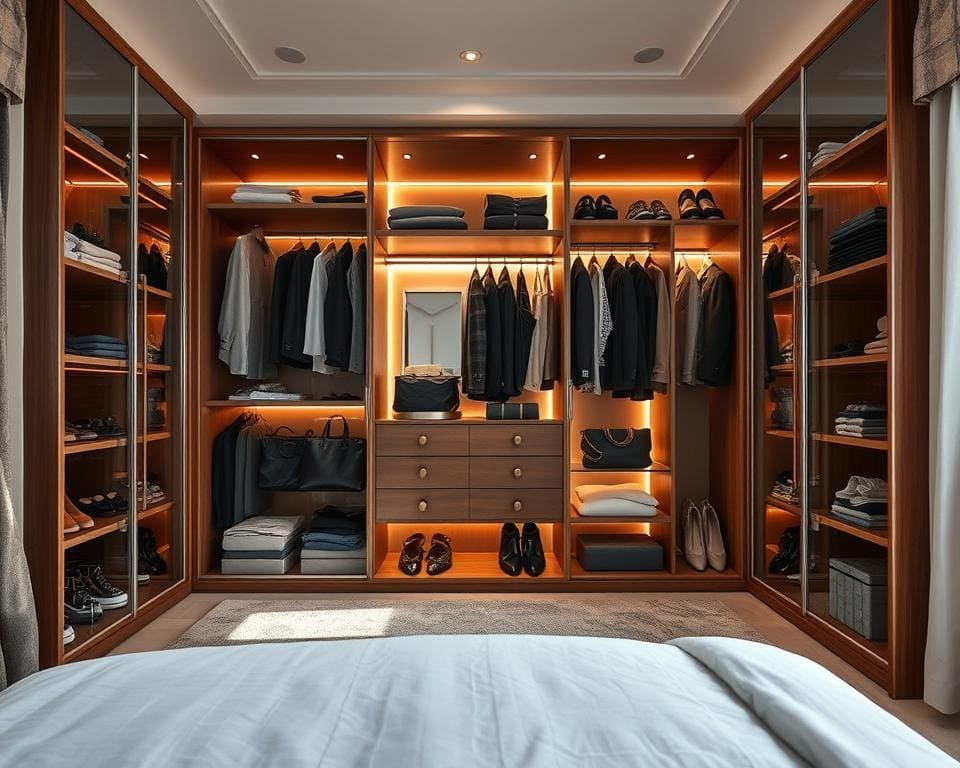

A built-in wardrobe is a fitted storage solution fixed to the room’s fabric, using wall-to-wall or alcove space to give a neat, permanent finish. When you choose a custom-built wardrobe or a bespoke wardrobe you gain a solution tailored to your room dimensions, storage needs and style preferences rather than a freestanding piece that limits layout options.
Practically, fitted wardrobes free up floor area and reduce visible clutter. Adjustable shelves, pull-out drawers and dedicated shoe or accessory bays keep items organised and easy to find, so getting dressed takes less time and your bedroom feels larger and calmer.
There are clear lifestyle benefits too: daily routines run smoother, you experience less stress from mess, and you enjoy a finish that reflects your taste. For British homes with small rooms, awkward alcoves or eaves in period properties, a bespoke wardrobe can turn limitations into neatly integrated storage.
Think of this as a wardrobe investment: it delivers immediate space and organisation gains and builds long-term value through durability and tailored design. In the rest of the article you will read about three main value pillars — functional benefits for space and storage, long-term financial value and practical design considerations — so you can weigh wardrobe cost vs value with confidence.
Custom-built wardrobes suit homeowners planning to stay long-term, landlords seeking better rental appeal and sellers aiming to enhance property value. They are less suitable where modifications are temporary or prohibited, as with short-term tenancies or listed buildings with strict alteration rules. For modular ideas that bridge bespoke design and flexible installation, see this modular wardrobe guide on SuperVivo for further inspiration: modular wardrobes for customised organisation.
Benefits of choosing a built-in wardrobe for your home
Choosing a built-in wardrobe transforms awkward corners into useful space. You gain a tailored solution that suits Victorian bedrooms, compact London flats and converted lofts. These installations deliver clear fitted wardrobe benefits you will notice every day.
Built-ins exploit dead areas such as alcoves, chimney breasts and sloping eaves to create practical storage where freestanding units cannot fit. By planning floor-to-ceiling units and low-profile base drawers you increase vertical capacity and keep sightlines clear.
Use recessed hanging rails and stacked storage to preserve circulation space. Typical outcomes show a 20–40% increase in usable storage capacity compared with standard freestanding wardrobes in the same footprint. This is especially useful in tight Victorian bedrooms and studio flats.
Seamless integration with room layout and architecture
Match skirting, cornice and door details so the wardrobe looks part of the room. Finishes such as matte lacquer, veneered wood, shaker doors or mirrored fronts change how light and space feel. Mirrored or high-gloss fronts reflect light and make rooms appear larger.
Installers can fix units to stud walls, work around radiators and keep access to sockets. Thoughtful detailing ensures the wardrobe sits flush with window sills and architraves for a built-in appearance rather than an add-on.
Improved storage efficiency with bespoke fittings
Bespoke fittings include adjustable shelving, pull-out shoe racks, slide-out tie and belt organisers and internal drawers with soft-close runners. Integrated laundry hampers and jewellery trays keep small items organised and protected.
Tailored hanging heights for long, short and double rails reduce wasted space and keep garments in better condition. Use reputable hardware such as Blum hinges and runners for longevity and smooth operation to maximise storage efficiency.
Enhancing property value and appeal to buyers
Quality built-in storage is a desirable feature for families and professionals who value organised, walk-in-style experiences. Estate agents frequently list built-in wardrobes or fitted storage as selling points in property descriptions.
Tasteful, well-executed built-ins reduce perceived renovation needs for buyers and can speed sale times. A home staging wardrobe that looks integrated gives the impression of a cared-for property, which may improve buyer interest and perceived value.
Long-term value: durability, customisation and cost-per-year
You want storage that lasts and adapts. Choosing quality components and accurate installation boosts wardrobe durability and lowers future hassle. A built-in solution with solid carcasses and reliable hardware outperforms many flat-pack units over time.
Quality of materials and workmanship vs off-the-shelf solutions
Bespoke wardrobes commonly use higher-grade MDF with durable veneers, plywood carcasses and solid timber doors. Many flat-pack options rely on cheaper particleboard that swells when damp and breaks down sooner.
Premium fittings from brands like Blum or Hettich give years of smooth use. Soft-close hinges and heavy-duty runners reduce wear. Accurate site measurement, scribing to uneven walls and on-site finishing create tighter joints than self-assembled furniture.
A properly installed built-in can reach a fitted wardrobe lifespan of 15–30 years with minimal maintenance. In contrast, inexpensive freestanding pieces often need replacement within 5–10 years.
Customisation options that reduce replacement and reorganisation costs
Modular internal layouts and adjustable shelves let you reconfigure storage as needs change. That flexibility can save money when children grow or seasonal items need a new home.
Integrated shoe racks, accessory trays and concealed charging points remove the need for separate organisers later on. Quality finishes stand up to repainting and respraying less frequently, cutting long-term spend compared with cheaper alternatives.
Designing in future technology, such as LED lighting or USB charging, avoids costly retrofits. Good planning reduces the chance you must replace or heavily alter the wardrobe in a few years.
Calculating cost-per-year and return on investment for homeowners
To estimate cost-per-year furniture, divide the total installed price by its useful life. For example, a £5,000 fitted wardrobe with a 20-year lifespan works out at £250 per year.
Include likely maintenance and occasional refurbishment in lifetime costs. Small repairs, hinge replacements or a fresh finish will add to the total over decades.
- Economy fitted wardrobes: roughly £1,500–£3,000 for a standard bedroom cupboard.
- Mid-range options: about £3,000–£7,000 depending on materials and layout.
- Premium bespoke solutions: typically above £7,000 for complex designs.
When you factor in fewer replacements, potential uplift in sale price and time saved from better organisation, wardrobe ROI often justifies higher upfront custom wardrobe cost. Obtain multiple quotes, check guarantees and verify hardware warranties to protect long-term value.
Design considerations and practical tips when investing in custom wardrobes
Begin with careful fitted wardrobe planning: take precise wardrobe measurements that include skirting boards, cornices and any floor level changes. Draw a simple elevation showing windows, doors, radiators and switches so installers know exact constraints before quoting.
Assess your actual wardrobe contents to decide layout and functionality. Count long coats, shirts, folded items and shoes to set hanging lengths, shelf spacing and drawer sizes. Prioritise frequently used items at eye level and place everyday drawers within easy reach; reserve top shelves for seasonal storage.
Choose mixed configurations for the best balance: hanging, shelving and drawers plus practical extras such as pull-out trouser racks, tie organisers and internal lighting. Consider integrated LED strip lighting or motion-sensor fittings for energy-efficient visibility, and select low-heat options to protect fabrics.
Select finishes and doors with both aesthetics and space in mind. Mirror doors increase perceived space, matte finishes reduce glare and painted or veneered surfaces can match room colours and skirtings. Remember door types: hinged doors need clearance, sliding doors save floor space but need interior access planning, and bi-folds sit between the two.
Mind ventilation to prevent mustiness by using perforated panels or small gaps for airflow; in poorly ventilated rooms consider a built-in dehumidifier. Vet wardrobe installers UK by checking reviews, portfolios and insurance, request material samples and hardware brands, and ensure the contract covers lead times, site prep and guarantees.
Prepare the room for installation by clearing the area, protecting floors and avoiding peak moving periods where possible. Plan for a realistic timeline — most projects take 2–6 weeks from survey to completion — and budget with a 10–15% contingency for site adjustments, prioritising carcass and hardware quality.
For aftercare, use manufacturer-recommended cleaners, lubricate runners annually and tighten fixings as needed. Keep an inventory of fittings and spare parts to simplify repairs. This bespoke wardrobe guide and these wardrobe design tips will help you get longevity and practical value from your investment.