
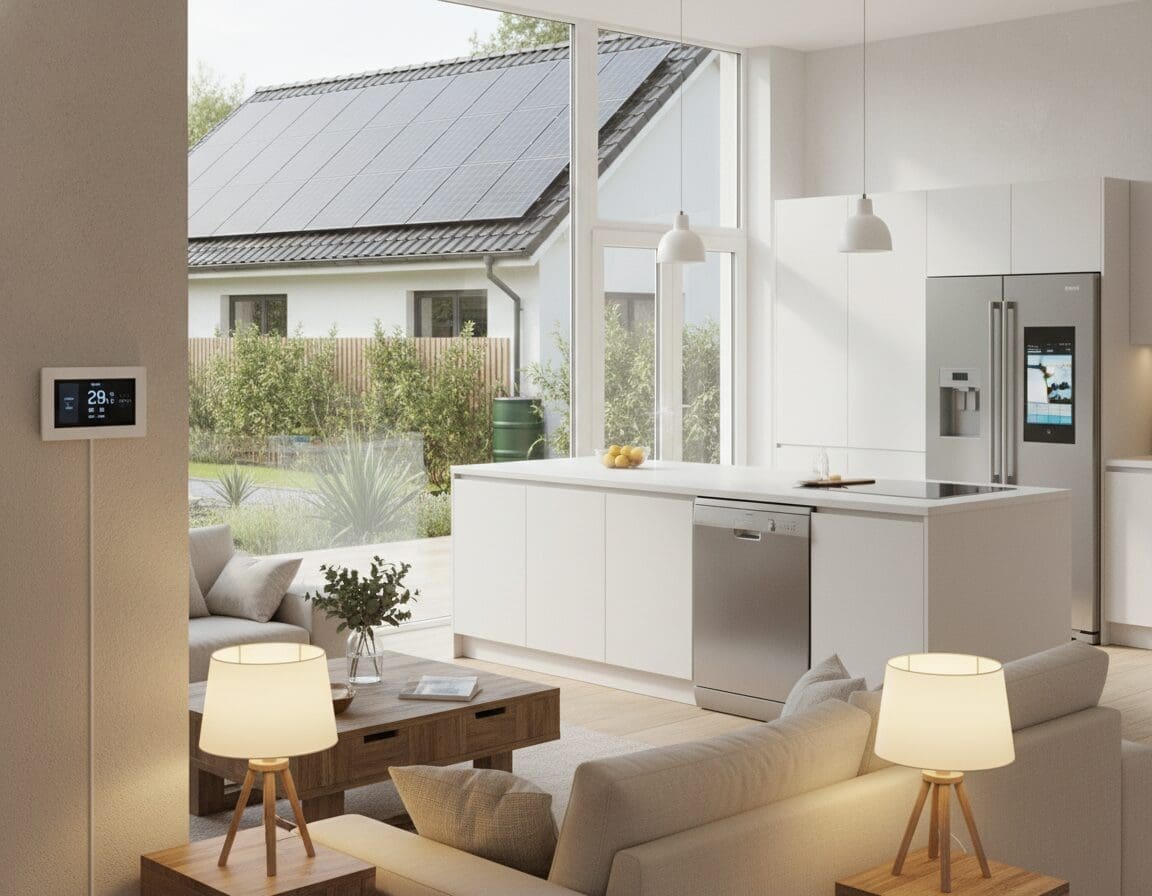
Deciding how to reduce energy costs home starts with a clear rule: fix the fabric first, then upgrade heating and consider renewables. Evidence from the Energy Saving Trust, BEIS summaries and Ofgem shows most heat escapes through the roof, walls and windows. Typical figures put roof losses up to about 25%, uninsulated solid walls as high as 35%, and windows and doors around 10–15%.
That pattern explains why simple home energy upgrades like loft insulation and draught-proofing often cut household energy bills quickly and cheaply. These measures usually have short payback times and deliver high impact per pound spent, helping households save on utilities within a few seasons.
More ambitious works — solid-wall insulation or replacing a gas boiler with a heat pump — cost more up front but can reduce energy use and carbon emissions substantially over the long term. For many UK homes, heat pumps lower heating bills when paired with good insulation and smart controls; they perform best in properties where heat loss has already been reduced.
This article will guide you through practical choices that deliver the biggest savings, explain typical paybacks and expected reductions in bills, and point to grants and trusted installers across the energy efficiency UK landscape.
reduce energy costs home: high-impact insulation and draught-proofing
Small, well-chosen upgrades to fabric and fittings can cut bills and lift comfort within weeks. Focusing on roof, wall and window measures delivers fast wins in thermal efficiency while keeping disruption low. The right mix depends on property age, budget and long-term plans.
Loft and roof insulation improvements are among the quickest ways to capture loft insulation savings. Common options include loft rolls, loose-fill mineral wool and blown fibre. UK guidance normally recommends about 270mm depth for mineral wool in the loft to reduce heat loss through the roof.
For loft conversions, insulating at rafter level keeps the space warm and usable. Flat roofs work best with rigid boards or warm roof techniques. Proper ventilation is crucial. Avoid compressing insulation and take health precautions such as gloves and masks, or use a registered installer.
Loft and roof insulation improvements
Energy Saving Trust figures show typical annual savings and short payback periods for loft insulation in many UK homes. Installation is fast and low cost compared with other measures. Check ventilation, loft hatches and any existing wiring before work starts.
Wall insulation options for different property types
Cavity wall insulation usually offers a low-cost, quick installation route. Installers typically use mineral wool or polystyrene beads. Suitability depends on cavity width and wall condition. A survey by an approved installer or SAP assessor helps avoid issues.
Solid wall insulation gives larger energy savings but costs more and causes greater disruption. Internal options use insulated plasterboard systems. External options include insulated render or cladding that improve thermal mass and appearance. External works may need breather membranes and careful detailing to avoid damp.
Property era guides choice. Many Victorian and inter‑war homes have solid walls that benefit most from internal or external insulation. Newer homes with cavities usually suit cavity wall insulation. A qualified survey will outline likely savings and any risks.
Window and door upgrades to prevent heat loss
Upgrading glazing reduces conduction and radiation losses. Double glazing is common and effective, while triple glazing adds more insulation where budgets allow. Low-emissivity (low-E) glass helps cut heat loss further.
Frame material matters. uPVC gives low maintenance, timber offers character with good insulation, and aluminium with thermal breaks balances slim sightlines and thermal efficiency. Secondary glazing is a lower-cost option for period properties where planning or appearance is a concern.
Draught proofing UK measures deliver quick comfort gains and measurable savings. Sealing gaps around windows, external doors, letterboxes and loft hatches with seals, brush strips and thresholds is inexpensive and fast. Use accredited installers and FENSA or BFRC‑certified replacements to reduce condensation risk and preserve ventilation.
Efficient heating and boiler upgrades to cut bills
Upgrading heating is one of the fastest ways to lower bills and carbon. A targeted approach pairs a smarter boiler with better controls and, where suitable, low-carbon replacements. Choices range from a straightforward boiler replacement UK to full heat-pump installs. Each option demands correct sizing, accredited installers and attention to how the house is insulated.
Replacing old boilers with modern condensing boilers
Condensing boilers reclaim latent heat from flue gases to reach high efficiency. Older, pre-2005 boilers often ran at 60–70% efficiency. Modern A-rated condensing boilers commonly deliver above 90% condensing boiler efficiency, cutting fuel use and emissions.
Replacing a worn unit with a correctly sized combi, system or regular boiler can give typical fuel savings of 15–30% and significant carbon reductions. Choice depends on hot-water demand and space for a cylinder. Combi boilers suit smaller homes with low storage needs. System or regular models work better where multiple outlets or stored hot water are needed.
Work with Gas Safe-registered engineers or System Installer Trust members for safe installation. Proper commissioning and annual servicing keep condensing boiler efficiency high. Past ECO vouchers and local grants have helped with boiler replacement UK costs; check current schemes before you buy.
Smart controls, thermostats and zoned heating
Smart thermostats from Google Nest, Hive and Honeywell Home can learn routines and cut waste. Studies often show 10–15% savings when devices are used correctly. Smart thermostat savings appear through better scheduling, geofencing and remote control.
Smart TRVs and zoned heating controls let you heat only occupied rooms. In larger homes, creating zones avoids overheating the whole house. Linking hot-water controls prevents heating water unnecessarily. Use timers and apps to match heating to real life, not fixed routines.
- Install smart TRVs to control radiators room by room.
- Create zones for upstairs and downstairs with zoned heating controls.
- Choose systems that integrate with hot-water schedules and apps.
Low-carbon alternatives: heat pumps and hybrid systems
Air-source and ground-source heat pumps extract ambient heat and use electricity to raise temperatures. Typical coefficients of performance (COP) for air-source units range from about 2.5 to 4 depending on conditions. Higher COPs mean lower running carbon when paired with low-carbon electricity.
Heat pumps have higher upfront cost but offer much lower running emissions. Suitability depends on insulation, radiator size and available space. Many properties need larger radiator surfaces or underfloor heating to get the best results.
Hybrid heating systems pair a heat pump with a gas boiler to cover very cold spells. Hybrids reduce peak electricity demand and lower capital cost while keeping familiar backup. For any heat pump or hybrid, choose MCS-accredited installers and plan a whole-house retrofit so expected savings are realised.
- Check Boiler Upgrade Scheme (BUS) grants and legacy RHI information when budgeting.
- Consider noise and siting for external units in planning decisions.
- Ensure installers assess insulation, emitters and controls before recommending heat pumps UK options.
Renewable energy installations for long-term savings
Adding renewables to a home can cut bills and raise property appeal. Solar, thermal and small-scale generators let households use local energy, lower carbon footprints and take control of spending. Choices depend on roof space, budget and daily demand patterns.
Photovoltaic systems and battery options
Photovoltaic panels convert sunlight into electricity. In the UK a well-sited 1 kW array typically yields roughly 700–1,000 kWh per year depending on orientation and tilt. Many family homes fit 3–4 kW systems as a balance of cost and output.
On-site generation reduces energy bought from the grid. PV battery storage shifts daytime solar output to evenings, raising self-consumption and cutting imports. Modern lithium-ion batteries pair with inverters from brands such as SolarEdge, SMA and Huawei, each backed by warranties for panels and inverters.
Before installing, check roof suitability for orientation, shading and structural integrity. Choose an MCS-accredited installer to ensure proper fit, product guarantees and eligibility for Feed-in Tariff alternatives like the Smart Export Guarantee (SEG).
- Typical household sizes: 3–4 kW common; larger systems for south-facing roofs.
- Inverter choices affect efficiency and monitoring features.
- Warranties vary; look for at least 10 years on inverters and 25 years on panels.
Solar thermal and additional microgeneration choices
Solar thermal panels heat water directly. They cut the energy needed for domestic hot water, especially in summer, and normally link to an existing boiler for backup. For households with high hot-water use, a solar thermal hot water setup offers clear seasonal savings.
Other microgeneration options suit particular sites. Small wind turbines work where local wind speeds are reliable. Micro-CHP units suit certain extended families or off-grid homes. Biomass boilers can serve larger properties with space for fuel and good fuel supply chains, but require attention to emissions and storage.
- Solar thermal is niche but effective for hot-water support.
- Small wind is site-dependent; planning and noise should be assessed.
- Biomass needs regular fuel delivery and more maintenance than gas systems.
Funding, grants and planning considerations
Upfront costs fall with the right support. Current routes include the Boiler Upgrade Scheme for heat pumps, local authority grants and schemes for low-income households such as ECO. Private finance, green mortgages and targeted offers can further reduce the initial spend.
Planning is usually straightforward. Most rooftop solar counts as permitted development, but listed buildings and conservation areas require consent. External plant such as heat pump units or biomass chimneys may need planning approval. Installers should advise on building regulations and planning matters.
Tax and incentive rules change, yet reduced VAT rates sometimes apply to certain energy-saving materials. Using MCS-accredited systems helps qualify for grants and preserves warranty validity. Weigh lifecycle costs, maintenance intervals and fuel logistics when choosing a microgeneration route.
Behavioural changes and low-cost upgrades with big returns
Small actions at home can unlock significant low-cost energy saving. Lowering the thermostat by 1–2°C, programming reduced temperatures for night or absence, and fitting thermostatic radiator valves prevents overheating and cuts bills. These behavioural energy savings add up quickly when paired with fabric improvements like loft insulation and simple draught proofing tips around doors and windows.
Everyday habits also matter. Use washing machines and dishwashers on eco settings, wash at lower temperatures and run full loads, and air-dry washing where possible. In the kitchen, use lids, match pan size to the hob ring and switch appliances off at the socket rather than leaving them on standby. These small changes multiply the benefits of efficient heating and renewables over time.
Low-cost hardware upgrades offer rapid payback. Replace incandescent bulbs with LED lighting—choose bulbs by lumens-to-watt guidance for the same brightness and expect a much longer lifespan. Fit draught-proofing kits, loft hatch insulation, hot-water cylinder jackets, pipe insulation and radiator reflector panels. Smart plugs and energy monitors from British Gas, Hive or third-party brands reveal high-use devices so you can shift consumption and save more.
When appliances are due for replacement, look for A++ rated appliances and inverter technology for fridges, freezers and heat-pump tumble dryers; consult appliance energy ratings UK guidance. Also consider switching suppliers at renewal, joining community energy schemes or seeking local authority and charity grants. Use an EPC to prioritise measures. Start with loft insulation, draught-proofing, LED lighting and thermostat settings, then plan larger investments like heat pumps or PV with accredited professionals to transform running costs and cut carbon.