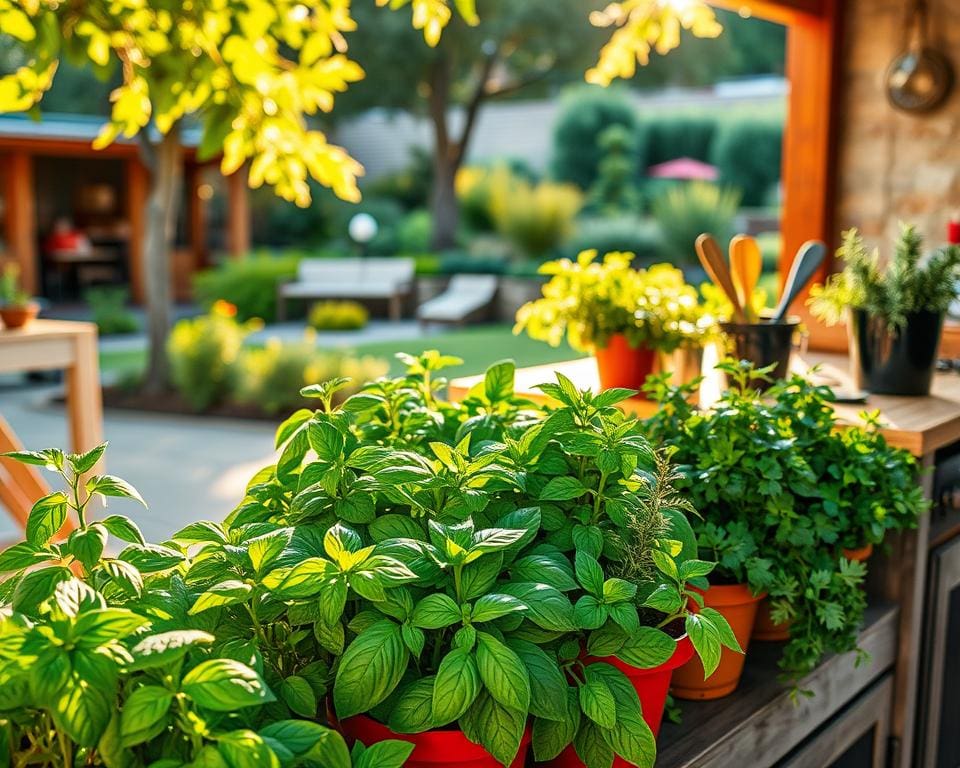

Growing outdoor kitchen herbs lets you pick fresh leaves as you prepare meals, light the barbecue or mix a drink. This simple habit adds flavour, colour and scent to your cooking space.
Basil, mint, chives, rosemary, thyme and oregano are among the easiest herbs to grow. They suit many herbs for outdoor kitchens and give you useful flavours without demanding much gardening experience.
Your growing conditions will guide the best choice. Check the sunlight, shelter, drainage and space near your cooking area. Tender basil needs warmth and protection, while chives, rosemary, thyme and oregano cope better with cool, changeable British weather.
Containers are a practical choice, especially for a container herb garden UK gardeners can move when needed. You can control the compost, improve drainage and keep spreading mint contained. In the following sections, you will find kitchen garden ideas for planting, watering, harvesting, feeding and protecting fresh herbs at home throughout the growing season.
Outdoor kitchen herbs that are easy to grow at home
Growing herbs beside your cooking space makes everyday meals feel fresher. Basil, mint and chives are beginner-friendly herbs that suit pots, planters and small patios. They give you fresh herbs near kitchen doors, where regular picking is simple.
Choose pots with drainage holes and use a free-draining herb compost. Terracotta and ceramic pots help regulate moisture. For more growing ideas, explore these indoor herb garden tips.
Basil for fresh summer flavour
Basil grows well as basil in pots beside a sunny outdoor kitchen. A container gives the roots warmth, good drainage and the freedom to place the plant in the brightest sheltered spot. It is one of the most useful summer herbs UK gardeners can grow.
Plant basil after the risk of frost has passed, usually from late spring. A warm patio, sheltered wall or sunny spot near the cooking area helps it produce healthy leaves. Keep it away from cold winds and sudden drops in temperature.
Keep the compost moist but never waterlogged. Check the surface during warm, dry weather, and water at the base rather than over the leaves. Pinch stems just above a pair of leaves, and remove flower buds when you want more foliage.
Frequent picking encourages a bushy plant. When nights turn cold, move basil into a greenhouse, conservatory or bright indoor position. Protect it from draughts and sharp temperature changes.
Mint for drinks, desserts and sauces
Mint is vigorous, versatile and well suited to growing mint in containers. It copes with partial shade and needs regular moisture, making it useful in spots where sun-loving herbs may struggle. Its fresh leaves work well in iced drinks, tea, desserts and fruit salads.
Grow mint in its own pot because underground stems spread quickly. Select a container with drainage holes, and check that roots cannot escape through cracks or gaps. These are easy container herbs to manage when you give each plant enough room.
Keep the compost moist during warm weather, but do not leave the pot standing in water. Trim stems often to maintain fresh growth and prevent an untidy shape. A pot close to the cooking area makes it easy to gather mint for sauces and summer dishes.
Chives for salads and savoury dishes
Chives are reliable perennials that tolerate cool British weather. They grow in full sun or chives in partial shade, so you can plant them in pots, window boxes, raised beds or herb borders. Their mild onion flavour suits salads, potatoes, eggs and soft cheese.
Keep the compost lightly moist while the plants establish. Water when the surface starts to dry, while ensuring the container drains well. Chives accept more moisture than rosemary or thyme, yet soggy roots can still cause problems.
Cut leaves close to the base when harvesting. Regular trimming encourages fresh, upright growth, while removing spent flowers directs energy towards new leaves. The edible flowers can bring colour and a gentle onion note to salads.
Choosing the best herbs for your outdoor kitchen space
Start by checking your growing conditions before buying plants. Measure direct sunlight across the day. Basil, rosemary, thyme and oregano suit a sunny herb garden, while mint and chives manage some partial shade.
Look for shelter from strong winds, heavy rain and heat from barbecues or pizza ovens. Keep every plant away from flames, hot surfaces, smoke and oil splashes. This protects the leaves and supports good food hygiene.
A practical herb garden layout keeps plants close enough to pick with ease. Leave clear paths around doors, worktops, seats, fuel stores and cooking equipment. Set each pot where it will not cause a trip or block access.
Drainage matters in every planting style. Choose pots with clear drainage holes and use a free-draining compost rich in organic matter. If water gathers beneath a pot, raise it on feet so excess moisture can escape.
Herbs in containers suit patios, rented homes and compact kitchens. You can separate plants with different water needs and move tender herbs into a sheltered spot during cold weather. Terracotta, glazed pottery, outdoor wood and strong recycled plastic are useful choices.
Use stable, food-safe containers in busy cooking areas. Avoid treated or painted materials that may leach into edible compost unless they are made for food growing. Heavy pots reduce the risk of plants being knocked over.
Raised herb beds offer more space and place plants at a comfortable height for harvesting. They work well beside a permanent kitchen, though you must plan the base carefully. Roots should never sit in wet soil after rain.
Wall planters make use of vertical space when the wall receives enough light and can carry the weight of wet compost. Small pockets dry out fast, so check them often. Secure window box herbs firmly, and prevent drips from reaching cooking surfaces or walkways.
Group herbs by their watering needs. Keep moisture-loving mint in its own pot, away from drought-tolerant rosemary, thyme and oregano. Chives, parsley and compact varieties can share space when their light and moisture needs match.
Place planters at hand height or beside the preparation area to encourage regular picking. Leave room for air movement, watering and trimming. Labels help you identify herbs that look alike, while sheltered patio planting protects tender growth from harsh weather.
For more guidance on selecting suitable containers, explore these indoor herb planters. A well-planned position makes daily care simpler and keeps fresh herbs within easy reach.
Low-maintenance Mediterranean herbs for pots and planters
Warm, sunny spots beside an outdoor kitchen suit many Mediterranean herbs UK gardeners can grow with ease. Rosemary, thyme and oregano need less water than basil, mint or chives. Keep them in separate pots, since they dislike compost that stays wet.
Rosemary for roasted dishes and barbecues
Rosemary thrives in full sun, warmth and sharply drained soil. A sunny pot beside your cooking area is ideal, especially where reflected heat reaches the foliage. Keep it away from direct cooking heat, which can scorch the plant.
For healthy rosemary in pots, choose a container with drainage holes. Fill it with free-draining compost mixed with horticultural grit or perlite. Rosemary is more likely to suffer from wet roots than from a short dry spell.
Wet British summers can cause problems. Raise the pot on feet, check that the holes remain clear and shelter it from prolonged heavy rain where practical. Let the compost dry slightly between waterings.
Harvest young leafy sprigs often. Trim lightly after flowering to keep the plant neat, but do not cut hard into old woody stems. Rosemary may not regrow from bare wood. Its fragrant leaves suit roasted vegetables, lamb, chicken, potatoes, focaccia and herbs for barbecues. Woody stems can scent marinades, too.
Thyme for grills, marinades and vegetables
Thyme is a compact, low-growing herb for pots, troughs and window boxes. It suits small spaces near an outdoor kitchen and works well along the edge of a raised bed. Growing thyme in containers gives you control over drainage and placement.
Plant thyme in gritty, free-draining compost and place it in full sun. Water new plants as they settle in, then let the compost dry between drinks. Once established, thyme is one of the most useful drought-tolerant herbs.
Trim lightly after flowering or after a strong flush of growth. This encourages a tidy, bushy shape. Avoid cutting into old, leafless stems. Add the small leaves to grilled meat, fish, vegetables, marinades, stocks and sauces.
Oregano for pizzas and Mediterranean cooking
Oregano enjoys warmth, sunshine and light, free-draining compost. An oregano herb planter can sit near a sunny wall or on a raised bed where water drains freely.
Harvest young stems and leaves regularly to encourage fresh growth and prevent legginess. Cut just above a pair of leaves, and avoid removing too much foliage at once. Fresh oregano is excellent for pizzas, tomato sauces, salads and roasted vegetables.
How to care for outdoor kitchen herbs throughout the growing season
Caring for outdoor kitchen herbs starts with the right watering routine. Pots hold less compost than garden soil, so they often dry out faster. Check the surface with your finger and water when it feels dry. Basil, mint and chives prefer steady moisture, while rosemary, thyme and oregano should dry slightly between waterings.
Water thoroughly until excess runs from the drainage holes, then let the pot drain fully. Empty saucers after rain or watering, as stagnant water can damage roots. Water at the base in the morning or during a cool part of the day. This approach to watering herbs in pots keeps leaves drier and may reduce fungal problems. Use a weak, balanced feed during active growth, but avoid overfeeding. Too much fertiliser can reduce flavour and cause soft growth.
Regular harvesting keeps plants compact and productive. Pick leaves or cut young stems just above a healthy pair of leaves, leaving enough foliage for growth. Harvest fresh herbs in the morning after dew has dried, when their flavour is often strongest. Pinch basil, trim mint, cut chives, and gather thyme and oregano often. Replace tired compost or add a fresh top layer in spring, with leaner compost for Mediterranean herbs.
Inspect plants for aphids, slugs and snails, which are common herb pests UK gardeners face. Remove pests by hand where possible, improve air flow and avoid wetting leaves. Before frost, move basil indoors or into a heated greenhouse. Place hardy pots beside a sheltered wall, raise them above cold paving and use horticultural fleece during short cold spells. Good winter herb care, along with protection from heavy rain and heat beside the kitchen, will help your herbs provide fresh flavour from spring into summer.