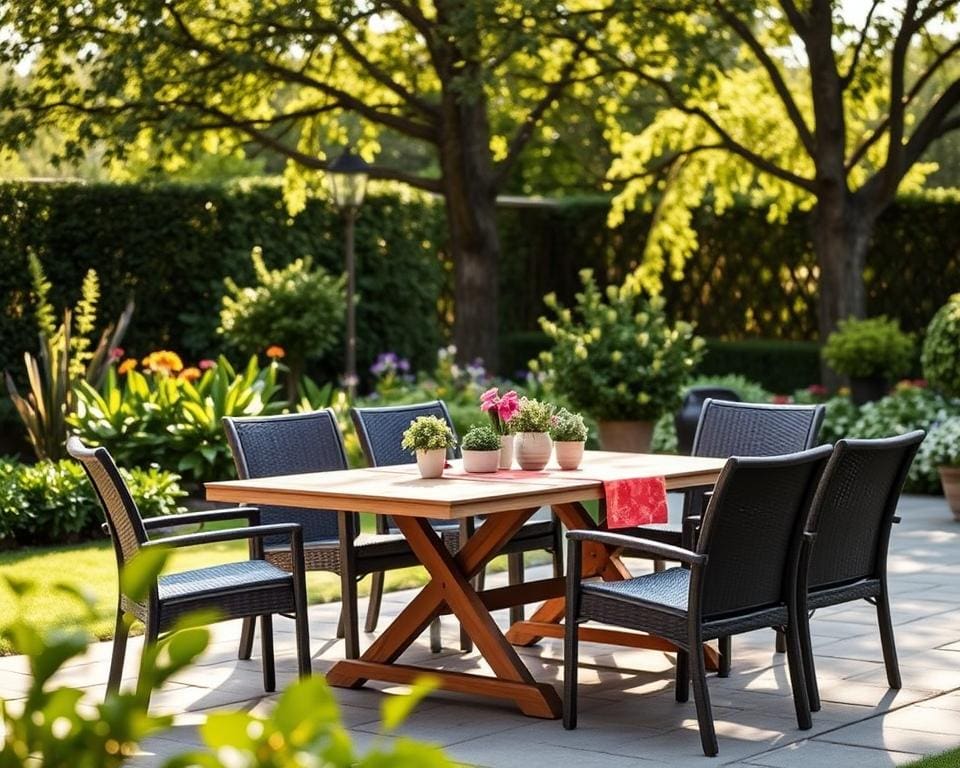

Choosing the best garden furniture for UK weather means preparing for rain, damp, frost, strong sunlight and sudden changes in temperature. Your furniture should stay comfortable and attractive without needing constant care.
No material is fully maintenance-free or indestructible. Good construction, a protective finish, proper drainage and quality cushions all affect performance. Covers and safe storage can also extend the life of your furniture.
Aluminium, weather-resistant synthetic rattan and well-maintained hardwood are strong choices for many gardens. Steel and wrought iron can also last for years, but they need regular checks and good rust protection.
When comparing weatherproof garden furniture, consider moisture resistance, UV protection, wind stability and ease of cleaning. Storage needs and long-term value matter too. A permanent dining set needs more strength than occasional balcony seating.
For simple year-round garden seating, aluminium is often a practical choice. Synthetic wicker can add comfort and style when it has a UV-resistant frame and good drainage. Hardwood offers natural beauty, but it needs regular treatment. You can explore more ideas in this guide to durable garden furniture.
Why weatherproof garden furniture matters in the UK
The UK garden weather can shift from heavy rain to bright sun within hours. Your furniture needs to cope with moisture, cold, heat and strong gusts. Good outdoor furniture protection helps preserve comfort, appearance and outdoor furniture durability.
How rain, frost and damp affect outdoor furniture
Frequent rain and high humidity can leave furniture continually damp. This is common in shaded gardens, beside walls and on patios with poor drainage. Damp outdoor furniture may develop stains, algae, mildew and mould.
Standing water can collect beneath seats, inside hollow frames and around joints. These areas dry slowly and can weaken fixings over time. Good garden furniture drainage, raised feet and slatted designs help water escape.
Rain-resistant garden furniture can cope with normal showers, yet no material is made for constant flooding. Even rain-resistant garden furniture needs space to dry after prolonged wet weather. Removable covers let you dry each part separately.
Frost creates a separate risk. When water enters porous timber or masonry-like materials, it freezes and expands. This frost damage can cause cracking, splitting and surface deterioration.
For colder months, choose frost-resistant furniture or frost-proof garden seating. Outdoor cushions should not stay wet for long periods. Moisture can enter seams, foam and filling, even when the fabric is water resistant.
Mould-resistant cushions offer added protection in damp conditions. You should still remove them after heavy rain and store them in a dry, ventilated place. Damp-proof outdoor seating should have quick-drying covers and surfaces that do not trap water.
What changing temperatures mean for garden furniture
Outdoor materials respond to heat and cold through expansion and contraction. Repeated movement can loosen joints, stress fasteners and open small gaps. These changes may reduce garden furniture stability over time.
Temperature-resistant garden furniture is made to handle normal seasonal shifts. Strong frames, sound fixings and quality finishes support durable patio furniture through spring, summer and winter. Check joints from time to time, especially after periods of frost.
When selecting winter garden furniture, look for solid construction and raised supports. Keeping furniture away from wet ground limits water contact. A breathable cover can protect it without trapping condensation beneath the fabric.
How sunlight and wind can cause damage
Strong sunlight can fade fabric, dry timber and weaken some plastics. UV-resistant garden furniture helps slow this process. Fade-resistant cushions keep their colour for longer when exposed to bright summer light.
Wind-resistant outdoor furniture needs a stable base and a well-balanced frame. Lightweight items may move across patios or strike walls during gusts. Secure loose pieces before storms to protect both furniture and garden surfaces.
Look for durable frames, protected finishes and stable feet when comparing products. These details support garden furniture stability in changeable conditions. They give your outdoor space a stronger base for year-round use.
Choosing durable materials for changing weather
The best outdoor furniture material depends on your garden’s exposure. Coastal air, winter frost, summer sun and poor drainage each place different demands on furniture. Compare durable garden furniture materials by their frame, fixings, surface finish and care needs. This helps you choose low-maintenance garden furniture that suits your space.
Aluminium garden furniture for year-round use
Aluminium garden furniture is a strong choice for wet British weather. It is lightweight garden furniture, so you can move it with little effort. Aluminium does not rust like iron or steel, though it can oxidise or suffer surface damage when its finish is neglected.
Powder-coated aluminium creates a hard protective layer that helps resist moisture and everyday marks. Look for low-maintenance aluminium patio sets with neat welds, firm joints and thick frames. Drainage holes in table tops and chair feet can reduce standing water. These details help create rust-resistant outdoor furniture for year-round use.
Aluminium suits many gardens, yet it may feel lighter in strong winds. Check the product weight and base design before buying. Removable cushions should dry quickly, since a weather-resistant frame cannot protect absorbent fabric.
Weather-resistant rattan and synthetic wicker
Weatherproof rattan garden furniture usually uses synthetic wicker furniture rather than natural cane. PE rattan is a popular option because it can handle rain and damp better than natural rattan. UV-resistant rattan helps slow fading, cracking and brittleness in sunny gardens.
Low-maintenance rattan seating works best when the weave is tight and even. Inspect the edges, corners and joins for loose strands. A strong aluminium frame can improve the life of synthetic wicker furniture. Poor fixings or a thin frame may fail before the weave does.
Natural rattan is better suited to a covered patio, conservatory or sheltered balcony. For exposed areas, choose all-weather patio furniture with UV-treated weave, quick-drying cushions and removable covers. You can read more about choosing outdoor lounge furniture in this guide to garden furniture worth buying.
Hardwood garden furniture and its maintenance needs
Hardwood garden furniture offers weight, warmth and a natural grain. Teak outdoor furniture is valued for its dense timber and natural oils. Quality teak can last for decades when it is cleaned and cared for. It is heavy and costly, so it may not suit a patio where you often move the chairs.
Acacia garden furniture can offer a lower-cost route to a timber patio furniture look. It still needs wood protection, such as a suitable oil or sealer. Teak oiling is often needed once a year when you want to preserve a golden tone. Without treatment, many timbers fade to silver-grey.
Inspect wooden slats, joints and feet before purchase. Water can collect in weak joints and split untreated timber. A cover can help, yet good airflow remains important to prevent trapped damp.
Steel and wrought iron furniture: benefits and drawbacks
Steel garden furniture is very strong and can support large tables or wide seating. Galvanised steel outdoor furniture has a zinc layer that helps guard against corrosion. Powder-coated steel can provide extra protection, while stainless 316 steel is a safer choice for gardens close to salt air.
Wrought iron garden furniture brings a classic look and a solid feel. Its weight makes it less likely to move in wind, though it can be hard to store. Rust-resistant metal furniture still needs care, since chips in the coating may expose the metal beneath.
Check welds, fasteners, frame thickness and paint coverage before buying metal patio sets. Touch up damaged areas with a suitable product and keep water from pooling around the feet. Warranties, care instructions and access to replacement parts can show how well a manufacturer expects the furniture to perform.
Features that make garden furniture easier to maintain
Good garden furniture design features can reduce cleaning, drying and repair work. Look beyond appearance when you compare sets. Raised feet, ventilated bases and slatted table tops help water drain away. Rounded edges and accessible joints make trapped dirt easier to remove.
Choose easy-care garden furniture with surfaces that you can reach and parts that you can replace. Furniture that is simple to move or dismantle is more likely to be stored before severe weather. These details make low-maintenance outdoor furniture a practical choice for a busy UK garden.
Protective coatings and rust-resistant finishes
A durable coating shields metal from rain, frost and daily marks. Powder-coated garden furniture has a hard, even surface that is simple to wipe clean. Galvanised steel offers another useful barrier against corrosion, especially when paired with a reliable outdoor protective finish.
For exposed patios, rust-resistant garden furniture can reduce the need for frequent touch-ups. Check welds, fixings and joints during routine metal furniture maintenance. Small chips should be cleaned and repaired before moisture reaches the metal beneath.
Removable, quick-drying outdoor cushions
Cushions need careful design in a damp climate. Choose quick-drying garden cushions with breathable filling, water-resistant garden cushions with sealed seams and fabric made for outdoor use. UV-resistant fabric helps limit fading during bright summer weather.
Removable outdoor cushion covers are easier to wash and dry than fixed upholstery. Look for washable cushions with strong zips and colourfast fabric. Store outdoor seating cushions indoors during heavy rain, or use a breathable bag to limit damp and mildew.
A well-fitted cover can protect a complete set from sun, rain and dirt. Read this guide to garden furniture covers before choosing a size and material.
Stackable and foldable designs for winter storage
Stackable garden chairs take up little room when summer ends. Foldable outdoor furniture can be moved into a shed, garage or covered store before strong winds arrive. These options suit smaller gardens where every metre matters.
Plan compact garden furniture storage before buying a new set. Tables with folding legs, nesting stools and chairs that stack neatly support practical winter furniture storage. This type of space-saving patio furniture is easier to cover, lift and protect during cold, wet months.
How to protect your garden furniture throughout the year
A simple garden furniture care guide can help you manage every season. In spring, inspect frames, joints, fixings and feet for rust, cracks or loose bolts. Clean each surface before adding cushions, and check for faded finishes or damage caused by winter damp.
During summer, place furniture in shade where possible, using a secure parasol in windy weather. Rotate cushions to reduce uneven fading. After heavy rain, remove standing water and let cushions dry fully. Quick-drying waterproof cushions can improve comfort, but check beneath tables, chairs and storage boxes for hidden moisture.
In autumn, clear leaves, soil and other debris before they hold moisture against timber, metal or woven surfaces. For winter garden furniture storage, clean and dry every item first. Store cushions indoors, fold or stack smaller pieces, and move vulnerable furniture into a shed, garage or sheltered area. If pieces stay outside, use well-fitted, breathable garden furniture covers. Secure them against wind, but remove them on dry days to reduce condensation. Never cover wet furniture.
Good year-round furniture maintenance also means washing aluminium, synthetic wicker, steel and iron with mild soapy water. Repair chips on metal quickly, and raise wooden furniture away from persistently wet ground. Follow the maker’s advice before oiling or sealing timber. Aluminium is often the simplest low-maintenance choice for UK weather, while UV-resistant synthetic rattan offers a softer look. Hardwood rewards regular care, and steel or wrought iron stays dependable when its protective finish is maintained.