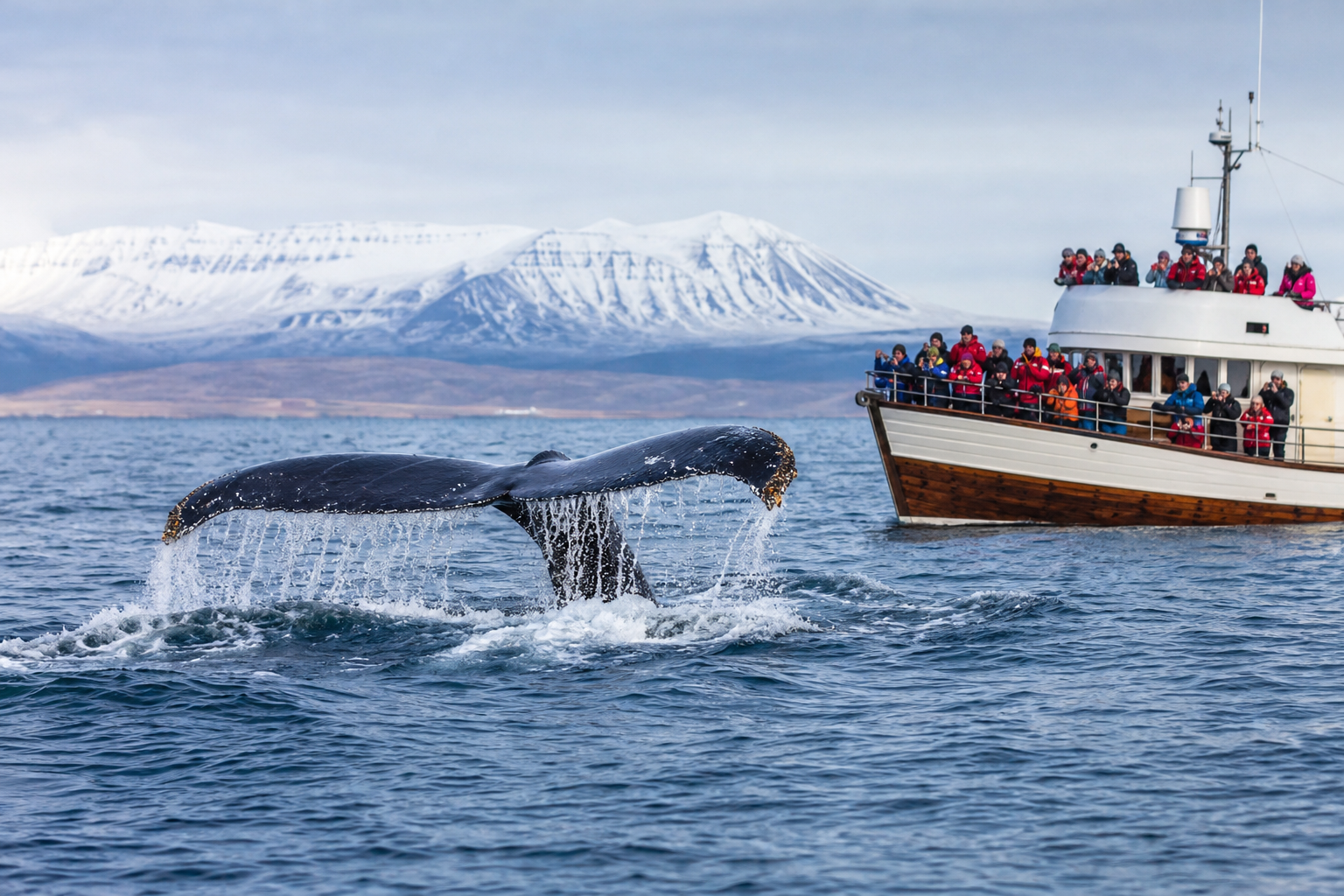

Where can you go whale watching in Iceland? For UK travel businesses, event organisers and corporate planners, the answer depends on season, itinerary shape and client expectations. Iceland has several strong whale watching areas, from Reykjavík’s accessible harbour to specialist northern ports with a strong maritime culture. Each location offers a different balance of convenience, scenery, wildlife variety and operational fit.
Where can you go whale watching in Iceland? Key regions to know
Iceland’s whale watching map is not centred on one place. Tours run from several coastal towns, and each departure point suits a different type of trip. Some work well for short city breaks, while others are better for longer incentive programmes, educational travel or high-value leisure groups.
Reykjavík and Faxaflói Bay
Reykjavík is the most convenient choice for many UK-based planners. Departures from the Old Harbour sit close to hotels, restaurants, conference venues and coach routes, making the capital easy to include in a packed schedule.
Tours usually explore Faxaflói Bay, where passengers may encounter minke whales, humpback whales, white-beaked dolphins and harbour porpoises. Sightings vary, as with all wildlife experiences, but the main advantage is logistics. A whale watching trip can sit alongside museums, meetings, dining, shopping or a Golden Circle programme without requiring an additional domestic transfer.
For B2B planning, Reykjavík is often the sensible option when the client values efficiency, accessibility and a broad choice of accommodation over a more remote setting.
North Iceland: Húsavík, Akureyri and Dalvík
North Iceland is widely associated with whale watching, particularly around Skjálfandi Bay and Eyjafjörður. Húsavík is especially well known for its whale watching heritage, while Akureyri offers a larger town base with good services and a sheltered fjord setting. Dalvík, a smaller fishing town, can suit groups seeking a quieter and more local atmosphere.
The north can feel more specialised than Reykjavík. Trips may appeal to wildlife-focused travellers, educational groups and incentive guests who want a stronger sense of place. Humpback whales are often a key draw in the region, alongside other marine life depending on conditions and time of year.
The trade-off is travel time. Groups usually need to fly domestically, drive from Reykjavík, or build North Iceland into a wider touring itinerary. This can be worthwhile when the whale watching experience is a central feature rather than a short add-on.
Snæfellsnes and the west
The Snæfellsnes Peninsula offers dramatic landscapes, coastal villages and access to rich marine areas. Departures are commonly associated with towns such as Ólafsvík and Grundarfjörður, depending on season and operator schedules.
This region is notable because some itineraries focus on orcas at certain times of year, particularly around the herring grounds when conditions align. However, these trips can be more seasonal and weather-dependent, so they require careful positioning with clients. It is better to present them as specialist nature experiences rather than guaranteed encounters.
The west suits clients who enjoy photography, geology, coastal scenery and slower-paced touring. It can combine well with lava fields, black churches, mountains and fishing villages, creating a varied nature-led programme.
Best seasons for whale watching in Iceland
Whale watching operates in parts of Iceland across much of the year, but the peak visitor season is generally from late spring to early autumn. During this period, longer daylight, milder conditions and broader tour availability help with scheduling.
Summer is often the easiest season for corporate groups and leisure clients because the wider tourism infrastructure is in full operation. It also supports multi-day programmes with less weather disruption than winter, although Icelandic weather remains changeable at any time.
Winter and shoulder-season trips can still be rewarding, especially for clients interested in Northern Lights, quieter destinations or specialist wildlife themes. However, planners should build in flexibility. Sea conditions, daylight and road travel can affect timings. Clear expectation management is essential, particularly for groups with tight programmes.
What businesses should consider when comparing locations
For travel trade and corporate planning, the “best” whale watching location is not always the one with the strongest wildlife reputation. It is the one that fits the client’s risk profile, schedule and purpose.
Key planning factors include:
- Access and journey time: Reykjavík is simplest for short breaks, while North Iceland and Snæfellsnes may need more itinerary space.
- Group size and vessel type: Smaller boats may feel more personal, while larger vessels can be better for mixed groups and comfort.
- Seasonal suitability: Some routes and species expectations change through the year.
- Weather resilience: Sea conditions can alter departures, so alternative activities should be realistic.
- Client profile: Corporate guests may value comfort and timing; specialist travellers may prioritise wildlife and scenery.
- Operational support: Consider proximity to hotels, coach parking, catering and meeting spaces.
The phrase Where can you go whale watching in Iceland? is therefore best answered through itinerary design, not a single destination name. Reykjavík, Húsavík, Akureyri, Dalvík and Snæfellsnes can all be suitable, but for different commercial reasons.
Matching whale watching with wider Iceland itineraries
Whale watching works best when it feels connected to the wider journey. In Reykjavík, it can complement a city stay, a conference agenda or a short Iceland introduction. Guests can experience the sea in the morning and still attend meetings or cultural visits later in the day.
In North Iceland, whale watching can sit within a broader nature itinerary including geothermal areas, waterfalls, fjords and local food experiences. This structure suits incentive travel and educational groups because it builds a stronger regional story.
On Snæfellsnes, the marine element can be part of a landscape-rich programme. The peninsula’s mountains, coastline and small communities create a sense of remoteness without needing to reach Iceland’s farthest corners.
For planners, the most reliable approach is to avoid overloading the day. Sea trips require check-in time, appropriate clothing and some flexibility afterwards. Many guests also appreciate time to warm up, eat and absorb the experience rather than moving straight into another demanding activity.
Frequently Asked Questions
Is Reykjavík a good place for whale watching in Iceland?
Yes, Reykjavík is a strong choice when convenience matters. Its harbour is close to hotels, venues and restaurants, making it practical for short itineraries, business groups and first-time visitors.
Which Icelandic town is most famous for whale watching?
Húsavík is often regarded as Iceland’s best-known whale watching town. It has a long maritime identity and is a popular base for trips into Skjálfandi Bay.
Can whale sightings be guaranteed in Iceland?
No, sightings cannot be guaranteed because whales are wild animals moving through natural feeding areas. Responsible planning should describe the experience honestly and allow for weather or wildlife variation.
What should business groups wear for whale watching?
Guests should wear warm layers, wind-resistant outerwear, hats and practical footwear. Even in summer, conditions at sea can feel much colder than on land.
Is whale watching suitable for corporate incentive travel?
Yes, it can suit incentive travel when matched with the right destination, season and schedule. The experience feels distinctive, memorable and strongly connected to Iceland’s coastal character.