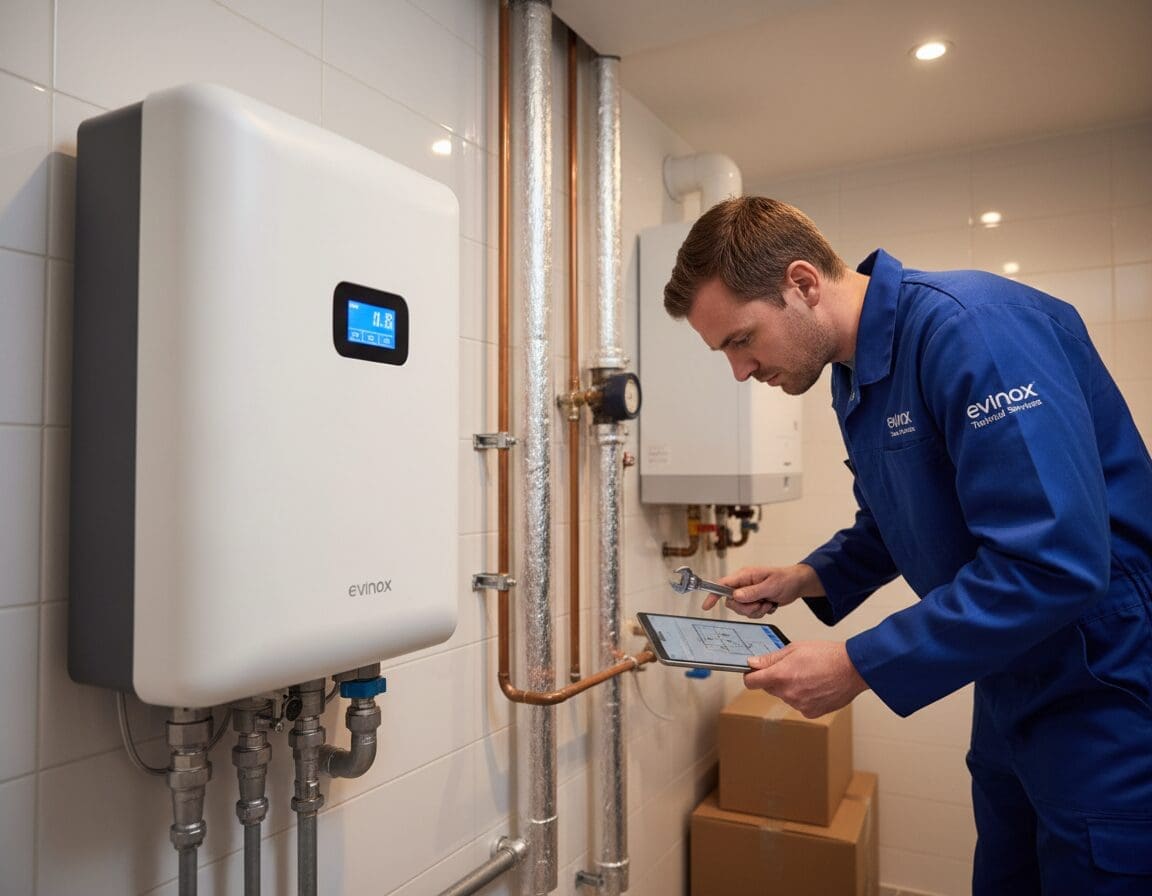
An Evinox HIU, or heat interface unit, transfers heat from a central plant to homes and flats while delivering controlled hot water and space heating. Many developments use the Evinox ModuSat unit as a modular example of efficient, compact design. For building owners and managing agents the function is simple but vital: the HIU delivers comfort and measures energy use for communal systems and individual dwellings.
Regular servicing keeps HIU heating interface units UK installations working as intended. Routine checks preserve HIU efficiency and system optimisation, extend component life and protect manufacturer warranties. That reduces the risk of costly downtime, avoids cold homes, and helps lower energy bills through improved hot water and heating HIU solutions.
This article explains how to recognise warning signs, outlines recommended servicing schedules and checks, and covers commissioning and post‑works verification. It also clarifies when to call professional engineers for Evinox HIU service and maintenance.
If you manage social housing, run facilities for a multi‑storey block, or live in a property linked to district heating, proactive maintenance secures comfort, sustainability and long‑term value from your Evinox systems. Servicing also supports warranty terms and helps meet regulatory expectations for communal heating plant performance in the United Kingdom.
Recognising signs your Evinox HIU needs attention
A heat interface unit can show small clues before a bigger fault appears. Spotting those clues early helps protect communal heating and keep residents comfortable. Read the short checkpoints below and act when patterns repeat.
Reduced heating or hot water performance
Look for lower than expected radiator temperatures and sluggish hot water delivery. You may hear reports of temperature fluctuations or longer recovery times after heavy use.
Common causes include fouled heat exchangers, blocked filters or strainers, trapped air in the circuit and incorrect control settings. Malfunctioning temperature sensors and actuators within Evinox ModuSat unit performance can be a factor.
Carry out simple checks such as verifying flow and return temperatures, inspecting differential pressure and checking domestic hot water flow rates and thermostatic settings. Compare readings with commissioning data or manufacturer performance curves to spot deviations.
Unusual noises and vibrations
Listen for banging, gurgling, whistling or a persistent vibration from the HIU enclosure. Tenants often notice these before any drop in temperature.
Air in primary or secondary circuits, pump cavitation, loose mounting brackets and failing circulating pumps or motorised valves within Evinox HIU components and controls are likely sources.
If safe, isolate and bleed air, check pump speed settings and record the noise characteristics. A clear record speeds up diagnosis by an engineer.
Frequent faults or error codes
Repeated error codes on the HIU display, recurrent fault resets or interlock trips affecting heating and DHW signal deeper issues.
Persistent codes can mean sensor failure, communications faults with building management systems or electrical/electronic control issues. Logging fault codes and operating conditions such as time, ambient temperature and load helps with HIU repairs and fault diagnosis Evinox technicians undertake.
Visible leaks or corrosion
Check for damp patches beneath the HIU, corrosion on pipework or heat exchanger surfaces, staining or pooling water around the unit.
Leaks reduce system pressure, invite air and contaminants and can rapidly degrade heat exchanger performance. A leaking unit risks wider contamination of communal circuits.
Where possible isolate affected circuits and avoid running a clearly leaking unit. Contact a qualified engineer to repair the fault and cleanse the system to prevent spread of debris or corrosion.
Evinox HIU servicing schedule and recommended checks
Regular servicing keeps communal heating reliable and efficient. A clear schedule protects warranty cover, supports safety, and maintains Evinox ModuSat heat interface unit performance through seasonal demand. Follow manufacturer guidance and keep concise records to show compliance.
Manufacturer guidance and warranty considerations
Always follow Evinox manufacturer recommendations for service intervals and approved procedures to protect warranty entitlements. Many warranties require annual inspection and adherence to specified tasks.
Manufacturer guidance typically covers cleaning or replacing filters and strainers, verifying sensor calibration, exercising valves, and checking pump performance and electrical safety. Retain service records and commissioning documentation to demonstrate compliance with warranty and insurance requirements.
Seasonal and annual inspection checklist
- Visual inspection for leaks, corrosion and secure mounting.
- Check and clean inlet strainers, mesh filters and commissioning filters; replace if needed.
- Measure and record primary and secondary flow and return temperatures, differential pressures and flow rates; compare with design values.
- Test temperature sensors, thermostats and motorised actuators; confirm correct set points and programming.
- Inspect circulating pumps for correct operation, noise and vibration; verify pump speed and energy use where possible.
- Verify electrical connections, fuses and control wiring; confirm safe isolation labels and earth continuity.
- Test safety devices and temperature/pressure interlocks; ensure DR function and any BMS/telemetry communications are reporting.
- Clean condensate drains and accessible heat exchanger faces where applicable.
- Check domestic hot water thermostatic control and anti‑scald devices; ensure legionella control aligns with the building’s water safety plan.
- Advise chemical cleaning or hydraulic flushing where fouling or low heat transfer exists.
Seasonal checks ahead of winter help ensure peak performance during highest demand and reduce emergency call‑outs. Regular attention improves HIU efficiency and system optimisation across the estate.
Commissioning and post‑works checks
Thorough commissioning confirms an Evinox ModuSat unit or other Evinox HIU is configured and tuned to deliver design performance. Verify calibration of metering and control set‑up and balance primary and secondary flows.
Confirm heat exchanger performance under load and validate safety and control interlocks. After repairs or retrofits, re‑run the commissioning checklist, purge air, re‑validate temperature and flow readings and update service records.
For complex commissioning or manufacturer authorised sign‑off, engage qualified teams experienced in HIU maintenance and repairs by R&B London HIU Engineers. Their expertise supports Evinox HIU service and maintenance and ensures ongoing HIU efficiency and system optimisation.
When to contact professional engineers for Evinox HIU service
If basic checks do not restore normal temperatures, or recovery times remain long, call a specialist. Persistent performance issues, repeated faults or unexplained error codes demand professional attention. For communal heating HIU systems, small problems can quickly affect many residents, so early escalation protects comfort and reduces disruption.
Suspected leaks, visible corrosion or any safety‑critical failure require immediate intervention. Major component faults such as a breached heat exchanger, seized pump or failed motorised valve are beyond routine on‑site fixes and need specialist HIU repairs and fault diagnosis Evinox engineers. Commissioning, decommissioning or system changes that affect multiple dwellings should always be handled by trained personnel.
Qualified engineers bring specialist fault diagnosis using manufacturer documentation and diagnostic tools to read error logs and validate sensor data. They carry out HIU repairs, replace pumps, valves, sensors and control modules, perform system cleansing, chemical treatments and hydraulic balancing, and manage BMS integration, telemetry and metering checks. These services restore Evinox ModuSat unit performance and ensure accurate billing where required.
Select engineers authorised or experienced with Evinox products; R&B London HIU Engineers are an example of providers offering Evinox HIU services by R&B London HIU Engineers and HIU maintenance and repairs by R&B London HIU Engineers, including warranty‑compliant commissioning. Verify qualifications, manufacturer training, insurance and references, and insist on genuine spare parts. For communal installs, a planned maintenance contract gives priority emergency response, predictable lifecycle costs and documented service records to support asset management and long‑term efficiency.