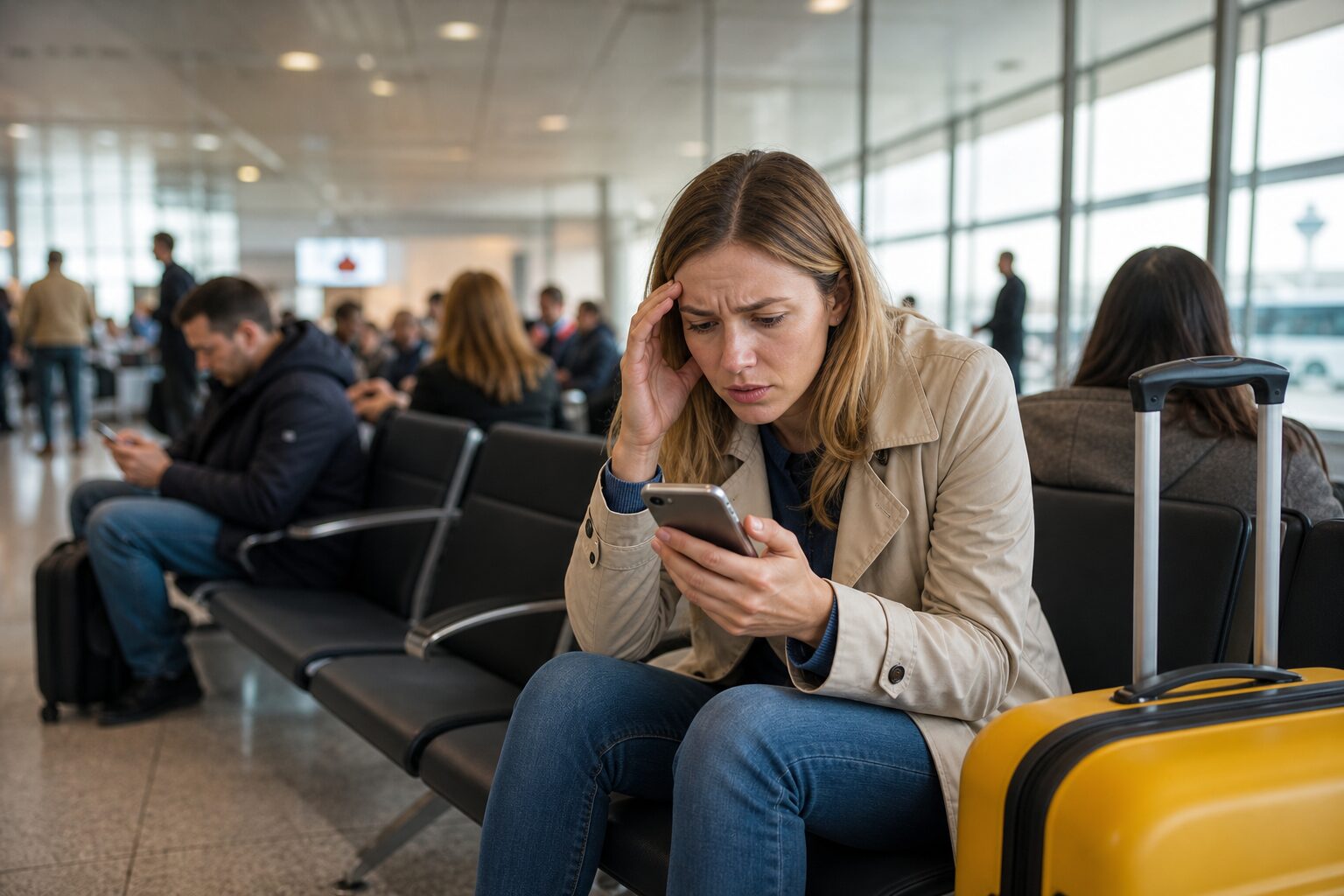

Flight disruptions are an inevitable part of corporate travel. For business professionals, a missed connection or a cancelled flight is not merely an inconvenience; it can mean a missed contract, a failed presentation, or a lost networking opportunity. Knowing exactly what to do when your flight is delayed or cancelled ensures that you can manage your schedule effectively and secure the compensation you are legally entitled to under UK and EU regulations.
Immediate Steps to Take at the Airport
The moments following a disruption announcement are often chaotic. While other passengers may rush to the service desk, creating long queues, a structured approach will save you time and stress. Your first priority should be information gathering. Check the airline's official mobile app or the airport departure boards to confirm the status of your flight and see if a new departure time has already been assigned.
Once you have the facts, communicate with your company's travel manager or your corporate booking agent. They often have access to alternative routing options that may not be visible to the general public. If you are managing your own travel, head to the airline's customer service desk, but keep your phone line open to call the airline's support centre simultaneously; often, the phone agent can rebook you faster than the staff at the terminal.
Documenting the Disruption
Evidence is critical for any future compensation claims. Do not rely on the airline to provide a written statement of the delay at the gate. Instead, take a photo of the departure board showing the delay or cancellation. Request a written statement from the airline staff explaining the reason for the disruption, as this determines whether the event was within the airline's control.
Managing Your Logistics
If the delay extends overnight, clarify your accommodation arrangements immediately. Under UK261 regulations, airlines are generally required to provide hotel accommodation and transport between the airport and the hotel if the disruption necessitates an overnight stay. Ensure you keep every single receipt for food, drink, and transport, as these are reimbursable expenses.
Understanding Your Rights and Compensation
Navigating the legalities of air travel can be daunting, but the framework is relatively straightforward for those flying from UK airports or arriving in the UK on a UK-registered airline. The primary legislation governing these situations is UK261 (and EU261 for flights within the European Union). These rules are designed to protect passengers from excessive losses during travel disruptions.
Compensation is not automatic for every delay. It is typically based on the length of the delay upon arrival at your final destination and the distance of the flight. For instance, a delay of over three hours on a long-haul flight may entitle you to significant financial compensation, provided the cause was not an "extraordinary circumstance."
What Qualifies as an Extraordinary Circumstance?
Airlines often cite extraordinary circumstances to avoid paying compensation. These are events that could not have been avoided even if all reasonable measures had been taken. Common examples include:
- Severe weather conditions that make flight unsafe.
- Air traffic control strikes or restrictions.
- Political instability or security risks at the destination.
- Unexpected safety defects discovered during a pre-flight check.
Technical faults, such as a broken engine or a crew shortage, are generally not considered extraordinary circumstances. In these cases, the airline is usually liable for compensation.
The Right to Care
Regardless of the reason for the delay, you are entitled to "duty of care." This is separate from financial compensation and applies as soon as a delay reaches a certain threshold (usually two hours). The airline must provide:
- Vouchers for food and refreshments proportional to the waiting time.
- Two telephone calls, emails, or faxes to notify business contacts.
- Hotel accommodation and transfers if an overnight stay is required.
Strategic Rebooking for Business Travellers
When your original itinerary fails, the goal is to return to your professional schedule as quickly as possible. Simply waiting for the airline to offer the next available flight may result in a delay of several days. Instead, take a proactive approach to rebooking.
Search for alternative flights across different airlines. If you find a suitable flight that departs sooner, you can ask the original airline to "interline" your ticket, meaning they transfer your booking to another carrier. While airlines are not always obligated to do this, they often will if it clears their backlog of stranded passengers.
If the airline cannot find a suitable alternative, you may be entitled to a full refund of the unused portion of your ticket. However, be cautious: if you take a refund, the airline is no longer responsible for getting you to your destination. In a B2B context, it is often more efficient to accept the rebooking or purchase a new ticket and claim the cost back through your company's travel insurance.
Navigating Insurance and Corporate Claims
For most business travellers, the primary safety net is corporate travel insurance. While UK261 provides a legal baseline for compensation, insurance policies often cover additional losses that the airline will not, such as non-refundable hotel bookings at your destination or missed prepaid event tickets.
To ensure a smooth claims process, maintain a digital folder of all travel documents. This should include your original itinerary, boarding passes, and the confirmation of the cancellation. When filing a claim, be specific about the financial loss incurred. Instead of stating "I missed a meeting," provide the value of the lost opportunity or the cost of the rescheduled logistics.
Many corporate policies also include "trip interruption" coverage. This can be vital when a flight cancellation forces you to extend your stay in a foreign city. Ensure you understand the difference between the compensation paid by the airline (which is a statutory right) and the reimbursement provided by insurance (which is a contractual agreement).
Frequently Asked Questions
How long do I have to claim compensation for a delayed flight?
In the UK, you generally have up to six years to bring a claim for compensation through the courts, although it is highly recommended to submit your claim to the airline as soon as possible.
Am I entitled to compensation if I voluntarily rebooked my flight?
Yes, if the original flight was delayed or cancelled and you took a different flight to reach your destination, you may still be eligible for compensation based on the arrival time.
Does the airline have to pay for my meals during a long delay?
Yes, airlines must provide vouchers or reimburse reasonable costs for food and drink once a delay exceeds a specific time limit, usually two to three hours.
What happens if the airline refuses to pay compensation?
If the airline rejects your claim, you can escalate the matter to an Alternative Dispute Resolution (ADR) scheme or the Civil Aviation Authority (CAA) for an independent review.
Can I claim for a lost day of work due to a cancelled flight?
Generally, UK261 compensation is a fixed statutory amount and does not cover "consequential losses" like lost wages; however, your corporate travel insurance may provide coverage for such losses.