
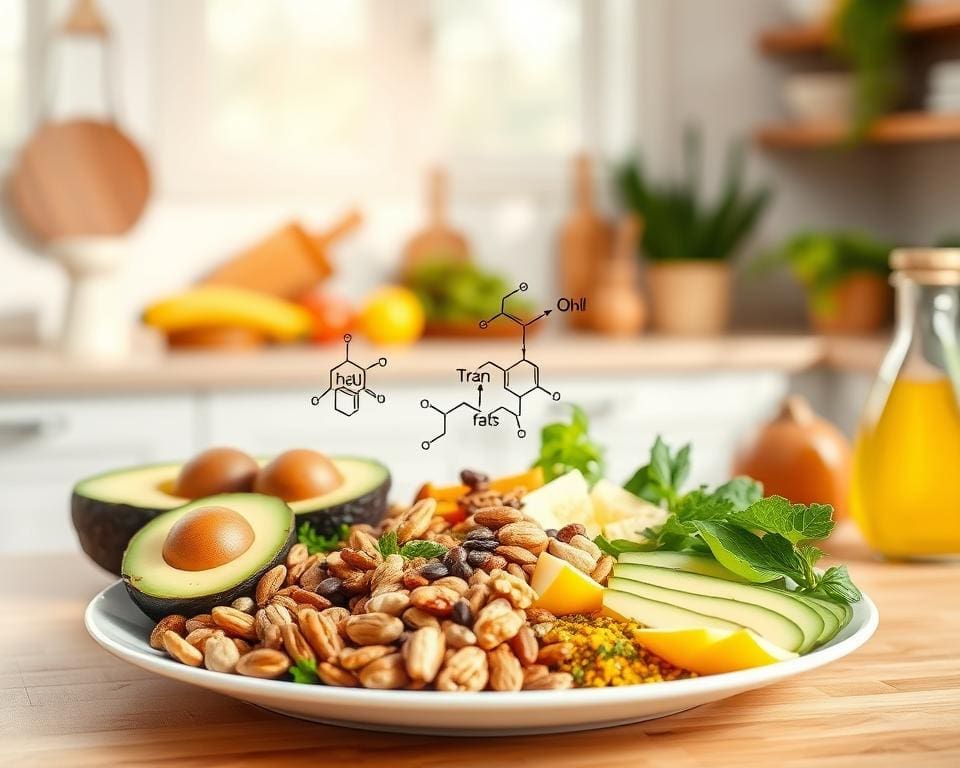
Fats are a vital macronutrient and the most energy-dense source we eat, providing about 9 kcal per gram. Their energy supports daily needs, especially at rest and during low-to-moderate intensity activity, which makes understanding the role of fats in nutrition essential for balanced eating across the UK.
Beyond fuel, dietary fats functions include building cell membranes and supplying precursors for steroid hormones and signalling molecules such as eicosanoids. This structural and signalling role is part of why health bodies like the NHS and the Scientific Advisory Committee on Nutrition emphasise the quality of fats as much as quantity.
Certain fatty acids are essential because the body cannot make them. Alpha-linolenic acid (omega-3) and linoleic acid (omega-6) support growth, skin health and immune function. Long-chain omega-3s, such as EPA and DHA found in oily fish like salmon and mackerel or in algae-based supplements, contribute to cardiovascular and cognitive wellbeing and form a key thread in fat nourishment advice.
Public health guidance in the UK recommends keeping total fat around 35% or less of daily energy and focuses on replacing saturated fats with unsaturated options rather than total elimination. Organisations such as the British Heart Foundation offer practical guidance to help people convert the science of fat nutrition UK into everyday choices that deliver real fat health benefits.
How can movement fit naturally into daily life?
Small changes add up. Think of movement as part of your day, not a separate task. This approach makes daily movement ideas easier to keep and helps people in an active lifestyle UK make steady progress without feeling overwhelmed.
NEAT activities—non-exercise activity thermogenesis—cover walking, cleaning and chores that burn energy beyond formal workouts. Brisk walking to the shops, gardening, stair climbing and vacuuming are simple examples that raise daily energy use and support fat metabolism through activity.
Short, repeated efforts can shift fuel use. Two to ten minute bursts of stair climbing, fast cycling or bodyweight moves increase post-exercise oxygen use and sustain calorie burn. Pairing these bursts with longer low-intensity periods, such as brisk walking between errands, helps the body call on fat stores more often.
- Choose public transport and walk from the stop to your destination.
- Use Santander Cycles or local bike schemes for short trips.
- Park further away and take stairs instead of lifts.
For busy UK lifestyles, chunk activity into micro-sessions. Schedule three ten-minute bursts, set phone reminders and fold movement into family time. Active play with children or dog walks doubles as quality time and gentle exercise.
At work, use standing desks, take walking meetings and move during phone calls. These habits boost NEAT activities and support fat metabolism through activity without needing extra hours in the day.
Plan for weather and safety. Wear waterproof layers and sturdy shoes in winter, adapt routes to avoid icy patches and keep visible in low light. Practical steps like these make an active lifestyle UK viable all year round.
Types of dietary fats and their nutritional roles
Understanding types of dietary fats helps you choose foods that support health and enjoyment. Fats are not all the same. Some nourish the body and mind, while others deserve careful avoidance.
Monounsaturated and polyunsaturated fats
Monounsaturated fats show up in olive oil, rapeseed (canola) oil, avocados and many nuts such as almonds and cashews. Evidence for monounsaturated fats benefits includes improved blood lipid profiles by lowering LDL cholesterol while preserving HDL and supporting insulin sensitivity.
Polyunsaturated fats include omega-6 sources like sunflower and soybean oils and omega-3 sources such as flaxseed, chia and rapeseed. Long-chain omega-3s (EPA and DHA) come from oily fish and algae. Polyunsaturated fats omega-3 omega-6 play essential roles in inflammation regulation and cardiovascular health. UK guidance advises choosing unsaturated fats over saturated options where possible.
Saturated fats and moderation
Saturated fat sources include butter, ghee, fatty cuts of meat, full-fat dairy and coconut oil. Consuming excess saturated fat can raise LDL cholesterol and link to higher cardiovascular risk. Aim for saturated fats moderation UK by using smaller amounts for flavour rather than as a primary cooking medium.
Simple swaps can make a difference. Use olive oil or rapeseed oil for roasting, trim visible fat from meat and choose lower-fat dairy when appropriate. Portion control keeps recipes tasty without excess saturated fat.
Trans fats and processed foods
Industrial trans fats from partially hydrogenated oils harm cardiovascular health by raising LDL and lowering HDL cholesterol. Many regulators have reduced their use, yet processed and baked goods, some margarines and deep-fried convenience foods can still hide trans fats in processed foods.
Check ingredient lists and favour minimally processed options. Look for products from reputable brands that declare no partially hydrogenated oils or list “0 g trans fats.” Small label checks help protect heart health and support informed choices.
How fats support bodily functions and health
Fats do more than add flavour to meals. They play active roles in nutrient uptake, endurance and brain function. Small changes to meals and activity can help you use fats for better health in everyday life across the UK.
Fat-soluble vitamin absorption
Vitamins A, D, E and K need dietary fat to be absorbed efficiently. Pairing salads with olive oil or rapeseed oil helps the body access carotenoids and vitamin A from vegetables. For vitamin D, which many people in the UK have low levels of, a combined plan of safe sun exposure, fortified foods, supplements and including a source of healthy fat with meals supports better uptake.
Energy storage and endurance
Fats are stored as triglycerides in adipose tissue and inside muscles. These stores offer a compact reserve for long, low-to-moderate intensity activity such as walking or cycling. Efficient fat metabolism spares glycogen and helps maintain steady energy over hours of activity.
Training influences how well the body burns fat. Regular endurance activity raises mitochondrial capacity and enhances fat utilisation, which improves stamina for everyday journeys and organised sport.
Essential fatty acids and cognitive health
Long-chain omega-3s like EPA and DHA form part of neuronal membranes and support synaptic function. Adequate intake links to improved memory, mood and developmental outcomes across life stages. Oily fish such as sardines, mackerel and salmon are rich sources, along with fortified eggs and algal supplements for those following plant-based diets.
- Include a small drizzle of oil on vegetables to boost fat-soluble vitamins absorption.
- For longer walks or cycle commutes, rely on balanced meals that support fats energy storage endurance.
- Eat oily fish twice a week or consider algae-based supplements to secure essential fatty acids brain health and enjoy omega-3 cognitive benefits UK.
Balancing fats in a healthy diet
Good fat choices let meals taste satisfying while supporting long-term health. Focus on practical swaps, sensible portioning and smart shopping to make balancing fats healthy diet straightforward and enjoyable for everyday life.
Practical portion and serving suggestions
Keep portions modest because fats are calorie-dense. Aim for a thumb-sized portion (about 10–15 g) of spreadable fat per person and a tablespoon (12–15 ml) of oil for cooking or dressing. A small handful of nuts (around 30 g) makes a nourishing snack. Try to include two portions of oily fish each week to provide EPA and DHA, following NHS advice.
Measure once or learn to eyeball portions. This preserves flavour without excess calories. Simple tools such as measuring spoons or a kitchen scale help with consistency.
Replacing unhealthy fats with healthier alternatives
Make swaps that keep meals satisfying. Use rapeseed or olive oil instead of butter for most cooking. Choose lean cuts of meat and trim visible fat before cooking. Swap deep-fried convenience items for oven-roasted or air-fried versions to cut grease while keeping crisp textures.
Try nut butters and avocado instead of processed spreads. For baking, replace some fat with apple purée or mashed banana to lower total fat while accepting mild texture changes. Where appropriate, choose lower-fat dairy but balance with whole-food nutrients to stay nourished.
Reading labels and shopping smart
Learn to scan packaging when reading food labels UK. Check total fat, saturates and trans fat per 100 g and per portion. Avoid products listing partially hydrogenated oils in the ingredients. Pick items with lower saturates to support heart health.
Shop the supermarket perimeter for fresh produce and whole foods. Choose reputable own-brand ranges such as Tesco, Sainsbury’s or Essential Waitrose for clearer labelling and sensible options. Plan meals before you go to reduce impulse buys of high-fat processed foods and to make shopping for healthy fats easier.
- Keep a simple set of swaps in mind to swap saturated for unsaturated in everyday recipes.
- Use small measures to control portion sizes fats and preserve taste.
- Make reading food labels UK a quick habit to spot better choices.
Fats in product choices and reviews
Choosing fats need not be daunting. This short guide compares oils, reviews dairy and plant-based options and points out hidden fats in convenience foods so you can shop with confidence.
Cooking oil comparison UK usually pits extra virgin olive oil and rapeseed oil against sunflower, coconut and peanut oil. Extra virgin olive oil works best for dressings and low to moderate heat, rich in monounsaturated fats and polyphenols. Rapeseed (canola) is neutral, has a good balance of MUFA and ALA omega-3, and suits higher-heat frying. Sunflower oil contains more omega‑6 polyunsaturates, so use it sparingly. Coconut oil is high in saturated fat; reserve it for flavourful uses. Peanut oil tolerates high heat and is handy for Asian recipes. Check smoke points and prices at major retailers such as Waitrose, Tesco, Sainsbury’s and Ocado when choosing the best oils for health and value.
Look for practical notes on availability and cost. Extra virgin olive oil is widely stocked but can be pricier at Waitrose. Rapeseed oil often gives better value at Tesco and Sainsbury’s. Supermarket own brands at Ocado and larger chains offer bulk options and clear labelling to aid a cooking oil comparison UK.
dairy alternatives fat content matters when swapping everyday items. Full‑fat milk, semi‑skimmed and skimmed vary in saturated fat and energy. Butter has high saturates; low‑fat spreads and olive or rapeseed‑based margarines cut saturates substantially. Some spreads, like Flora and Stork, come in lower‑saturate ranges; olive oil‑based spreads or those with added plant sterols may suit heart‑minded shoppers.
Plant milks such as oat, almond and soya differ in fat and calories. Fortified versions supply calcium and vitamins, but check labels for sugar and added oils. A careful plant-based spreads review helps identify options with lower saturated fat while keeping spreadability and flavour.
hidden fats convenience foods are common in ready meals, pastries, biscuits, crisps and deep‑fried takeaway items. Many chilled supermarket meals and bakery goods contain high levels of saturates and trans fats. When reviewing convenience choices, compare fat and saturates per portion rather than per pack. Choose brands that label lower‑fat options or offer grilled and steamed variants.
- Tip: Swap a supermarket ready meal for a homemade tray bake using a measured tablespoon of rapeseed oil and plenty of veg.
- Tip: Pick salad packs with a small sachet of oil‑based dressing and use half to reduce added fats.
- Tip: Look at nutritional panels from Tesco and Sainsbury’s to find lower‑fat convenience options.
Keep portions mindful and frequency low for processed snacks. Use this practical overview to weigh trade‑offs between flavour, cost and nutrition when selecting fats, so your choices support a balanced and inspiring eating plan.
Practical meal ideas and recipes focusing on healthy fats
Start the day with simple recipes healthy fats in mind. Porridge made with semi-skimmed milk or fortified oat milk, topped with a tablespoon of ground flaxseed and a small handful of walnuts, gives slow-release energy and omega-3s. For a quicker option, smashed avocado on wholegrain toast finished with a drizzle of rapeseed oil and a poached egg makes a filling breakfast that suits busy commutes and picnic mornings alike.
For lunch and dinner, choose meal ideas omega-3 rich to balance flavour and nutrition. A baked salmon fillet with lemon and extra virgin olive oil served alongside new potatoes and steamed leafy greens is a classic UK healthy fat recipe. Vegetarians can try a chickpea, spinach and tomato curry cooked in a tablespoon of rapeseed oil with brown rice, or hearty salads with quinoa, roasted sweet potato, pumpkin seeds and an olive oil and lemon dressing.
Snacks and quick meals healthy oils keep the day steady. A small handful of almonds or mixed nuts, natural yoghurt with a teaspoon of flaxseed, or oat biscuits made with mashed banana and a touch of rapeseed oil are portable and family-friendly. Batch-cook roasted vegetables with measured oil, portion nuts and seeds into single servings, and use canned oily fish such as sardines or mackerel for speedy sandwiches or salads.
Pair these UK healthy fat recipes with movement to boost benefits: a brisk 10-minute walk after eating, or short active intervals between tasks. Pack salads or nut portions for work, plan picnic-friendly salmon wraps for weekends, and use batch-prep to make healthy choices simple on school nights. These small steps make recipes healthy fats practical and sustainable.