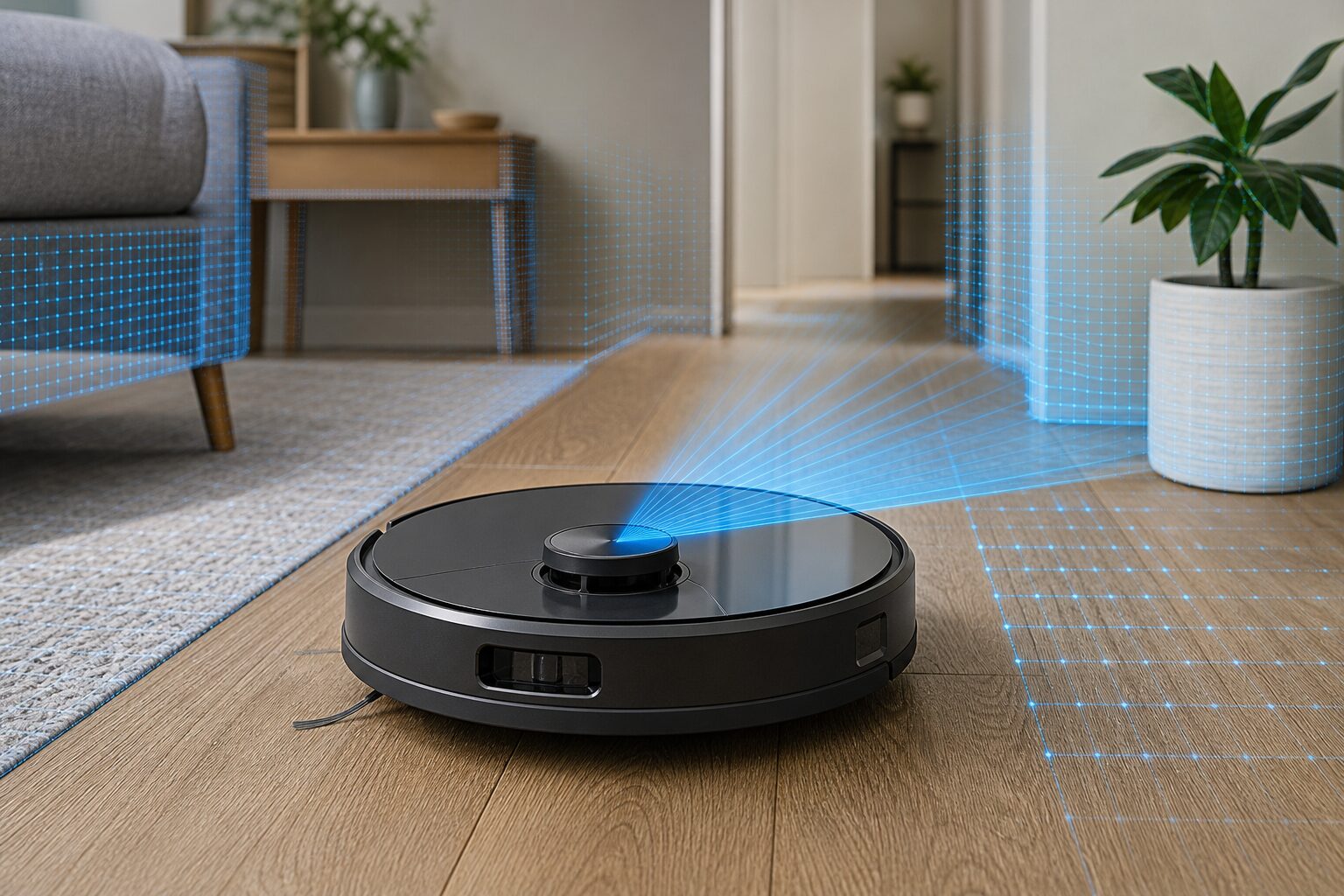

For facility managers and commercial cleaning contractors, the efficiency of floor maintenance directly impacts operational costs and hygiene standards. As automation enters the professional space, understanding the technology driving these machines is essential. One of the most significant advancements in this field is Light Detection and Ranging, commonly known as LiDAR.
When asking, "What is LiDAR navigation in robot vacuums?", you are essentially looking at the difference between a machine that guesses where it is and one that knows exactly where it is. LiDAR allows a robot to create a precise digital map of a physical environment, ensuring that every square metre of a commercial floor is cleaned without redundant overlapping or missed patches.
How LiDAR Technology Works in Commercial Cleaning
LiDAR operates on a principle similar to sonar or radar, but it uses light instead of sound or radio waves. A LiDAR-equipped robot vacuum contains a rotating laser sensor, usually housed in a small turret on top of the device. This sensor emits rapid pulses of infrared light that bounce off walls, furniture, and other obstacles.
By measuring the time it takes for each pulse of light to return to the sensor—a process called Time of Flight (ToF)—the robot calculates the exact distance to the object. Because the laser rotates at high speeds, the vacuum captures thousands of data points per second. This creates a high-resolution "point cloud" that the robot's processor converts into a detailed 2D or 3D map of the premises.
Unlike basic sensors that only detect a collision after it happens, LiDAR allows the machine to "see" the room before it even moves. This proactive approach to navigation is what makes these devices suitable for complex B2B environments, such as open-plan offices, warehouses, or retail showrooms.
The Advantages of LiDAR Over Other Navigation Systems
In the B2B sector, time is a critical resource. Traditional robot vacuums often rely on "random bounce" navigation or basic infrared sensors. These methods are inefficient for large-scale operations because they result in erratic movement patterns and inconsistent cleaning quality.
Precision Mapping and Path Planning
LiDAR enables a robot to implement "Z-shape" or "S-shape" cleaning patterns. Instead of wandering, the machine follows a calculated grid. This ensures total coverage of the floor area while minimising the time spent on each room. For a business, this means faster turnaround times for cleaning crews and less disruption to daily operations.
Superior Performance in Low Light
Many commercial spaces, such as corridors or storage areas, may have dim lighting during cleaning shifts. Visual SLAM (Simultaneous Localisation and Mapping), which relies on cameras, often struggles in the dark. Because LiDAR provides its own light source via the laser, it operates with the same level of precision in total darkness as it does in bright sunlight.
Efficient Obstacle Avoidance
LiDAR allows for a wider field of view and faster reaction times. The robot can detect a misplaced chair or a temporary partition from several metres away, allowing it to adjust its trajectory smoothly. This reduces the frequency of the robot getting stuck, which is a primary pain point for businesses that cannot afford to have a human staff member constantly "rescuing" a machine.
Implementing LiDAR Navigation in Business Environments
Integrating automated cleaning into a professional workflow requires more than just purchasing a machine; it requires an understanding of how the technology interacts with the workspace. LiDAR-based systems offer several functional benefits that align with corporate KPIs.
- Customisable No-Go Zones: Using the map generated by LiDAR, managers can set virtual boundaries. This prevents the robot from entering sensitive areas, such as server rooms or wet zones near plumbing.
- Room-Specific Scheduling: You can instruct the robot to clean the lobby at 6:00 AM and the boardroom at 8:00 PM, ensuring the most high-traffic areas are prioritised.
- Multi-Floor Mapping: Advanced LiDAR systems can store multiple maps, allowing a single unit to service different floors of a building by recognising its location upon startup.
When evaluating equipment, it is important to note that LiDAR navigation in robot vacuums provides a level of reliability that basic sensors cannot match. By reducing the overlap of cleaning paths, these machines also preserve the lifespan of the battery and the wear on the brushes, lowering the total cost of ownership over several years.
Comparing LiDAR to Camera-Based Navigation
While LiDAR is highly effective, some B2B models use VSLAM (Visual SLAM). VSLAM uses cameras to identify landmarks—such as the corner of a ceiling or a specific picture frame—to orient itself. While VSLAM can be cheaper to produce and allows for object recognition (such as identifying a cable on the floor), it lacks the raw spatial accuracy of LiDAR.
LiDAR is generally preferred for larger, more sterile environments where landmarks may be few or repetitive. In a long white corridor, a camera might struggle to find a unique reference point, whereas a LiDAR sensor simply measures the distance to the walls, maintaining a perfect sense of position. For the business user, the choice usually comes down to the complexity of the environment and the requirement for autonomous reliability.
Frequently Asked Questions
Does LiDAR navigation work in very large warehouses?
Yes, LiDAR is particularly effective in large spaces because it can map vast areas with high precision. However, the range of the laser varies by model, so it is important to check the maximum mapping square footage to ensure the robot can return to its dock from the furthest point of the facility.
Is the laser used in LiDAR navigation safe for employees?
The infrared lasers used in commercial robot vacuums are typically Class 1 lasers, which are considered eye-safe under normal operating conditions. They operate at low power levels and are designed specifically for distance measurement rather than cutting or burning, making them safe for use around staff and clients.
Can LiDAR robots handle dynamic environments with moving people?
LiDAR is excellent at detecting moving obstacles in real-time. When a person walks in front of the robot, the sensor detects the change in distance immediately and triggers a detour. This allows the robot to navigate safely through busy offices without causing accidents or interruptions.
How does LiDAR affect the battery life of the vacuum?
While the rotating laser requires power, the overall impact on battery life is usually positive. Because the robot follows a direct, optimised path rather than wandering randomly, it completes the cleaning task much faster, which reduces the total energy consumed per cleaning cycle.
Do I need to prepare my office layout for a LiDAR robot?
Minimal preparation is required, but removing extremely small items from the floor can help. While LiDAR is highly accurate, very thin objects or mirrored surfaces can occasionally confuse the laser pulses, so ensuring a generally clear path will maximise the efficiency of the automated cleaning process.